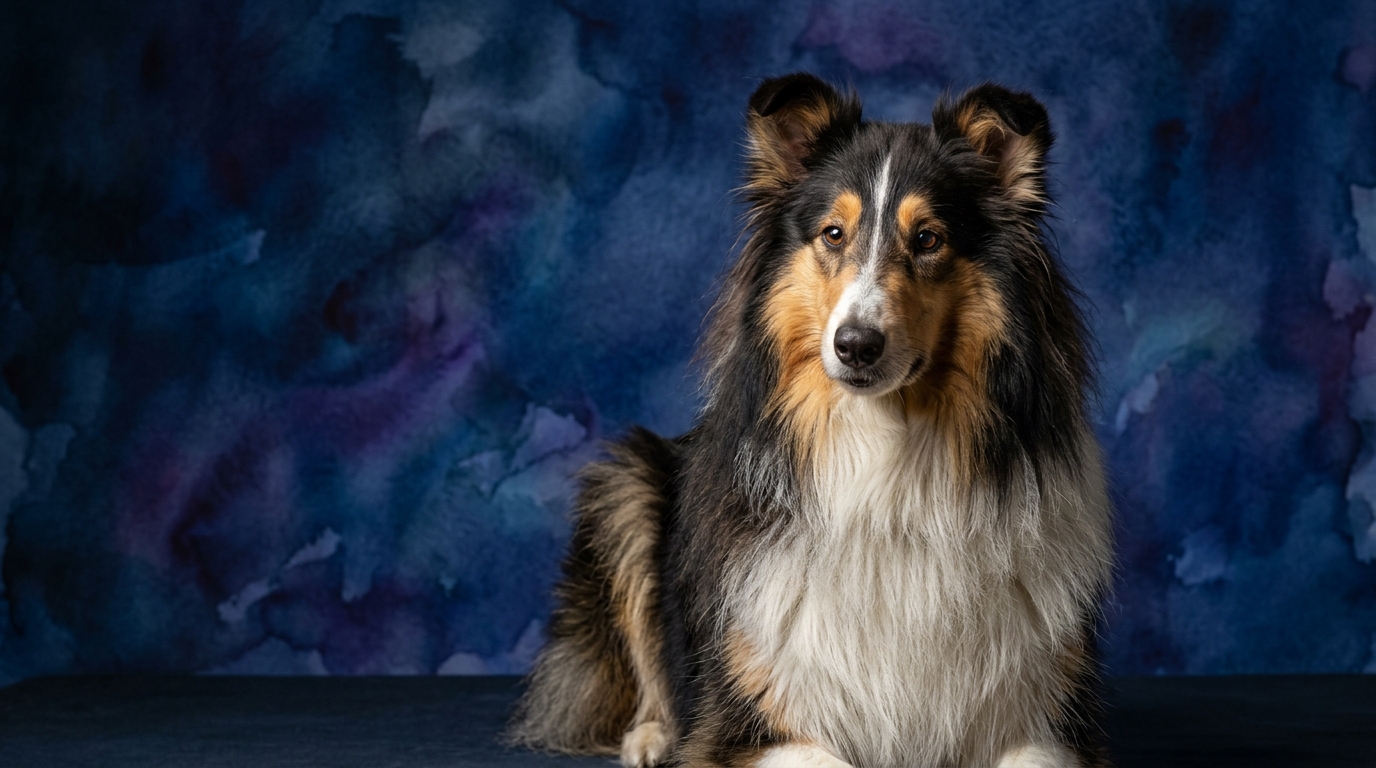
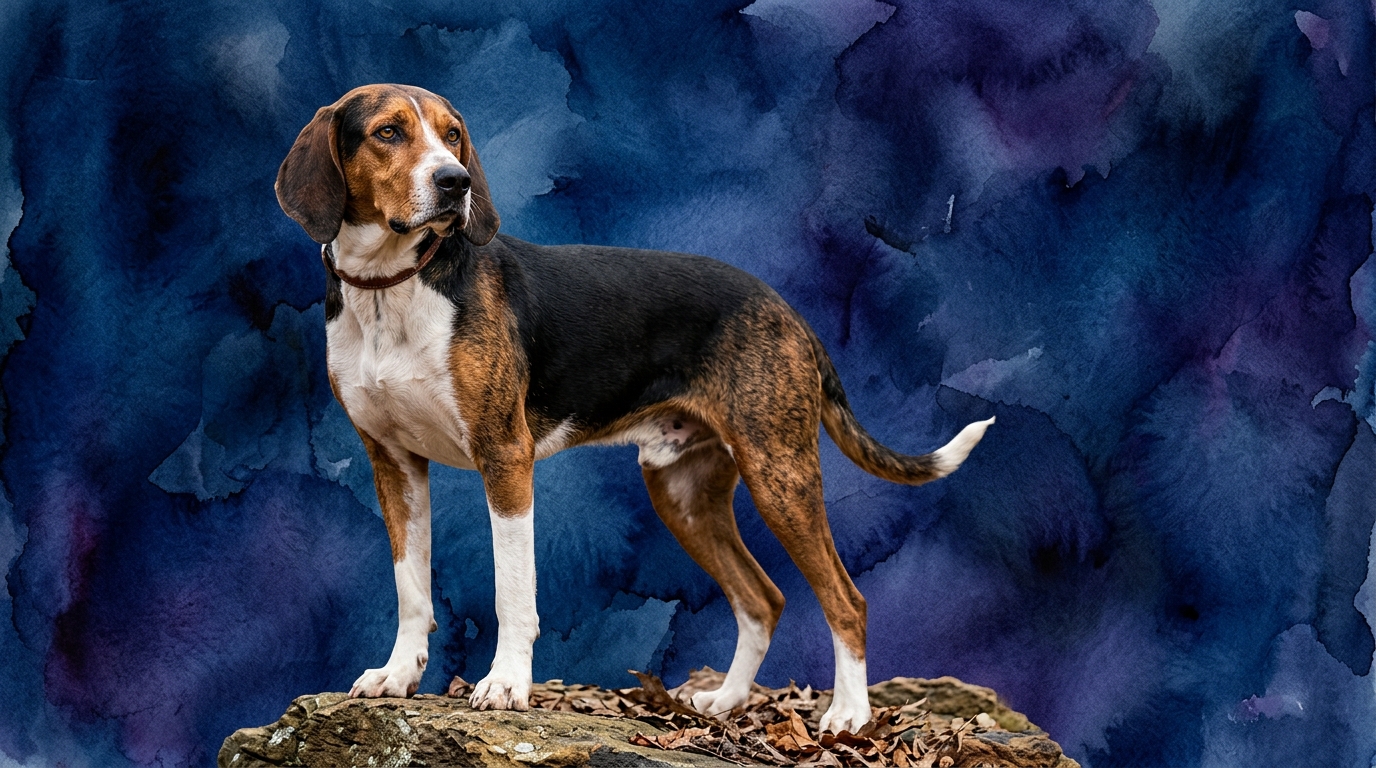
Side-by-Side Cognitive Profiles: Collie (Rough) vs. Treeing Walker Coonhound
The Cosmic Pet Pet IQ Lab employs a five-dimensional framework to assess canine intelligence, offering a nuanced view beyond simple obedience. For the Collie (Rough), we observe a dog with a well-rounded and adaptable mind, particularly excelling in areas that demand human cooperation and learning. Its Problem Solving is rated at 4/5, indicating a strong capacity to analyze situations and devise effective solutions, often in collaboration with its handler. Training Speed, also at 4/5, reflects its eagerness to learn and quick assimilation of new commands and routines, making it a highly receptive student. Social Intelligence stands at 3/5, suggesting it navigates social cues adequately but might exhibit a degree of reservation with unfamiliar individuals, preferring the company of its established pack. Instinctive Drive, at 3/5, denotes a present but generally manageable herding impulse that can be channeled effectively. Finally, its Memory truly shines at 5/5, demonstrating an exceptional ability to retain information, complex sequences, and past experiences over extended periods.
In contrast, the Treeing Walker Coonhound presents a cognitive profile shaped by centuries of specialized work, emphasizing independence and sensory acuity over generalized obedience. Its Problem Solving is rated 3/5, meaning it is resourceful and effective within its domain of scent work, adept at navigating complex environments to follow a trail, but less inclined towards abstract or human-initiated problem-solving tasks. Training Speed, also at 3/5, indicates a steady learning pace that benefits from consistency and positive reinforcement, though it may require more repetition than a Collie. Social Intelligence matches the Collie at 3/5; these hounds are generally amicable but often possess an independent streak, prioritizing their sensory world over constant human interaction. Its Instinctive Drive, also 3/5, is powerfully focused on scent and pursuit, a defining characteristic that strongly influences its behavior and cognitive application. Memory, rated 3/5, suggests it retains scent trails and learned hunting strategies effectively, but perhaps not the broad spectrum of human-centric commands as readily as the Collie.
Where the Collie (Rough) Cognitively Excels
The Collie (Rough) demonstrates clear cognitive advantages in areas requiring adaptive learning, complex task execution, and a strong partnership with a human handler. Its superior Problem Solving (4/5) means it can quickly grasp multi-step commands, anticipate human intentions, and adapt its behavior to novel situations, such as navigating an agility course or learning intricate trick sequences. This aptitude allows it to excel in roles where it needs to make quick, intelligent decisions based on evolving circumstances, like guiding livestock or responding to subtle cues in competitive obedience. Furthermore, its exceptional Memory (5/5) is a cornerstone of its cognitive strength, allowing it to build a vast vocabulary of commands and retain complex patterns of behavior without constant reinforcement. This capacity for long-term retention means a well-trained Collie can recall commands learned years ago, making it a highly reliable and consistent companion over its lifetime. The speed at which it internalizes new information, reflected in its 4/5 Training Speed, further solidifies its position as a highly teachable and responsive dog, capable of mastering a wide array of skills and behaviors with fewer repetitions than many other breeds.
Where the Treeing Walker Coonhound Cognitively Excels
While the Treeing Walker Coonhound's cognitive scores might appear lower in generalist categories, its true intellectual prowess lies in its highly specialized, instinct-driven intelligence. Its Problem Solving (3/5) is acutely focused on the hunt; it exhibits remarkable ingenuity in deciphering complex scent trails, navigating varied terrain, and locating quarry, often making independent decisions far from its handler. This isn't about solving abstract puzzles, but about applying sophisticated sensory input to a real-world, dynamic challenge. The Coonhound's Instinctive Drive (3/5), though rated the same as the Collie's, manifests as an all-consuming focus on scent, a cognitive specialization that allows it to filter out distractions and maintain singular concentration on a trail for extended periods. This sustained focus, combined with its memory for specific scent patterns and successful hunting strategies (Memory 3/5 in its domain), represents a highly evolved form of intelligence tailored for its purpose. It's a breed that thinks with its nose, capable of processing an immense amount of olfactory data to achieve its objective, a feat of cognitive specialization that few other breeds can match.
Which is Easier to Train and Why
When considering ease of training for general obedience and household manners, the Collie (Rough) generally presents a smoother path due to its cognitive makeup. Its 4/5 Training Speed means it grasps new concepts quickly, often requiring fewer repetitions for a command to become ingrained. This responsiveness stems from its history as a herding dog, where quick, precise reactions to a handler's cues were essential for managing livestock. A Collie is more likely to offer behaviors proactively in anticipation of a reward or to please its handler, making positive reinforcement highly effective. Their higher Problem Solving score also means they can generalize learned behaviors more readily to new environments and understand complex sequences of commands, which simplifies advanced training. For instance, teaching a Collie to 'stay' while you leave the room and then 'come' on command is often a swift process because they connect the actions and consequences efficiently.
The Treeing Walker Coonhound, with its 3/5 Training Speed, requires more patience and consistency. Its powerful Instinctive Drive, particularly for scent, means that external stimuli can easily override its focus on human-given commands. While capable of learning, the Coonhound often needs more repetitions and a highly motivating reward system to internalize commands. A key behavioral difference is its independent nature; a Coonhound's problem-solving is often directed towards its own interests (like following a fascinating scent) rather than directly fulfilling a human's request. For example, teaching a Coonhound a reliable recall can be challenging because the allure of a distant scent trail might be far more compelling than its handler's voice. Training a Coonhound effectively means understanding and working with its specialized drive, often channeling it into appropriate activities rather than trying to suppress it entirely.
Cognitive Profiles and Owner Lifestyles: Active vs. Relaxed Owners
For active owners who enjoy engaging their dogs in structured activities, learning new skills, and participating in dog sports, the Collie (Rough) is often an ideal match. Its cognitive profile, marked by high Training Speed, Problem Solving, and Memory, means it thrives on mental stimulation and enjoys the challenge of learning. Owners who want to pursue obedience, agility, rally, or even therapy work will find the Collie's responsiveness and eager-to-please attitude highly rewarding. These dogs enjoy a routine that includes mental tasks and physical exercise, making them excellent companions for hikers, runners, or families committed to daily training sessions. Their social intelligence, while moderate, means they bond deeply with their family and are generally content to be part of an active household that values their participation.
Conversely, the Treeing Walker Coonhound aligns well with owners who appreciate a dog with a strong, independent spirit and a deep connection to its primal instincts. These are not dogs that typically excel at generalized obedience competitions, but they are phenomenal partners for activities that leverage their natural abilities, such as scent work, tracking, or hunting. Owners who enjoy long walks or runs in varied terrain, where the dog can engage its powerful nose, will find a dedicated companion. A 'relaxed' owner for a Coonhound isn't necessarily sedentary; rather, it's someone relaxed about strict obedience and more focused on providing outlets for the dog's innate drives. They require consistent, patient training, and owners must understand that a Coonhound's contentment often comes from fulfilling its desire to explore and follow scents, even if it means an independent excursion into the backyard.
The Verdict
Choose the Collie (Rough) if you seek a highly trainable, responsive companion eager to learn a wide array of commands and participate in structured activities.
Opt for the Treeing Walker Coonhound if you appreciate an independent, scent-driven dog whose satisfaction comes from engaging its powerful natural instincts, suitable for owners who enjoy outdoor exploration and specialized work.
🧠 Find Your Pet's IQ Score
Our Pet IQ Lab assessment covers 25+ tests across 5 cognitive dimensions — personalized to your breed.
Take the Full IQ Test →Frequently Asked Questions
Is a Collie (Rough) good for first-time dog owners?
Yes, a Collie (Rough) can be a suitable choice for first-time owners due to its high training speed and responsiveness. Its eagerness to learn and strong memory make the training process more manageable, provided owners are committed to consistent positive reinforcement and mental engagement.
Do Treeing Walker Coonhounds need a lot of exercise?
Treeing Walker Coonhounds require a significant amount of physical and mental exercise, particularly activities that engage their powerful sense of smell. Daily vigorous walks, runs, or dedicated scent work sessions are crucial to keep them content and prevent boredom-related behaviors.
How do their social intelligence scores impact family life?
Both breeds have a social intelligence score of 3/5, meaning they are generally good with their family but might be reserved with strangers. A Collie may be more inclined to seek interaction with family members, while a Coonhound, while friendly, might be more independent and focused on its surroundings or scent, even within the family unit.