
Side-by-Side Cognitive Profiles
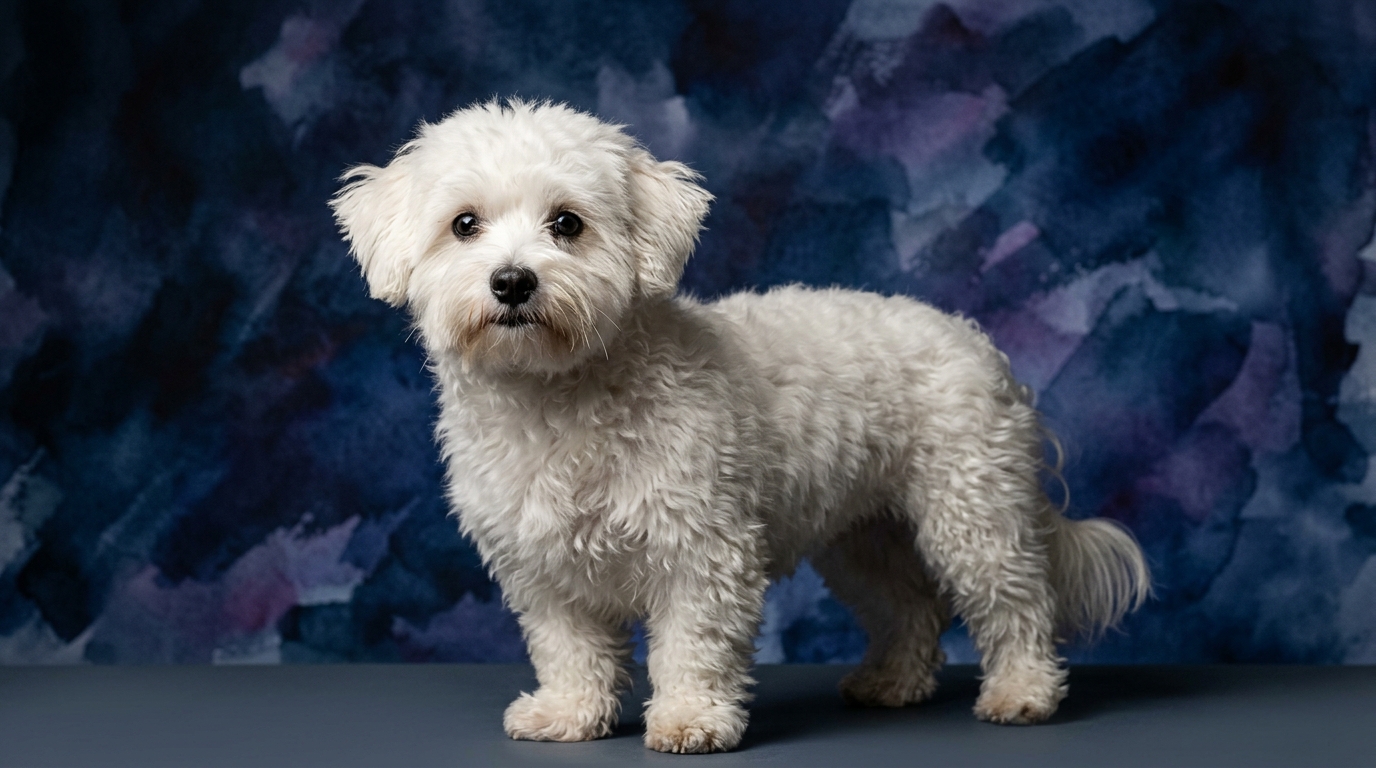
Understanding a dog's cognitive strengths involves examining several dimensions, each contributing to their overall mental agility and how they interact with their world. For the Coton de Tuléar and Miniature Poodle, our IQ Lab framework evaluates problem solving, training speed, social intelligence, instinctive drive, and memory, revealing distinct patterns.
Problem Solving: This dimension measures a dog's capacity to navigate novel situations or overcome obstacles to achieve a goal. The Coton de Tuléar scores 3/5, indicating a moderate ability to figure things out independently. They can learn simple puzzles or adapt to minor changes in routine, but complex, multi-step challenges might require more guidance. Their approach is often pragmatic. In stark contrast, the Miniature Poodle scores 5/5, reflecting an exceptional talent for problem-solving. These dogs readily assess situations, devise strategies, and remember solutions to intricate dilemmas, thriving on mental challenges and often finding creative ways to achieve their objectives.
Training Speed: This metric assesses how quickly a dog forms associations between commands and actions, and how many repetitions are typically needed for mastery. The Coton de Tuléar scores 3/5, suggesting a moderate learning curve. They are certainly trainable and eager to please, but might require more consistent repetition and patience to solidify new commands. Progress is steady rather than instantaneous. The Miniature Poodle, scoring 5/5, demonstrates a remarkable aptitude for rapid learning. They pick up new commands and routines with very few repetitions, often understanding the intent behind a cue almost immediately, making them exceptionally responsive to training efforts.
Social Intelligence: This refers to a dog's ability to understand and respond appropriately to human cues, other animals, and social contexts, encompassing empathy and reading body language. Both the Coton de Tuléar and the Miniature Poodle score 3/5 in social intelligence, demonstrating a balanced social awareness. They are generally adept at reading human emotions and intentions, making them sensitive companions. They navigate social interactions with other dogs and people competently, forming strong bonds and responding to subtle emotional shifts.
Instinctive Drive: This dimension covers inherent, genetically programmed behaviors related to their original purpose or natural predispositions. Both breeds also score 3/5 in instinctive drive. The Coton de Tuléar exhibits a moderate level of instinctive behaviors; while not possessing strong working drives, they retain a natural curiosity and a moderate prey drive that might manifest as chasing small critters. Similarly, the Miniature Poodle, historically used as water retrievers, retains some retrieving instincts, often enjoying games of fetch. However, these drives are generally not overwhelming and are easily channeled into appropriate activities.
Memory: This measures the capacity to recall past experiences, learned commands, and spatial information over time. The Coton de Tuléar scores 3/5, reflecting a solid, functional memory. They remember routines, learned commands, and familiar faces reliably, sufficient for daily living and consistent training reinforcement. The Miniature Poodle, with a score of 5/5, signifies an exceptional memory. They retain a vast amount of information, from a wide array of commands to intricate sequences of actions and spatial layouts. This robust recall contributes significantly to their rapid training speed and problem-solving prowess.
Where the Coton de Tuléar Excels Cognitively
While the Coton de Tuléar doesn't boast higher scores in any specific cognitive dimension compared to the Miniature Poodle, their consistent 3/5 across the board presents a unique cognitive advantage for certain living situations. Their moderate problem-solving ability, for instance, means they are less likely to become bored or destructive if not constantly presented with complex mental challenges. Unlike a dog with a 5/5 problem-solving score that might invent mischief to occupy its mind, the Coton is often content with simpler routines and less demanding mental stimulation. This translates to a dog that generally requires less intense intellectual engagement to remain fulfilled, making them inherently less prone to anxiety or frustration stemming from cognitive under-stimulation. Their balanced social intelligence also ensures they are responsive and adaptable companions without being overly sensitive or prone to overthinking social cues. Essentially, the Coton's cognitive profile fosters a more 'go-with-the-flow' temperament, where their minds are engaged but not relentlessly seeking the next intellectual puzzle, contributing to a calm and adaptable presence in the home.
Where the Miniature Poodle Excels Cognitively
The Miniature Poodle's cognitive strengths are pronounced and multifaceted, particularly in areas critical for learning and adaptability. Their 5/5 score in problem-solving means they possess a remarkable capacity to analyze new situations and independently figure out solutions. This manifests as a dog that can quickly learn how to open gates, retrieve specific items on command, or even manipulate puzzle toys with impressive dexterity. This aptitude for logical thought also underpins their exceptional training speed, also rated 5/5. Poodles absorb new commands and behaviors with astonishing rapidity, often requiring only a handful of repetitions to grasp a concept, making them incredibly rewarding for owners who enjoy advanced obedience, dog sports, or complex trick training. Complementing these abilities is their 5/5 memory, which allows them to retain a vast repertoire of learned behaviors, commands, and spatial information over long periods. This robust recall ensures that once a lesson is learned, it is rarely forgotten, building a strong foundation for future learning and consistent performance. These combined cognitive assets make the Miniature Poodle a highly capable and versatile learner, eager to engage in mental challenges.
Which is Easier to Train and Why
When it comes to ease of training, the Miniature Poodle unequivocally holds an advantage due to its superior cognitive scores in training speed and memory. With a training speed of 5/5, Poodles form associations between commands and actions almost instantaneously. An owner might demonstrate a 'sit' command just a few times, and the Poodle is likely to understand and replicate the action. This rapid assimilation means less frustration for both dog and trainer, allowing for quicker progression to more complex behaviors. Their 5/5 memory further solidifies this advantage; once a Poodle learns something, it tends to stick, reducing the need for constant re-training and reinforcing good habits over time. In contrast, the Coton de Tuléar, with a training speed of 3/5, requires a more patient and repetitive approach. While certainly trainable and eager to please, a Coton might need more consistent practice sessions and a greater number of repetitions to fully grasp and reliably perform new commands. Their 3/5 memory means that while they remember what they've learned, occasional refreshers might be more beneficial to maintain proficiency, especially for less frequently used cues. Therefore, for owners prioritizing swift and efficient training, the Miniature Poodle presents a smoother, faster learning journey.
Which Suits Active Owners vs. Relaxed Owners
The cognitive profiles of these two breeds offer clear guidance for matching them with owner lifestyles. For active owners who enjoy engaging their dogs in mentally stimulating activities, dog sports, or advanced obedience, the Miniature Poodle is an ideal fit. Their 5/5 problem-solving and memory scores mean they thrive on intellectual challenges and can become bored or restless if their minds aren't adequately exercised. These dogs excel in activities like agility, rally obedience, or even learning complex trick sequences, requiring an owner who can consistently provide structured mental work. A Miniature Poodle with an under-stimulated mind might invent its own 'puzzles,' potentially leading to undesirable behaviors like excessive vocalization or destructive chewing. Conversely, the Coton de Tuléar, with its consistent 3/5 scores across cognitive dimensions, is often a better match for more relaxed owners. Their moderate need for mental stimulation means they are generally content with regular walks, interactive play sessions, and basic obedience training. While they enjoy learning, they don't possess the same intense drive for constant intellectual engagement as the Poodle. This makes them adaptable to quieter households or owners who prefer a companion whose mental demands are less rigorous, allowing them to enjoy a fulfilling life without the need for constant, intricate cognitive challenges.
The Verdict
Choose a Coton de Tuléar if you appreciate a companion with a balanced, adaptable cognitive profile that doesn't demand constant, intense mental engagement, thriving in a more relaxed home environment. Their moderate cognitive needs mean they are less prone to boredom-induced issues from lack of complex intellectual puzzles.
Opt for a Miniature Poodle if you are an active owner eager to engage in advanced training, dog sports, or provide consistent, intricate mental challenges to a highly capable and rapidly learning canine partner. Their exceptional problem-solving and memory will flourish with dedicated intellectual stimulation.
🧠 Find Your Pet's IQ Score
Our Pet IQ Lab assessment covers 25+ tests across 5 cognitive dimensions — personalized to your breed.
Take the Full IQ Test →Frequently Asked Questions
Do Coton de Tuléars need less exercise than Miniature Poodles?
While both breeds benefit from regular physical activity, the Coton de Tuléar's moderate cognitive demands often mean they are content with less intense mental exercise compared to the Poodle. This can translate to a slightly more relaxed overall activity requirement, though individual energy levels vary.
Can a Coton de Tuléar learn complex tricks?
Yes, a Coton de Tuléar can certainly learn complex tricks, but their 3/5 training speed and memory suggest it will likely require more patience, repetition, and consistent practice than with a Miniature Poodle. They are capable learners, but their learning pace is moderate.
Are Miniature Poodles prone to anxiety if not mentally stimulated?
Miniature Poodles, with their 5/5 problem-solving and memory, thrive on mental engagement. If their cognitive needs are not met, they can indeed become bored, which may manifest as anxiety, destructive behaviors, or excessive vocalization, indicating a need for more intellectual challenges.