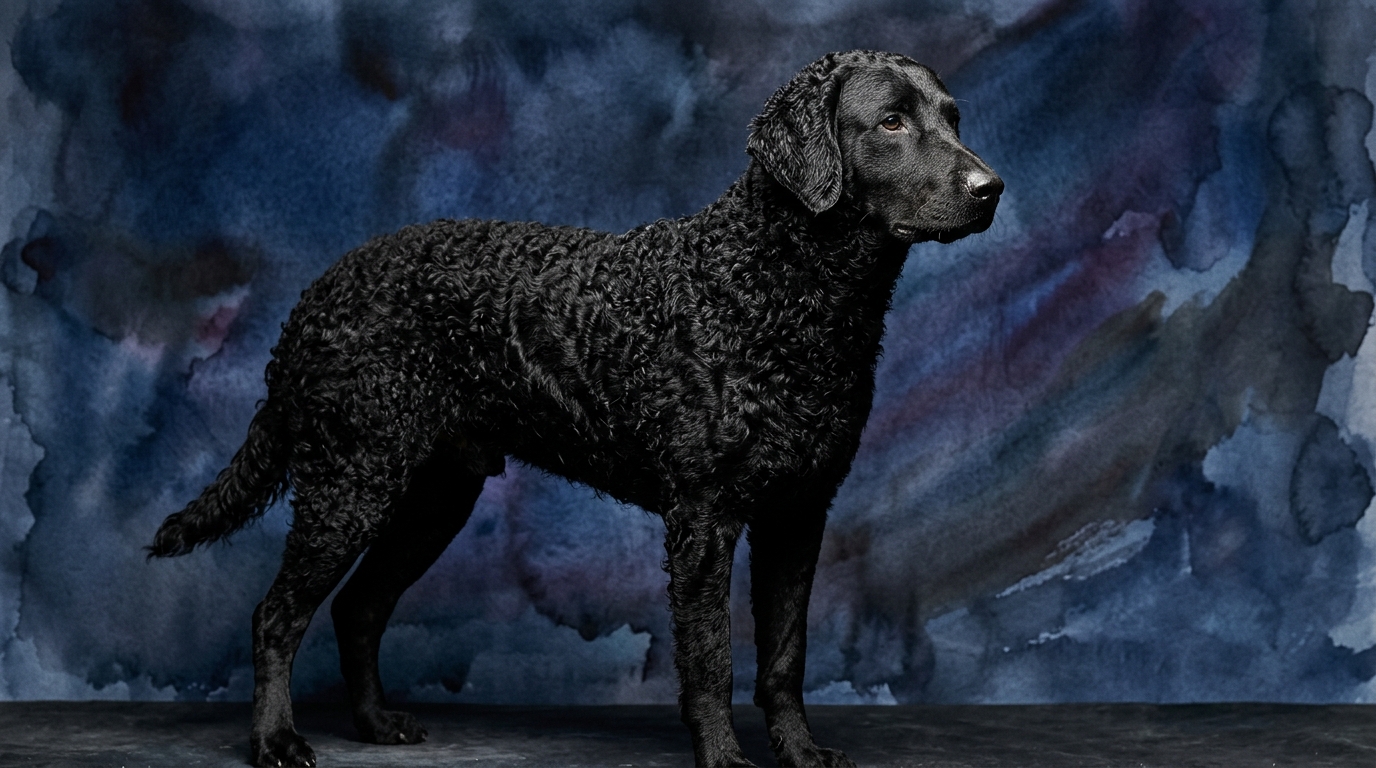
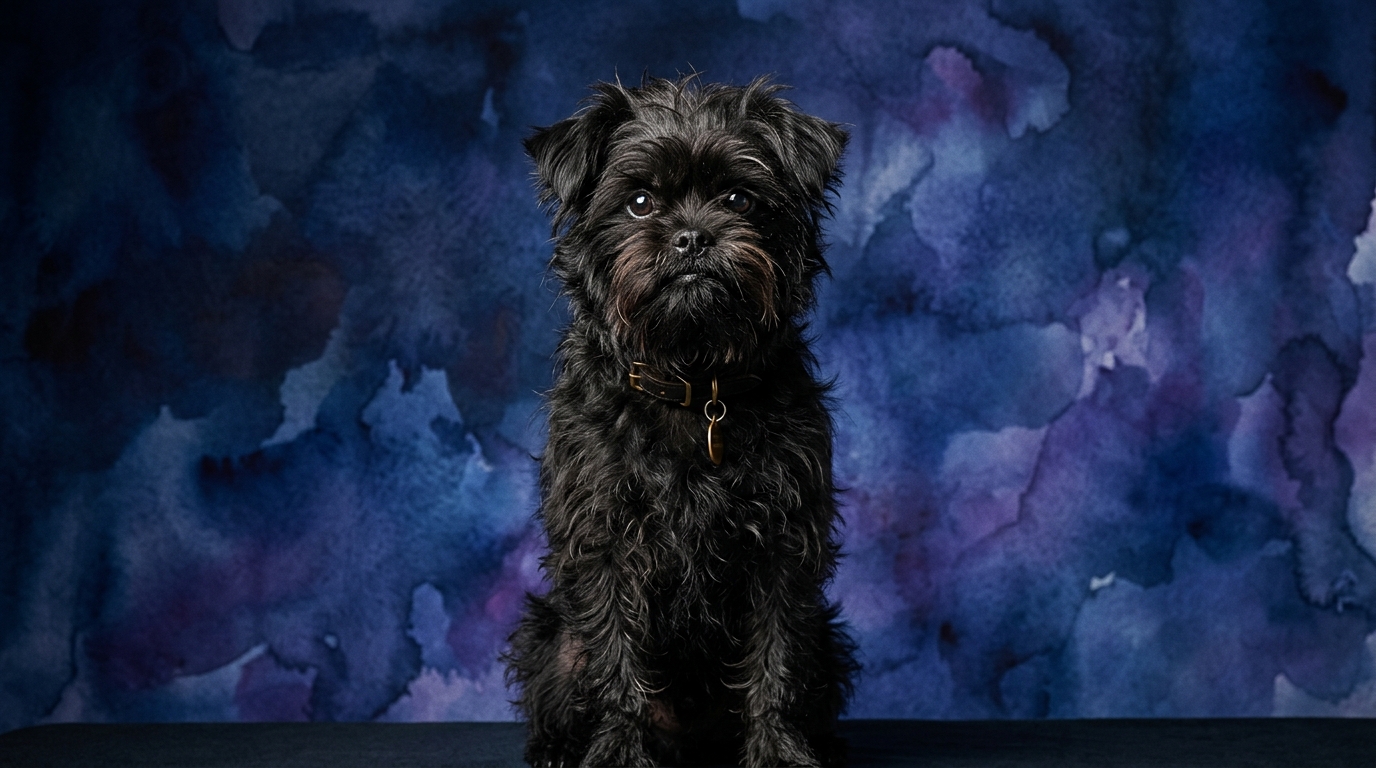
Side-by-side IQ profile
**Curly-Coated Retriever:** This Sporting group dog, ranked #41 by Coren, presents a balanced yet distinctly practical cognitive makeup. Their Problem Solving (3/5) indicates an ability to navigate practical challenges, often seeking efficient solutions in real-world scenarios, particularly those related to their retrieving heritage. Training Speed (3/5) suggests they grasp new commands at a moderate pace, benefiting from consistent, positive reinforcement. Social Intelligence (3/5) means they connect well with their human families and can read social cues, forming strong bonds, though they might be reserved with strangers. Their Instinctive Drive (3/5) is primarily geared towards purposeful activity like retrieving, marking, and working alongside a handler. A standout trait is their Memory (4/5), allowing them to retain complex sequences of commands, remember locations of hidden items, and recall past experiences with remarkable clarity, aiding in consistent performance over time.
**Affenpinscher:** This charming Toy breed, while not Coren-ranked, possesses a unique cognitive profile tailored to companionship and vigilance. Their Problem Solving (3/5) often manifests as ingenious methods for navigating a home, outsmarting a baby gate, or creatively seeking attention, indicating a cleverness tailored to their domestic environment. Training Speed (3/5) is similar to the Curly, but their independent spirit means successful training often hinges on making the process engaging and rewarding for them, as repetitive drills might be met with disinterest. Social Intelligence (3/5) allows them to possess keen social awareness within their family unit, acting as attentive companions who understand household dynamics and communicate their needs effectively. Their Instinctive Drive (3/5) leans towards companionship, vigilance, and playful interaction, often exhibiting a terrier-like curiosity and a drive to 'hunt' small toys or keep watch over their domain. Memory (3/5) is solid for routines, favored people, and past interactions, allowing them to recall learned behaviors and associate specific cues with actions, though perhaps not with the same depth for complex, multi-step tasks as the Curly.
Where Curly-Coated Retriever wins cognitively
The Curly-Coated Retriever distinguishes itself with its exceptional memory, scoring a 4/5 compared to the Affenpinscher's 3/5. This enhanced capacity for recall makes them particularly adept at tasks requiring sequential learning and long-term retention, such as advanced obedience routines, complex field work involving multiple marks, or remembering specific locations of retrieved items over extended periods. Their Coren ranking at #41 further underscores a cognitive aptitude geared towards understanding and executing human commands efficiently, a testament to their trainable intelligence within a working context. While both breeds share a 3/5 in problem-solving, the Curly's larger physical presence and Sporting group heritage often mean their problem-solving is applied to navigating challenging outdoor terrains or devising strategies to successfully retrieve, requiring a different scale of cognitive application than a Toy breed. This practical, task-oriented application of their problem-solving and memory gives them an edge in structured, goal-driven activities.
Where Affenpinscher wins cognitively
While the Affenpinscher's individual scores might not surpass the Curly's, their cognitive profile shines in specific contexts, particularly within a companion setting. Their problem-solving (3/5) often manifests as ingenious methods for navigating a home, outsmarting a baby gate, or creatively seeking attention, indicating a cleverness tailored to their domestic environment. This isn't about retrieving ducks but about optimizing their personal comfort and social interaction within their human family. Their social intelligence (3/5), combined with their compact size, allows them to integrate seamlessly into diverse household dynamics, often becoming highly attuned to the emotional states and routines of their owners. They may not be Coren-ranked, but this doesn't diminish their cognitive strengths; instead, it highlights that their intelligence is specialized for companionship, vigilance, and engaging social interaction rather than complex obedience. Their instinctive drive (3/5) to be watchful and playful translates into a quick perception of changes in their immediate surroundings, making them surprisingly alert and adaptable housemates.
Which is easier to train and why
Both the Curly-Coated Retriever and the Affenpinscher receive a 3/5 for training speed, suggesting they learn at a moderate pace. However, the approach to training and the consistency of results can differ significantly due to their other cognitive traits and breed purposes. The Curly-Coated Retriever's superior memory (4/5) gives them an advantage in retaining a broad repertoire of commands and complex sequences. Their strong instinctive drive for working and retrieving means they are often motivated by task completion and pleasing their handler, making them generally more compliant and focused during training sessions. They thrive on structured learning and consistent routines. In contrast, the Affenpinscher, while capable of learning, can exhibit a more independent and sometimes stubborn streak, typical of many Toy breeds. Their training success often relies on high-value rewards and making sessions fun and varied to maintain their interest. Their problem-solving, while clever, can sometimes be applied to finding ways to avoid an undesirable command rather than executing it. Therefore, while both learn at a similar speed, the Curly-Coated Retriever is generally perceived as easier to train for obedience and complex tasks due to their higher memory capacity and inherent desire to work cooperatively, leading to more predictable and consistent responses. The Affenpinscher requires a trainer who understands their unique motivations and can make learning feel like a game.
Which suits active owners vs relaxed owners
The Curly-Coated Retriever is an ideal match for active owners who seek a capable, engaging canine partner for outdoor pursuits. Their Sporting group background and pronounced instinctive drive (3/5) for activity mean they thrive with regular exercise, whether it's long hikes, swimming, retrieving games, or participation in dog sports like agility or dock diving. Owners who can provide consistent mental stimulation through training and physical exertion will see their Curly flourish. Their memory (4/5) and problem-solving (3/5) make them well-suited to learning complex tasks and navigating varied environments alongside their human companions. Conversely, the Affenpinscher is better suited for owners with a more relaxed lifestyle, or those living in smaller spaces, who can still dedicate time to interactive play and companionship. While they enjoy walks and playtime, their exercise needs are considerably lower than a Curly's. Their social intelligence (3/5) means they are content to be close companions, often happy to observe household activities from a lap or a vantage point. They still require mental engagement, perhaps through puzzle toys or short, fun training sessions, but their overall energy output is geared more towards bursts of playful activity and attentive companionship rather than sustained physical exertion.
The Verdict
Choose the Curly-Coated Retriever if you are an active individual or family seeking a highly trainable, robust companion with exceptional memory for demanding outdoor activities and structured learning.
Opt for the Affenpinscher if you prefer a clever, attentive, and spirited companion for a more relaxed, indoor-centric lifestyle, appreciating their unique charm and adaptable social intelligence.
🧠 Find Your Pet's IQ Score
Our Pet IQ Lab assessment covers 25+ tests across 5 cognitive dimensions — personalized to your breed.
Take the Full IQ Test →Frequently Asked Questions
Do Curly-Coated Retrievers require a lot of mental stimulation?
Yes, their strong memory and problem-solving abilities mean Curly-Coated Retrievers benefit greatly from consistent mental challenges. This can include advanced training, puzzle toys, and engaging in dog sports to keep their minds sharp and prevent boredom.
Are Affenpinschers difficult to house train due to their small size?
Affenpinschers can be successfully house trained, though their independent nature and smaller bladders may require more frequent outings and a consistent routine. Patience and positive reinforcement are key to overcoming any initial challenges.
How do their social intelligence scores translate into family life?
Both breeds score 3/5 in social intelligence, meaning they are generally good at understanding family dynamics. The Curly-Coated Retriever often forms strong, dedicated bonds with its primary family, while the Affenpinscher's social awareness allows them to be charming, attentive companions who thrive on close interaction within their human pack.