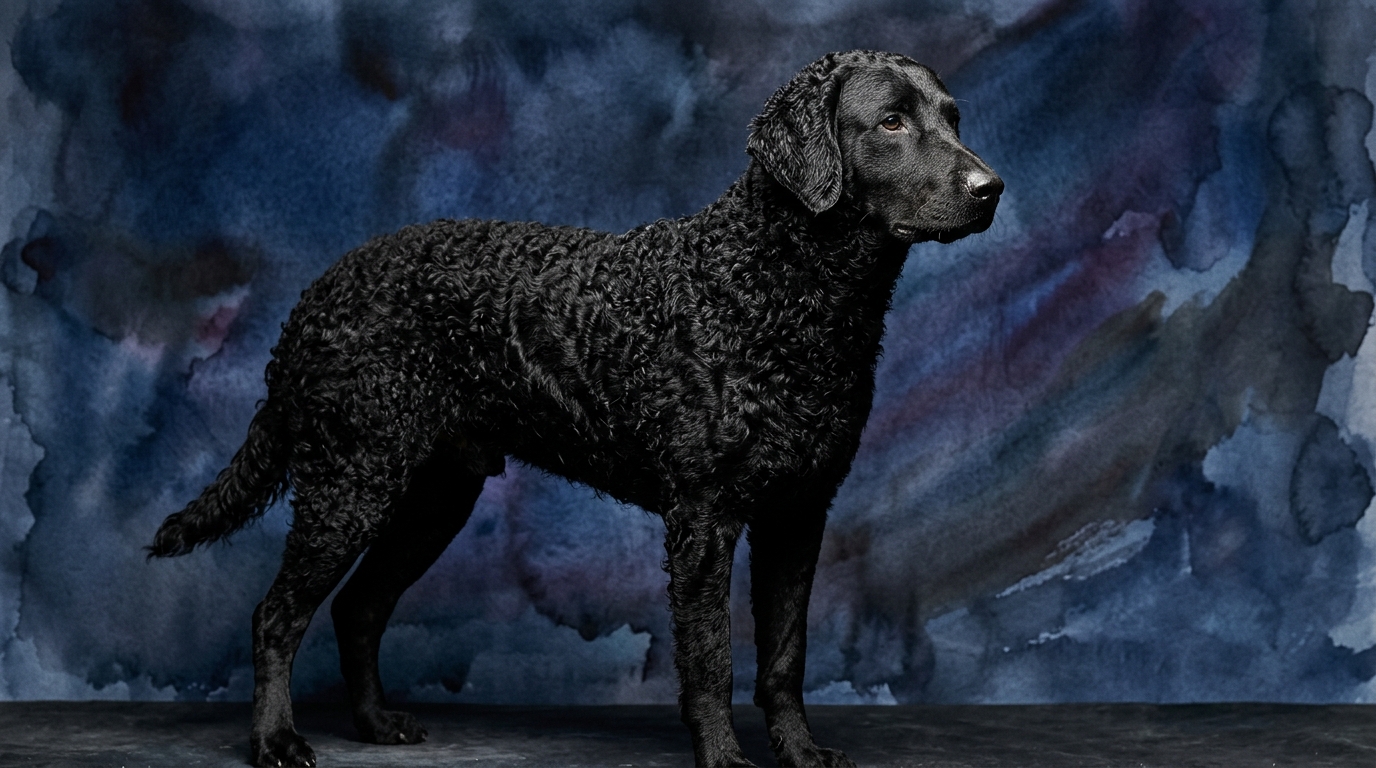
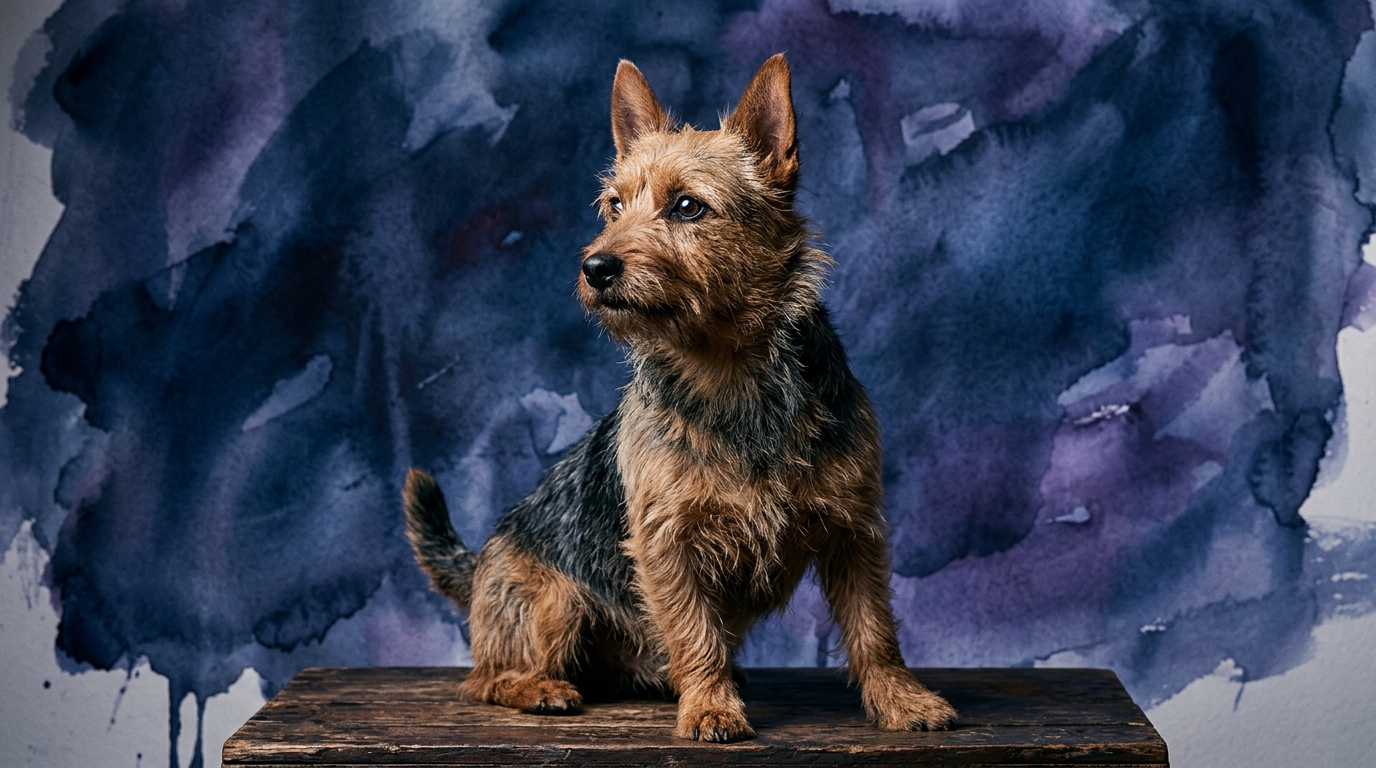
Side-by-Side IQ Profile: Curly-Coated Retriever vs. Australian Terrier
The Cosmic Pet Pet IQ Lab provides a detailed breakdown of canine cognitive abilities across five key dimensions. For the Curly-Coated Retriever, a breed noted for its Coren rank of #41, its profile is as follows: Problem Solving 3/5, Training Speed 3/5, Social Intelligence 3/5, Instinctive Drive 3/5, and Memory 4/5. This suggests a dog with solid foundational cognitive skills, particularly excelling in retention.
In contrast, the Australian Terrier, while not Coren-ranked, presents a slightly different cognitive landscape: Problem Solving 3/5, Training Speed 3/5, Social Intelligence 3/5, Instinctive Drive 3/5, and Memory 3/5. This breed demonstrates an equivalent capacity in most areas, with a notable difference appearing in its memory score. Both breeds show comparable abilities in adapting to new situations, learning pace, and understanding social cues, yet their overall cognitive application varies due to their historical roles.
Where the Curly-Coated Retriever Wins Cognitively
The Curly-Coated Retriever's most pronounced cognitive advantage lies in its exceptional memory, rated at 4/5, surpassing the Australian Terrier's 3/5. This robust recall ability means they are more likely to retain complex sequences of commands, remember specific locations of retrieved items, or recall intricate training protocols over long durations without significant refresher sessions. For tasks requiring precision and consistent execution based on prior learning, such as advanced obedience trials, intricate field work involving multiple retrieves, or learning long agility courses, their superior memory provides a clear edge. This strong memory also contributes significantly to their reliability in established routines and their capacity for building upon previously acquired knowledge, making them highly dependable partners for owners who invest in structured training.
Where the Australian Terrier Wins Cognitively
While the Australian Terrier’s individual IQ scores largely mirror those of the Curly-Coated Retriever, its cognitive strengths manifest uniquely through its terrier spirit, particularly in contexts demanding independent action and persistent focus. Their problem-solving (3/5) and instinctive drive (3/5) combine to create a dog that excels at tasks requiring self-directed initiative and unwavering determination, even without direct human instruction. For instance, in situations demanding autonomous exploration or the sustained pursuit of a goal, such as tracking a scent or navigating a complex environment to “flush out” a perceived target, their independent drive and problem-solving merge into a powerful, self-starting cognitive asset that might surpass the retriever's more collaborative approach. This allows them to “win” in scenarios where a dog needs to think on its feet and act without constant guidance, leveraging their resourcefulness to overcome obstacles.
Which is Easier to Train and Why
Despite both breeds scoring 3/5 for training speed, the Curly-Coated Retriever generally presents as an easier dog to train for traditional obedience and cooperative tasks, primarily due to its breed purpose and higher memory score. As a Sporting dog, the Curly-Coated Retriever was bred to work in close partnership with humans, demonstrating a natural inclination to please and a focus on retrieving. Their stronger memory (4/5) means that once a command is learned, it is more deeply ingrained, requiring less frequent reinforcement to maintain proficiency. They are typically more attuned to human direction and less prone to independent diversions during training sessions, making the process smoother for an owner seeking a reliable working companion who thrives on collaboration.
The Australian Terrier, while equally capable of learning new behaviors at a similar pace, brings its strong terrier instincts and independent nature to the training arena. Their historical role involved working autonomously to hunt vermin, which cultivated a self-sufficient mindset. This means that while they grasp concepts quickly, they might also decide to prioritize an interesting scent or a perceived “prey” over a human command, especially in stimulating environments. Their problem-solving (3/5) can sometimes be applied to figuring out how to get their own way, requiring more creative and consistent motivation to keep them engaged and compliant. Therefore, while equally bright, training an Australian Terrier often demands more patience, ingenuity, and a firm, consistent hand to channel their independent spirit effectively.
Suitability for Active vs. Relaxed Owners
For active owners seeking a canine partner for outdoor adventures and structured activities, the Curly-Coated Retriever is often a more natural fit. Their instinctive drive (3/5) is geared towards retrieving, swimming, and sustained physical exertion, making them excellent companions for hiking, running, or participating in dog sports like agility, dock diving, or obedience. Their higher memory score also means they can excel at complex routines and enjoy learning new skills that challenge both their body and mind. They thrive on having a “job” and require consistent mental and physical engagement to prevent boredom and channel their energy constructively.
The Australian Terrier, while possessing an equivalent instinctive drive (3/5), channels it differently, often towards bursts of energetic exploration and the pursuit of small prey. This makes them suitable for active owners who enjoy shorter, more intense play sessions, brisk walks, or engaging in scent work or earthdog trials where their natural instincts can shine. They are energetic and require daily exercise to remain content, but their needs might be satisfied with vigorous play in a secure yard and regular leash walks rather than extensive, long-duration endurance activities. For more relaxed owners, the Australian Terrier can adapt if its exercise needs are met through focused, shorter bursts of activity, but neglecting their mental and physical stimulation can lead to boredom-driven behaviors like digging or excessive barking. The Curly-Coated Retriever, with its sustained energy and need for purpose, would likely overwhelm a truly sedentary owner.
The Verdict
Choose the Curly-Coated Retriever if you seek a steadfast, cooperative partner for sustained outdoor activities and enjoy the process of teaching complex routines, valuing their reliable memory and eagerness to work alongside you.
Opt for the Australian Terrier if you appreciate a spirited, independent companion for engaging, shorter bursts of activity and thrive on channeling a tenacious, problem-solving mind with consistent, creative training.
🧠 Find Your Pet's IQ Score
Our Pet IQ Lab assessment covers 25+ tests across 5 cognitive dimensions — personalized to your breed.
Take the Full IQ Test →Frequently Asked Questions
Is the Curly-Coated Retriever truly easier to train than the Australian Terrier?
While both breeds score 3/5 for training speed, the Curly-Coated Retriever's stronger memory and cooperative nature, stemming from its Sporting group heritage, often make it more amenable to traditional obedience training. The Australian Terrier, with its independent terrier spirit, might require more engaging and consistent methods to maintain focus and compliance.
Which breed is better for a family with children?
Both breeds can integrate well into families, scoring 3/5 in social intelligence. The Curly-Coated Retriever tends to be a bit more reserved and gentle, while the Australian Terrier is often more playful and boisterous. Supervision is always key, but the Curly-Coated Retriever's calm demeanor might be a slightly better match for very young children.
Do these breeds require a lot of mental stimulation?
Yes, both breeds benefit significantly from mental stimulation. The Curly-Coated Retriever thrives on learning new commands and solving retrieval puzzles, while the Australian Terrier enjoys activities that engage its problem-solving skills and instinctive drive, such as scent games or exploring new environments. Consistent mental engagement is crucial for their well-being.