Side-by-Side IQ Profile: Unpacking Cognitive Dimensions
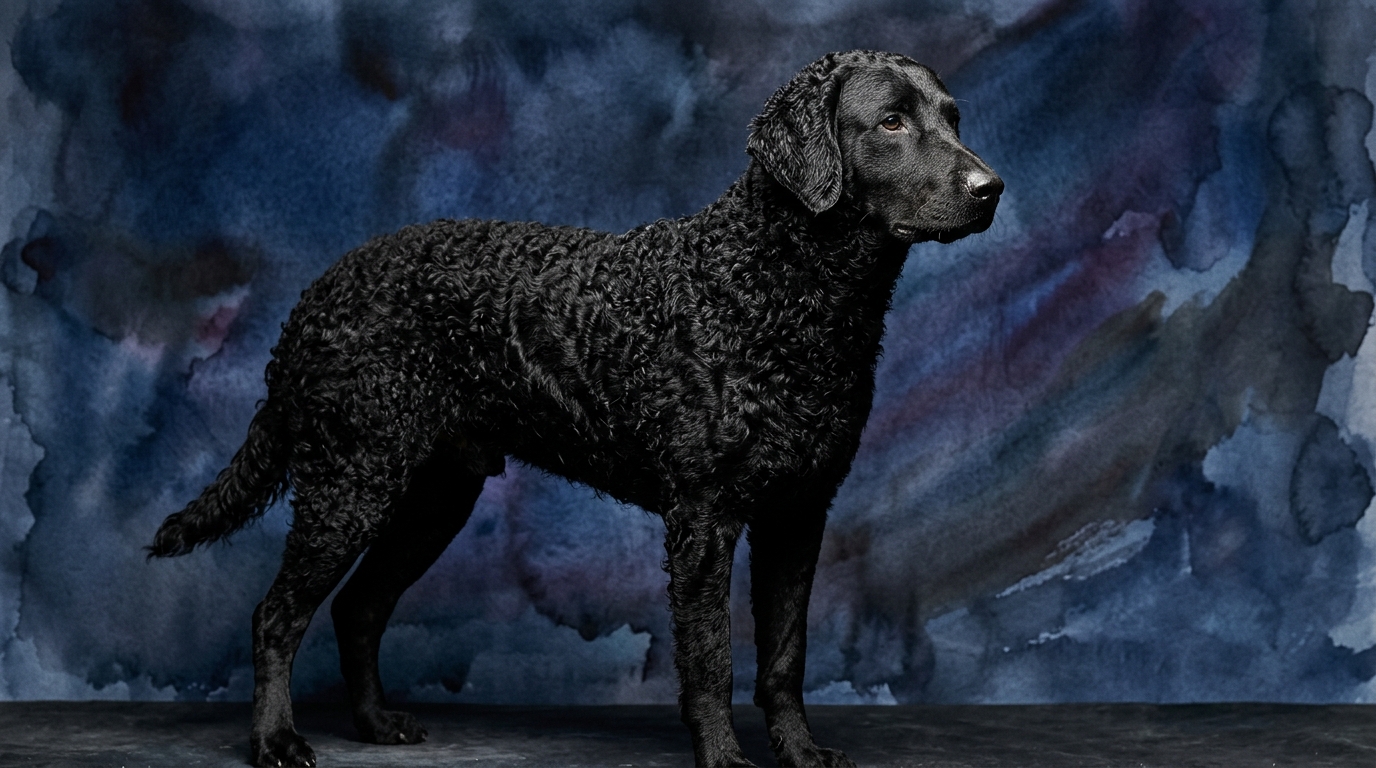
The Cosmic Pet Pet IQ Lab employs a five-dimensional framework to assess canine intelligence, offering a granular view beyond a single numerical score. For the Curly-Coated Retriever, a Sporting group dog, its profile includes Problem Solving 3/5, Training Speed 3/5, Social Intelligence 3/5, Instinctive Drive 3/5, and notably, Memory 4/5. This breed also holds a respectable Coren rank of #41, indicating its adaptive intelligence and obedience potential.
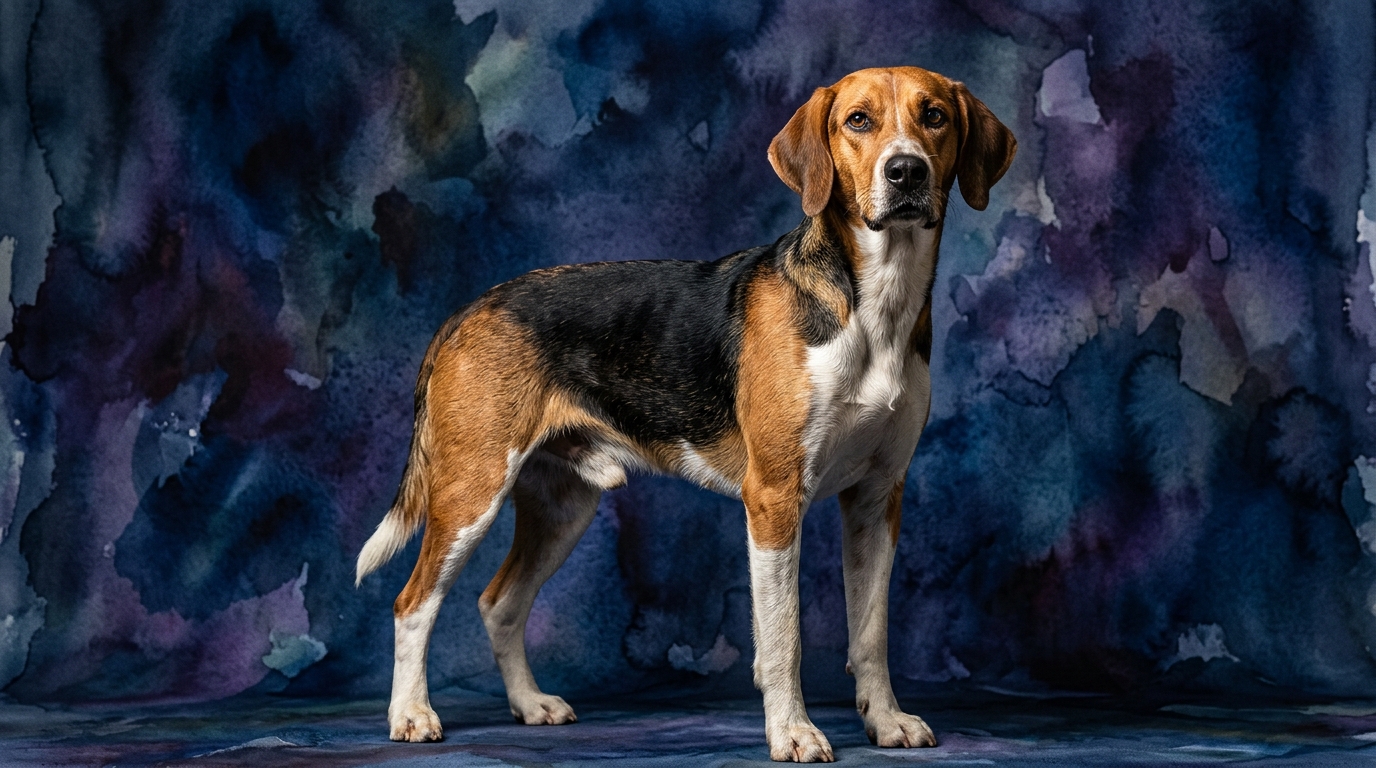
In contrast, the English Foxhound, a member of the Hound group, presents a profile of Problem Solving 3/5, Training Speed 3/5, Social Intelligence 3/5, Instinctive Drive 3/5, and Memory 3/5. Unlike the Curly-Coated Retriever, the English Foxhound is not listed in Coren's ranking, which often suggests a more specialized cognitive architecture less geared towards general obedience or broad adaptive tasks, instead focusing on the demands of its primary function.
Where the Curly-Coated Retriever Excels Cognitively
The Curly-Coated Retriever’s primary cognitive advantage lies in its superior Memory score of 4/5, surpassing the English Foxhound’s 3/5. This enhanced memory means a Curly-Coated Retriever is likely to retain learned commands, complex sequences, and past experiences more effectively and for longer durations. For instance, a Curly might grasp multi-step retrieve tasks or intricate agility courses with fewer repetitions and recall them readily even after a break, showcasing a stronger cognitive retention capacity.
Furthermore, its Coren ranking of #41 is a significant indicator of its ability to understand and execute human commands, learn new tasks quickly, and adapt to novel situations. This suggests a broader capacity for generalized learning and a willingness to engage in cooperative problem-solving with humans, making it more versatile in various training scenarios beyond its instinctive drives. Its balanced scores across other dimensions, coupled with strong memory, allow for a more consistent and predictable learning curve in diverse environments.
Where the English Foxhound Shines Cognitively
While the English Foxhound’s individual IQ scores may not numerically exceed the Curly-Coated Retriever’s, its cognitive strengths are rooted in specialized application and unparalleled endurance within its specific domain. Its Instinctive Drive of 3/5, though numerically similar to the Curly’s, manifests as an exceptionally focused and sustained drive for scent-following and pursuit. This isn't merely about physical stamina; it's a cognitive strength involving complex scent discrimination, long-term tracking, and an unwavering commitment to a task, often over vast distances and varied terrains.
The Foxhound's cognitive prowess is in its ability to process intricate scent information, ignore distractions unrelated to its quarry, and maintain a singular focus for extended periods. This specialized cognitive endurance and sensory processing are crucial for its historical role, demanding a unique mental fortitude that a general obedience ranking might not capture. Its social intelligence, also 3/5, is often geared towards pack cooperation, indicating an ability to work harmoniously within a group during a hunt, a different facet of social cognition than one-on-one human interaction.
Training Dynamics: Which Breed is Easier?
Considering their cognitive profiles, the Curly-Coated Retriever generally presents as the easier breed to train. Both breeds share a Training Speed score of 3/5, implying they learn at a similar pace. However, the Curly’s superior Memory (4/5) means that once a concept is learned, it is retained more reliably. This translates to less need for constant repetition and a greater capacity for building upon previously acquired skills. Their Coren ranking further supports their amenability to formal training and eagerness to please, characteristic of many Sporting group dogs who enjoy working alongside their handlers.
The English Foxhound, with its Memory score of 3/5, might require more consistent reinforcement to solidify lessons. Moreover, its strong, independently-driven instinctive drive, geared towards following a scent, can be a significant challenge in traditional obedience. A Foxhound may become singularly focused on an interesting smell, effectively 'tuning out' commands, a behavioral trait deeply ingrained from generations of hunting. Training a Foxhound often demands immense patience, creativity, and a deep understanding of positive reinforcement to channel its natural instincts rather than suppress them, which can be a more arduous process for the average owner.
Lifestyle Match: Active vs. Relaxed Owners
Both the Curly-Coated Retriever and the English Foxhound possess an Instinctive Drive of 3/5, indicating a need for substantial physical and mental engagement, making neither truly suited for a purely relaxed, sedentary lifestyle. The Curly-Coated Retriever, originating from the Sporting group, thrives with active owners who enjoy diverse activities such as retrieving games, swimming, hiking, or dog sports like agility and obedience. They are adaptable and generally enjoy being part of family activities, requiring both physical outlets and mental stimulation to prevent boredom, but are equally content with downtime once their needs are met.
The English Foxhound, however, demands a more specific and intense form of activity. Its endurance and drive for scent work mean it requires extensive daily exercise, often involving long runs or opportunities to follow scent trails in secure, expansive areas. Owners must be prepared for a dog whose historical purpose dictates a relentless, sustained energy output. A Foxhound is not typically satisfied with short walks around the block; it needs to run, explore with its nose, and engage its deep-seated hunting instincts. While they can be affectionate indoors, their mental and physical well-being hinges on consistent, high-energy outdoor engagement, making them less suitable for owners seeking a more laid-back companion.
The Verdict: Choosing Your Canine Companion
When making a choice between these two distinct breeds, understanding their cognitive strengths and lifestyle needs is paramount. The Curly-Coated Retriever, with its superior memory and higher Coren ranking, offers a more versatile and generally cooperative companion for owners who appreciate a dog that learns readily and adapts well to various family activities and dog sports. Its balanced cognitive profile makes it an excellent choice for those seeking a trainable and engaged partner who enjoys diverse forms of physical and mental stimulation.
The English Foxhound, while sharing similar baseline IQ scores, is a specialist whose cognitive power is channeled into exceptional endurance and scent-driven focus. This breed is ideal for highly active owners who are prepared to meet its substantial need for long, sustained exercise, particularly those who enjoy activities like running, hiking, or scent work. It requires an owner who understands and respects its independent, driven nature, providing ample opportunity for it to fulfill its deeply ingrained instincts.
The Verdict
Choose the Curly-Coated Retriever if you seek a versatile, trainable companion with excellent memory, suitable for diverse family activities and dog sports, and a cooperative spirit in training.
Opt for the English Foxhound if you are a highly active individual or family prepared for a dog with unmatched endurance and a singular focus on scent, thriving in a lifestyle that provides extensive, structured outdoor exercise and opportunities for its instincts.
🧠 Find Your Pet's IQ Score
Our Pet IQ Lab assessment covers 25+ tests across 5 cognitive dimensions — personalized to your breed.
Take the Full IQ Test →Frequently Asked Questions
Are English Foxhounds difficult to train?
English Foxhounds are not untrainable, but their strong, independent drive for scent work and lower memory score compared to some breeds can make traditional obedience more challenging. They require consistent, patient training and owners who understand how to channel their natural instincts positively.
How much exercise does a Curly-Coated Retriever need daily?
A Curly-Coated Retriever needs a good amount of daily exercise, typically 60-90 minutes of vigorous activity like running, swimming, or retrieving games. They also benefit from mental stimulation through training and interactive play to keep their minds engaged.
What is the main cognitive difference between these two breeds?
The primary cognitive difference lies in memory and the application of their instinctive drive. The Curly-Coated Retriever has superior memory (4/5) and a broader adaptive intelligence, reflected in its Coren ranking, making it more amenable to diverse training. The English Foxhound's cognitive strength is its specialized, relentless focus and endurance for scent-tracking, a highly specific form of intelligence.