Side-by-Side Cognitive Profiles: Decoding Their Minds
At first glance, the cognitive profiles of the Curly-Coated Retriever and the Finnish Spitz appear remarkably similar across many dimensions, yet a closer inspection reveals subtle but significant distinctions rooted in their breed purposes. Both breeds score 3/5 in Problem Solving, indicating an aptitude for navigating moderately complex scenarios, such as figuring out how to manipulate a toy or overcome simple environmental obstacles, without exhibiting exceptional ingenuity or profound mental leaps. This suggests they possess practical intelligence, capable of learning routines and adapting to new situations.
Similarly, both the Curly-Coated Retriever and the Finnish Spitz register a 3/5 in Training Speed. This score implies they are receptive to learning new commands and behaviors at a consistent, moderate pace, not exceptionally quick to grasp concepts in a single session, nor particularly slow to catch on. Owners can expect steady progress with patient, consistent methods. Their Social Intelligence also aligns at 3/5, suggesting they are generally aware of human social cues and capable of forming bonds, but might not possess the profound empathy or intricate social navigation seen in breeds with higher scores. They are companionable but not overly effusive.
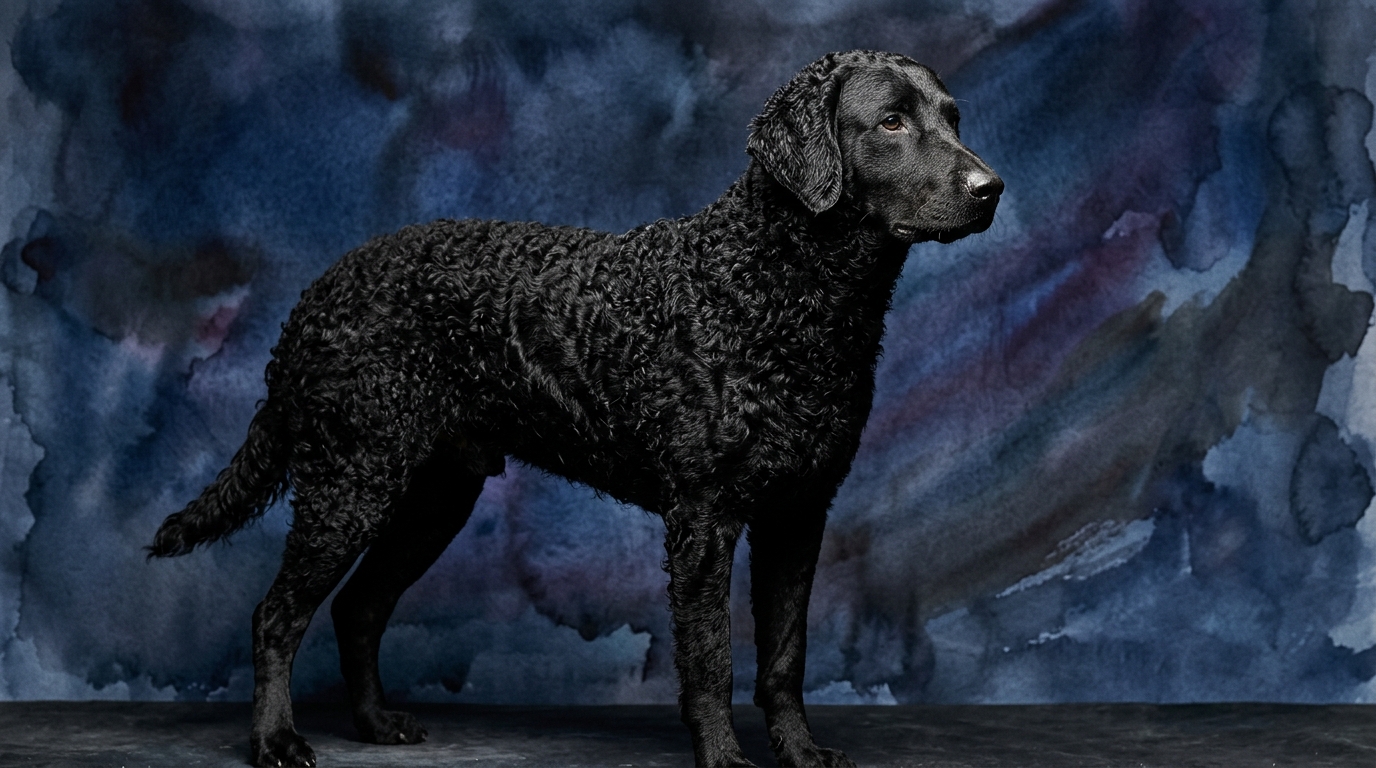
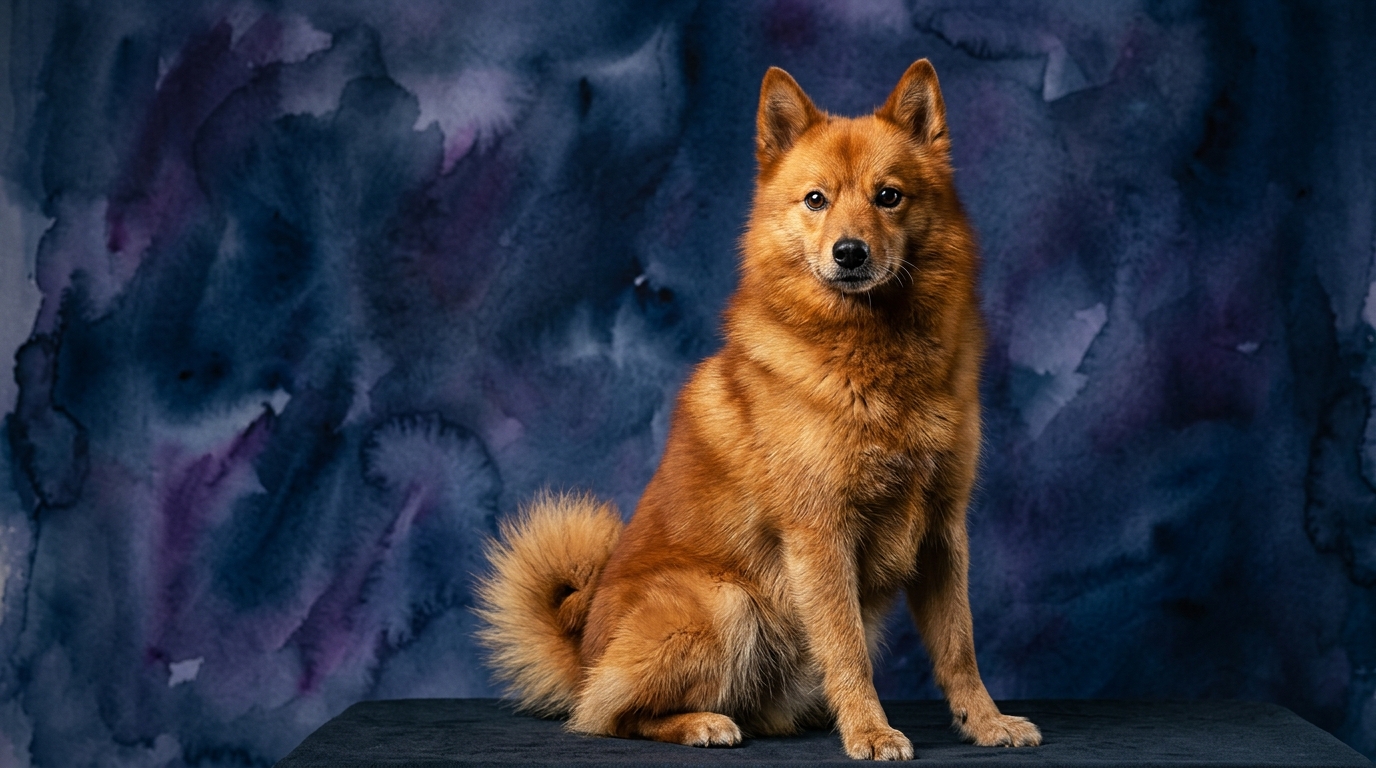
Instinctive Drive is another shared 3/5 score, meaning both breeds possess a moderate level of innate, hardwired behaviors. For the Curly-Coated Retriever, this drive often manifests as a desire to retrieve and work cooperatively, stemming from its sporting heritage. For the Finnish Spitz, it translates into a strong inclination for independent hunting and vocalization, a legacy of its bark-pointing role. The most notable cognitive divergence lies in Memory: the Curly-Coated Retriever scores a robust 4/5, indicating a strong capacity for retaining learned commands and experiences over time, potentially requiring fewer repetitions for mastery and exhibiting reliable recall. In contrast, the Finnish Spitz scores 3/5 in memory, meaning it will learn and remember, but might benefit from more frequent reinforcement to solidify lessons, and its recall may not be as consistently reliable over long periods without practice.
Where the Curly-Coated Retriever Shines Cognitively
The Curly-Coated Retriever's standout cognitive strength lies demonstrably in its superior memory, scoring 4/5 compared to the Finnish Spitz's 3/5. This translates directly into a more robust and reliable retention of training cues and past experiences. A Curly-Coated Retriever is likely to solidify commands with fewer repetitions and recall them more consistently, even after periods of inactivity. This enhanced memory is a significant asset for complex obedience work, competitive dog sports like agility or retrieving trials, and even for maintaining household manners without constant reminders. Their ability to remember intricate sequences or a large vocabulary of commands places them at an advantage for owners seeking a dog capable of advanced learning.
Furthermore, while both breeds share a 3/5 for instinctive drive, the Curly-Coated Retriever’s drive is specifically channeled towards cooperative work, a hallmark of the Sporting group. This means their problem-solving (also 3/5) and social intelligence (3/5) are often expressed in partnership with a human handler. They are wired to understand and respond to human direction in tasks like retrieving, making them adept at interpreting complex cues and executing multi-step instructions that rely on memory and cooperation. This cognitive inclination for working in tandem with a person gives them a distinct edge in environments where a strong, remembered partnership is paramount.
Where the Finnish Spitz Presents Unique Cognitive Strengths
While the Finnish Spitz shares similar scores across many cognitive dimensions, its unique strengths are deeply intertwined with its history as a bark-pointing hunting dog, necessitating a particular kind of independent intelligence. Its 3/5 instinctive drive, coupled with its problem-solving (also 3/5), manifests as a remarkable ability to work autonomously and communicate effectively through its distinct vocalizations. Unlike the cooperative retriever, the Finnish Spitz's problem-solving is often self-directed in its original role – locating game and alerting the hunter through persistent barking, a task requiring initiative and sustained focus without direct human commands. This specialized problem-solving, though scoring the same, is applied in a very different context.
The Finnish Spitz's cognitive profile, particularly its moderate social intelligence (3/5) and its less outstanding memory (3/5), contributes to a distinct personality that some owners find appealing. It's a breed that thinks for itself and isn't overly reliant on constant human direction, making it less prone to separation anxiety in some cases, and more self-sufficient in its environment. Its vocal communication is a cognitive strength in itself; the breed is known for its wide range of barks, yodels, and howls, each conveying specific information. While this can be a training challenge for some, it's a profound form of communication for others, showcasing a complex vocal intelligence that is integral to its identity and purpose.
Training Dynamics: Which is Easier and Why?
The Curly-Coated Retriever generally presents as the more straightforward breed to train due to its 4/5 memory score, which facilitates quicker and more lasting retention of commands. Their Sporting group background has imbued them with a stronger inclination towards cooperation and a desire to please their handler, aligning their 3/5 social intelligence and instinctive drive towards partnership. This means once a Curly has learned a command, it is more likely to remember and reliably execute it, requiring fewer repetitions and less consistent reinforcement over time. Their problem-solving (3/5) is often applied in the context of figuring out how to achieve a desired outcome that pleases their human, making them responsive to reward-based training.
The Finnish Spitz, with its 3/5 memory and pronounced independence, may require a more patient, creative, and engaging training approach. Their 3/5 instinctive drive is geared towards autonomous hunting and vocal alerting, not necessarily towards eager human cooperation. This independence, while valuable in its original role, can translate into a perception of stubbornness during training. They might understand a command but choose not to comply if they don't see the immediate benefit or if something more interesting captures their attention. Training a Finnish Spitz often involves finding ways to motivate them by appealing to their natural instincts, such as using scent work or allowing them to 'find' the correct answer, rather than relying solely on repetition. Their vocal nature also requires specific training to manage, as their natural communication style involves a lot of barking, which needs to be channeled appropriately.
Lifestyle Suitability: Active vs. Relaxed Owners
For active owners seeking a canine partner for adventures and structured activities, the Curly-Coated Retriever is often the more fitting choice. Their 3/5 instinctive drive, coupled with their superior 4/5 memory and cooperative nature, makes them excellent companions for hiking, swimming, and various dog sports. They thrive on having a 'job' and enjoy engaging in activities that involve learning new skills and working in tandem with their human. Their robust memory ensures that lessons learned during training or sports translate into consistent performance, making them reliable partners for competitive or demanding pursuits. Owners who appreciate a dog that is eager to please and remembers its training will find the Curly-Coated Retriever a rewarding match.
Relaxed owners, or those who appreciate a more independent and unique canine personality, might find the Finnish Spitz a delightful companion, provided they understand its specific needs. While not a couch potato, the Finnish Spitz's activity needs are often more self-directed; they enjoy exploring and engaging their senses, but may not demand the same level of structured, cooperative exercise as a retriever. Their independence and vocal nature mean they are best suited for owners who are comfortable with a dog that thinks for itself and expresses itself vocally. Owners who appreciate a companion with a strong personality, a unique communication style, and who are prepared to engage in positive, patient training to manage their instincts, will find the Finnish Spitz a charming and devoted member of the family.
The Verdict
Choose the Curly-Coated Retriever if you desire a highly trainable, cooperative partner for active pursuits, valuing its superior memory and eager-to-please nature for consistent performance in sports or complex tasks.
Opt for the Finnish Spitz if you appreciate an independent, vocal, and self-sufficient companion, understanding its unique cognitive strengths lie in autonomous problem-solving and distinct communication, requiring patient, creative engagement rather than strict obedience.
🧠 Find Your Pet's IQ Score
Our Pet IQ Lab assessment covers 25+ tests across 5 cognitive dimensions — personalized to your breed.
Take the Full IQ Test →Frequently Asked Questions
Is the Curly-Coated Retriever truly 'smarter' than the Finnish Spitz?
Based on the provided IQ dimensions, the Curly-Coated Retriever's superior memory (4/5 vs. 3/5) gives it an edge in retaining learned information and commands, which often translates to perceived 'smartness' in training contexts. While other scores are similar, this memory difference makes a practical impact on their learning curve and reliability.
Do Finnish Spitz dogs bark excessively due to their cognitive profile?
The Finnish Spitz's 3/5 instinctive drive and specialized problem-solving are deeply tied to its original role as a bark-pointing hunter, meaning vocalization is a core part of its cognitive expression. While not necessarily 'excessive' for its purpose, this trait requires consistent training and management to ensure their communication is appropriate for a companion setting.
Which breed is better for first-time dog owners interested in training?
For first-time owners keen on training, the Curly-Coated Retriever typically offers a more straightforward experience due to its better memory and cooperative disposition. The Finnish Spitz, with its independence and vocal nature, can present more challenges for novice trainers who might struggle with its distinct motivations and communication style.