Side-by-Side Cognitive Profile
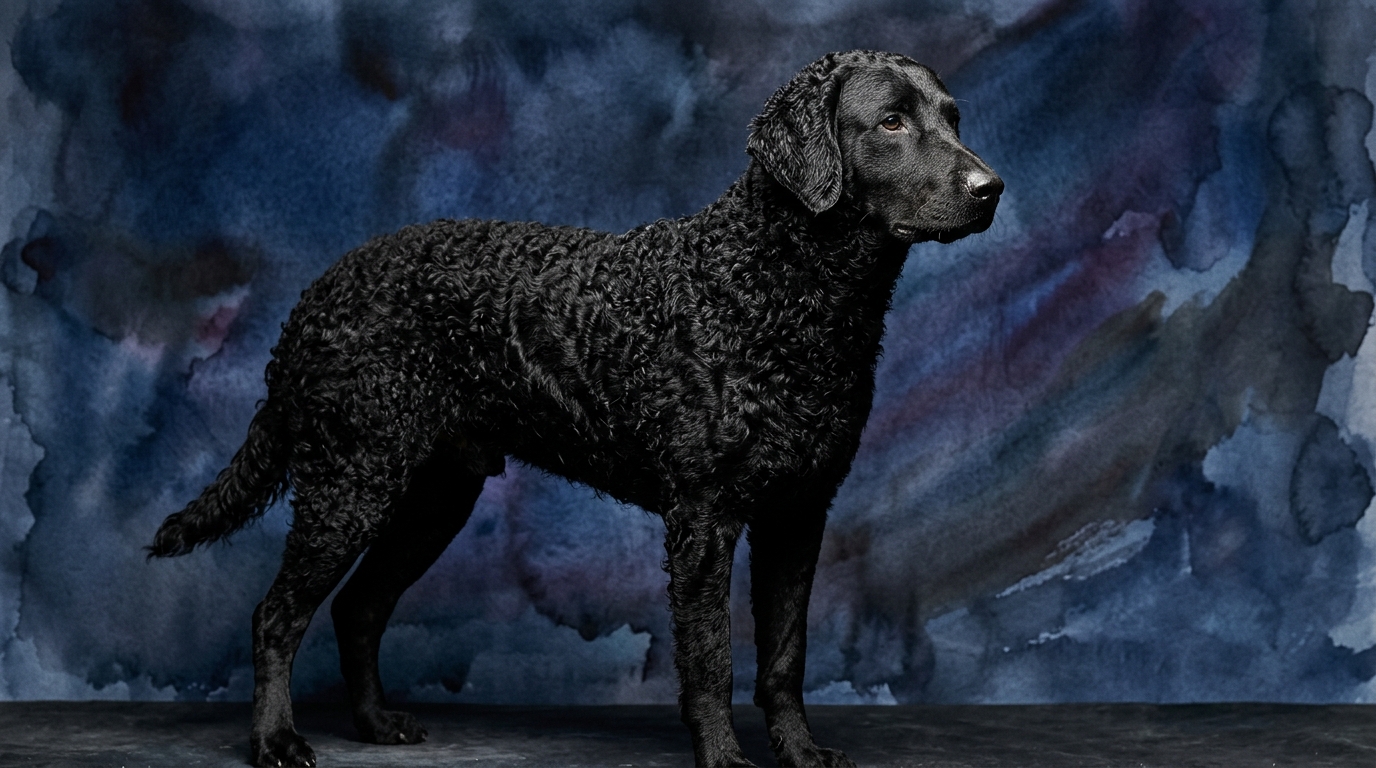
The Curly-Coated Retriever, a member of the Sporting Group, holds a respectable Coren rank of 41, indicating a solid foundation in obedience and adaptive intelligence. Our Cosmic Pet IQ Lab metrics show their Problem Solving at 3/5, signifying a moderate capacity for independent thought in novel situations, often leaning towards practical solutions related to their retrieving heritage. Their Training Speed also rates 3/5, meaning they grasp new commands at a steady pace, benefiting from consistent, positive reinforcement methods.
Social Intelligence for the Curly-Coated sits at 3/5, reflecting an ability to read human cues and adapt within social structures, though they might not be overtly demonstrative. Their Instinctive Drive is 3/5, typically channeled towards their foundational purpose of retrieving waterfowl, making them eager participants in activities that mimic this work. Crucially, their Memory scores 4/5, a notable strength indicating a strong ability to retain complex sequences and past experiences, which is invaluable for advanced training and recall.
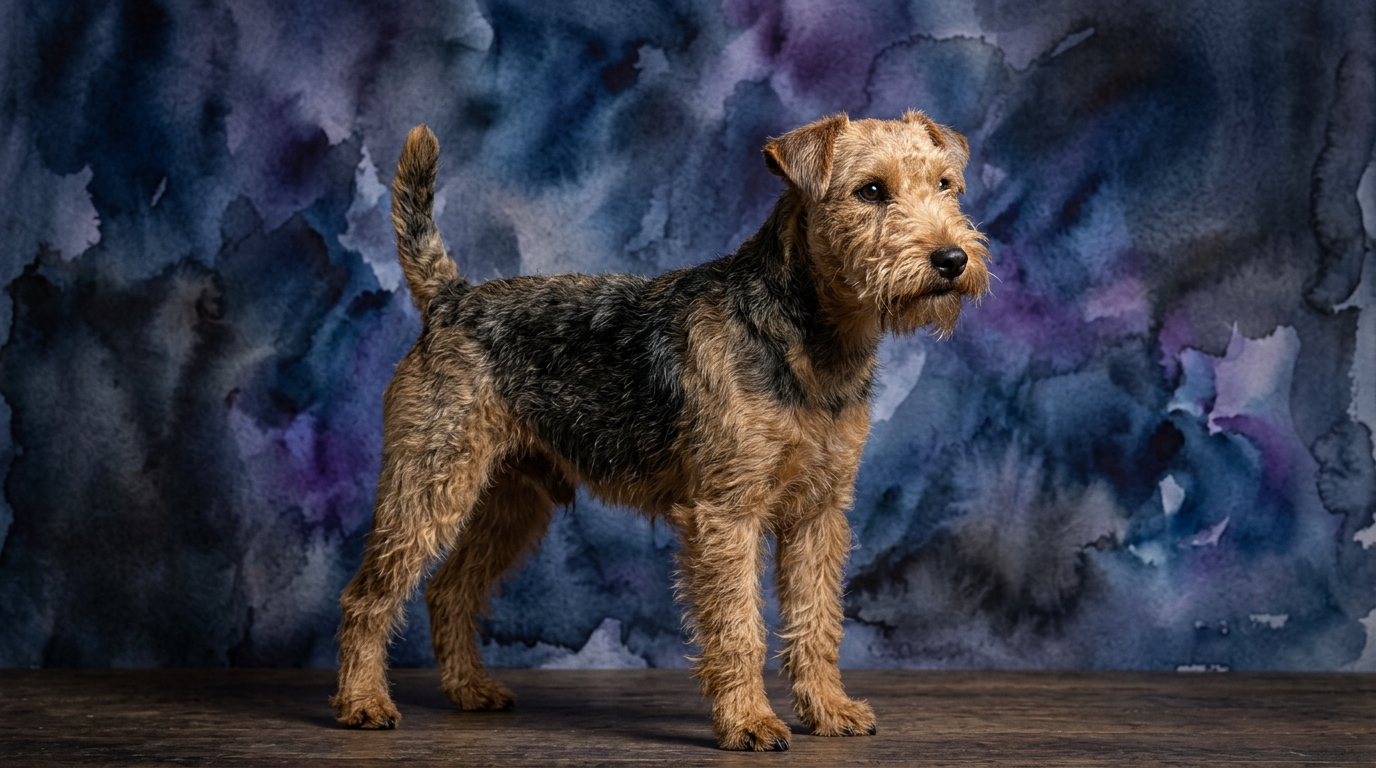
In contrast, the Lakeland Terrier, a spirited member of the Terrier Group, is not listed in Coren's ranking, which often suggests a more independent and less obedience-focused cognitive profile. Our IQ Lab assessment gives them a Problem Solving score of 3/5, demonstrating a moderate ability to navigate challenges independently, often with a resourceful, tenacious approach characteristic of their vermin-hunting background. Their Training Speed is also 3/5, indicating they learn at a moderate pace, but their inherent terrier willfulness can sometimes make consistency a key factor.
The Lakeland Terrier's Social Intelligence is 3/5, showing they can interpret human signals but may choose to engage on their own terms, often displaying a selective sociability. Their Instinctive Drive is 3/5, strongly geared towards their original purpose of chasing and dispatching small prey, which translates into a persistent focus on tasks they deem important, like digging or exploring. Their Memory scores 3/5, meaning they retain information adequately, but might require more frequent reinforcement compared to breeds with a higher memory capacity to solidify learning.
Where the Curly-Coated Retriever Shows Cognitive Strengths
The Curly-Coated Retriever's most pronounced cognitive advantage lies in its superior Memory, rated 4/5 compared to the Lakeland Terrier's 3/5. This enhanced recall means a Curly can retain a broader repertoire of commands, complex sequences of actions, and learned behaviors over longer periods with fewer refreshers. For owners engaged in advanced obedience, agility, or multi-step tasks, this memory capacity translates directly into more efficient and reliable performance, as they are less likely to 'forget' previous lessons.
Furthermore, the Curly-Coated's Coren rank of 41, while not directly an IQ metric, implies a predisposition towards understanding new commands with fewer repetitions and responding consistently to known cues. This foundational biddability, inherent to many sporting breeds, provides a cognitive framework that prioritizes cooperation and working in tandem with a human handler. Their problem-solving, while rated similarly, often manifests in finding solutions that align with human directives, rather than pursuing independent, terrier-driven agendas.
Where the Lakeland Terrier's Mind Excels
While both breeds share a 3/5 Problem Solving score, the Lakeland Terrier's cognitive strength in this area often manifests differently, rooted in their tenacious terrier spirit. Their problem-solving isn't always about cooperation; it's about overcoming obstacles to achieve *their* goals, whether that's figuring out how to get to a perceived 'prey' or outsmarting a gate. This resourcefulness, driven by a powerful instinctive drive (3/5), means they can be incredibly persistent and creative in their attempts to achieve a desired outcome, even if it's not the one their human intended.
The Lakeland's independent nature, a hallmark of the Terrier Group, can also be viewed as a cognitive strength in specific contexts. They are less reliant on constant human direction, capable of making quick decisions in the field and adapting to changing circumstances without hesitation. This self-sufficiency, while sometimes challenging in a domestic setting, reflects a robust, self-reliant intelligence that enables them to navigate situations and pursue interests with remarkable determination, often showcasing ingenuity in their pursuits.
Training Dynamics: Biddability vs. Independence
When considering ease of training, the Curly-Coated Retriever generally presents a more straightforward path due to its higher memory and inherent desire to cooperate. Their 4/5 memory means that once a command is learned, it tends to stick, requiring less repetition and fewer refresher sessions. Their sporting background has cultivated a dog that thrives on working with a human partner, making them more inclined to engage in structured training and respond consistently to cues. This cooperative spirit often translates to a more fluid and rewarding training experience, especially for those seeking to advance in dog sports or complex obedience.
The Lakeland Terrier, while equally capable of learning with its 3/5 Training Speed and Problem Solving, often requires a more nuanced and patient approach. Their independent nature and strong instinctive drives mean that consistency is not just helpful, but absolutely vital, as their 3/5 memory might necessitate more frequent reinforcement. Training a Lakeland often involves making the desired behavior seem like their idea or more rewarding than their inherent terrier pursuits. Owners must be creative, use high-value rewards, and maintain a firm yet fair demeanor to channel their tenacity effectively, rather than trying to suppress their spirited independence.
Matching Cognitive Profiles to Lifestyles
For active owners seeking a highly engaged and cooperative partner, the Curly-Coated Retriever is often an ideal match. Their strong memory and sporting drive make them excellent candidates for activities like advanced obedience, competitive retrieving, agility, or even search and rescue. They thrive on structured mental stimulation that leverages their ability to learn and retain complex tasks, alongside ample physical exercise like swimming or long hikes. Owners who enjoy working closely with their dog to achieve shared goals will find the Curly’s biddable nature and cognitive strengths incredibly rewarding.
Owners who appreciate a spirited, tenacious companion with an independent streak, and are prepared for proactive engagement, might find the Lakeland Terrier a perfect fit. While also requiring significant physical activity to manage their energy and instinctive drives, their cognitive profile suits those who enjoy a dog that thinks for itself and brings a unique personality to every interaction. They excel in activities like earthdog trials, vigorous hiking, or agility where their agility and problem-solving can shine. However, truly 'relaxed' owners in terms of minimal daily engagement might find both breeds too demanding; neither is suited for a sedentary lifestyle without proper mental and physical outlets.
The Verdict
Choose the Curly-Coated Retriever if you desire a cooperative, highly trainable companion for advanced obedience, dog sports, or a family dog that reliably retains learned behaviors. Their strong memory and biddable nature make them excellent partners for structured activities and those who appreciate working closely with their canine.
Opt for the Lakeland Terrier if you are drawn to a tenacious, spirited, and independent companion that brings ingenuity and personality to every interaction. You should be prepared for consistent, creative training to channel their strong instincts and appreciate a dog that thinks for itself while still forming deep bonds.
🧠 Find Your Pet's IQ Score
Our Pet IQ Lab assessment covers 25+ tests across 5 cognitive dimensions — personalized to your breed.
Take the Full IQ Test →Frequently Asked Questions
Are Curly-Coated Retrievers prone to wandering more than Lakeland Terriers due to their sporting drive?
While Curly-Coated Retrievers have an instinctive drive (3/5), it is typically channeled into retrieving and working alongside humans. Their higher memory (4/5) and biddable nature often mean better recall. Lakeland Terriers, with their terrier instincts and independent problem-solving, might be more prone to exploring independently if not properly managed, especially if they catch a scent.
How do their problem-solving styles differ in a home environment?
Both breeds score 3/5 in problem-solving, but their approaches vary. A Curly-Coated Retriever might try to figure out how to open a gate to follow you, aiming for cooperation. A Lakeland Terrier might figure out how to open a gate to chase a squirrel or explore, driven by their independent curiosity and tenacious pursuit of their own interests.
Which breed adapts better to new environments or routines?
The Curly-Coated Retriever, with its Coren rank and generally more cooperative temperament, often adapts more smoothly to new environments and routines, especially if their basic needs for exercise and mental engagement are met. The Lakeland Terrier can adapt well, but their independent nature might mean they take a bit longer to settle into new routines, often testing boundaries or exploring new spaces with thoroughness.