Side-by-Side IQ Profile: Curly-Coated Retriever vs. Miniature Bull Terrier
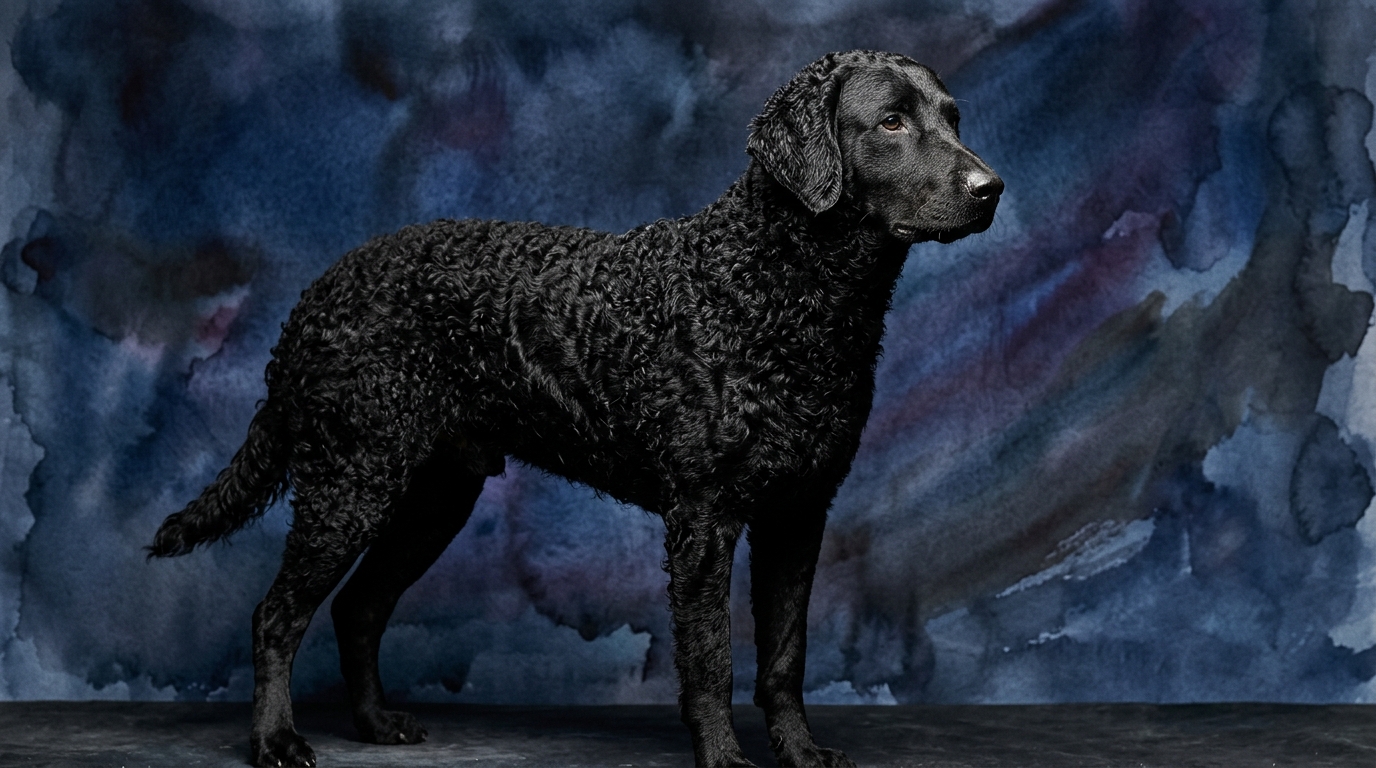
The Curly-Coated Retriever, a member of the Sporting group and Coren-ranked at #41, presents a balanced cognitive profile with a notable memory. Their problem-solving capacity is rated 3/5, indicating an aptitude for navigating practical situations, particularly those involving retrieving tasks or environmental challenges. Training speed also sits at 3/5, meaning they acquire new commands at a moderate pace, responding well to consistent, positive reinforcement. Their social intelligence, at 3/5, reflects a solid understanding of human cues and family dynamics, allowing them to form strong bonds. An instinctive drive of 3/5 points to their purposeful retrieving heritage, while their memory stands out at 4/5, indicating a strong capacity for retaining learned behaviors and experiences over time.
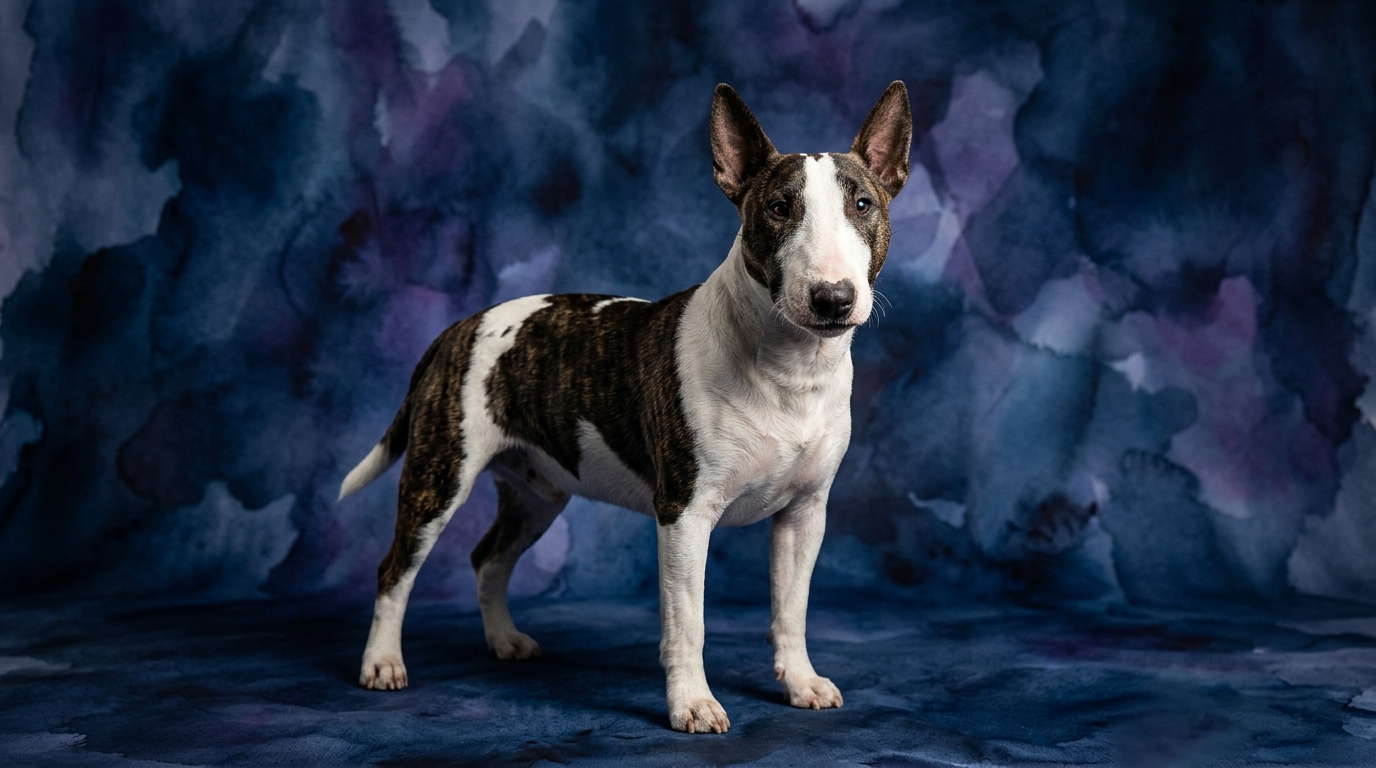
In contrast, the Miniature Bull Terrier, a tenacious Terrier breed not included in Coren's ranking, shares several cognitive scores, yet their underlying approach differs. Their problem-solving is also 3/5, often employing their strong will and physical prowess to achieve objectives, sometimes with a persistent trial-and-error method. Training speed is likewise 3/5, but their independent Terrier nature can necessitate more engaging and varied training to maintain focus. Social intelligence rates 3/5, showing an ability to understand social dynamics and form deep attachments, though their interactions can be more direct. Their instinctive drive, also 3/5, manifests as a strong prey drive and a desire for robust, engaging play. Finally, their memory is rated 3/5, indicating a solid, but perhaps not exceptional, ability to retain commands and routines, benefiting from regular reinforcement.
Where the Curly-Coated Retriever Shines Cognitively
The Curly-Coated Retriever's distinct advantage lies in its superior Memory score of 4/5, a full point above the Miniature Bull Terrier. This exceptional recall means that once a Curly has grasped a command or a routine, it tends to stick with remarkable tenacity. For tasks requiring long-term retention of complex sequences or specific environmental cues, such as advanced obedience or intricate field work, the Curly-Coated Retriever often demonstrates more consistent and reliable performance over time. This enhanced memory contributes significantly to their reputation as dependable working companions, capable of remembering intricate instructions and their purpose even after long breaks.
While both breeds share a 3/5 in problem-solving, the Curly's Sporting group heritage often directs its problem-solving towards practical, task-oriented solutions related to cooperation and retrieval. They are adept at figuring out how to successfully bring an object back or navigate obstacles in a field, showing a thoughtful approach to achieving a shared goal. Their cognitive process in these scenarios is often geared towards efficiency and fulfilling a given role, making them naturally inclined to understand and execute multi-step commands more fluidly due to their stronger memory reinforcing these pathways.
Where the Miniature Bull Terrier Excels Cognitively
The Miniature Bull Terrier brings a unique set of cognitive strengths, particularly in how its instinctive drive and problem-solving intersect with its Terrier tenacity. While both breeds score 3/5 in instinctive drive, the Terrier's drive is often characterized by an unwavering determination to pursue its own interests or objectives, sometimes with a singular focus that can be interpreted as stubbornness but also as incredible persistence. This tenacity, when channeled appropriately, allows them to excel in activities requiring sustained effort and an independent approach to overcoming challenges, such as earthdog trials or complex scent work where they must follow a trail regardless of distractions.
Their problem-solving, also rated 3/5, is often fueled by this strong, independent drive. A Miniature Bull Terrier might approach a problem, like getting to a desired toy or figuring out how to open a cupboard, with a relentless trial-and-error strategy, not easily deterred by initial failures. This particular brand of problem-solving, though not necessarily 'smarter' in the traditional sense, highlights their mental resilience and willingness to keep trying until a solution is found, often through sheer force of will and physical manipulation. This contrasts with the Curly's more cooperative, task-oriented problem-solving, emphasizing the Mini Bull's self-directed cognitive approach.
Training Ease: Unpacking Behavioral Differences
When evaluating training ease, the Curly-Coated Retriever generally presents a more straightforward path for the average owner, primarily due to its superior memory and Sporting group temperament. With a memory score of 4/5, the Curly retains learned commands and routines more effectively, meaning fewer repetitions are needed for long-term retention and less 'rust' builds up between training sessions. Their cooperative nature, typical of a retriever, means they are often eager to please and work alongside their human, making them more receptive to instruction and less inclined to challenge authority. They thrive on positive reinforcement and consistent methods, building upon their strong recall for dependable responses.
The Miniature Bull Terrier, scoring 3/5 in training speed and memory, requires a different approach. While capable of learning, their independent and tenacious Terrier personality often means that training can feel like a negotiation rather than a simple instruction. They might understand a command but choose not to perform it if they don't see the immediate benefit or if something more interesting captures their attention. Their strong instinctive drive, combined with a slightly less robust memory, means that owners need to be exceptionally consistent, engaging, and patient. Training sessions must be kept fresh and motivating to overcome their potential for stubbornness, and owners must be prepared to reinforce learned behaviors more frequently to ensure they stick.
Matching Breeds to Lifestyles: Active vs. Relaxed Owners
For active owners seeking a canine partner for outdoor adventures, sports, and consistent engagement, the Curly-Coated Retriever is an excellent match. Their balanced instinctive drive (3/5) and cooperative nature from their Sporting heritage make them eager participants in activities like hiking, swimming, retrieving games, and dog sports such as agility or obedience. They thrive on having a 'job' and a routine that involves physical and mental stimulation. Owners who enjoy consistent training, particularly in areas where the Curly's strong memory can shine, will find a rewarding partnership. Their social intelligence (3/5) also ensures they are well-adjusted companions in various active social settings.
The Miniature Bull Terrier, while certainly energetic and requiring activity, might appeal to active owners who appreciate a dog with a strong, independent personality and a playful, sometimes mischievous streak. Their tenacious instinctive drive (3/5) means they excel in activities that engage their prey drive and problem-solving, such as vigorous play, earthdog sports, or exploring new environments where they can 'hunt' for toys. However, their independent nature means they might not always be as focused on their owner during activities, preferring to follow their own nose. Relaxed owners might find the Miniature Bull Terrier's persistent nature and need for structured mental and physical outlets challenging, as their energy, if not properly directed, can lead to creative and sometimes destructive problem-solving indoors. Active owners who value a dog with a unique character and are prepared for consistent, engaging training to channel that tenacity will find a devoted companion.
The Verdict
Choose the Curly-Coated Retriever if you value a cooperative, dependable companion with excellent memory for complex tasks and a natural inclination towards working alongside you in various activities. They are ideal for owners seeking a consistent partner for field work, dog sports, or a well-mannered family dog who retains lessons effectively.
Opt for the Miniature Bull Terrier if you are drawn to a tenacious, independent spirit with a robust personality, prepared for engaging and creative training to channel their strong will and playful energy. They suit owners who appreciate a dog with character and are ready to embrace a persistent problem-solver who thrives on varied, stimulating activities.
🧠 Find Your Pet's IQ Score
Our Pet IQ Lab assessment covers 25+ tests across 5 cognitive dimensions — personalized to your breed.
Take the Full IQ Test →Frequently Asked Questions
Is the Curly-Coated Retriever easy to live with?
Yes, the Curly-Coated Retriever, with its balanced social intelligence and cooperative nature, generally integrates well into family life. Their strong memory helps them quickly learn household rules, making them relatively predictable and pleasant companions once trained.
Do Miniature Bull Terriers get along with other pets?
Miniature Bull Terriers, due to their strong instinctive drive and terrier heritage, can sometimes exhibit a prey drive towards smaller animals and may require careful, early socialization with other dogs. Their social intelligence allows them to adapt, but individual temperaments vary, and supervision is always wise.
Which breed is better for first-time dog owners?
The Curly-Coated Retriever is generally a more forgiving choice for first-time owners due to its cooperative temperament and strong memory, which aids in training consistency. The Miniature Bull Terrier's independent nature and specific training needs might pose a greater challenge for those new to dog ownership.