Side-by-Side IQ Profile: Sporting vs. Toy Minds
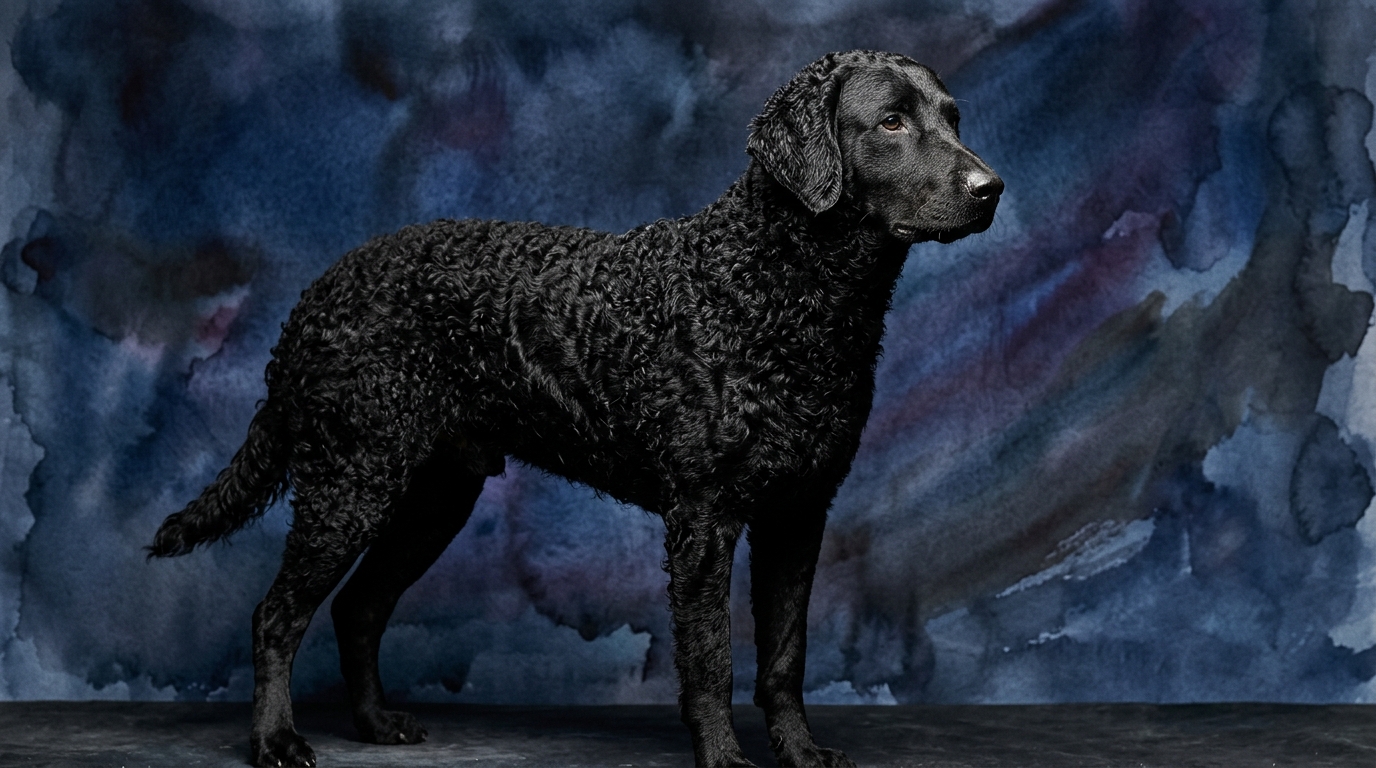
At The Cosmic Pet Pet IQ Lab, we evaluate canine intelligence across five key dimensions. For the Curly-Coated Retriever, a Coren rank #41 breed, its cognitive scores reflect its sporting heritage and adaptability.
**Curly-Coated Retriever (Coren rank #41):** Problem Solving (3/5) demonstrates practical, goal-oriented solutions, adept at navigating complex environments for retrieval tasks. Training Speed (3/5) shows it learns new commands and routines at a moderate pace, exhibiting willingness for structured engagement. Social Intelligence (3/5) indicates a balanced understanding of human cues and family social dynamics, fostering strong bonds. Instinctive Drive (3/5) means it maintains a moderate, persistent drive for activities aligned with its retrieving heritage, like tracking and fetching. Memory (4/5) exhibits strong retention of learned information, commands, and spatial layouts, crucial for consistent performance.
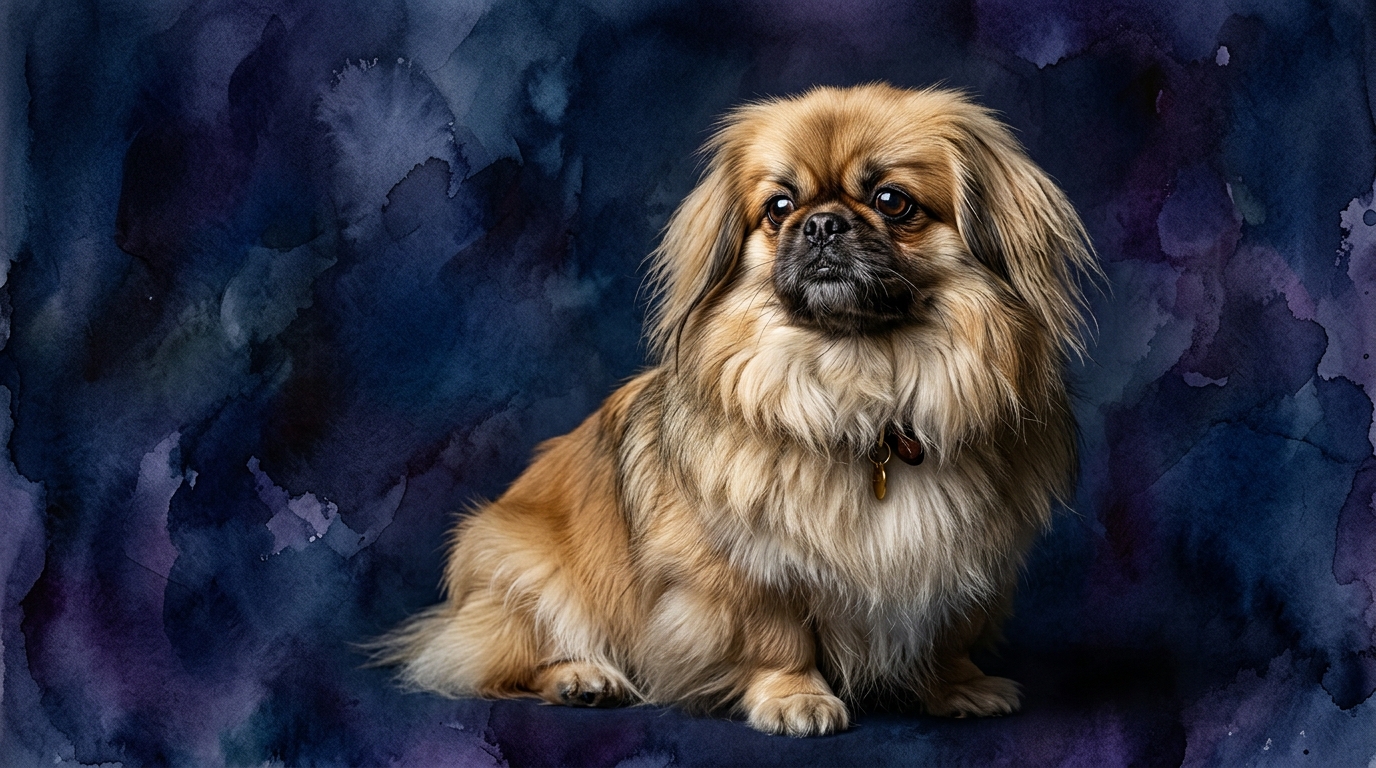
The Pekingese, with a Coren rank #77, offers a contrasting cognitive blueprint, shaped by its history as a companion animal.
**Pekingese (Coren rank #77):** Problem Solving (3/5) displays a focused, often independent, problem-solving style, particularly for optimizing personal comfort or navigating its immediate domain. Training Speed (3/5) indicates it learns at a moderate pace, though often requiring consistent motivation and patience due to its self-assured nature. Social Intelligence (3/5) demonstrates discerning social awareness, forming deep, selective bonds and understanding its chosen human's nuanced moods and routines. Instinctive Drive (3/5) means it possesses a moderate drive, often expressed through a desire for companionship, guarding its territory, or brief playful activity. Memory (3/5) retains information adequately for daily routines and familiar commands, though less extensively than breeds with higher working demands.
Where the Curly-Coated Retriever Wins Cognitively
The Curly-Coated Retriever's cognitive profile reveals a clear advantage in memory, scoring a 4/5 compared to the Pekingese's 3/5. This enhanced memory capacity means a Curly is more likely to retain complex sequences of commands, recall object locations over extended periods, and remember specific training cues even after breaks. For owners engaging in repetitive tasks or multi-step activities, this superior memory translates into a more reliable and consistent partner, capable of building a vast repertoire of learned behaviors.
Furthermore, while both breeds score 3/5 in problem-solving, the Curly's sporting heritage implies its problem-solving is often applied to dynamic, environmental challenges like navigating varied terrain to retrieve. This requires a broader spatial and task-oriented cognitive application, such as strategizing the best path through dense brush or remembering where a thrown item landed. This suggests a functional cognitive breadth that extends beyond merely navigating a home, distinguishing its application of this shared score.
Where the Pekingese Wins Cognitively
While the Pekingese doesn't boast numerically higher scores in any single cognitive dimension, its strength lies in the nuanced application of its 3/5 ratings, particularly in social intelligence and problem-solving, within its specific context. Its social intelligence, for instance, manifests as a profound understanding of its primary human's subtle emotional states and routines, often anticipating needs or reacting to unstated desires with remarkable accuracy. This isn't about broad social adaptability, but deep, selective attunement, excelling at communication within its inner circle.
Its problem-solving, also 3/5, is often directed towards personal comfort and strategic maneuvering within its home environment, such as finding the optimal sunbeam spot, subtly influencing its owner for attention, or even figuring out how to get its favorite toy from a tight space. This independent, self-serving problem-solving showcases a highly focused and effective internal cognitive agenda, allowing it to excel at optimizing its immediate well-being and managing its human companions with a quiet determination.
Training Dynamics: Biddable Partner vs. Nuanced Persuasion
Both breeds are rated 3/5 for training speed, suggesting neither is inherently "easier" in a broad sense, but their training approaches differ significantly due to their inherent temperaments and drives. The Curly-Coated Retriever, with its sporting background and marginally higher memory, tends to be more eager to please and finds purpose in structured tasks. Their instinctive drive (3/5) can be readily channeled into retrieving games and obedience work, making them generally responsive to positive reinforcement and consistent methods. Their higher memory score means they are likely to solidify learned behaviors more quickly and retain them over time, requiring less frequent refreshers once a skill is mastered.
Conversely, the Pekingese, while capable of learning at a similar speed, often presents a more independent and self-assured demeanor. Their problem-solving (3/5) might be employed to find ways around commands rather than complying directly if they don't see immediate benefit or if the training isn't engaging enough. Training a Pekingese often requires immense patience, creativity, and a focus on making learning a rewarding and fun experience from their perspective. They respond best to positive reinforcement and short, engaging sessions, as their social intelligence (3/5) means they are highly attuned to their owner's tone and body language, but their independent streak means they are less motivated by mere compliance. Therefore, while both learn, the Curly-Coated Retriever might be perceived as "easier" for those seeking a biddable partner, while the Pekingese demands a more nuanced and persistent trainer.
Lifestyle Match: Active Adventures or Relaxed Companionship
The distinction between these two breeds for different lifestyles is quite pronounced. The Curly-Coated Retriever, originating from the Sporting Group, naturally aligns with active owners. Their moderate instinctive drive (3/5) means they thrive on regular physical activity, such as long walks, runs, swimming, or engaging in dog sports like agility and obedience. Their problem-solving and memory capabilities make them excellent partners for activities that involve learning new routes, retrieving objects from varied environments, or performing complex sequences. Owners who enjoy outdoor adventures and want a companion to share in their energetic pursuits will find the Curly-Coated Retriever to be a fulfilling match, benefiting from its balanced cognitive and physical needs.
The Pekingese, a Toy breed, is far better suited for relaxed owners. While they have a moderate instinctive drive (3/5), it manifests more as a desire for companionship and comfort rather than intense physical exertion. Their problem-solving is often about navigating the home environment for optimal comfort, and their social intelligence makes them content with close proximity to their chosen human. Short, leisurely strolls and indoor play are typically sufficient to meet their physical requirements. Owners who prefer a calm, affectionate lap companion and enjoy quiet evenings at home will find the Pekingese's cognitive profile and physical needs perfectly complement their relaxed lifestyle, offering deep companionship without demanding rigorous activity.
The Verdict
Choose the Curly-Coated Retriever if you are an active individual or family seeking a mentally engaged companion for outdoor adventures, structured training, and a partner who excels in memory-based tasks and dynamic problem-solving.
Choose the Pekingese if you prefer a devoted, independent companion who thrives in a relaxed home environment and appreciates subtle social interactions, offering deep affection without demanding extensive physical or highly structured mental activities.
🧠 Find Your Pet's IQ Score
Our Pet IQ Lab assessment covers 25+ tests across 5 cognitive dimensions — personalized to your breed.
Take the Full IQ Test →Frequently Asked Questions
Does a higher Coren rank always mean a "smarter" dog?
Coren's ranking primarily assesses obedience and working intelligence, which measures how quickly a dog learns and obeys commands. It doesn't fully capture the breadth of canine cognition, such as independent problem-solving or social nuance, which can be strong in breeds with lower rankings.
Can a Pekingese be trained for complex tasks like a Curly-Coated Retriever?
While a Pekingese can certainly learn commands, their independent nature and lower instinctive drive for "work" mean they typically won't approach complex tasks with the same enthusiasm or consistency as a Curly-Coated Retriever. Training success relies heavily on motivation and making the task personally rewarding for the Pekingese.
How does memory impact daily life for these breeds?
A Curly-Coated Retriever's superior memory (4/5) means they'll likely remember routines, commands, and even past experiences more vividly, making training retention strong. A Pekingese's memory (3/5) is sufficient for daily life and basic commands, but might require more frequent refreshers for less common tasks, though they excel at remembering their preferred routines.