A Side-by-Side Look at Their IQ Profiles
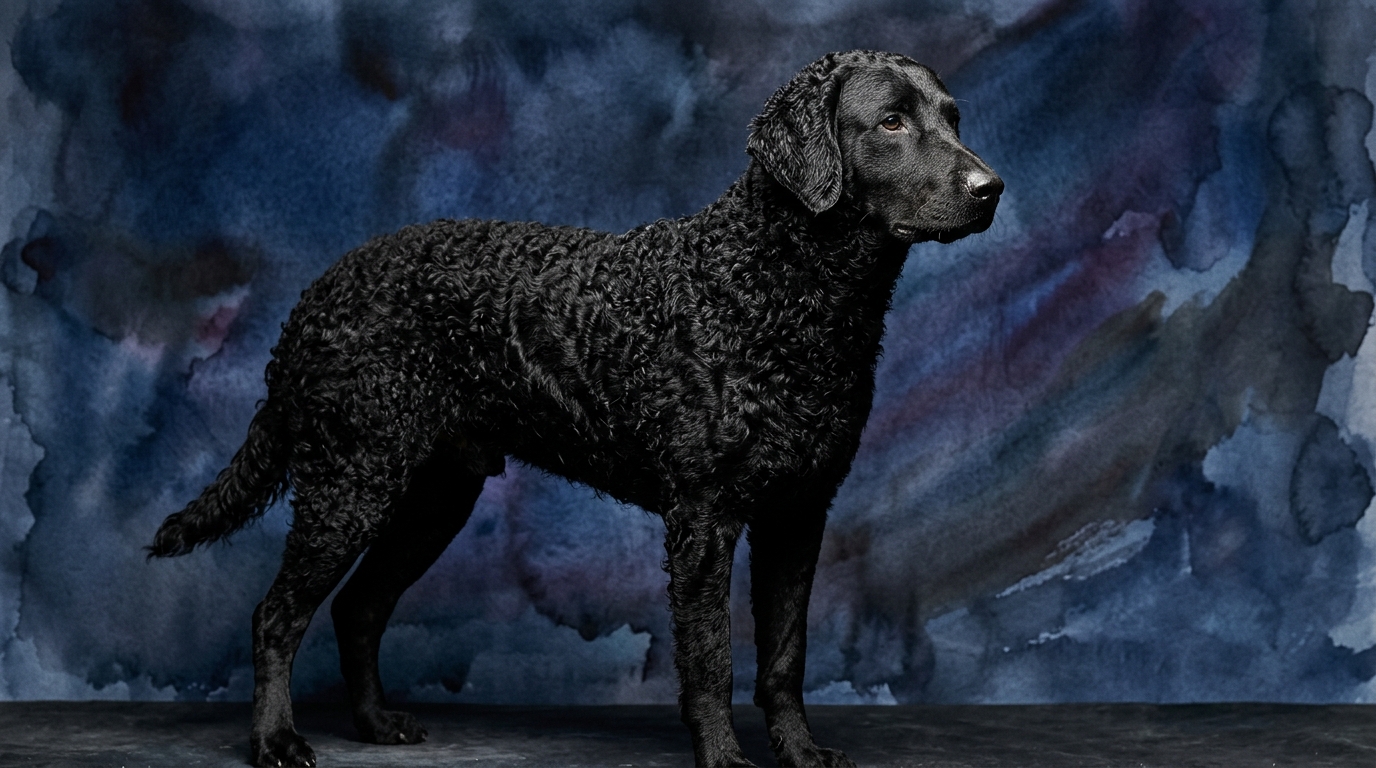
The Cosmic Pet Pet IQ Lab employs a five-dimensional framework to assess canine intelligence, offering a granular view beyond general perceptions. For the Curly-Coated Retriever, a breed recognized by Coren as ranking #41, its profile shows a balanced aptitude. Its Problem Solving score is 3/5, indicating a capacity to navigate moderately complex novel situations and find solutions through learned experiences rather than pure ingenuity. Training Speed also sits at 3/5, suggesting it learns new commands and routines at an average pace, requiring consistent but not excessive repetition. Social Intelligence, rated 3/5, means the Curly-Coated Retriever typically understands and responds appropriately to human cues and social dynamics, making it a good companion without being overly sensitive or aloof. Its Instinctive Drive, also 3/5, reflects a moderate expression of its retrieving instincts, present but manageable. A standout for the Curly-Coated Retriever is its Memory, scoring 4/5, which points to a superior ability to retain information over time, including commands, routines, and past experiences.
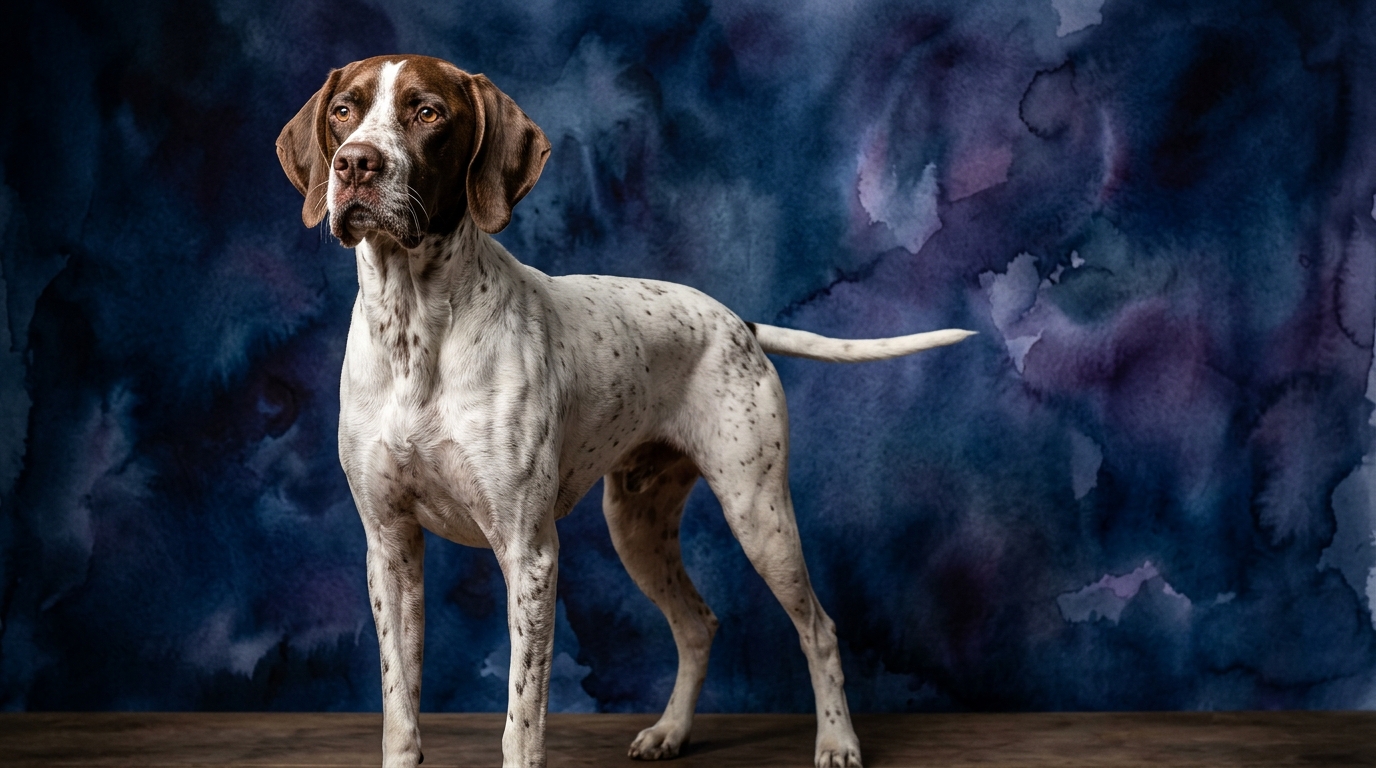
The Pointer, while not included in Coren's ranking, presents a remarkably similar profile across most dimensions, with one notable distinction. Its Problem Solving ability is rated 3/5, mirroring the Curly, implying it is capable of tackling practical challenges related to its work with a pragmatic approach. The Pointer's Training Speed is also 3/5, indicating it learns at a comparable rate to the Curly-Coated Retriever, responding well to clear and consistent instruction. Social Intelligence for the Pointer is likewise 3/5, suggesting it is generally attuned to human interaction and capable of forming strong bonds within a family unit. Its Instinctive Drive, at 3/5, speaks to a moderate but persistent drive for its primary purpose of scenting and pointing game, a fundamental aspect of its breed identity. The key difference lies in its Memory, which scores 3/5, suggesting a solid but not exceptional capacity for recall compared to its Curly-Coated counterpart.
Where the Curly-Coated Retriever Shows Cognitive Strengths
The Curly-Coated Retriever's primary cognitive advantage lies in its superior Memory, rated at 4/5 compared to the Pointer's 3/5. This enhanced capacity for retention translates into several practical benefits. A Curly-Coated Retriever is more likely to remember complex sequences of commands, elaborate routines, or even specific solutions to problems it encountered weeks or months prior. This means less frequent refreshing of learned behaviors is needed, making long-term obedience and advanced training potentially more robust. For owners involved in dog sports requiring intricate routines, such as competitive obedience or agility, the Curly-Coated Retriever's ability to store and recall a vast array of information can be a significant asset, allowing for greater progression and precision over time. Its past experiences, both positive and negative, are likely to be more firmly imprinted, influencing future responses more consistently.
Where the Pointer Demonstrates Unique Cognitive Aptitudes
While the Pointer does not outscore the Curly-Coated Retriever in any of the five measured dimensions, its cognitive profile, particularly its balanced 3/5 scores across Problem Solving, Training Speed, Social Intelligence, and Instinctive Drive, combined with its specialized breeding, points to a distinct aptitude for focused field work. The Pointer excels in a singular, intense cognitive task: locating and indicating game. Its 3/5 Instinctive Drive, while moderate, is channeled with remarkable efficiency into scent discrimination and the iconic 'point.' This isn't about general problem-solving; it's about a highly specialized cognitive algorithm for a specific task. Its ability to maintain a consistent, unwavering focus on scent trails for extended periods, despite distractions, showcases a unique application of its cognitive resources. While its memory may not be as expansive as the Curly-Coated Retriever's, its ability to recall specific scents and associate them with prey locations is highly refined, a specialized form of memory crucial for its role.
Ease of Training: Curly-Coated Retriever vs. Pointer
When considering which breed might be easier to train, the Curly-Coated Retriever gains a subtle but significant edge due to its superior Memory score of 4/5, compared to the Pointer's 3/5. Both breeds share a 3/5 Training Speed, meaning they learn new commands at an average pace. However, the Curly-Coated Retriever's better retention means that once a command is learned, it is likely to be remembered more reliably over longer periods. This translates to less need for refresher sessions and more consistent performance of learned behaviors in the long run. For instance, teaching a complex multi-step retrieve or a series of obedience commands might take similar initial effort for both, but the Curly-Coated Retriever is more likely to execute it flawlessly weeks later without additional practice. The Pointer, while eager to please and trainable, may require more frequent reinforcement to keep commands sharp, especially if training isn't consistently maintained. This difference in memory doesn't make the Pointer untrainable, but it suggests a greater investment in ongoing practice might be needed to maintain the same level of precision and reliability as a Curly-Coated Retriever.
Suited for Active vs. Relaxed Owners
Neither the Curly-Coated Retriever nor the Pointer are suitable for truly relaxed owners; both breeds hail from the Sporting group and possess inherent energy and a need for purpose. However, their specific needs lean them towards different types of active lifestyles. The Pointer, with its strong, focused instinctive drive (albeit rated 3/5, it's highly specialized), thrives on consistent, vigorous activity, particularly those that engage its scenting and pointing abilities. Owners who enjoy long, challenging hikes, jogging, or participating in field trials and hunting activities will find a Pointer a tireless and dedicated partner. Its energy is often channeled into sustained, purposeful movement. A Pointer might struggle in an environment where its innate desire to range and explore scents is not regularly satisfied, potentially leading to restless behaviors.
The Curly-Coated Retriever, while equally active, tends to be more adaptable in its exercise preferences. With its balanced IQ profile and strong memory, it can excel in a wider variety of dog sports and activities beyond just field work, such as agility, obedience, dock diving, or even just long walks and swims. Its physical and mental stimulation needs are substantial, but its activity might be integrated into a more varied family routine rather than being solely focused on a single type of strenuous activity. Owners who lead an active, outdoorsy lifestyle that involves diverse activities, and who appreciate a dog that can transition between vigorous play and calm indoor companionship, might find the Curly-Coated Retriever a better fit.
The Verdict: When to Choose Each Breed
The Verdict
Choose the Curly-Coated Retriever if you value strong long-term memory for complex training and a versatile companion adaptable to various dog sports and active family life. Its balanced cognitive profile and superior retention make it a robust partner for diverse challenges.
Opt for the Pointer if you seek a highly specialized, focused partner for extensive field work, hunting, or endurance activities that engage its exceptional scenting abilities. While it requires consistent training upkeep, its dedication to its primary purpose is unparalleled.
🧠 Find Your Pet's IQ Score
Our Pet IQ Lab assessment covers 25+ tests across 5 cognitive dimensions — personalized to your breed.
Take the Full IQ Test →Frequently Asked Questions
Is the Curly-Coated Retriever harder to train than a Pointer?
Both breeds have a Training Speed of 3/5, meaning they learn at an average pace. However, the Curly-Coated Retriever's superior memory (4/5) means it may retain commands more reliably over time, potentially making long-term training feel more effortless.
Which breed is better for competitive dog sports?
The Curly-Coated Retriever, with its 4/5 memory and balanced problem-solving and social intelligence, is often well-suited for a wider range of competitive dog sports requiring complex routines and sustained recall, such as obedience or agility. The Pointer excels in field-specific competitions.
Do Pointers require more exercise than Curly-Coated Retrievers?
Both are active sporting dogs. Pointers often require more sustained, high-intensity exercise focused on their innate drive for scenting and ranging, making them ideal for dedicated hunters or endurance athletes. Curly-Coated Retrievers also need substantial exercise but are often more adaptable to varied activities.