Side-by-Side IQ Profile: Diving into Canine Cognition
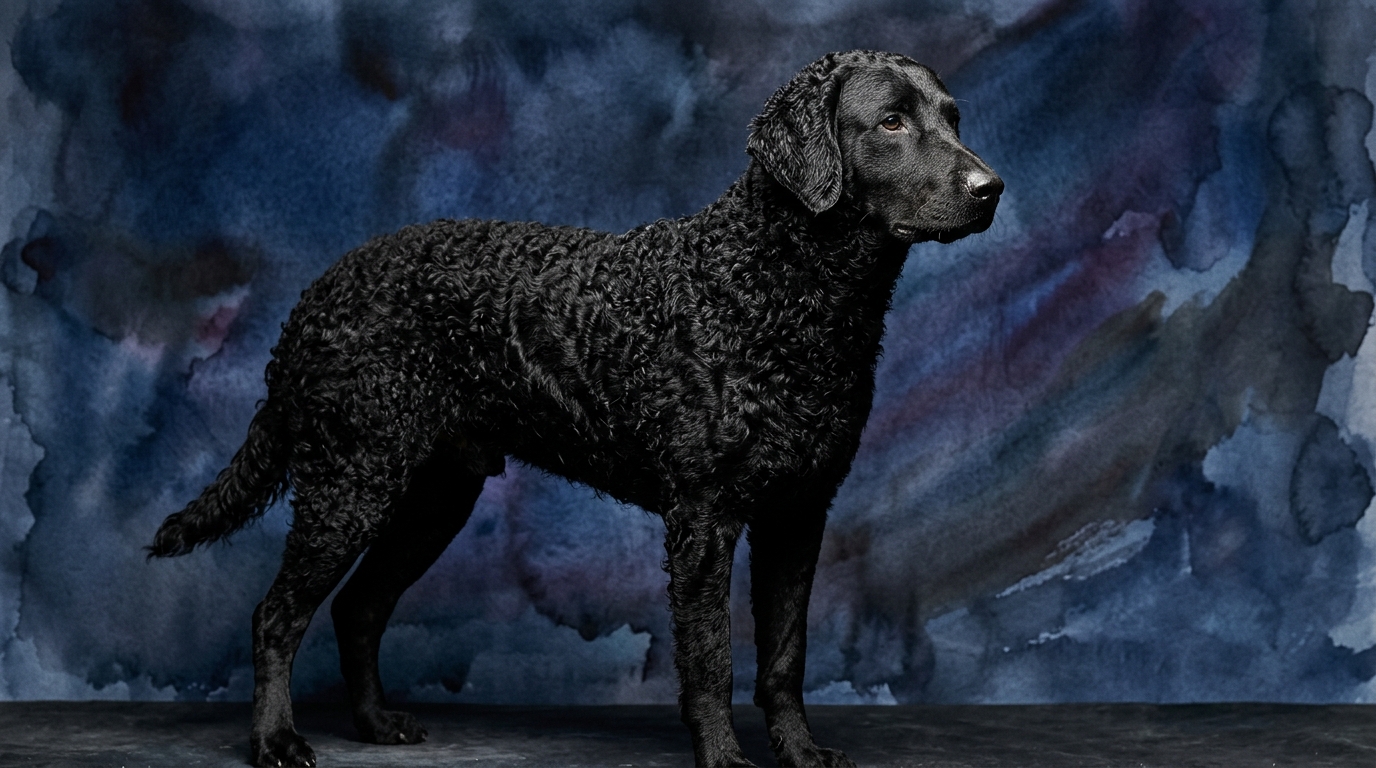
The Cosmic Pet Pet IQ Lab employs a five-dimensional framework to assess breed intelligence, moving beyond a simple 'smart' label to understand how different dogs process and interact with their world. For the Curly-Coated Retriever, a Sporting group dog, its Coren ranking of #41 positions it comfortably among breeds capable of understanding new commands with fewer repetitions and responding reliably. Its IQ scores detail a balanced profile: Problem Solving at 3/5, Training Speed at 3/5, Social Intelligence at 3/5, and Instinctive Drive at 3/5. The standout dimension for the Curly-Coated Retriever is Memory, scoring an impressive 4/5, which suggests a strong capacity for retaining complex sequences and learned behaviors over time.
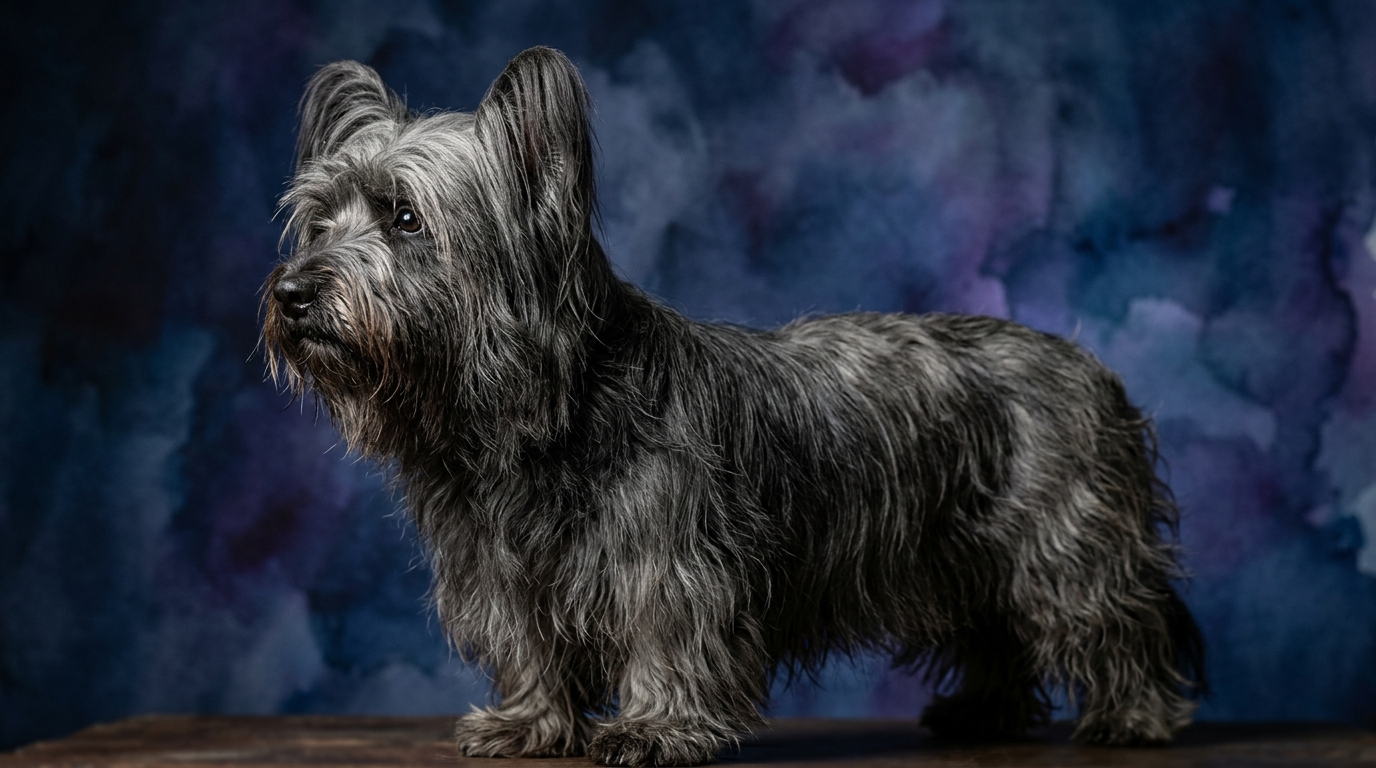
In contrast, the Skye Terrier, a member of the Terrier group, does not appear on Coren's traditional ranking, indicating it might not excel in the type of obedience-focused tasks that Coren's methodology often emphasizes. However, its IQ profile from our lab reveals a consistent and practical set of abilities: Problem Solving at 3/5, Training Speed at 3/5, Social Intelligence at 3/5, and Instinctive Drive at 3/5. Its Memory score is 3/5. This uniform set of scores points to a dog with solid, functional cognitive skills across the board, perhaps prioritizing tenacity and independent thought over highly cooperative, quick-to-learn obedience typically seen in sporting breeds.
Where the Curly-Coated Retriever Wins Cognitively
The Curly-Coated Retriever's primary cognitive advantage lies in its superior Memory, rated 4/5. This translates into a remarkable ability to recall a wide array of commands, remember the locations of specific objects, or retain intricate routines over extended periods. For instance, a Curly-Coated Retriever might effortlessly remember a multi-step retrieve sequence from months ago or consistently follow a complex agility course after limited practice. This strong memory capacity also contributes to its overall trainability, allowing it to build upon past learning experiences more effectively than a breed with a lower memory score.
Furthermore, its Coren ranking of #41 indicates a breed that generally grasps new concepts and commands with fewer repetitions compared to many other dogs. While its Training Speed is 3/5, this ranking suggests that when paired with its excellent memory and reasonable problem-solving skills (3/5), the Curly-Coated Retriever possesses an integrated cognitive framework that facilitates consistent and reliable performance in structured tasks. This breed's cooperative nature, inherent to its Sporting group heritage, often means it applies its cognitive abilities in partnership with its human companions, making it adept at tasks requiring sustained focus and adherence to learned protocols.
Where the Skye Terrier Wins Cognitively
While the Skye Terrier doesn't boast a higher score in any single IQ dimension compared to the Curly-Coated Retriever, its consistent 3/5 across all categories signifies a robust and balanced practical intelligence, particularly well-suited to its original purpose. Its 3/5 for Problem Solving, combined with a 3/5 for Instinctive Drive, means the Skye Terrier is adept at independent thinking to overcome obstacles, especially those related to its natural hunting instincts. This breed might excel at figuring out how to access a hidden toy or persist in scent-tracking, demonstrating a tenacious and focused application of its cognitive skills.
The Skye Terrier's strengths are less about rapid, cooperative learning and more about determined, self-directed engagement. Its social intelligence, also 3/5, suggests it can navigate complex social cues, but often with a distinct terrier independence. This means it's capable of understanding human intentions but might choose to act on its own assessment of a situation rather than immediate compliance. This blend of practical problem-solving and strong instinctive drive allows the Skye Terrier to be highly effective in tasks requiring perseverance and ingenuity, often without constant human direction.
Which is Easier to Train and Why
When considering ease of training, the Curly-Coated Retriever generally presents a more straightforward experience for most owners. Its Coren ranking and 4/5 Memory score are significant advantages. This breed tends to absorb commands quickly and retain them reliably, making the progression from basic obedience to more complex tasks smoother. For instance, a Curly-Coated Retriever is likely to master 'stay' and 'recall' with fewer repetitions and maintain proficiency over time, readily applying its cognitive abilities to cooperate with its handler. Their Sporting group background also predisposes them to work collaboratively, often seeking to understand and fulfill human expectations.
The Skye Terrier, while possessing solid cognitive scores across the board (all 3/5s), often requires a different training approach. Its strong independent streak, characteristic of many terrier breeds, means that while it is perfectly capable of learning, its motivation might stem more from its own interest or perceived benefit rather than an inherent desire to please. A Skye Terrier might learn a command but choose not to execute it if it perceives a more interesting alternative. Real behavioral differences include a terrier's propensity for selective hearing or a determined focus on a scent, requiring trainers to be consistent, patient, and creative in making training engaging and rewarding on the dog's terms. This isn't a deficit in intelligence, but rather a difference in how that intelligence is applied and motivated.
Which Suits Active Owners vs Relaxed Owners
For active owners seeking a dynamic partner, the Curly-Coated Retriever is often the more fitting choice. Its Sporting group heritage means it thrives on physical activity and mental engagement, often excelling in canine sports like agility, obedience, or field trials. Its strong memory and cooperative nature make it an excellent candidate for learning complex routines and participating enthusiastically in outdoor adventures. Owners who enjoy hiking, running, or structured training sessions will find a willing and capable companion in the Curly-Coated Retriever, as it benefits greatly from a consistent outlet for its energy and cognitive skills.
Relaxed owners might find the Skye Terrier a more suitable companion, provided they appreciate its unique blend of independence and loyalty. While not requiring the same intense physical exertion as a retriever, a Skye Terrier still needs daily walks and mental stimulation appropriate for a terrier, such as puzzle toys or scent work that taps into its instinctive drive. This breed is often content with a comfortable home life, enjoying quiet companionship and shorter, more focused bursts of activity. Owners who value a dog with a distinctive personality, a watchful nature, and a certain self-possessed demeanor, and who are prepared to engage with its independent spirit on its own terms, will find a rewarding relationship with a Skye Terrier.
The Verdict
Choose the Curly-Coated Retriever if you desire a cooperative, highly trainable companion for active pursuits and complex learning, valuing its strong memory and eager-to-please nature.
Opt for the Skye Terrier if you appreciate an independent, tenacious companion that offers practical problem-solving and a balanced intelligence, suited to a more relaxed pace but still requiring engaging mental stimulation.
🧠 Find Your Pet's IQ Score
Our Pet IQ Lab assessment covers 25+ tests across 5 cognitive dimensions — personalized to your breed.
Take the Full IQ Test →Frequently Asked Questions
Does the Coren ranking indicate overall intelligence for all breeds?
The Coren ranking primarily measures 'working and obedience intelligence,' reflecting a breed's ability to learn and execute human commands. While valuable, it doesn't fully encompass all dimensions of canine cognition, such as problem-solving in natural environments or social adaptability, which our Pet IQ Lab scores address.
How does 'Instinctive Drive' differ between these two breeds, even with the same score?
Although both breeds score 3/5 for Instinctive Drive, its manifestation differs significantly due to their breed purposes. For the Curly-Coated Retriever, it's often a drive for retrieving and cooperation; for the Skye Terrier, it's a drive for independent hunting, digging, and vigilance. The score reflects the strength of these instincts, not their specific application.
Can a Skye Terrier participate in obedience competitions successfully?
Yes, a Skye Terrier can certainly participate in obedience competitions. While they might require more patient and creative training methods due to their independent nature and preference for self-directed tasks, their solid problem-solving and training speed scores (3/5) indicate they are capable of learning and performing commands effectively with dedicated effort and positive reinforcement.