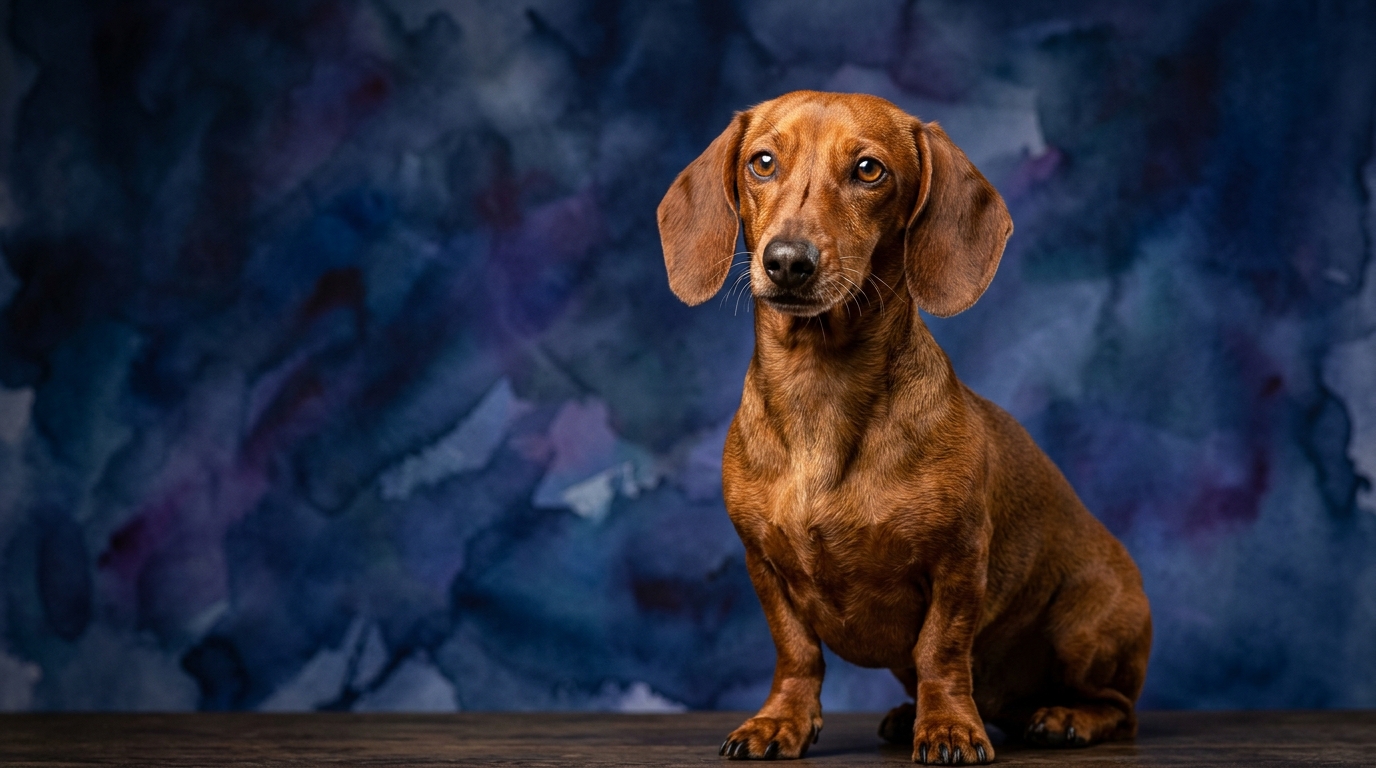
Side-by-Side IQ Profile: Dachshund
The Dachshund, ranked #49 by Coren, displays a cognitive makeup well-suited for its original purpose. Their Problem Solving score of 4/5 indicates a significant capacity for navigating complex situations, often independently, a trait crucial for tracking prey through varied terrain. This breed is not easily stumped by obstacles, frequently devising novel approaches to achieve their goals, whether it's retrieving a hidden toy or finding a way onto a forbidden couch.
When it comes to Training Speed, the Dachshund receives a 2/5. While capable of learning, they typically require consistent, engaging methods to master new commands, often prioritizing their own agenda over immediate compliance. Their Social Intelligence, rated 3/5, suggests a moderate responsiveness to human cues and a capacity for forming close bonds, though they retain a degree of independence. Instinctive Drive is exceptionally high at 5/5, reflecting their powerful prey drive and tenacity. Their Memory, at 3/5, implies a reliable recall for learned routines and experiences, contributing to their consistent patterns of behavior.
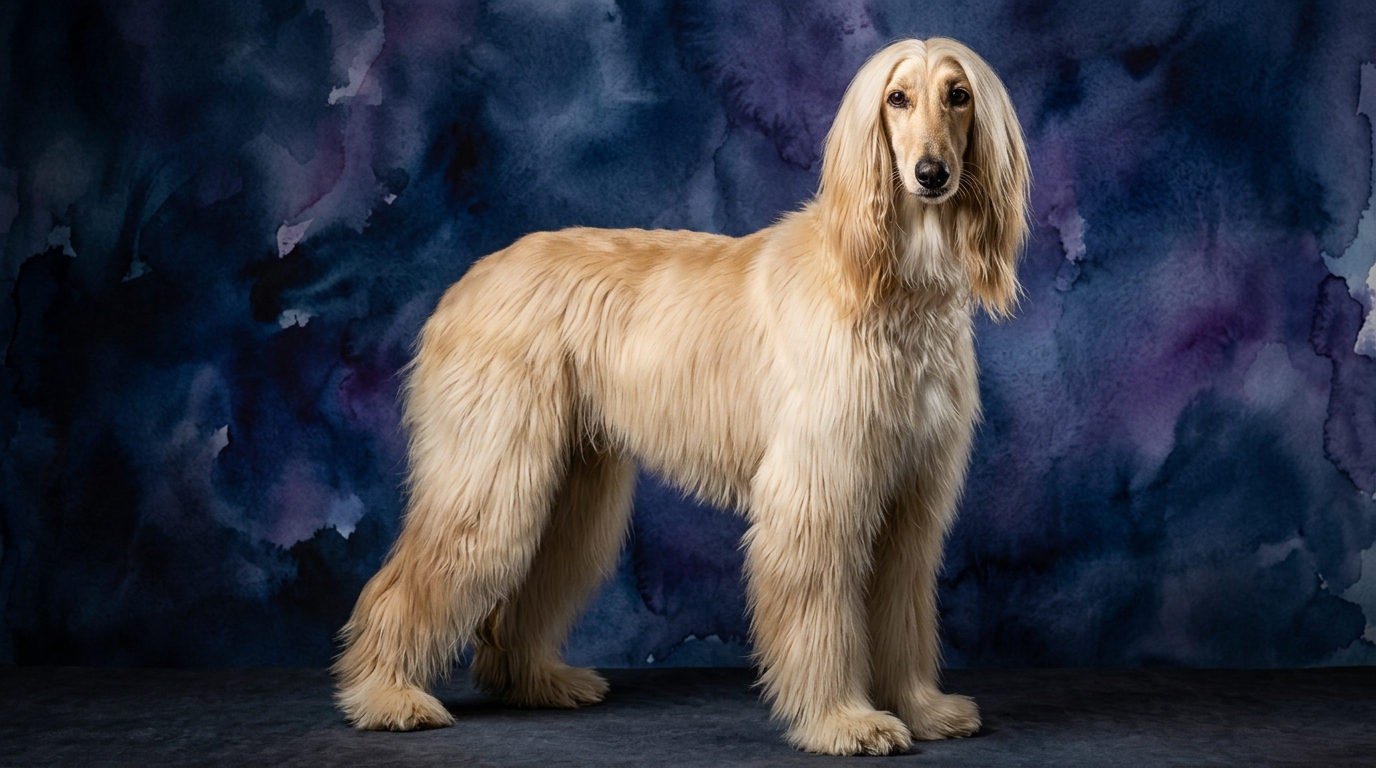
Side-by-Side IQ Profile: Afghan Hound
The Afghan Hound, with a Coren rank of #79, possesses a distinct cognitive architecture. Their Problem Solving ability matches the Dachshund at 4/5, demonstrating a strong capacity for independent thought and strategic action. This score suggests they are adept at making their own decisions, particularly when pursuing a goal, rather than constantly seeking human direction. This self-sufficiency is a hallmark of the breed, reflecting their ancient role as independent hunters.
The Afghan Hound's Training Speed is 1/5, indicating that acquiring new commands typically demands extensive patience, repetition, and highly motivating rewards. Their Social Intelligence is 2/5, suggesting a more reserved and independent demeanor compared to many breeds, often displaying a degree of aloofness even with their primary caregivers. Like the Dachshund, their Instinctive Drive is a formidable 5/5, reflecting a powerful urge to chase and hunt. Their Memory, also 3/5, allows them to retain learned experiences and routines effectively, though their application of this memory might be less about obedience and more about navigating their environment on their own terms.
Where the Dachshund Wins Cognitively
The Dachshund's cognitive profile shows a distinct advantage in areas that facilitate cohabitation and training within a typical family setting. Their Training Speed of 2/5, while not top-tier, is notably higher than the Afghan Hound's 1/5. This means a Dachshund will generally pick up basic commands and household rules with fewer repetitions and in less time, making the initial stages of training less demanding for the owner.
Furthermore, the Dachshund's Social Intelligence, rated 3/5, surpasses the Afghan Hound's 2/5. This higher social acumen translates into a greater attentiveness to human moods, subtle cues, and a more pronounced desire for interaction and partnership. While still independent, a Dachshund is typically more inclined to engage with and respond to human communication, fostering a more interactive and reciprocal relationship, especially in training contexts.
Where the Afghan Hound Wins Cognitively
While not outscoring the Dachshund in every metric, the Afghan Hound's cognitive strengths lie in its profound independence and self-directed problem-solving. Both breeds share an impressive 4/5 in Problem Solving and a 5/5 in Instinctive Drive, but for the Afghan Hound, these traits are often expressed with less reliance on human input due to their lower social intelligence. This means they are exceptionally adept at assessing situations and making decisions autonomously, a cognitive win for owners who value a dog with strong self-reliance.
Their cognitive profile, particularly the combination of high problem-solving and instinctive drive with lower social intelligence, results in an animal that thinks for itself. This independent thought allows them to excel in environments where their innate problem-solving capacity is channeled into activities like lure coursing or navigating complex scent trails, often with an elegant, almost solitary focus. Their cognitive 'win' is in the purity of their self-sufficiency, a deep-seated mental fortitude that defines their unique character.
Which is Easier to Train and Why
The Dachshund is generally easier to train compared to the Afghan Hound, a difference clearly reflected in their respective Training Speed scores (Dachshund 2/5, Afghan Hound 1/5) and Coren ranks. The Dachshund's higher training speed means they require fewer repetitions to understand and execute commands. This is partly due to their greater Social Intelligence (3/5), which makes them more attuned to human expectations and often more motivated by human approval, even with their independent streak.
In contrast, the Afghan Hound's training journey is typically more protracted and challenging. Their Training Speed of 1/5 signifies a breed that takes a considerable amount of time and consistent effort to learn new behaviors. This is compounded by their lower Social Intelligence (2/5), which often manifests as an independent and somewhat aloof disposition. They are less inclined to prioritize human directives over their own interests, requiring a trainer with exceptional patience, creativity, and a deep understanding of positive reinforcement to make progress. Their high instinctive drive, while powerful, is often self-directed rather than easily channeled into obedience.
Which Suits Active Owners vs. Relaxed Owners
For owners seeking a companion with a moderate activity level and a more engaged partnership, the Dachshund often presents a suitable match. While their Instinctive Drive of 5/5 demands outlets for their natural hunting behaviors, their higher Social Intelligence and Training Speed make them more amenable to structured activities like scent work, earth dog trials, or even agility. Owners who enjoy consistent, engaging training sessions and can provide regular mental stimulation for a clever, tenacious problem-solver will find the Dachshund a rewarding companion, even if their physical exercise needs are moderate.
The Afghan Hound, despite its majestic appearance, is better suited for owners who appreciate an independent, somewhat reserved companion and are prepared for a specific kind of active engagement. Their profound Instinctive Drive (5/5) necessitates regular, vigorous exercise, ideally in a secure, expansive area where they can run freely and indulge their sighthound instincts. Relaxed owners who prefer minimal training input or struggle with consistency would find the Afghan Hound's low training speed and independent nature challenging. They thrive with owners who are patient, understand their unique cognitive profile, and can provide ample opportunities for self-directed activity, valuing their aristocratic aloofness over constant social interaction.
The Verdict: When to Choose Each
The Verdict
Choose a Dachshund if you appreciate a tenacious, clever companion with a strong independent streak but also value a higher degree of social engagement and a more responsive, albeit still challenging, training experience. They are ideal for owners who enjoy consistent mental stimulation and can manage a powerful instinctive drive within a more compact package.
Opt for an Afghan Hound if you are drawn to an independent, elegant companion with profound self-reliance and are prepared for a long-term commitment to patient, creative training methods. They suit owners who can provide significant opportunities for free running and appreciate a dog that thinks for itself, valuing their unique aloofness and strong, self-directed instincts.
🧠 Find Your Pet's IQ Score
Our Pet IQ Lab assessment covers 25+ tests across 5 cognitive dimensions — personalized to your breed.
Take the Full IQ Test →Frequently Asked Questions
Do Afghan Hounds genuinely have lower problem-solving abilities than Dachshunds?
No, both breeds share an equal Problem Solving score of 4/5 in our metrics. The perceived difference often stems from how they apply their problem-solving skills; Afghan Hounds tend to be more self-directed and less inclined to solve problems on human terms, while Dachshunds might be more outwardly demonstrative in their efforts.
If both have a 5/5 instinctive drive, does that mean their exercise needs are identical?
While both breeds possess a very strong instinctive drive, its manifestation and thus their exercise needs differ. The Dachshund's drive is often expressed through digging and scent-tracking, requiring mental and moderate physical outlets. The Afghan Hound's drive, as a sighthound, is geared towards chasing and running at high speeds, demanding extensive opportunities for vigorous, free-form exercise in secure areas.
Does a lower social intelligence score mean an Afghan Hound cannot bond with its owner?
A lower social intelligence score does not mean an Afghan Hound cannot bond; rather, it suggests they typically form bonds differently, often with a more reserved and independent demeanor. They may not constantly seek interaction or readily comply with commands, but they can develop deep, loyal connections with owners who respect their self-sufficient nature and provide a calm, consistent environment.