Side-by-Side IQ Profile: Unpacking Their Minds
The Cosmic Pet Pet IQ Lab employs a comprehensive five-dimensional framework to assess canine intelligence, moving beyond simple obedience to capture a breed's full cognitive spectrum. Let's apply this lens to the Dachshund and the American Water Spaniel, two breeds that, despite their shared domesticity, exhibit markedly different mental predispositions.
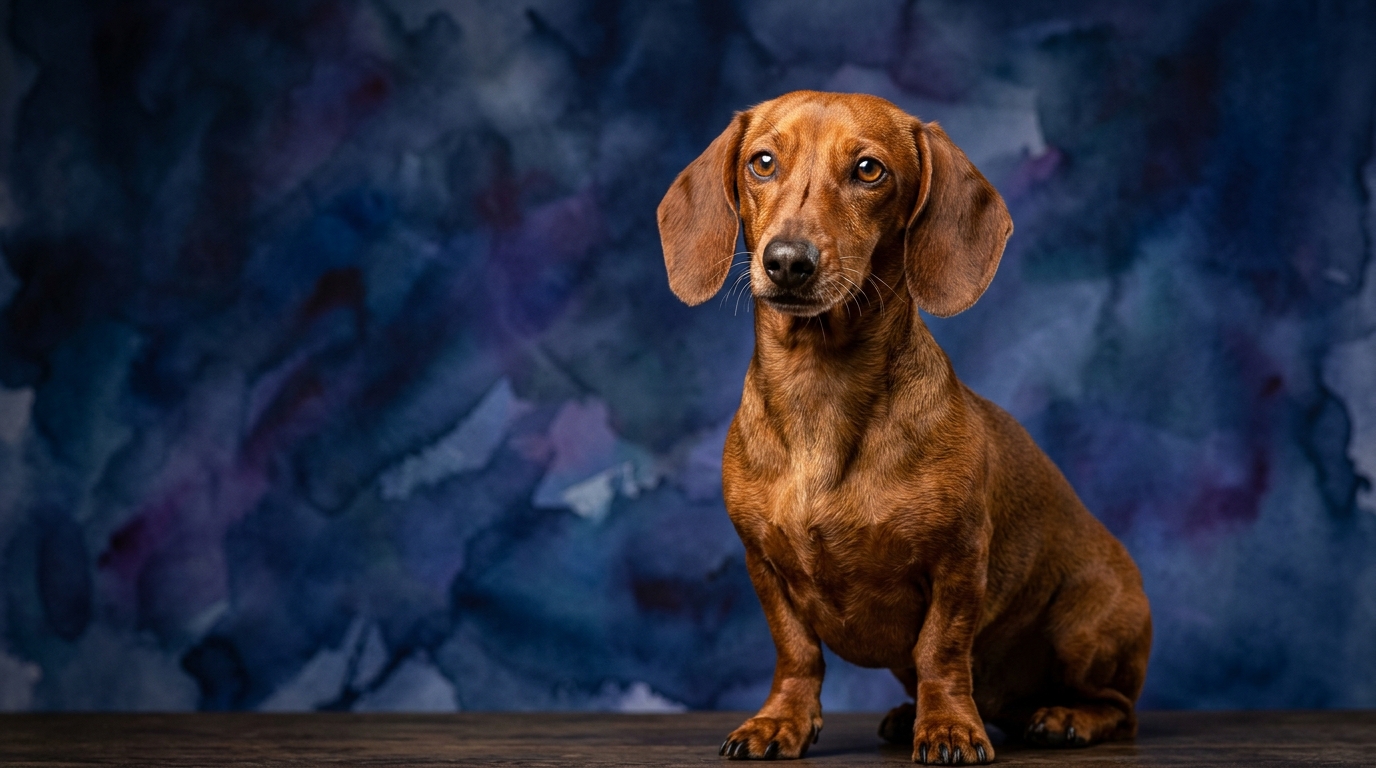
The Dachshund, ranked #49 by Coren, presents a profile shaped by its badger-hunting ancestry. Its Problem Solving score of 4/5 reflects a keen ability to independently strategize and overcome obstacles, particularly when motivated by scent or a perceived 'prey.' This often manifests as cleverness in navigating tight spaces or persistent efforts to reach a desired object. However, this independent streak contributes to a lower Training Speed of 2/5; these dogs prioritize their own objectives, which can make immediate compliance less consistent. Their Social Intelligence at 3/5 suggests adaptability within their family unit, but their focus can be task-oriented rather than broadly empathetic. An impressive Instinctive Drive of 5/5 highlights their powerful prey drive and unwavering determination, while Memory, at 3/5, is sufficient for tracking but perhaps less suited for complex, multi-step command sequences.
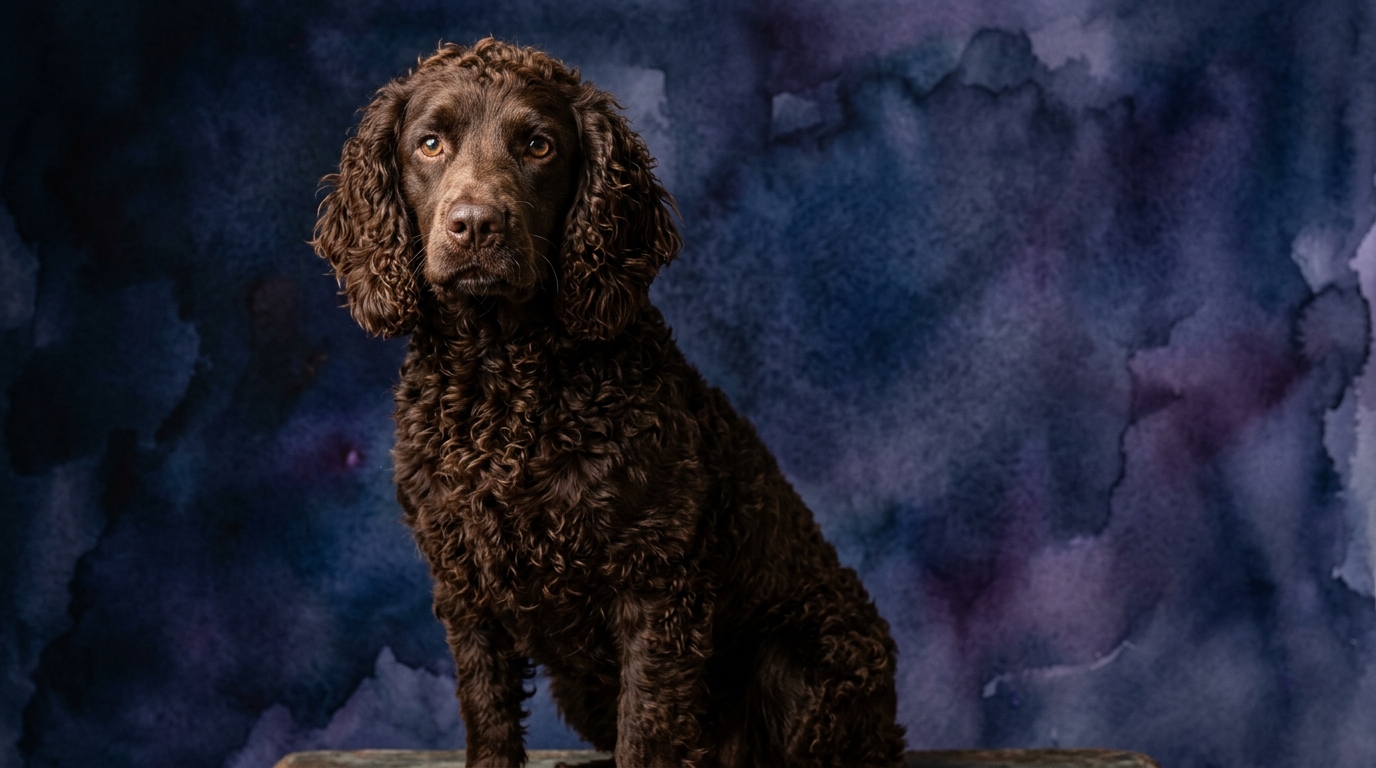
In contrast, the American Water Spaniel, holding a Coren rank of #44, exhibits a cognitive makeup optimized for cooperative retrieving and water work. Their Problem Solving is rated 3/5, indicating competence in practical tasks, though perhaps with less independent ingenuity than the Dachshund; they often look to their handler for guidance rather than devising their own solutions. Training Speed at 3/5 signifies a moderate willingness and capacity to learn new commands, making them generally responsive. Social Intelligence also stands at 3/5, reflecting their role as a working companion, needing to be attuned to human cues without being overly dependent. Their Instinctive Drive, at 3/5, is geared towards retrieving and swimming, a focused persistence rather than the Dachshund's broad predatory intensity. Notably, their Memory excels at 4/5, allowing them to retain complex sequences of commands and retrieve multiple items with precision.
Where the Dachshund Excels Cognitively
The Dachshund's cognitive strengths are deeply rooted in its original purpose: independent hunting. Their Problem Solving score of 4/5 isn't about solving abstract puzzles, but about practical, goal-oriented ingenuity. Imagine a Dachshund determined to reach a dropped crumb under a sofa; it will assess angles, push obstacles, and use its long body to wriggle its way through, demonstrating a tenacious, self-directed approach to problem-solving that few breeds can match. This isn't about pleasing a handler but about achieving its own objective.
Furthermore, the Dachshund's Instinctive Drive, rated 5/5, is a profound cognitive asset when channeled appropriately. This isn't just a physical urge; it's a mental focus that allows them to follow a scent trail for extended periods, ignoring distractions, or to pursue a small animal with unwavering dedication. This intense drive, combined with their problem-solving ability, makes them incredibly effective at tasks requiring persistence and independent decision-making in the field, even if it translates to a challenging stubbornness in a domestic setting.
Where the American Water Spaniel Shines Cognitively
The American Water Spaniel's cognitive brilliance lies in its capacity for cooperative learning and retention, particularly evident in its 4/5 Memory score. Unlike the Dachshund's more episodic, scent-based memory, the AWS excels at recalling sequences of commands, retrieving specific items from a group, or remembering complex routes during a hunt. This robust memory makes them adept at advanced obedience, field trials, and even agility, where precise execution of learned patterns is paramount.
While their Problem Solving is rated 3/5, it's a practical, handler-focused problem-solving that complements their memory and training speed. They are good at figuring out how to retrieve a duck from a tricky spot or navigating dense cover to find a fallen bird, but they typically do so with an eye towards their handler's instructions, rather than embarking on completely independent ventures. Their moderate Instinctive Drive (3/5) ensures they are motivated for their tasks without being overly distractible by extraneous stimuli, allowing them to remain focused on the task at hand and their handler's cues.
Training Dynamics: Which is Easier and Why?
When it comes to ease of training, the American Water Spaniel generally presents a more straightforward experience for the average owner. Their Training Speed of 3/5, coupled with a superior Memory (4/5) and a moderate Instinctive Drive (3/5), means they absorb commands readily and retain them effectively. An AWS is typically eager to please and cooperative, responding well to positive reinforcement and clear guidance. Their natural inclination to work alongside a human makes them receptive pupils, and they often enjoy the mental stimulation that training provides.
The Dachshund, with its Training Speed of 2/5 and a potent Instinctive Drive of 5/5, can be significantly more challenging to train. Their independent problem-solving (4/5) often leads them to prioritize their own agenda—like following an interesting scent or investigating a perceived burrow—over immediate compliance with a command. This isn't a lack of understanding, but rather a strong self-determination. Owners often describe them as 'stubborn,' which is a manifestation of their deep-seated hound instinct. Successful Dachshund training requires immense patience, consistency, and creative motivation to convince them that obeying a command is more rewarding than pursuing their own fascinating endeavors. While they can learn, their learning process is often slower and requires more persistence from the trainer.
Matching Breeds to Lifestyles: Active vs. Relaxed Owners
Choosing between these two breeds also hinges on an owner's lifestyle, particularly regarding activity levels and engagement. The American Water Spaniel, as a sporting breed, thrives with active owners who can provide consistent physical exercise and mental stimulation. Their moderate instinctive drive and excellent memory make them ideal companions for activities like hiking, swimming, retrieving games, and dog sports such as agility or obedience trials. They need regular outlets for their energy and a structured routine to prevent boredom. A relaxed owner who cannot commit to daily activities might find an AWS to be restless or prone to finding their own (potentially destructive) entertainment.
The Dachshund, despite its smaller stature, is not necessarily a 'relaxed' dog in terms of cognitive needs. While they can be content snuggling on the sofa after exercise, their powerful instinctive drive (5/5) demands outlets. Active owners for a Dachshund might not be running marathons, but they should be prepared for daily walks, engaging scent work games, and opportunities for 'digging' (perhaps in a sandbox) or chasing toys. Owners who appreciate a dog with an independent, often comical, personality will find a Dachshund rewarding. However, a truly relaxed owner who offers minimal mental or physical engagement might find themselves with a bored and potentially destructive or vocal Dachshund, as their sharp minds and drives still require stimulation.
The Verdict: When to Choose Each Breed
The choice between a Dachshund and an American Water Spaniel ultimately comes down to an owner's preferences for a dog's cognitive style and their capacity to meet specific breed needs. Both are rewarding companions, but they demand different approaches.
If you are an owner who values independent thought, a tenacious spirit, and a dog with a powerful, specialized drive, and you are prepared for the patience required in training a more self-directed canine, the Dachshund might be your ideal match. They thrive with owners who appreciate their cleverness and can provide outlets for their strong instincts.
Conversely, if you seek a cooperative, responsive partner capable of learning complex tasks and excelling in structured activities, the American Water Spaniel could be the perfect fit. They suit owners who enjoy an active lifestyle and are keen to engage in consistent training and outdoor adventures with a dog that values teamwork.
The Verdict
Choose a Dachshund if you appreciate a clever, tenacious companion with a strong independent streak and are prepared for patient, consistent training to channel their powerful drives. They are best for owners who enjoy a dog with a distinct personality and a flair for self-directed problem-solving.
Opt for an American Water Spaniel if you desire a cooperative, highly trainable partner for active lifestyles, excelling in learning complex commands and participating in dog sports. They thrive with owners who enjoy teamwork and can provide consistent mental and physical engagement.
🧠 Find Your Pet's IQ Score
Our Pet IQ Lab assessment covers 25+ tests across 5 cognitive dimensions — personalized to your breed.
Take the Full IQ Test →Frequently Asked Questions
Are Dachshunds difficult to train due to their intelligence?
Dachshunds are not lacking in problem-solving ability, but their strong instinctive drive and independent nature often make them prioritize their own goals over immediate human commands. This can make training challenging, requiring significant patience and consistent, positive reinforcement to channel their cleverness effectively.
How does the American Water Spaniel's memory benefit its trainability?
The American Water Spaniel's superior memory (4/5) allows them to quickly learn and retain complex sequences of commands and tasks. This makes them highly responsive to training, enabling them to excel in activities requiring precise execution and recall, such as advanced obedience or retrieving multiple items.
Which breed is better for a family with young children, considering their social intelligence?
Both breeds have a social intelligence rating of 3/5, suggesting they can be good family dogs with proper socialization. However, the American Water Spaniel's more cooperative nature and moderate drive might make them slightly more adaptable to a bustling family environment, while a Dachshund's independent streak might require more careful management around very young children.