
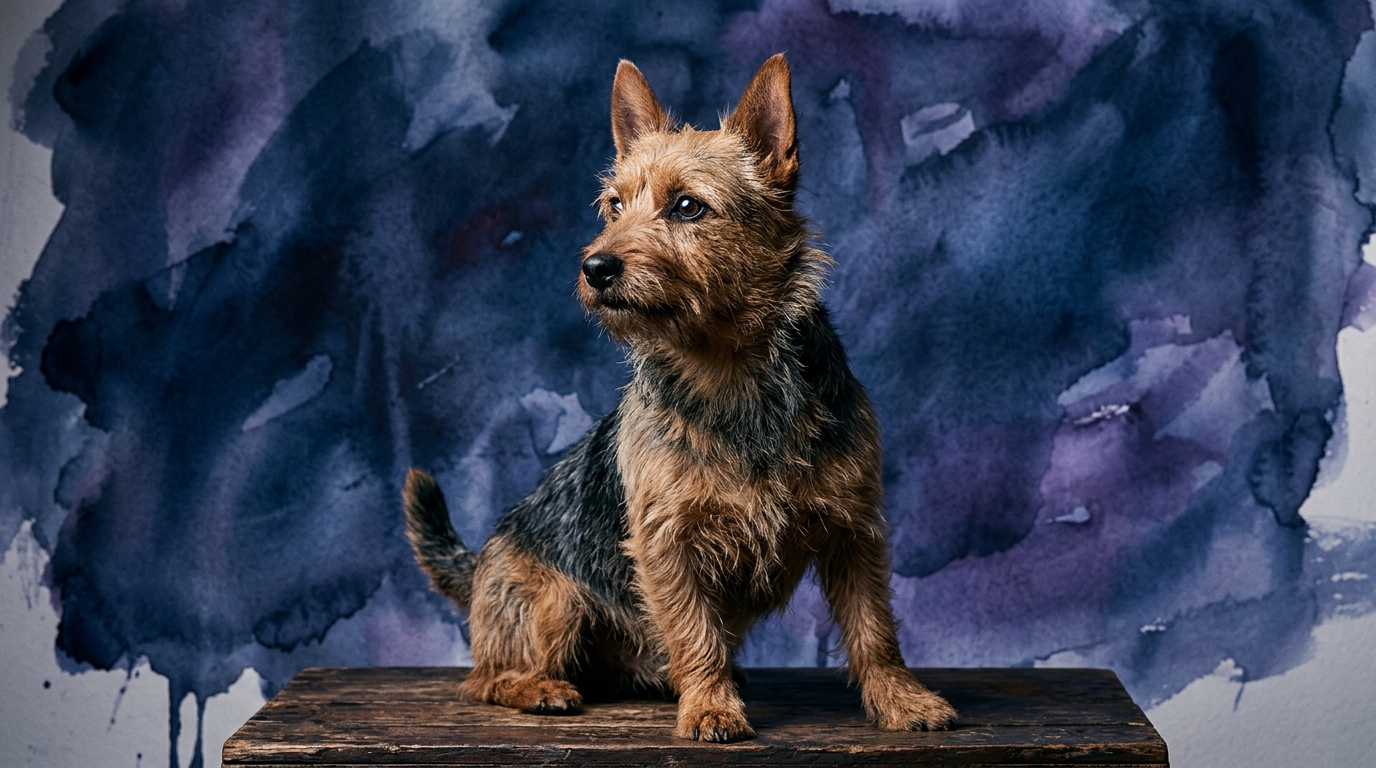
The Cosmic Pet Pet IQ Lab: Dachshund vs. Australian Terrier Profile
At The Cosmic Pet Pet IQ Lab, we dissect canine cognition across five key dimensions to provide a nuanced understanding of each breed's mental landscape. Here’s how the Dachshund, a hound with a rich hunting heritage, compares to the Australian Terrier, a spirited working terrier, across these specific cognitive traits.
The Dachshund's Coren rank of #49 places it in the 'Average Working & Obedience Intelligence' category, indicating a moderate learning rate for obedience commands. Their Problem Solving is rated at 4/5, showcasing impressive ingenuity, especially when pursuing a goal. Training Speed is 2/5, suggesting a need for significant patience and consistent motivation during training. Social Intelligence stands at 3/5, meaning they are attuned to human cues but often interpret them through the lens of their own desires. Their Instinctive Drive is an exceptional 5/5, reflecting a profound, persistent urge for tracking and digging. Finally, their Memory is 3/5, allowing them to retain learned behaviors and past experiences quite effectively.
The Australian Terrier, while not Coren-ranked, offers a distinct cognitive profile. Their Problem Solving is 3/5, demonstrating practical skills in navigating environments and engaging with challenges. Training Speed is 3/5, indicating a moderate pace for learning new commands with good engagement. Social Intelligence also rates 3/5, signifying strong bonds with family and an ability to read moods, though they maintain an independent streak. Their Instinctive Drive is 3/5, a balanced level that includes chasing and digging but is generally more manageable than some specialized hunting breeds. Their Memory is also 3/5, providing a solid foundation for consistent learned behaviors and routines.
Where the Dachshund Cognitively Excels
The Dachshund's cognitive strengths distinctly shine in areas deeply rooted in their original purpose. Their Problem Solving, rated at 4/5, is a clear advantage over the Australian Terrier's 3/5. This isn't just about general cleverness; it's a specific, tenacious ingenuity in figuring out how to bypass obstacles or strategize to reach a desired object, often driven by their powerful instincts. They can devise elaborate plans to secure a dropped treat or navigate complex environments to follow a compelling scent.
Furthermore, the Dachshund's Instinctive Drive at 5/5 is unparalleled. While this can present training challenges, it represents a cognitive win in its sheer power and unwavering focus. Their ability to lock onto a scent trail or a perceived 'prey' and pursue it with relentless dedication showcases an incredible mental tenacity. This isn't merely impulse; it's a deep-seated, complex cognitive program for fulfilling their primary purpose, demonstrating a profound, specialized form of intelligence.
Where the Australian Terrier Cognitively Excels
The Australian Terrier’s cognitive advantages lie in their adaptability and balanced nature, making them highly suitable for modern companionship. Their Training Speed of 3/5 surpasses the Dachshund’s 2/5, indicating a quicker grasp of new commands and a more consistent learning curve. This responsiveness makes them generally more amenable to structured training sessions and a wider variety of learned tasks, requiring fewer repetitions for mastery.
Additionally, while the Dachshund’s drive is powerful, the Australian Terrier’s more moderate Instinctive Drive of 3/5 offers a cognitive advantage in terms of everyday manageability. Their instincts for chasing or digging are present but typically more easily redirected and integrated into a pet lifestyle. This balance means their natural inclinations are less likely to constantly override human direction, fostering a more harmonious co-existence and allowing for greater cognitive flexibility in diverse home environments.
Ease of Training: Behavioral Differences That Matter
When considering ease of training, the Australian Terrier generally emerges as the more straightforward student. Their Training Speed of 3/5, coupled with a moderate Instinctive Drive of 3/5, means they are typically more receptive to learning new commands and less prone to being sidetracked by overpowering urges. Australian Terriers often respond enthusiastically to positive reinforcement, eager to engage with their human companions, which makes them cooperative and enjoyable to teach. Their practical problem-solving skills are also more readily channeled toward human-desired outcomes, simplifying the training process.
Conversely, the Dachshund can present a more significant training challenge. Their Training Speed of 2/5 reflects a deeply independent spirit; they often prioritize their own agenda over immediate obedience. The Dachshund’s extreme Instinctive Drive of 5/5 means that a compelling scent, a perceived 'prey,' or a digging opportunity can easily overshadow any command, demanding immense patience, creativity, and high-value motivation from their owner to maintain focus. While their Problem Solving (4/5) is impressive, it's frequently applied to achieving *their* goals, necessitating an owner who can consistently outsmart or redirect their inherent cunning and tenacity. Their solid Memory (3/5) ensures they remember what works best for them, even if it's not what you’ve taught.
Matching Cognitive Profiles to Lifestyles: Active vs. Relaxed Owners
For **active owners**, both breeds can be suitable, but with differing engagement styles. An Australian Terrier, with its balanced energy and trainable nature, is an excellent companion for varied activities such as hiking, agility, or long walks, enjoying both mental and physical challenges alongside their owner. Their moderate instinctive drive means they can participate in a wide range of activities without becoming overly fixated. A Dachshund, while also active, suits an owner who understands how to channel their intense instinctive drive into specific, engaging tasks. This might include scent work, earthdog trials, or intricate puzzle games that challenge their superior problem-solving, rather than just long, unstructured runs which may not fully satisfy their unique cognitive needs.
For **relaxed owners**, the Australian Terrier generally offers a more adaptable fit. Provided they receive consistent mental enrichment and moderate daily exercise like walks and engaging playtime, their social intelligence (3/5) allows them to be content and responsive companions in a calmer household. However, a truly relaxed owner might find a Dachshund more demanding. Their intense Instinctive Drive (5/5) and independent Problem Solving (4/5) mean they require significant mental stimulation and structured engagement to prevent boredom. Without this, their powerful instincts can manifest as persistent digging, excessive barking, or escape attempts, even if their overall physical exercise needs are not extreme, making them a more intensive commitment for a relaxed lifestyle.
The Verdict
Choose the Dachshund if you are drawn to a companion with exceptional, instinct-driven problem-solving abilities and possess the patience to channel a fiercely independent spirit, offering a uniquely engaging cognitive challenge.
Choose the Australian Terrier if you seek a cognitively balanced, adaptable companion that learns readily and thrives on interactive engagement, offering a cheerful and responsive intelligence for a variety of lifestyles.
🧠 Find Your Pet's IQ Score
Our Pet IQ Lab assessment covers 25+ tests across 5 cognitive dimensions — personalized to your breed.
Take the Full IQ Test →Frequently Asked Questions
Are Dachshunds stubborn or just smart?
Dachshunds aren't necessarily stubborn in a negative sense; their perceived "stubbornness" often stems from their high problem-solving skills and intense instinctive drive. They prioritize their own goals, like tracking a scent, making them seem resistant to commands that conflict with their internal mission.
How does the Australian Terrier's "not Coren-ranked" status affect its intelligence perception?
Not being Coren-ranked doesn't imply lower intelligence; it simply means they weren't part of that specific obedience-focused study. Our IQ breakdown shows they possess practical problem-solving, good training speed, and balanced social intelligence, making them capable learners in their own right.
Which breed is better for first-time dog owners?
The Australian Terrier is generally a better fit for first-time owners due to its more manageable training speed and instinctive drive. Dachshunds, with their strong independent streak and intense instincts, often require a more experienced hand to navigate their unique cognitive landscape effectively.