
Side-by-Side IQ Profile
The Cosmic Pet Pet IQ Lab employs a multi-dimensional approach to assess canine intelligence, moving beyond simple obedience to encompass a broader spectrum of cognitive functions. For the Dachshund, ranked #49 by Coren, its profile shows a Problem Solving score of 4/5, reflecting a persistent and often ingenious approach to overcoming obstacles, particularly those related to its hunting heritage. Training Speed is rated at 2/5, indicating a moderate pace of learning new commands, often tempered by its independent spirit. Social Intelligence stands at 3/5, suggesting a reasonable capacity for understanding human cues and social structures, though not always prioritizing them. Its Instinctive Drive is a commanding 5/5, a clear nod to its strong prey drive and determination, while Memory is at 3/5, allowing it to retain learned behaviors and experiences adequately.
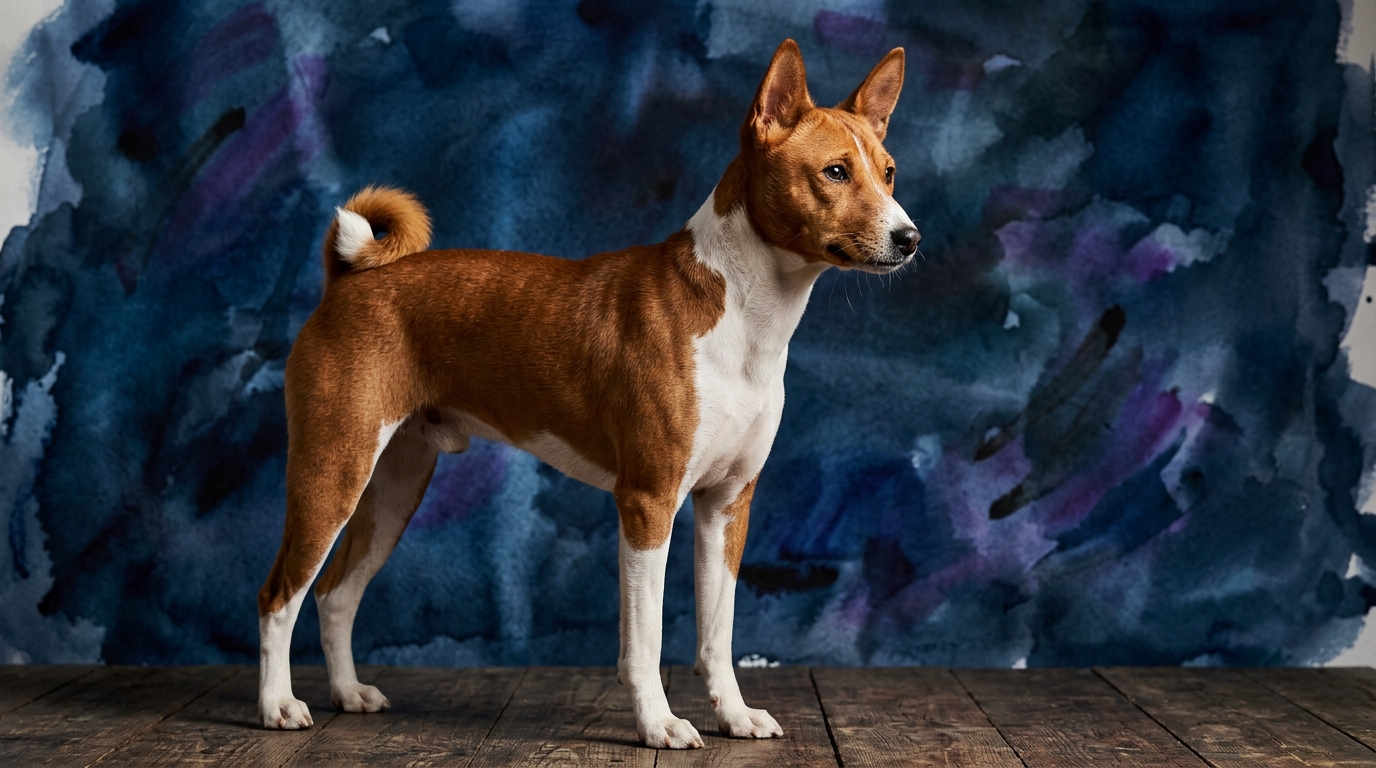
The Basenji, with a Coren rank of #78, presents a different cognitive landscape. Its Problem Solving ability is exceptional at 5/5, showcasing a high capacity for independent thought and creative solutions, often used to achieve its own objectives. Training Speed is notably low at 1/5, highlighting the breed's challenging nature when it comes to formal obedience, primarily due to its intense independence. Social Intelligence matches the Dachshund at 3/5, meaning it can interpret social signals but may choose to act on its own terms. Its Instinctive Drive is also a perfect 5/5, driven by its sighthound and scenthound ancestry, leading to an unwavering pursuit of interesting stimuli. Basenji Memory is quite strong at 4/5, enabling it to recall complex spatial layouts and past events, which often contributes to its problem-solving prowess.
Where the Dachshund Wins Cognitively
While both breeds are hounds, the Dachshund holds a distinct edge in areas that prioritize biddability and a more direct application of learned behaviors. Its Training Speed score of 2/5, though not stellar, significantly surpasses the Basenji's 1/5. This means a Dachshund, given consistent and positive reinforcement, will generally pick up basic commands and house rules more readily. Their problem-solving, while high at 4/5, often manifests as a determined focus on a task, such as burrowing or tracking, rather than the Basenji's more abstract, self-serving ingenuity. This focused persistence can make them more predictable in certain tasks. Furthermore, while their Social Intelligence scores are identical, the Dachshund's historical role as a companion and hunter working closely with humans often translates to a more overt desire to engage and cooperate, making their 3/5 feel more accessible in daily interactions.
Where the Basenji Wins Cognitively
The Basenji's cognitive strengths lie in its exceptional Problem Solving (5/5) and superior Memory (4/5), which combine to create a remarkably self-reliant and resourceful canine. Their problem-solving isn't just about persistence; it's about innovative thinking – figuring out how to open gates, climb fences, or retrieve desired items through complex sequences of actions. This is not always for human benefit, but rather to achieve their own independent goals. Their impressive memory allows them to retain these complex solutions and apply them repeatedly, or even adapt them to new situations. This combination of traits makes them incredibly adept at navigating their environment and often outsmarting their human counterparts. While their instinctive drive is equal, the Basenji often applies its drive with a level of cunning and strategic planning that is a hallmark of its high problem-solving capacity, making them masters of independent action.
Which Is Easier to Train and Why
Based on their respective IQ profiles, the Dachshund is undeniably the easier breed to train. The Dachshund's Training Speed of 2/5, while still requiring patience, is double that of the Basenji's 1/5. This difference stems from core behavioral traits. Dachshunds, despite their stubborn streaks and independent hound nature, were bred to work alongside humans, flushing out badgers and other den animals. This historical role fostered a degree of biddability and a willingness to understand and respond to human directives. They can be motivated by food, praise, and play, and will generally try to please their owners, even if their strong scent drive can be distracting.
The Basenji, on the other hand, is often described as 'cat-like' in its independence and aloofness. Their extremely low Training Speed (1/5) is a direct reflection of their deeply ingrained self-sufficiency. Basenjis were historically used for hunting in Africa, where they were expected to work independently, often out of sight and hearing of their human companions. This means they are far less concerned with pleasing people and are more driven by their own instincts and desires. They learn quickly, but often only what benefits them directly, making traditional obedience training a significant challenge. Their high problem-solving skills are frequently applied to finding ways around commands or escaping enclosures rather than adhering to human rules.
Which Suits Active Owners vs. Relaxed Owners
Both the Dachshund and Basenji possess a high Instinctive Drive (5/5), meaning neither is suited for a truly sedentary, relaxed owner who expects a couch potato. However, the *type* of activity and mental engagement they require differs significantly. A Dachshund, while possessing a strong drive for scent work and bursts of energy, can often be satisfied with moderate daily walks, consistent mental stimulation through puzzle toys, and opportunities for supervised digging or scent games in a secure yard. They enjoy being close to their people and can adapt to apartment living if their exercise and mental needs are met. They are better suited for owners who enjoy routine, can provide consistent training, and appreciate a dog with a strong personality but a generally affectionate nature.
The Basenji, with its exceptional problem-solving and high instinctive drive, demands a more active and engaged owner who understands their need for mental and physical challenges. They thrive with owners who enjoy structured activities like agility, lure coursing, or advanced scent work, which tap into their intelligence and natural hunting instincts. Their independent nature and high energy mean they can become bored and destructive if not adequately stimulated. Basenjis are ideal for owners who are experienced with independent breeds, appreciate a clever and sometimes mischievous companion, and are prepared for the commitment to ongoing training and enrichment that addresses their unique cognitive profile and strong will. They are not a dog for a relaxed, first-time owner seeking an easily managed pet.
The Verdict: When to Choose Each
The Verdict
Choose the Dachshund if you appreciate a tenacious, affectionate companion who is moderately trainable, enjoys routine, and offers a strong personality in a compact package, understanding their need for consistent boundaries and mental engagement. They are a good fit for owners seeking a loyal companion who will generally comply with training, albeit with a charmingly stubborn streak.
Opt for the Basenji if you are an experienced, active owner drawn to a highly intelligent, independent, and resourceful canine that thrives on mental challenges and consistent, engaging activities. You should be prepared for a dog that learns quickly but often uses its intelligence to its own advantage, requiring creative training approaches and a deep understanding of its unique, often 'cat-like' personality.
🧠 Find Your Pet's IQ Score
Our Pet IQ Lab assessment covers 25+ tests across 5 cognitive dimensions — personalized to your breed.
Take the Full IQ Test →Frequently Asked Questions
Are Basenjis really difficult to train?
Yes, Basenjis are widely considered challenging to train due to their extreme independence and low motivation to please humans. Their high problem-solving skills mean they often figure out ways to achieve their own goals rather than follow commands, requiring creative and patient training approaches.
Do Dachshunds have good memories?
Dachshunds have a moderate memory score of 3/5, meaning they can adequately retain learned behaviors and experiences. This helps them with consistency in training, though their strong scent drive can sometimes override recall in distracting environments.
Which breed is better for apartment living?
Both breeds can adapt to apartment living with sufficient exercise and mental stimulation, but a Dachshund might be slightly easier due to its smaller size and generally more manageable energy bursts. A Basenji's high energy and problem-solving can lead to destructive behaviors if not adequately engaged, making a highly committed owner crucial for apartment success.