
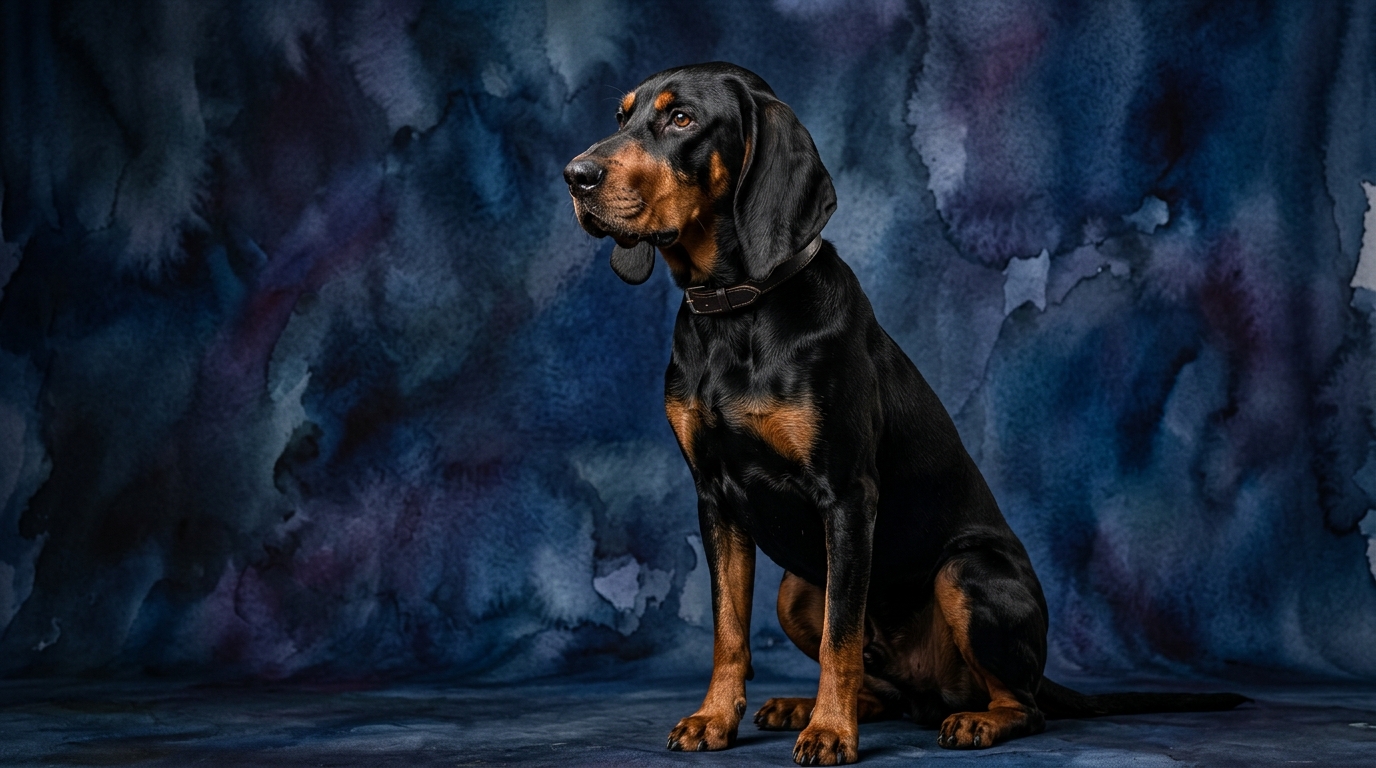
Side-by-Side IQ Profile: Dachshund vs. Black and Tan Coonhound
At The Cosmic Pet Pet IQ Lab, we evaluate canine intelligence across five key dimensions, revealing the unique cognitive landscape of each breed. For the Dachshund, a Coren rank #49 breed, its profile reflects a specialized intellect: Problem Solving (4/5) indicates a strong capacity for independent thought and strategic action, often seen in their ability to navigate complex environments or figure out how to access desired items. Training Speed (2/5) suggests they can be discerning learners, taking longer to consistently perform new commands due to their independent nature and strong will. Social Intelligence (3/5) points to a selective sociability, where they form deep bonds with their inner circle but may be more reserved with outsiders. Instinctive Drive (5/5) is their defining characteristic, an unparalleled tenacity for tracking, digging, and pursuing scents, stemming directly from their badger-hunting heritage. Memory (3/5) is functional and reliable for routines and familiar contexts, though not necessarily for vast repertoires of complex tricks without regular reinforcement.
The Black and Tan Coonhound, while not Coren-ranked, presents a different yet equally specialized cognitive blueprint. Their Problem Solving (3/5) is practical and methodical, often relying on their exceptional scenting abilities to navigate challenges rather than abstract reasoning, reflecting their history of trailing game over long distances. Training Speed (3/5) indicates a moderate learning pace; they are generally amenable to instruction, though their powerful scent drive can occasionally divert their focus. Social Intelligence (3/5) reveals a good-natured and affable disposition, typically integrating well with both family and strangers, showcasing a balanced understanding of social dynamics. Instinctive Drive (3/5) is a persistent and purposeful scent drive, crucial for their role in coonhunting, but often more measured than the intense, immediate prey drive of some other hounds. Memory (3/5) is solid for scent trails, routines, and recognizing family, vital for their working and companionship roles, but again, not for an extensive catalog of complex behaviors without consistent practice.
Where the Dachshund Excels Cognitively
The Dachshund's 4/5 rating in problem-solving shines significantly brighter than the Coonhound's 3/5, showcasing a distinct cognitive advantage. This isn't just about general cleverness; it reflects their inherent ability to independently strategize and overcome both physical and mental obstacles. A Dachshund might more readily figure out how to manipulate a complex puzzle toy for a treat, or devise a novel way to access a forbidden area, often demonstrating a creative tenacity born from their badger-hunting origins where independent thought was crucial for survival. Their capacity to assess a situation and formulate a solution, even if it's a mischievous one, sets them apart in this domain.
Furthermore, with a perfect 5/5 in instinctive drive compared to the Coonhound's 3/5, the Dachshund showcases an unparalleled focus when their core instincts are engaged. This manifests as an unyielding determination to track a scent, dig a burrow, or pursue perceived prey with single-minded intensity. While this can be challenging for owners managing a pet in a suburban environment, it speaks to a profound cognitive specialization: an instinct so deeply ingrained that it overrides many other stimuli. This singular focus on their primary drive is a cognitive strength for their original purpose, even if it requires careful management in modern homes.
Where the Black and Tan Coonhound Shines Cognitively
The Black and Tan Coonhound earns a 3/5 for training speed, surpassing the Dachshund's 2/5, indicating a more receptive and less resistant approach to learning new commands and routines. While not lightning-fast, Coonhounds generally demonstrate a willingness to cooperate and absorb instruction more consistently. Their slightly higher trainability suggests they are less prone to the stubborn independent streaks that can characterize Dachshunds, making foundational obedience and household manners potentially smoother to establish, offering a more straightforward learning curve for owners.
While not directly an 'intelligence' metric, the Coonhound's more moderate instinctive drive (3/5 vs. Dachshund's 5/5) contributes to a more balanced and manageable cognitive profile for a companion animal. Their drive is persistent and purposeful for scent work but less prone to the intense, single-minded tunnel vision that can make a Dachshund difficult to redirect. This translates into a dog that can maintain focus on a handler during training without being constantly hijacked by an overwhelming primal urge, offering a more adaptable cognitive state for diverse living situations where redirectability is key.
Training Dynamics: Which Breed is Easier and Why?
Considering the IQ metrics, the Black and Tan Coonhound is generally easier to train than the Dachshund. The Coonhound's training speed rating of 3/5, compared to the Dachshund's 2/5, is a key indicator of this difference. This stems from behavioral tendencies: Coonhounds, while possessing an independent scent drive, often exhibit a more cooperative demeanor during training sessions. They are less likely to actively resist commands or express the strong-willed, 'what's in it for me?' attitude that can characterize a Dachshund. A Dachshund's high problem-solving ability (4/5) combined with their lower training speed often means they are capable of understanding what is asked but may choose not to comply if it doesn't align with their immediate interests or deeply ingrained instinctive drives (5/5). For instance, a Dachshund tracking a captivating scent might simply 'decide' that continuing the chase is more rewarding than a recall, whereas a Coonhound, while also driven by scent, may be more amenable to redirection with consistent positive reinforcement. The Coonhound’s more moderate instinctive drive allows them to be more present and less singularly focused on their own agenda during training, leading to faster and more consistent learning outcomes.
Matching Breeds to Owner Lifestyles
The choice between these two breeds for active versus relaxed owners hinges significantly on their cognitive and instinctive profiles. The Dachshund, with its intense instinctive drive (5/5) and high problem-solving capacity (4/5), thrives with owners who can channel its tenacious energy and sharp mind. They require consistent mental stimulation through puzzle toys, scent work games, and engaging training to prevent boredom-induced mischief, which can manifest as destructive digging or excessive barking. Active owners who enjoy structured outdoor activities like earthdog trials or extensive scent walks, and who appreciate a dog with a strong, independent personality, will find the Dachshund a rewarding companion. Their need to 'work' their brains and bodies means they are not ideal for entirely relaxed, sedentary lifestyles.
In contrast, the Black and Tan Coonhound, with a more moderate instinctive drive (3/5) and balanced social intelligence (3/5), can adapt to a wider range of owner activity levels. While they certainly benefit from regular exercise, especially opportunities to engage their nose, their energy is often more sustained and less frenetic than a Dachshund's. They are content with long, leisurely walks and spending time with their family. Relaxed owners who appreciate a laid-back, affectionate companion but are still committed to daily walks and occasional scent-based enrichment will find the Coonhound a good fit. They are less likely to invent their own 'work' if under-stimulated, preferring to relax by their owner's side after their exercise needs are met after their daily exercise and mental engagement are provided.
The Verdict
Choose a Dachshund if you are an owner who appreciates a tenacious, clever companion with a strong independent streak, prepared to engage their high problem-solving skills and intense instinctive drives with consistent mental and physical challenges.
Opt for a Black and Tan Coonhound if you seek a good-natured, adaptable companion eager to learn at a steady pace, and you can provide regular exercise and scenting opportunities without needing to manage an overwhelming, highly independent drive.
🧠 Find Your Pet's IQ Score
Our Pet IQ Lab assessment covers 25+ tests across 5 cognitive dimensions — personalized to your breed.
Take the Full IQ Test →Frequently Asked Questions
Are Dachshunds harder to train because of their problem-solving skills?
Dachshunds aren't necessarily harder to train because they are less capable, but their strong problem-solving ability (4/5) and intense instinctive drive (5/5) can make them more selective about compliance. They are adept at figuring out what they *want* to do, which might not always align with what you're asking, requiring more patience and motivation in training.
How does a Black and Tan Coonhound's scent drive compare to a Dachshund's?
The Black and Tan Coonhound's scent drive (3/5) is persistent and methodical, focused on trailing game over long distances, whereas the Dachshund's (5/5) is an intense, immediate urge to pursue and dig. While both are scent hounds, the Dachshund's drive is often more overwhelming and singular, making it harder to redirect.
Which breed is better for first-time dog owners?
For first-time dog owners, the Black and Tan Coonhound might be a slightly easier introduction due to their more balanced training speed (3/5) and generally more cooperative nature. The Dachshund's strong will and intense instincts (5/5) can be more challenging for those new to dog ownership, requiring a dedicated approach to training and management.