
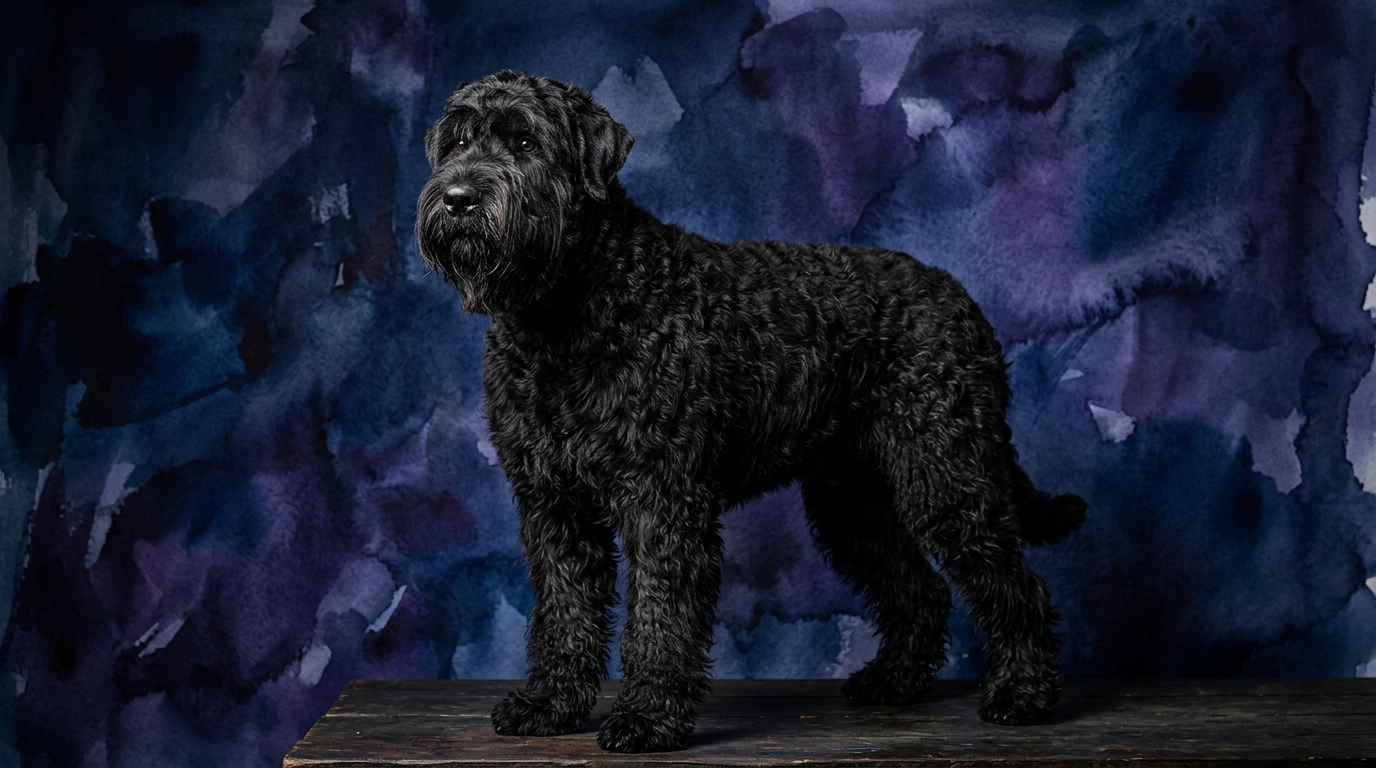
Side-by-Side Cognitive Profiles: Dachshund vs. Black Russian Terrier
The Dachshund, a small hound with a Coren rank of #49, presents a unique cognitive blueprint shaped by centuries of independent hunting. Their Problem Solving score of 4/5 indicates a remarkable capacity for independent thought, often devising their own solutions to challenges. Their history as badger hunters necessitated cunning and persistence, traits that manifest in their ability to figure out how to access forbidden treats or navigate complex puzzle toys with remarkable ingenuity; they are not always waiting for human direction to tackle an obstacle. However, their Training Speed is a modest 2/5. While capable of learning, Dachshunds are not typically quick to absorb and reliably execute commands. Their strong independent streak and focus on their own perceived priorities, especially scent trails, can make them less receptive to conventional obedience training, requiring patience and creative methods from their handlers. Their Social Intelligence is rated 3/5, where Dachshunds exhibit a moderate understanding of social cues, often leveraging their charm to get what they want from their human companions. They are adept at reading family dynamics to their advantage and can form strong bonds, though their interactions are frequently colored by their self-assured and sometimes demanding nature. A defining cognitive strength for the Dachshund is their Instinctive Drive, rated a perfect 5/5. Their drive to hunt, track, and burrow is exceptionally powerful, making them highly motivated by scent work and activities that simulate digging or chasing. This deep-seated instinct often overrides other considerations, influencing their behavior significantly. Finally, their Memory is 3/5. Dachshunds possess an average memory, capable of recalling learned commands and routines, as well as remembering specific people and places. However, their memory is often most potent when linked to their strong instinctive drives, such as recalling where they buried a toy or a particularly interesting scent.
The Black Russian Terrier, a large working breed not currently Coren-ranked, brings a different set of cognitive strengths to the table, largely influenced by its development as a military and guard dog. Their Problem Solving score is 3/5, indicating a solid, practical approach. While they may not exhibit the same independent cunning as a Dachshund in devising novel solutions, they are capable of understanding and executing complex tasks assigned to them. Their intelligence is more geared towards structured application rather than spontaneous ingenuity. With a Training Speed of 3/5, Black Russian Terriers are generally receptive to learning and can master a wide range of commands and tasks with consistent instruction. Their working background means they are often eager to please their handler and thrive on having a job to do, making them more amenable to structured training sessions than many breeds. Their Social Intelligence is also 3/5. Black Russian Terriers display a moderate level of social intelligence, particularly in discerning friend from foe and understanding their role within their family unit. They are often reserved with strangers but deeply loyal to their own, exhibiting a keen awareness of their environment and the people within it, which underpins their protective nature. The Instinctive Drive of a Black Russian Terrier is 3/5, manifesting primarily as a strong protective and guarding instinct, coupled with a desire to work alongside their human companion. While they don't possess the intense prey drive of a Dachshund, their innate desire to patrol and defend is a significant cognitive aspect. Lastly, their Memory is 3/5. Black Russian Terriers have an average memory, enabling them to retain training, routines, and experiences effectively. This consistent recall is crucial for their role as working and protection dogs, allowing them to build upon past lessons and maintain long-term obedience and household rules.
Where the Dachshund Excels Cognitively
The Dachshund truly shines in areas demanding independent thought and a tenacious pursuit of a goal. Their Problem Solving score of 4/5 indicates a remarkable capacity to navigate challenges without constant human intervention. Whether it's figuring out how to open a cabinet door or devising a strategy to reach a coveted toy, their ingenuity is notable. This isn't about following commands, but about innate cleverness in manipulating their environment. Furthermore, their Instinctive Drive, rated a perfect 5/5, represents a profound cognitive advantage in tasks requiring intense focus on scent and persistent tracking. A Dachshund’s ability to lock onto a scent trail and follow it with unwavering determination, ignoring distractions, is a testament to a specialized form of cognitive endurance and focus. This drive empowers them to excel in activities like earthdog trials or advanced scent work, where other breeds might falter due to lack of innate motivation.
Where the Black Russian Terrier Excels Cognitively
Conversely, the Black Russian Terrier demonstrates cognitive strengths that cater to a different kind of partnership and purpose. Their Training Speed, rated 3/5, surpasses the Dachshund's, highlighting their greater receptiveness to structured learning and a willingness to absorb new commands efficiently. This capability stems from their working heritage, where understanding and executing complex directives were paramount. A BRT's cognitive processes are geared towards absorbing and applying information from a handler, allowing them to excel in advanced obedience, protection work, or service roles. While their Problem Solving is rated 3/5, their intelligence is often expressed through their capacity for consistent execution of learned tasks, rather than independent improvisation. Their Social Intelligence, also 3/5, is often channeled into discerning subtle environmental cues and understanding the nuances of their family's safety, making them astute observers and formidable protectors, a cognitive strength that underpins their guarding abilities.
Training Dynamics: Which Breed is More Amenable?
Determining which breed is 'easier' to train hinges on the owner's definition of training success. For conventional obedience and the reliable execution of commands, the Black Russian Terrier generally proves more tractable. Their Training Speed of 3/5 reflects a predisposition to learning from a handler, rooted in their history as military working dogs. They thrive on clear, consistent instruction and find satisfaction in performing tasks, making them responsive to positive reinforcement and structured training sessions. Their intelligence aligns with understanding and fulfilling human expectations for cooperative behavior. The Dachshund, with a Training Speed of 2/5, presents a different challenge. Their formidable Instinctive Drive (5/5) and independent Problem Solving (4/5) often mean they have their own agenda, prioritizing interesting scents or self-devised missions over human directives. This isn't a lack of cognitive ability, but a strong will to employ their intellect for their own purposes. Training a Dachshund demands immense patience, creativity, and a deep understanding of their innate drives, often requiring methods that make training feel like a game or a 'hunt' to capture their attention and willingness to cooperate.
Cognitive Needs for Active vs. Relaxed Owners
The distinction between active and relaxed ownership for these breeds lies more in the type of activity and engagement required rather than a simple quantity of exercise. Active owners who enjoy consistent, structured training and appreciate a canine partner eager to learn complex tasks would find the Black Russian Terrier a rewarding companion. Their cognitive makeup thrives on purpose-driven activities like advanced obedience, protection sports, or even simply daily 'jobs' around the house. They need mental engagement that challenges their capacity for learning and execution. Conversely, owners who define 'active' as embracing a dog's independent spirit, engaging in less structured but mentally stimulating games, and patiently navigating a strong-willed personality might find the Dachshund a better fit. Their high instinctive drive means they need outlets for scenting, digging, and 'hunting' games, which can be immensely engaging but also require constant supervision and redirection. A 'relaxed' owner, in the sense of one who prefers minimal training effort or hands-off engagement, would likely struggle with either breed, as both possess significant cognitive needs that, if unmet, can lead to undesirable behaviors.
The Verdict
Opt for a Dachshund if you appreciate a cunning, independent problem-solver with an unparalleled drive for scent work and enjoy engaging with a dog that constantly thinks for itself, even if it means a training challenge.
Choose a Black Russian Terrier if you seek a dedicated, trainable companion capable of complex learning and protective duties, thriving under structured guidance and consistent mental engagement.
🧠 Find Your Pet's IQ Score
Our Pet IQ Lab assessment covers 25+ tests across 5 cognitive dimensions — personalized to your breed.
Take the Full IQ Test →Frequently Asked Questions
Is a Dachshund's stubbornness a sign of low intelligence?
Not at all. A Dachshund's perceived stubbornness is often a direct manifestation of their high problem-solving skills and intense instinctive drive. They are often simply prioritizing their own compelling agenda, like following an intriguing scent, over a human command, demonstrating independent thought rather than a lack of cognitive capacity.
Do Black Russian Terriers require extensive mental stimulation?
Yes, absolutely. Their working dog heritage means Black Russian Terriers thrive on consistent mental engagement, such as regular training sessions, puzzle toys, and learning new tasks. Without adequate mental stimulation, they can become bored, which may lead to undesirable behaviors.
How does instinctive drive impact daily life for these breeds?
For Dachshunds, their powerful instinctive drive (5/5) means a strong urge to follow scents, dig relentlessly, and chase small moving objects, requiring vigilant supervision and appropriate outlets. For Black Russian Terriers, their drive (3/5) primarily manifests as a robust protective instinct towards their family and home, leading to alert guarding behaviors and a need for clear social boundaries.