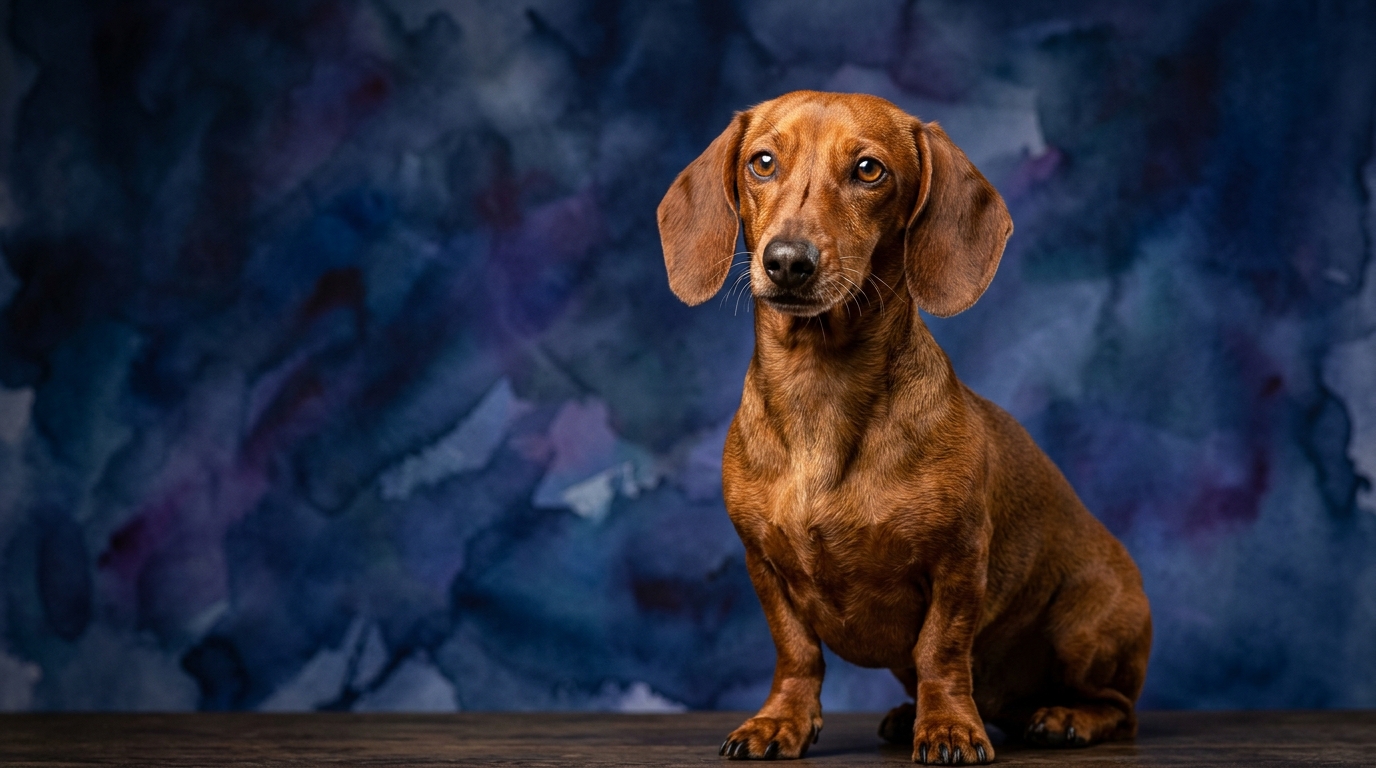
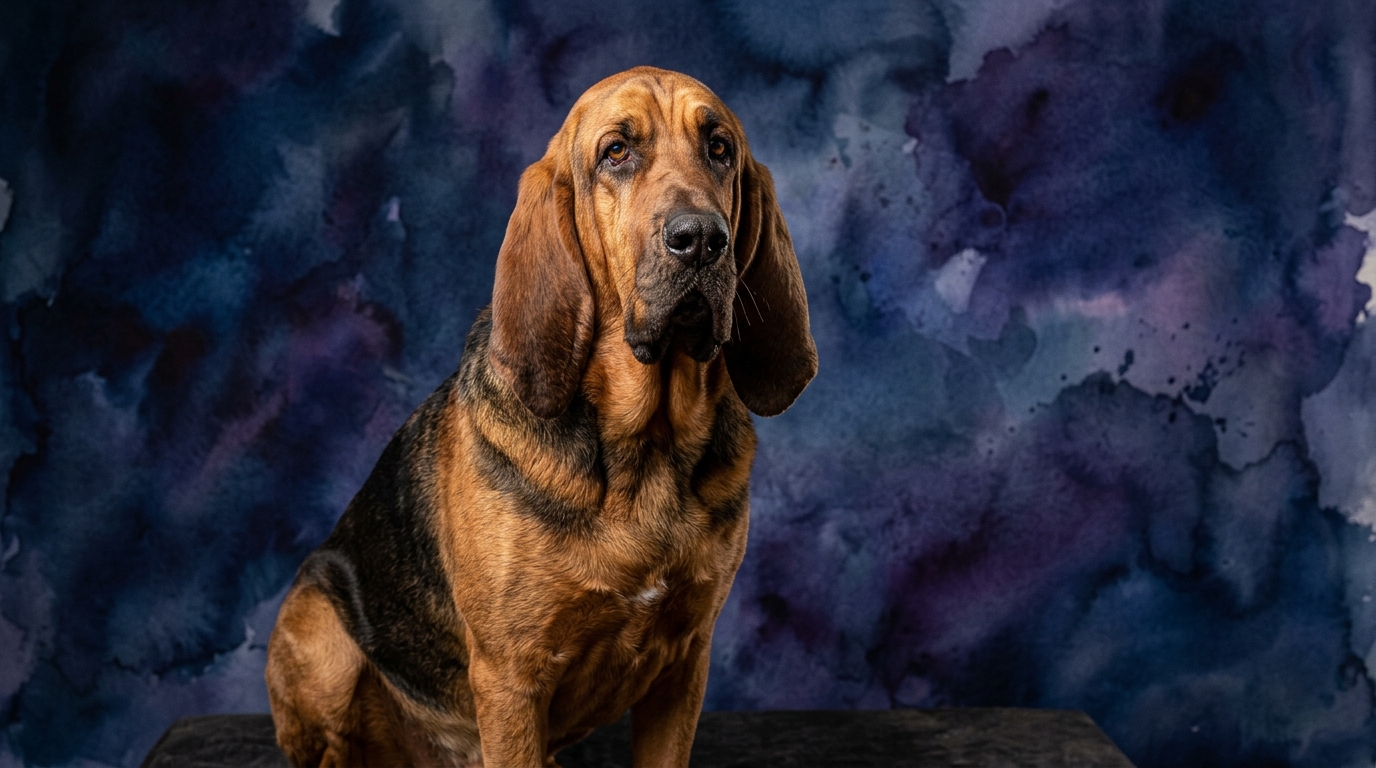
Side-by-Side IQ Profile: Dachshund vs. Bloodhound
The Cosmic Pet Pet IQ Lab assesses canine intelligence across five dimensions, offering a nuanced look at a breed's cognitive blueprint. Comparing the Dachshund and Bloodhound, both hounds, reveals specialized mental architectures shaped by their historical roles.
Dachshund (Coren Rank #49): Problem Solving (4/5): Exhibits cleverness in navigating its domestic world, often figuring out how to access forbidden areas or manipulate objects. This resourcefulness reflects an independent, sometimes mischievous, cognitive approach. Training Speed (2/5): Learns at a moderate pace, often requiring consistent, patient, and highly rewarding methods due to an independent will. Cooperation is selective, weighing commands against personal desires. Social Intelligence (3/5): Forms strong bonds with family and understands routines, yet can be reserved or assertive with strangers, displaying a focused social awareness primarily within its immediate pack. Instinctive Drive (5/5): Possesses a profound, unwavering drive to hunt and track, manifesting as persistent digging, chasing, and intense focus on compelling scents, a legacy of its badger-hunting past. Memory (3/5): Functional for routines and learned commands, but not exceptional for highly complex sequences or intricate environmental details beyond immediate instinctive pursuits.
Bloodhound (Coren Rank #74): Problem Solving (5/5): Unparalleled in scent detection and tracking, deciphering faint trails and navigating complex environments using olfactory data. This is a highly specialized cognitive genius, not abstract reasoning. Training Speed (1/5): Famously challenging in conventional obedience due to an overwhelming instinctive drive to follow scent. Once engaged on a trail, diverting their attention is exceptionally difficult, demanding immense patience. Social Intelligence (2/5): Generally amiable but less attuned to nuanced human social cues, especially when focused on scent. They can appear aloof, prioritizing their olfactory world over social interactions. Instinctive Drive (5/5): Embodies the pinnacle of instinctive drive, entirely geared towards scent work. This relentless, unwavering pursuit of a trail is a profound cognitive commitment, demonstrating tireless dedication. Memory (5/5): Extraordinary for scent profiles and intricate trail patterns. They can recall specific odors and routes over extended periods, a cornerstone of their tracking ability and processing vast sensory data.
Where the Dachshund Excels Cognitively
The Dachshund often displays greater generalized cognitive adaptability within a typical home. Their 4/5 problem-solving score signifies resourcefulness in non-scent-related challenges like manipulating latches or accessing forbidden spaces, making them appear "clever" in domestic contexts. Their higher social intelligence (3/5 vs. Bloodhound's 2/5) also suggests a more nuanced attunement to human emotional states and subtle social cues, fostering a more interactively responsive companionship. Furthermore, their moderate training speed implies quicker grasp of diverse commands when motivated, broadening their learned behavioral repertoire for a pet owner.
Where the Bloodhound Excels Cognitively
The Bloodhound's cognitive strengths are profoundly impressive and specialized. Their 5/5 problem-solving represents an unparalleled capacity for complex sensory analysis, deciphering faint, aged, or commingled scent trails with immense focus and spatial reasoning. Their extraordinary 5/5 memory is crucial, allowing them to recall intricate scent profiles and precise trail topography over extended periods, enabling remarkable accuracy on cold trails. This long-term olfactory recall is a distinct cognitive advantage. Finally, their perfect 5/5 instinctive drive, while challenging in training, is a powerful cognitive asset, enabling singular, unwavering focus on a goal, a unique form of mental fortitude.
Training: Which Breed is More Amenable?
Training ease starkly differentiates these breeds. Dachshunds, with a 2/5 training speed, are generally more receptive to traditional obedience than Bloodhounds (1/5). Dachshunds, despite their independent streak, are highly motivated by food or play and their higher social intelligence often makes them more inclined to work *with* their owner. They grasp commands with fewer repetitions, making the training process feel more progressive for the average owner.
Bloodhounds are famously difficult in conventional obedience. Their powerful 5/5 instinctive drive for scent work overrides commands, making their problem-solving and memory entirely dedicated to tracking. Once their nose is engaged, diverting their focus from a compelling odor is incredibly challenging. Training requires immense patience, understanding their nose is their world, and often integrating scent work to make learning relevant; their cognitive architecture isn't built for rapid, generalized obedience.
Matching Breeds to Owner Lifestyles: Active vs. Relaxed
Suitability for active versus relaxed owners hinges on each breed's intense instinctive drive. Dachshunds (5/5 instinctive drive) need consistent engagement beyond lap-sitting. Daily walks, sniffing opportunities, and mental stimulation are crucial to satisfy their hunting instincts. An active owner enjoying varied games, short hikes, or beginner scent work will find a fulfilling companion. Relaxed owners might struggle with their persistent energy, potentially leading to boredom-driven behaviors if their instincts are unmet.
Bloodhounds (5/5 instinctive drive) demand specialized commitment. They thrive on long, focused tracking exercises, formal trailing, or extensive nose work, utilizing their unparalleled olfactory abilities. Active owners dedicated to providing regular, purposeful outlets—through search and rescue or daily "sniffari" walks—will have a content Bloodhound. Relaxed owners unable to commit to this mental and physical exertion will likely face unmet needs, potentially manifesting as lethargy, destructive tendencies, or frustrated baying. While calm indoors, their outdoor drive is immense.
The Verdict
Opt for a Dachshund if you seek a clever, often opinionated companion who can adapt to various domestic challenges and offers more interactive social engagement, provided you appreciate their independent streak and provide consistent, engaging training.
Select a Bloodhound if you are a dedicated, patient individual eager to channel an unparalleled scenting ability into purposeful activities like tracking or nose work, valuing their specialized cognitive prowess over conventional obedience.
🧠 Find Your Pet's IQ Score
Our Pet IQ Lab assessment covers 25+ tests across 5 cognitive dimensions — personalized to your breed.
Take the Full IQ Test →Frequently Asked Questions
Do Dachshunds or Bloodhounds bark more?
Both breeds can be vocal, but differently. Dachshunds often bark at perceived threats or to alert, a remnant of their hunting past, which can become nuisance barking if unmanaged. Bloodhounds typically bay—a deep, resonant sound—often when on a scent or bored, reflecting their persistent nature.
Are Dachshunds and Bloodhounds good with children?
Dachshunds are better with older, respectful children due to their sensitive backs and potential for nippiness if startled, making them less ideal for very young kids. Bloodhounds are generally gentle and patient giants with children, though their size and scent-focused nature can lead to unintentional clumsiness around toddlers.
How much exercise do these breeds need daily?
Dachshunds need moderate daily exercise, 30-60 minutes of walks and mental games, to satisfy instincts and prevent back issues. Bloodhounds require substantial, purposeful exercise, ideally involving an hour or more of scent work daily, as their intense drive demands significant mental and physical engagement beyond simple walks.