
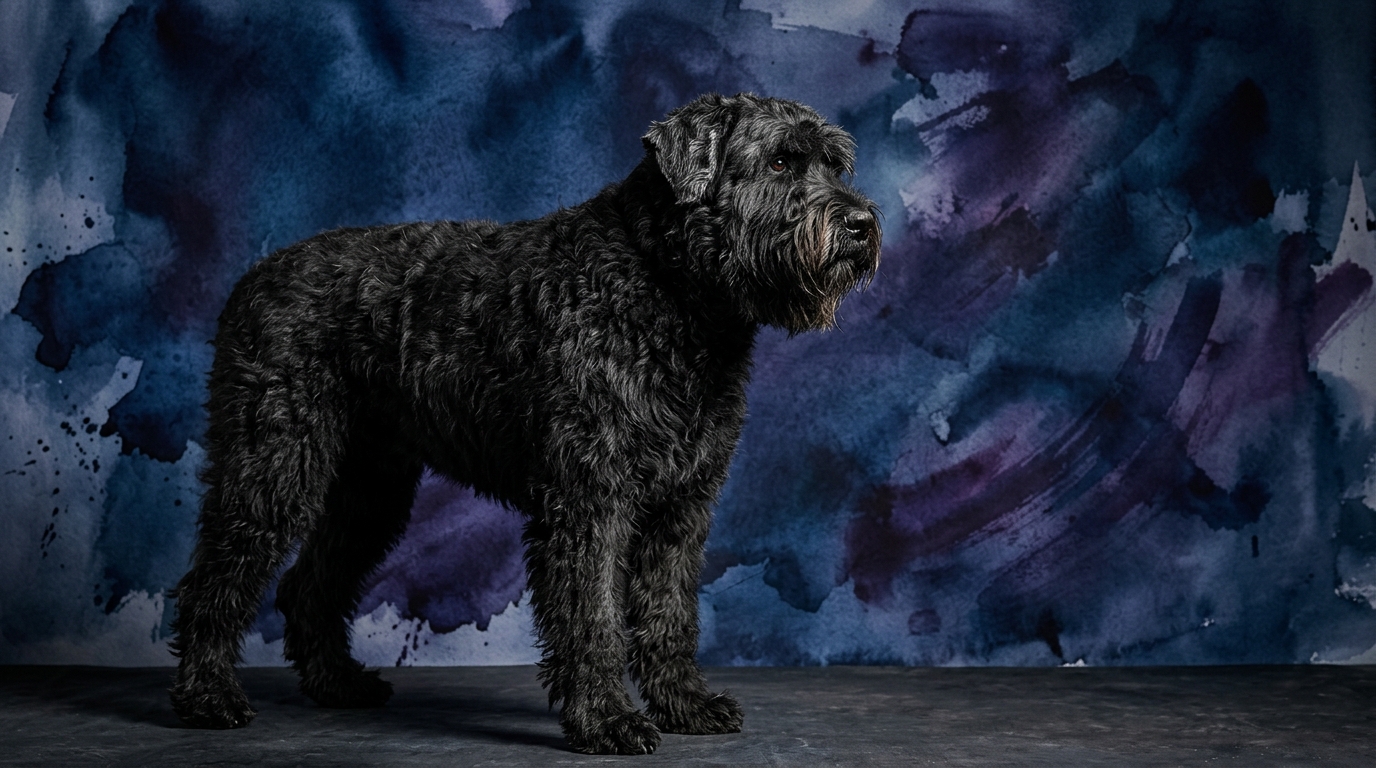
Side-by-Side IQ Profile: Dachshund vs. Bouvier des Flandres
At The Cosmic Pet Pet IQ Lab, we evaluate canine intelligence across five key dimensions, revealing unique cognitive blueprints for each breed. The Dachshund, a small hound, holds a Coren rank of #49, placing it firmly in the average working/obedience intelligence category. Its Problem Solving is rated at 4/5, indicating a strong capacity for independent thought and ingenuity, often directed towards achieving specific goals. Training Speed is 2/5, suggesting they can be slow or stubborn learners, requiring patient and consistent methods. Social Intelligence is 3/5, meaning they form strong bonds but can also be independent or reserved with strangers. Instinctive Drive is an exceptional 5/5, reflecting their powerful genetic predisposition for scent work, digging, and hunting. Memory is 3/5, an average recall for routines and learned behaviors.
The Bouvier des Flandres, a robust herding dog, is not Coren-ranked, which does not diminish its cognitive capabilities but rather indicates its specialized working intelligence falls outside the specific metrics of that study. Its Problem Solving is 3/5, demonstrating practical intelligence, particularly in real-world scenarios related to their historical roles. Training Speed is 3/5, indicating a moderate ability to learn new commands, making them reasonably amenable to instruction. Social Intelligence is also 3/5, suggesting a balanced approach to social interactions, forming strong family ties while often being reserved but observant with outsiders. Instinctive Drive is 3/5, a moderate drive encompassing herding, guarding, and protection, without the singular intensity of a hound. Memory is 3/5, providing a reliable capacity for retaining commands and experiences, essential for their working roles.
Where the Dachshund Excels Cognitively
The Dachshund truly shines in its Problem Solving (4/5) and an unparalleled Instinctive Drive (5/5). Their high problem-solving score reflects a natural ingenuity born from generations of independent hunting; they are adept at navigating complex environments, tunneling, and outsmarting small prey, demonstrating a tenacious, goal-oriented cognitive approach. This isn't about solving abstract puzzles, but rather about persistent, creative strategizing to achieve a deeply ingrained objective. Their exceptional instinctive drive means they possess an unwavering focus when pursuing a scent or a perceived target, a cognitive trait that fuels their determination and independent spirit. This intense internal motivation gives them an edge in tasks requiring sustained, self-directed effort, even if it's not always in line with human expectations.
Where the Bouvier des Flandres Excels Cognitively
The Bouvier des Flandres exhibits a more balanced and adaptable cognitive profile, particularly evident in their Training Speed (3/5) and the balanced nature of their Instinctive Drive (3/5). While their Problem Solving (3/5) is good, it’s their moderate Training Speed that gives them an advantage in human-directed learning. They are receptive to instruction and capable of absorbing new commands at a steady pace, making them more pliable for various tasks. Their instinctive drive, while not as singularly intense as the Dachshund's, is more versatile, encompassing herding, guarding, and protection. This multifaceted drive, coupled with their social intelligence (3/5), allows for a broader range of learned behaviors and a greater willingness to work cooperatively within a structured environment. Their cognitive strengths lie in their capacity for practical application and their readiness to integrate human direction with their natural inclinations.
Training Dynamics: Which Breed is Easier to Guide?
Based on their profiles, the Bouvier des Flandres would generally be considered easier to train than the Dachshund. The Bouvier's Training Speed score of 3/5, compared to the Dachshund's 2/5, indicates a greater willingness and capacity to learn new commands and cues efficiently. This difference stems from the Bouvier's moderate instinctive drive (3/5) and their historical role as a cooperative working dog, requiring them to respond to handler commands for herding livestock. They tend to be more responsive and less prone to independent decision-making when given direction. In contrast, the Dachshund's exceptionally high instinctive drive (5/5) and problem-solving tenacity (4/5) often mean they prioritize their own deeply ingrained motivations, like scent tracking, over human instruction. Their independent nature makes training a more prolonged process, often requiring significant patience and creative motivation to redirect their focus from their innate pursuits. While both breeds can be trained, the Bouvier's balanced drive and receptiveness make the learning curve smoother and more predictable.
Lifestyle Match: Active vs. Relaxed Owners
The choice between these breeds heavily depends on an owner's lifestyle and preferred level of engagement. The Dachshund, with its intense instinctive drive (5/5) and high problem-solving capacity (4/5), surprisingly suits a certain type of active owner: one who understands and can channel their relentless curiosity and need for mental engagement, particularly through scent work or structured digging. Despite their small size, they require significant mental stimulation to prevent boredom-driven behaviors, making them a fit for owners who enjoy engaging their dog's natural instincts through games and exploration, rather than just purely physical exertion. For truly relaxed owners who prefer minimal engagement, a Dachshund's independent, driven nature might prove challenging, potentially leading to unwanted behaviors. The Bouvier des Flandres, with its balanced instinctive drive (3/5) and moderate training speed (3/5), is a better fit for active owners who seek a cooperative partner for activities like advanced obedience, agility, or even protection work. Their cognitive profile lends itself to purposeful engagement and a desire to work alongside their human, making them excellent companions for structured activities that burn both physical and mental energy. While they appreciate downtime, their inherent working dog nature means they thrive with consistent activity and mental challenges, making them less suited for purely sedentary lifestyles.
The Verdict
Choose the Dachshund if you appreciate a fiercely independent, clever companion with an unyielding spirit for exploration and a keen mind for solving self-directed puzzles, understanding that their training requires patience to navigate their strong instincts.
Opt for the Bouvier des Flandres if you seek a robust, cooperative partner capable of learning a wide range of tasks, thriving on purposeful activity, and offering a balanced, adaptable cognitive profile that excels in a structured, active household.
🧠 Find Your Pet's IQ Score
Our Pet IQ Lab assessment covers 25+ tests across 5 cognitive dimensions — personalized to your breed.
Take the Full IQ Test →Frequently Asked Questions
Is the Dachshund's high instinctive drive difficult to manage?
Yes, the Dachshund's exceptional instinctive drive (5/5), particularly for scent and digging, can present management challenges. Owners must be prepared to provide appropriate outlets for these behaviors and use consistent training to redirect their focus from innate pursuits.
How does the Bouvier des Flandres's lack of Coren ranking affect its perceived intelligence?
The Bouvier des Flandres not being Coren-ranked doesn't imply a lack of intelligence; rather, the Coren study primarily focused on working/obedience intelligence based on specific metrics. The Bouvier possesses a specialized working intelligence suited for herding and guarding, which might not align perfectly with the Coren ranking methodology.
Can a Bouvier des Flandres adapt to apartment living despite its working dog background?
A Bouvier des Flandres can adapt to apartment living if their owners are committed to providing sufficient mental and physical exercise daily. Their moderate instinctive drive and balanced social intelligence mean they can be calm indoors, but they absolutely require structured activities and regular outdoor engagement to prevent boredom and maintain their well-being.