
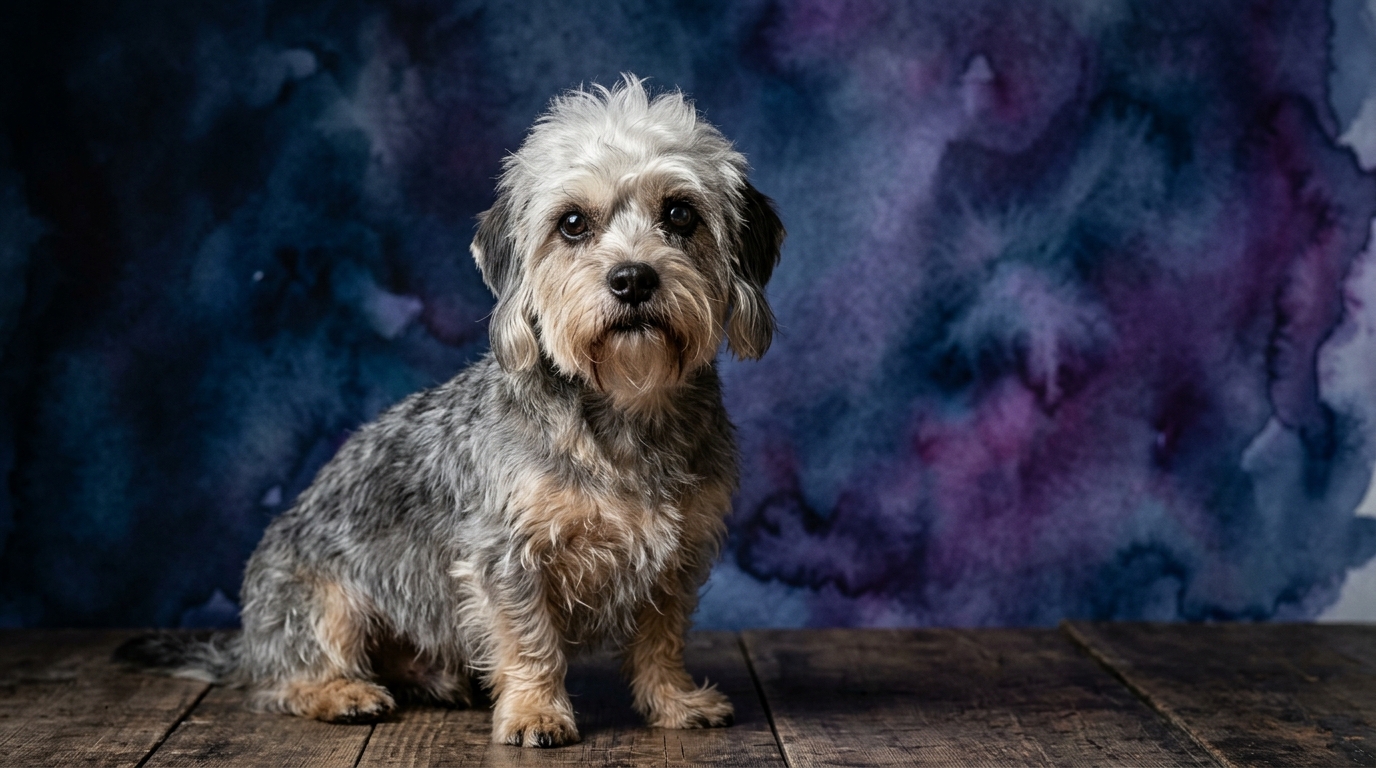
Side-by-Side Cognitive Profiles: Dachshund vs. Dandie Dinmont Terrier
The Cosmic Pet Pet IQ Lab evaluates canine cognition across five crucial dimensions: problem-solving, training speed, social intelligence, instinctive drive, and memory. These scores offer a nuanced view beyond general perceptions, allowing us to understand how each breed processes information and interacts with its world.
The Dachshund, recognized with a Coren rank of #49, presents a profile marked by a strong independent streak. Its problem-solving ability scores 4/5, indicating a capacity for navigating complex scenarios, often driven by its senses. Training speed is rated 2/5, suggesting a need for patience and consistent methods, while social intelligence is 3/5, meaning it can read cues but often prioritizes its own agenda. Its instinctive drive is notably high at 5/5, reflecting its deep-rooted hunting heritage, and memory stands at 3/5, capable of recalling important information but perhaps selectively.
In contrast, the Dandie Dinmont Terrier, while not Coren-ranked, offers a balanced cognitive profile. Its problem-solving ability is 3/5, demonstrating competence without the Dachshund's intense focus on independent solutions. Training speed is 3/5, indicating a more amenable learning curve. Social intelligence also scores 3/5, suggesting a good capacity for interaction and understanding human dynamics. Its instinctive drive is 3/5, a typical terrier tenacity but less specialized than a Dachshund's, and memory is 3/5, providing a standard recall and retention ability.
Where the Dachshund's Mind Takes the Lead
Analyzing the cognitive dimensions, the Dachshund demonstrates distinct advantages in specific areas, particularly its problem-solving aptitude and formidable instinctive drive. These strengths are deeply intertwined with its historical role as a badger hunter, requiring significant mental and physical tenacity.
The Dachshund’s 4/5 problem-solving score signifies a breed that excels at independent thought and strategy, especially when a task involves scent detection or navigating confined spaces. Their cognitive wiring makes them adept at figuring out how to reach a desired object or overcome an obstacle, often employing persistent, creative methods. This isn't about simple obedience; it's about a dog that can conceptualize and execute a plan to achieve a goal, a testament to their focused determination.
Furthermore, the Dachshund’s instinctive drive, rated at a powerful 5/5, is a profound cognitive asset in its original context. This intense, hardwired focus on pursuit and exploration makes them relentless and highly motivated when engaged in activities that tap into these instincts. While it can manifest as stubbornness in training, this drive is a specialized form of intelligence, allowing them to process sensory information with exceptional clarity and maintain sustained effort towards a specific, instinctual objective, making them masters of their domain when it comes to scent work or tracking.
Dandie Dinmont Terrier's Unique Cognitive Strengths
While the Dachshund excels in specific, intense cognitive areas, the Dandie Dinmont Terrier offers a different kind of strength, particularly in its more balanced and adaptable mental approach. This balance translates into practical advantages for owners seeking a responsive yet spirited companion.
The Dandie Dinmont Terrier's training speed, rated at 3/5, stands out when compared to the Dachshund's 2/5. This indicates a greater receptiveness to learning new commands and routines, making them generally more straightforward to teach. Their moderate instinctive drive (3/5) means they are less likely to be overwhelmingly distracted by environmental stimuli, allowing for more focused training sessions and a quicker grasp of desired behaviors. This cognitive trait fosters a more cooperative learning environment.
Additionally, the Dandie Dinmont Terrier’s consistent 3/5 scores across problem-solving, social intelligence, instinctive drive, and memory suggest a well-rounded cognitive profile. This balance means they aren't dominated by a single, powerful instinct or a highly independent problem-solving style that might override owner directives. Their adaptability allows them to integrate smoothly into various household dynamics and adjust to different situations without the intense, singular focus seen in some highly specialized breeds, making them versatile companions.
Training Dynamics: Dachshund Stubbornness vs. Dandie Dinmont Receptiveness
The distinct cognitive profiles of these two breeds lead to significantly different experiences in training. Understanding these underlying mental frameworks is key to successful engagement with either a Dachshund or a Dandie Dinmont Terrier.
The Dachshund's training speed of 2/5 is not an indicator of a lack of mental capacity, but rather a reflection of its formidable 5/5 instinctive drive and 4/5 problem-solving ability. These dogs possess an independent mind and a powerful internal compass, often prioritizing their own perceived tasks—like following a scent—over human commands. Training a Dachshund demands exceptional consistency, positive reinforcement, and creative methods that make complying with human requests more appealing than indulging their innate urges. Their cognitive strength in independent decision-making can be interpreted as 'stubbornness' when it diverges from an owner's expectations.
Conversely, the Dandie Dinmont Terrier, with a training speed of 3/5, generally presents a more cooperative student. While they possess a terrier’s characteristic spirit, their instinctive drive is less all-consuming, and their problem-solving is less oriented towards independent, self-directed missions. This makes them more responsive to conventional training techniques and less prone to intense fixations that can derail a session. They are typically more eager to please and to engage in a back-and-forth learning process with their human companions, making the training journey smoother for many owners.
Lifestyle Compatibility: Active Explorers vs. Adaptable Companions
Matching a dog's cognitive strengths and drives with an owner's lifestyle is paramount for a harmonious relationship. The Dachshund and Dandie Dinmont Terrier offer very different propositions in this regard, shaped by their distinct mental makeups.
For owners seeking a dog for active, mentally stimulating engagement, especially involving scent work, exploration, or challenging puzzle toys, the Dachshund is a compelling choice. Their high problem-solving (4/5) and intense instinctive drive (5/5) mean they thrive when given purpose and opportunities to exercise their formidable hunting instincts. They require owners who can channel this boundless energy and focused determination into structured activities, understanding that a bored Dachshund will invent its own (often destructive) mental games. These dogs need more than just physical exercise; they demand significant mental engagement and opportunities to 'work' in a way that satisfies their deep-seated drives.
The Dandie Dinmont Terrier, with its balanced cognitive scores across the board, is a better fit for owners looking for a more adaptable and generally easier-to-manage companion. While they certainly appreciate regular walks and playtime, their moderate instinctive drive (3/5) and training speed (3/5) mean they can integrate more smoothly into a wider range of daily routines without needing constant, intense mental challenges. They are well-suited for relaxed owners who enjoy an active companion but don't necessarily want to manage an overwhelming working drive, offering a delightful blend of terrier spirit and companionability that fits well into varied household environments.
The Verdict: Choosing Your Canine Companion
The Verdict
Choose a Dachshund if you appreciate a dog with exceptional problem-solving abilities and a powerful, instinct-driven focus, and are prepared to engage their mind with consistent, creative training and activities that satisfy their deep-seated drives.
Opt for a Dandie Dinmont Terrier if you prefer a more balanced cognitive profile, offering a more straightforward training experience and a moderate instinctive drive that integrates well into a variety of household environments, providing a charming and adaptable companion.
🧠 Find Your Pet's IQ Score
Our Pet IQ Lab assessment covers 25+ tests across 5 cognitive dimensions — personalized to your breed.
Take the Full IQ Test →Frequently Asked Questions
Does a Dachshund's problem-solving score mean they are harder to train?
A Dachshund's 4/5 problem-solving, combined with a 5/5 instinctive drive, means they often independently assess situations and follow their own strong urges. This doesn't indicate a lack of learning capacity but rather a need for owners to be exceptionally consistent and creative in making desired behaviors more rewarding than their inherent pursuits.
How does the Dandie Dinmont Terrier's lack of Coren ranking affect understanding its intelligence?
The absence of a Coren ranking for the Dandie Dinmont Terrier simply means it wasn't included in that specific study, not that it lacks cognitive abilities. Our Pet IQ Lab provides a detailed breakdown across five key dimensions, offering specific insights into its problem-solving, training speed, social intelligence, instinctive drive, and memory, allowing for a direct comparison based on observable traits.
Which breed is better for first-time dog owners interested in cognitive engagement?
For first-time owners keen on cognitive engagement, the Dandie Dinmont Terrier offers a more accessible entry point due to its 3/5 training speed, making it generally more responsive. While the Dachshund presents fascinating cognitive challenges, its intense instinctive drive and independent problem-solving often require more experienced handling to channel effectively.