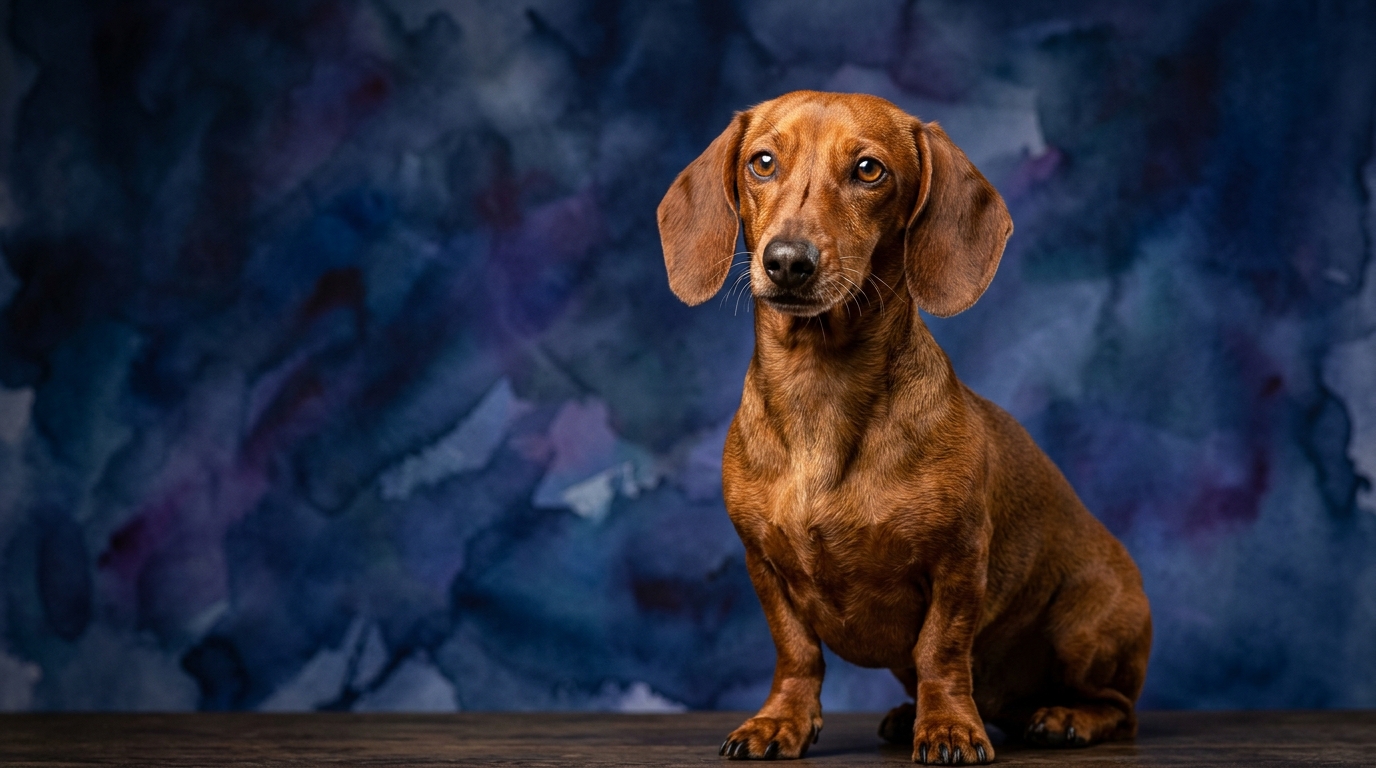
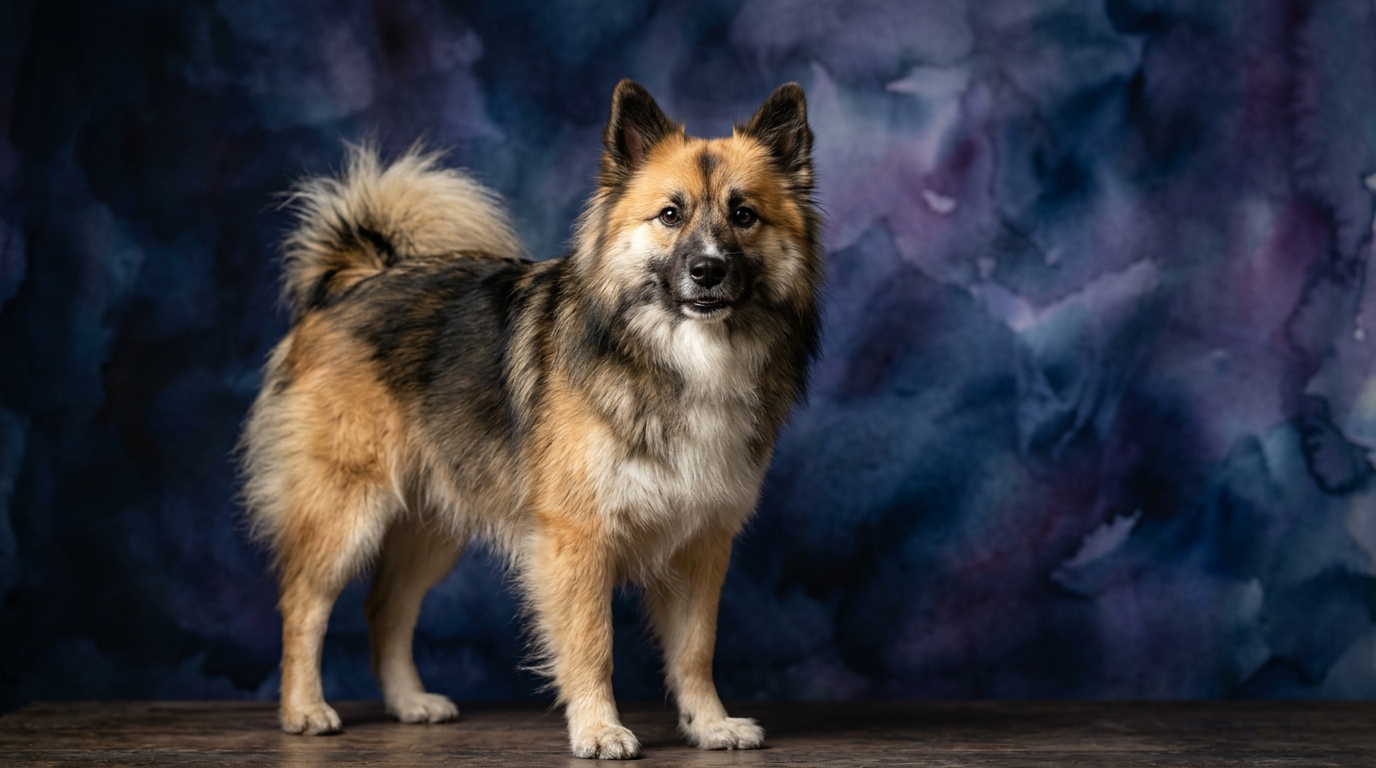
Side-by-Side Cognitive Profiles
At The Cosmic Pet Pet IQ Lab, we delve beyond generalities to understand the specific cognitive strengths of each breed. For the Dachshund, ranked #49 by Coren, and the Icelandic Sheepdog, an unranked but cognitively distinct Herding breed, their intelligence manifests in very different ways across five key dimensions:
Dachshund (Hound, Coren Rank #49):
Problem Solving (4/5): The Dachshund demonstrates a strong capacity for independent thought and figuring out how to achieve goals, particularly when it involves reaching something or digging. Their history as badger hunters honed a persistent, strategic mind for navigating complex underground tunnels, showcasing a remarkable ability to overcome obstacles to reach a desired outcome.
Training Speed (2/5): While certainly capable of learning, their independent nature and strong will mean Dachshunds often require patient, highly consistent training methods. They can be selective about when to comply, frequently prioritizing their own instincts and perceived objectives over immediate human directives, which can slow down the training process.
Social Intelligence (3/5): Dachshunds form deep, often exclusive bonds with their chosen humans and can be quite perceptive of household dynamics. However, their social circle tends to be smaller, and they may be reserved, opinionated, or even aloof with strangers and other dogs, reflecting a self-assured disposition rather than broad social eagerness.
Instinctive Drive (5/5): Their drive to hunt, track, and dig is exceptionally strong, a direct legacy of their breed purpose. This inherent motivation fuels their curiosity and determination, often manifesting as an unstoppable pursuit of scents or small critters, making it a dominant force in their cognitive landscape.
Memory (3/5): Dachshunds possess a reliable memory for routines, commands they choose to follow, and especially for locations of interesting smells or buried treasures. They remember experiences, both positive and negative, which significantly influences their future interactions and responses.
Icelandic Sheepdog (Herding, Not Coren-ranked):
Problem Solving (3/5): The Icelandic Sheepdog exhibits practical problem-solving skills rooted in their herding background, such as figuring out how to move sheep or navigate varied terrain. They are adaptable thinkers who can assess situations and react appropriately, though perhaps less inclined towards abstract or purely self-serving puzzles than the Dachshund.
Training Speed (3/5): Generally eager to please and responsive to positive reinforcement, Icelandic Sheepdogs are moderately quick learners. Their cooperative spirit and desire to work alongside humans contribute to a steady, if not lightning-fast, training progression, making them receptive to consistent instruction.
Social Intelligence (3/5): Known for their friendly and outgoing nature, Icelandic Sheepdogs are attuned to human emotions and family dynamics. They thrive on companionship and are generally amiable with strangers and other animals, showing a balanced social awareness that contributes to their role as family companions.
Instinctive Drive (3/5): Their herding instinct is present but often expressed as a desire to keep their 'flock' (family) together, rather than an intense prey drive. This drive is manageable and can be channeled effectively into activities like agility or rally, reflecting a cooperative rather than purely predatory focus.
Memory (3/5): Icelandic Sheepdogs have a good memory for commands, routines, and the people they encounter. This allows them to quickly learn and retain complex tasks, particularly those involving cooperation and recall in an open, dynamic environment, aiding their herding and companion roles.
Where the Dachshund Excels Cognitively
The Dachshund's cognitive strength particularly shines in areas demanding tenacious, independent problem-solving. Their 'Problem Solving' score of 4/5 reflects a breed that thrives on figuring things out for themselves, especially when a reward is perceived at the end. This isn't about rote learning; it's about a dog who will persistently strategize how to get to the treat on the counter or dig under a fence. Their 'Instinctive Drive' at 5/5 is a powerful cognitive engine, making them exceptionally focused on their primary motivations – scent work, tracking, and burrowing. This intense drive translates into a remarkable ability to concentrate on a task, even when faced with distractions, until their objective is met. For owners seeking a dog with a profound, self-directed drive to explore and achieve specific goals, the Dachshund offers a mind uniquely wired for determined pursuit.
Where the Icelandic Sheepdog Excels Cognitively
The Icelandic Sheepdog demonstrates a nuanced cognitive edge in areas emphasizing adaptability and cooperative learning. Their balanced 'Training Speed' and 'Social Intelligence' scores of 3/5 highlight a dog that integrates well into a human family structure, eager to learn and participate. Unlike the Dachshund's independent streak, the Icelandic Sheepdog’s cognitive process is more geared towards understanding and responding to human cues, making them receptive to varied training approaches. Their 'Instinctive Drive' at 3/5, while present, is less singularly focused than the Dachshund's, allowing for greater flexibility in channeling their energy. This means their cognitive resources are more broadly distributed, enabling them to excel in dynamic environments where quick assessment and cooperative action are key, such as navigating complex herding patterns or participating in dog sports that require teamwork and communication.
Training Dynamics: Which is Easier to Guide?
Evaluating ease of training between these two breeds requires understanding their core motivations. The Icelandic Sheepdog, with its 'Training Speed' of 3/5 and 'Social Intelligence' of 3/5, generally presents an easier training experience. They possess an inherent desire to work cooperatively with humans, a legacy of their herding role where responding to commands was crucial for flock management. This means they are often more eager to please and respond well to positive reinforcement, quickly grasping new commands and routines. Their moderate 'Instinctive Drive' (3/5) is also less likely to overshadow their focus on their handler, making them more amenable to consistent instruction.
In contrast, the Dachshund’s 'Training Speed' of 2/5 is a direct reflection of their independent, often stubborn nature. Their profound 'Instinctive Drive' (5/5) means they are frequently more interested in pursuing a scent or a digging opportunity than in performing a sit-stay. Training a Dachshund demands exceptional patience, creativity, and a deep understanding of their motivations, often requiring owners to make training feel like a game that aligns with the Dachshund's own objectives, rather than a mere compliance exercise. Their selective obedience stems not from a lack of capacity, but from a strong sense of self-direction.
Lifestyle Match: Active vs. Relaxed Owners
For owners with an active lifestyle, the Icelandic Sheepdog presents a compelling match. Their moderate 'Instinctive Drive' and 'Problem Solving' capabilities make them excellent companions for activities like hiking, agility, or rally, where their adaptable nature and desire to cooperate shine. They thrive on mental engagement through training and physical exertion, enjoying varied routines that keep their minds and bodies busy. Their balanced 'Social Intelligence' also makes them suitable for outings and interactions in diverse environments, readily adapting to new people and places.
Conversely, the Dachshund, despite its smaller stature, isn't necessarily a fit for 'relaxed' owners in the traditional sense, especially those unprepared for their profound 'Instinctive Drive' (5/5). While they enjoy cuddling, their cognitive wiring demands outlets for their strong hunting and digging urges. A 'relaxed' owner for a Dachshund would be one who appreciates and provides structured opportunities for scent work, puzzle toys, or supervised digging, channeling their intense focus. Owners seeking a dog for long, strenuous hikes might find the Dachshund's physical limitations a mismatch, but those who enjoy focused, shorter activities like urban scent walks or backyard 'treasure hunts' would find their cognitive drive well-suited and deeply rewarding.
The Verdict
Choose a Dachshund if you admire a fiercely independent thinker with an unparalleled drive for specific, sensory-rich tasks and are prepared to engage with their strong will and hunting instincts creatively.
Opt for an Icelandic Sheepdog if you seek a cooperative, adaptable companion who thrives on teamwork, enjoys diverse activities, and integrates seamlessly into a family-oriented, active lifestyle.
🧠 Find Your Pet's IQ Score
Our Pet IQ Lab assessment covers 25+ tests across 5 cognitive dimensions — personalized to your breed.
Take the Full IQ Test →Frequently Asked Questions
Are Dachshunds difficult to train?
Dachshunds possess a strong independent streak and a powerful instinctive drive, making training require significant patience and consistency. They often prioritize their own interests, like scent following, over immediate compliance, so owners need to make training highly rewarding and engaging and understand their unique motivations.
Do Icelandic Sheepdogs need a lot of mental stimulation?
Yes, Icelandic Sheepdogs thrive on mental engagement due to their background as working herding dogs. They enjoy learning new tasks, participating in dog sports, and having opportunities to use their problem-solving skills in cooperative activities alongside their human companions, which keeps their minds active and engaged.
Which breed is better with children?
Both breeds can be good with children, but their temperaments differ. Icelandic Sheepdogs are generally known for their friendly, adaptable, and patient nature, often integrating well into family life. Dachshunds, while loyal to their family, can be less tolerant of rough play and may prefer a calmer environment, making supervision crucial with very young children.