
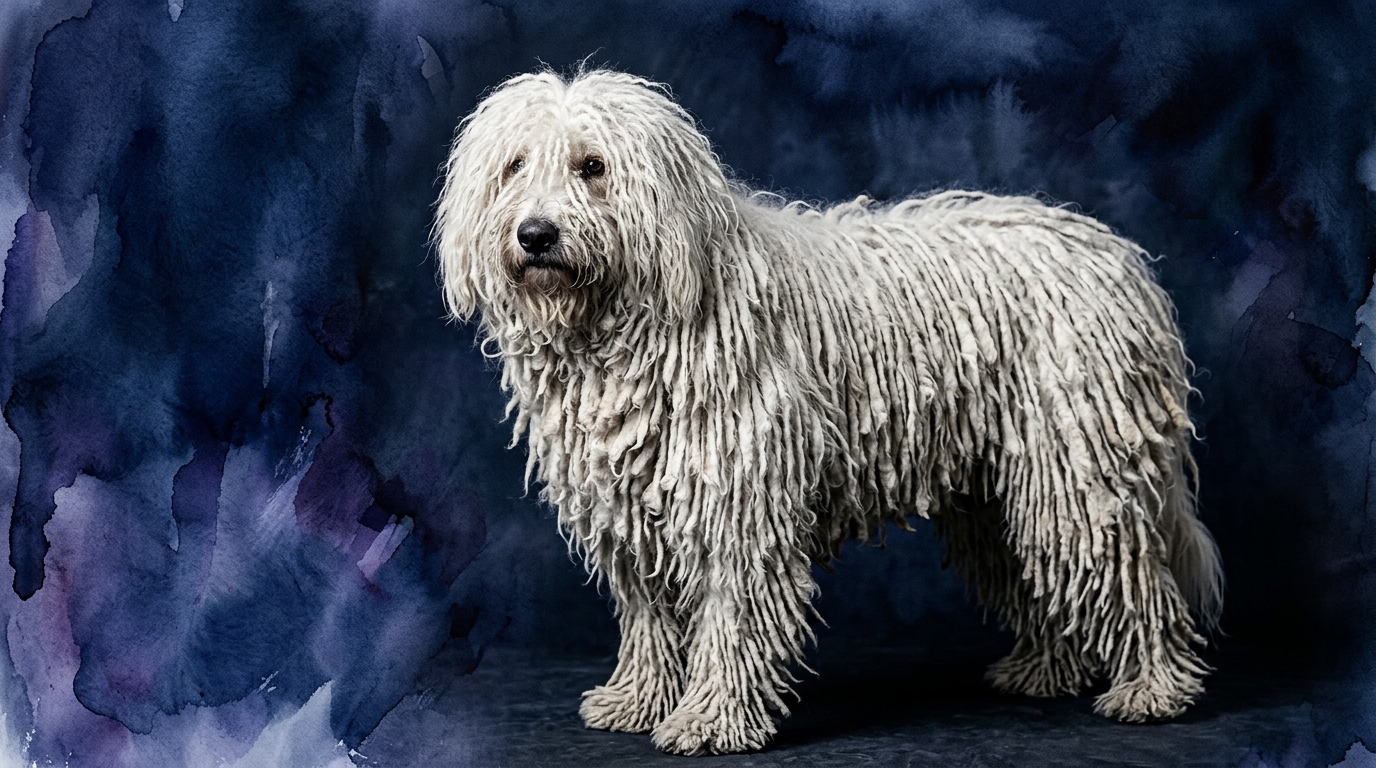
Side-by-Side Cognitive Profiles
The Dachshund, a hound breed, ranks #49 on the Coren intelligence scale, exhibiting a fascinating blend of sharp problem-solving skills and a formidable drive. Its Problem Solving is rated 4/5, indicating a high capacity for figuring out novel solutions to reach goals. Training Speed, however, stands at 2/5, suggesting a need for persistent and engaging methods. Social Intelligence is 3/5, meaning it can interpret human cues but often operates with its own agenda. Its Instinctive Drive is a powerful 5/5, reflecting its deep-seated hunting and tracking heritage, while Memory is a solid 3/5, capable of retaining useful information.
In contrast, the Komondor, a working breed, sits at Coren rank #67, showcasing a different set of cognitive strengths geared towards guardianship. Its Problem Solving is 3/5, indicating it can navigate challenges, often through vigilance rather than complex manipulation. Training Speed is 3/5, suggesting a moderate pace for learning new commands, benefitting from clear, purposeful instruction. Social Intelligence also registers at 3/5, showing an awareness of its family but a reserved nature towards strangers. Instinctive Drive is 3/5, centered on its protective duties rather than prey pursuit, and Memory is also 3/5, allowing it to recall routines and perceived threats effectively.
Where the Dachshund Excels Cognitively
The Dachshund's superior Problem Solving at 4/5 is a clear cognitive advantage. This breed is adept at strategizing to achieve specific outcomes, whether that involves devising a way to access a treat on a high counter or tunneling under a fence to explore. This capacity for creative thinking and independent action stems from its historical role requiring it to operate autonomously underground, out of sight of its handler. Its intense Instinctive Drive, rated 5/5, means it possesses an unwavering focus and stamina when pursuing a scent or digging, often exhibiting a persistence that can astound. This deep-seated drive, while sometimes challenging for owners, is a testament to its cognitive specialization in its original hunting purpose.
Where the Komondor Shows Its Strengths
While the Komondor doesn't boast higher scores in individual cognitive dimensions compared to the Dachshund, its strength lies in the balanced application of its faculties, particularly in its role as a guardian. Its Training Speed of 3/5, while not exceptional, is more amenable than the Dachshund's 2/5, indicating a more straightforward learning process when commands align with its inherent purpose or provide clear structure. The Komondor's 3/5 Instinctive Drive, specifically tailored for protection, allows it to excel in discerning and reacting appropriately to perceived threats, a nuanced cognitive skill less central to the Dachshund's profile. This means a Komondor's mental energy is efficiently channeled into vigilance and protective decision-making, rather than the varied pursuits of a hound.
Trainability: Dachshund vs. Komondor
When it comes to trainability, the Komondor generally presents a more receptive learner due to its 3/5 Training Speed compared to the Dachshund's 2/5. Komondors respond well to consistent, purposeful training, especially when commands reinforce their natural guarding instincts or provide a clear role within the family structure. They are often calm and thoughtful in their approach to learning, although they can be independent. The Dachshund, with its lower Training Speed, requires significant patience and creative reinforcement. Its powerful 5/5 Instinctive Drive means that if a captivating scent or movement appears, its ingrained hunting impulses can easily override any learned commands, making consistent compliance a long-term project. Behavioral differences manifest in the Dachshund's tendency to follow its nose rather than its owner's instruction, whereas the Komondor, once it understands a command's utility, is more likely to integrate it into its routine, albeit with an independent streak.
Suitability for Different Lifestyles
For active owners who relish engaging with a dog's sharp, independent mind and providing outlets for intense natural drives, the Dachshund is an excellent match. Its high Problem Solving and extreme Instinctive Drive demand regular mental stimulation and opportunities for scent work or digging. Owners who enjoy puzzle toys, canine sports like earthdog trials, or consistent, engaging training sessions will find the Dachshund's cognitive needs align well with their active lifestyle, providing a rewarding challenge. This breed thrives when given a 'job' that taps into its innate capabilities, preventing boredom and potential mischief.
Conversely, the Komondor might appeal more to relaxed owners who appreciate a dog with a steady, watchful presence and a moderate, focused drive. While not a couch potato, its 3/5 Instinctive Drive is primarily directed towards guarding, meaning its activity needs often revolve around patrolling its territory and observing. Owners who value a calm, vigilant companion and are prepared for a dog that learns at a moderate pace will find the Komondor suitable. Its independent nature and loyalty make it a steadfast, if reserved, companion, requiring less frantic physical activity but still needing purposeful engagement and socialization to thrive.
The Verdict
Choose the Dachshund if you are an active owner who enjoys a canine partner with exceptional problem-solving abilities and a strong, persistent drive, willing to invest time in engaging its keen mind and managing its independent nature.
Opt for the Komondor if you seek a calm, vigilant companion with a moderate, protective drive, and appreciate a dog that learns steadily and integrates into a family with a reserved yet loyal disposition.
🧠 Find Your Pet's IQ Score
Our Pet IQ Lab assessment covers 25+ tests across 5 cognitive dimensions — personalized to your breed.
Take the Full IQ Test →Frequently Asked Questions
Which breed is more prone to independent decision-making?
The Dachshund, with its 4/5 Problem Solving and 5/5 Instinctive Drive, is more prone to independent decision-making, often following its own impulses or finding creative solutions without direct human guidance. The Komondor also exhibits independence, but its decisions are typically rooted in its guarding instincts rather than varied curiosity.
Do either of these breeds excel in social settings?
Both breeds have a Social Intelligence rating of 3/5, indicating they understand human cues but aren't necessarily outgoing. Dachshunds can be social with their chosen family but reserved with strangers, while Komondors are typically aloof with outsiders, focusing their social engagement on their immediate household and perceived protective duties.
Which breed requires more mental stimulation to prevent destructive behaviors?
The Dachshund, with its higher Problem Solving (4/5) and intense Instinctive Drive (5/5), generally requires more consistent and varied mental stimulation to prevent boredom and potential destructive behaviors like excessive digging or chewing. The Komondor's mental needs are more focused on vigilance and routine, though it still benefits from purposeful activity.