
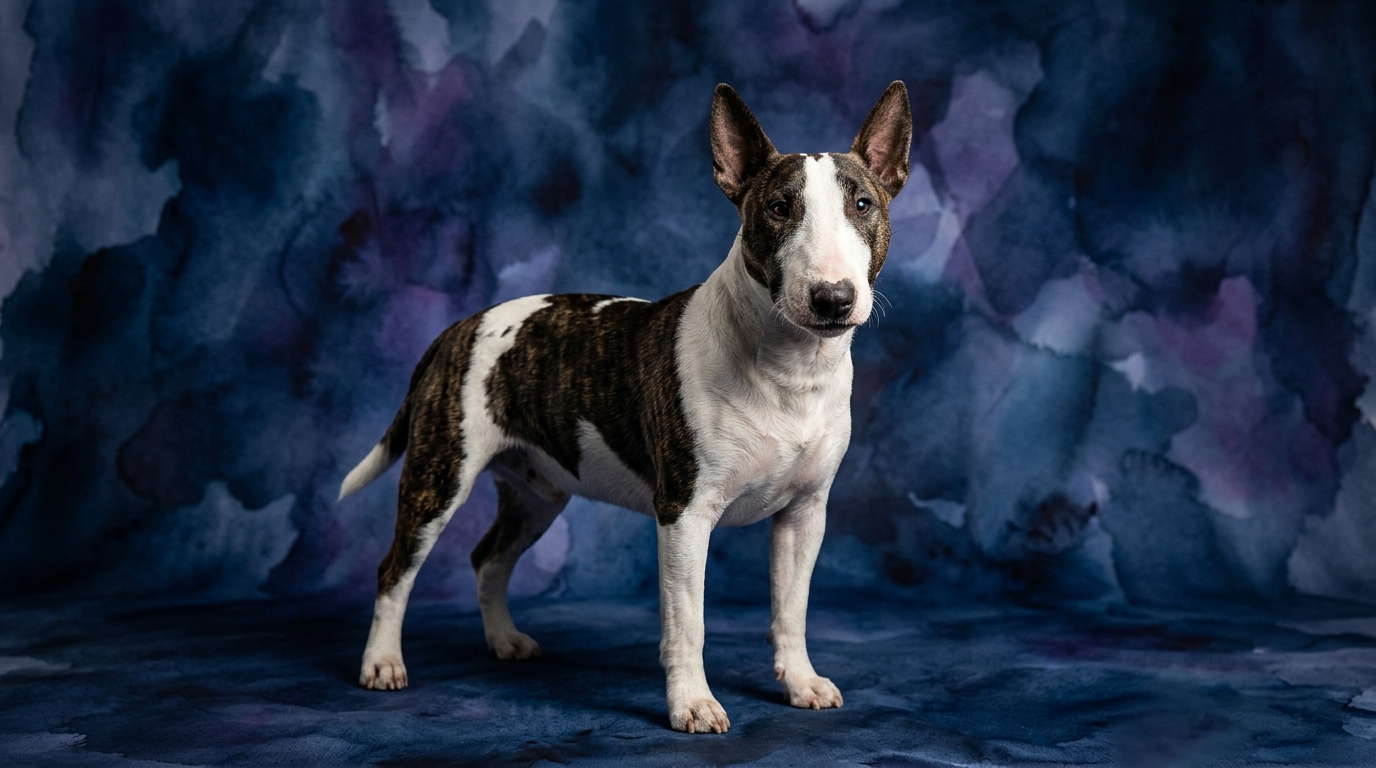
Side-by-Side Cognitive Profiles: Dachshund vs. Miniature Bull Terrier
The Cosmic Pet Pet IQ Lab's assessment provides a detailed look into the unique cognitive makeup of each breed, moving beyond general perceptions to specific intellectual dimensions. For the Dachshund, a hound breed ranked #49 by Coren, its profile highlights a Problem Solving score of 4/5, indicating a tenacious and independent approach to overcoming obstacles, often driven by its powerful scenting abilities. Its Training Speed is rated 2/5, suggesting a breed that learns at its own pace, requiring consistent and patient methods, often due to a strong will. Social Intelligence stands at 3/5, meaning they are capable of forming strong bonds and understanding human cues, though they sometimes prefer the company of their chosen few. Crucially, their Instinctive Drive is a profound 5/5, reflecting an almost singular focus on their original hunting purpose, manifesting as persistent tracking and burrowing behaviors. Memory is a solid 3/5, allowing them to retain learned commands and experiences, but this can also apply to undesirable habits if not managed effectively.
In contrast, the Miniature Bull Terrier, a terrier breed not specifically Coren-ranked, presents a different cognitive blueprint. Its Problem Solving ability is rated 3/5, demonstrating adaptability and a willingness to engage with puzzles, though perhaps with less single-minded intensity than a Dachshund. The Miniature Bull Terrier's Training Speed is 3/5, suggesting a more moderate pace of learning than the Dachshund, with a better response to varied training techniques and a generally more eager disposition. Social Intelligence is also 3/5, indicating they are generally outgoing and capable of good social interaction, often displaying a playful and robust demeanor. Their Instinctive Drive is a balanced 3/5, meaning they possess a moderate prey drive and an inclination towards engaging with the world, but not with the overwhelming focus seen in specialized hunting breeds. Like the Dachshund, their Memory is 3/5, retaining information effectively and making consistent training beneficial for solidifying desired behaviors.
Where the Dachshund Excels Cognitively
The Dachshund's cognitive strengths are most evident in its exceptional Problem Solving capacity and unparalleled Instinctive Drive. With a 4/5 in Problem Solving, Dachshunds excel in scenarios requiring independent thought and remarkable persistence, particularly when a strong motivation like a compelling scent trail is involved. This isn't about rapid obedience, but about sustained, self-directed mental effort to achieve a goal, a trait honed over centuries for flushing out den-dwelling prey. Owners often observe their Dachshunds meticulously figuring out complex routes to a desired object or persistently working to access hidden treats, showcasing a profound cognitive tenacity.
Furthermore, the Dachshund's 5/5 instinctive drive is a profound cognitive advantage for tasks demanding singular focus and unwavering endurance. While this intense drive can sometimes manifest as stubbornness in a domestic setting, it is an unparalleled asset for specific, goal-oriented activities. For an owner who understands and channels this deep-seated drive, it translates into a dog capable of incredible dedication to a task, whether it's intricate scent work or solving a complex puzzle box designed to mimic their ancestral work. Their cognitive wiring makes them exceptionally well-suited for tasks that require sustained, independent effort rather than immediate human-directed compliance.
Where the Miniature Bull Terrier Shines Cognitively
The Miniature Bull Terrier's cognitive strengths lie in its more adaptable learning profile and its balanced instinctive drives. Marked by a 3/5 Training Speed, the Mini Bull Terrier generally demonstrates a greater willingness to engage with training exercises and a quicker grasp of new commands compared to the Dachshund. Their enthusiastic and sometimes boisterous demeanor often makes them more receptive to positive reinforcement methods, facilitating a smoother and more varied training experience. This isn't to say they are always compliant, but their cognitive processing for learning new human-directed tasks is generally more fluid, allowing for a broader repertoire of learned behaviors.
Additionally, the Miniature Bull Terrier's 3/5 instinctive drive, while still present and robust, offers a distinct cognitive advantage in a modern companion setting. Unlike the Dachshund's almost overwhelming natural focus, the Mini Bull Terrier can more easily shift its attention from inherent urges to human interaction or novel environmental stimuli. This balanced drive contributes to their general robustness and adaptability, making them more amenable to a wider range of activities and environments without being constantly compelled by a singular, deep-seated ancestral purpose. Their cognitive framework allows for a broader engagement with their surroundings and their human companions.
Training Dynamics: Which is Easier to Train and Why
When considering ease of training, the Miniature Bull Terrier generally presents a more straightforward experience. Their 3/5 training speed suggests they process and respond to commands with greater alacrity and enthusiasm than Dachshunds. This is often observed in their eager-to-please, albeit sometimes clownish, demeanor, making them more receptive to structured lessons and positive reinforcement. Their moderate instinctive drive means they are less likely to be completely consumed by external stimuli during a training session, allowing for more consistent focus on the task at hand. They can learn a broader repertoire of behaviors more quickly, making them suitable for owners who enjoy teaching various tricks and sports.
Conversely, training a Dachshund, with its 2/5 training speed, requires significant patience, creativity, and a deep understanding of their unique motivations. Their profound 5/5 instinctive drive means they are often more focused on their own agenda, particularly if a compelling scent or a perceived burrowing opportunity arises. This isn't a lack of ability to learn, but rather a strong independent streak and a tendency to prioritize their internal motivations over human requests. Owners frequently report that Dachshunds require training to be highly engaging, fun, and rewards-based, otherwise their 'selective hearing' can quickly manifest, making consistent obedience a long-term, rewarding project that celebrates their cleverness rather than demanding instant compliance.
Matching Breeds to Lifestyles: Active vs. Relaxed Owners
For the active owner who enjoys varied activities, consistent engagement, and a robust canine companion, the Miniature Bull Terrier often proves a more suitable match. Their resilient nature, coupled with a moderate instinctive drive and a willingness to learn (3/5 training speed), means they thrive on structured play, agility, and even some forms of canine sports. They possess a playful energy that, while requiring outlets, is generally more directed and adaptable to an owner's routine. An active owner can leverage their social intelligence and training speed to teach complex games and activities, fulfilling their cognitive and physical needs, making them a joyful participant in an energetic lifestyle.
The Dachshund, while possessing bursts of surprising energy and tenacity, often suits a different kind of owner, one who appreciates quiet companionship but is also prepared for bursts of tenacious activity and independent thought. Their high instinctive drive (5/5) means they require outlets for their natural behaviors, such as supervised digging, scent work, or intricate puzzle toys, even if the owner's overall lifestyle is less 'active' in the traditional sense of hiking or running. A 'relaxed' owner who values independent problem-solving (4/5) and a loyal, albeit sometimes stubborn, presence will find the Dachshund a rewarding companion, understanding that 'relaxed' doesn't mean 'no mental stimulation' for this persistent hound. They are not necessarily a dog for a sedentary owner, but rather an owner who can accommodate their specific, often self-directed, cognitive and physical needs without demanding constant high-energy interaction.
The Verdict
Opt for a Dachshund if you appreciate a dog with exceptional independent problem-solving skills and an unwavering instinctive drive, and are prepared for a training journey that values patience and creativity over rapid obedience. They are ideal for owners who can provide outlets for their unique cognitive persistence and enjoy a loyal companion with a strong personality.
Select a Miniature Bull Terrier if you seek a robust, adaptable companion who responds more readily to training efforts and enjoys a variety of activities, thriving on engagement and consistent social interaction. They are well-suited for owners who can provide structured play and appreciate a dog with a balanced drive and an enthusiastic approach to life.
🧠 Find Your Pet's IQ Score
Our Pet IQ Lab assessment covers 25+ tests across 5 cognitive dimensions — personalized to your breed.
Take the Full IQ Test →Frequently Asked Questions
Does the Dachshund's lower training speed mean it cannot be trained effectively?
Not at all; the Dachshund's 2/5 training speed indicates they require more patience and consistent, engaging methods, often due to their independent nature and strong instinctive drives. They are capable learners, but their training journey benefits from owners who understand their tenacious personality and use positive reinforcement creatively to capture their attention.
Is the Miniature Bull Terrier considered a high-energy dog despite its moderate instinctive drive?
Yes, Miniature Bull Terriers possess considerable energy and a playful spirit, thriving on regular physical activity and mental engagement, even with a 3/5 instinctive drive. Their energy is often expressed through robust play and a desire for interaction, making them excellent companions for active households that can provide consistent outlets.
How does a Dachshund's 5/5 instinctive drive manifest in a typical home environment?
A Dachshund's powerful 5/5 instinctive drive often manifests as persistent burrowing, a strong inclination to follow compelling scents, and an independent problem-solving approach to reaching desired objects or locations. Owners will observe them diligently pursuing perceived prey or scents, requiring secure environments and appropriate outlets for these deep-seated behaviors to prevent unwanted digging or chasing.