Unpacking Their Cognitive Frameworks: A Side-by-Side IQ Profile
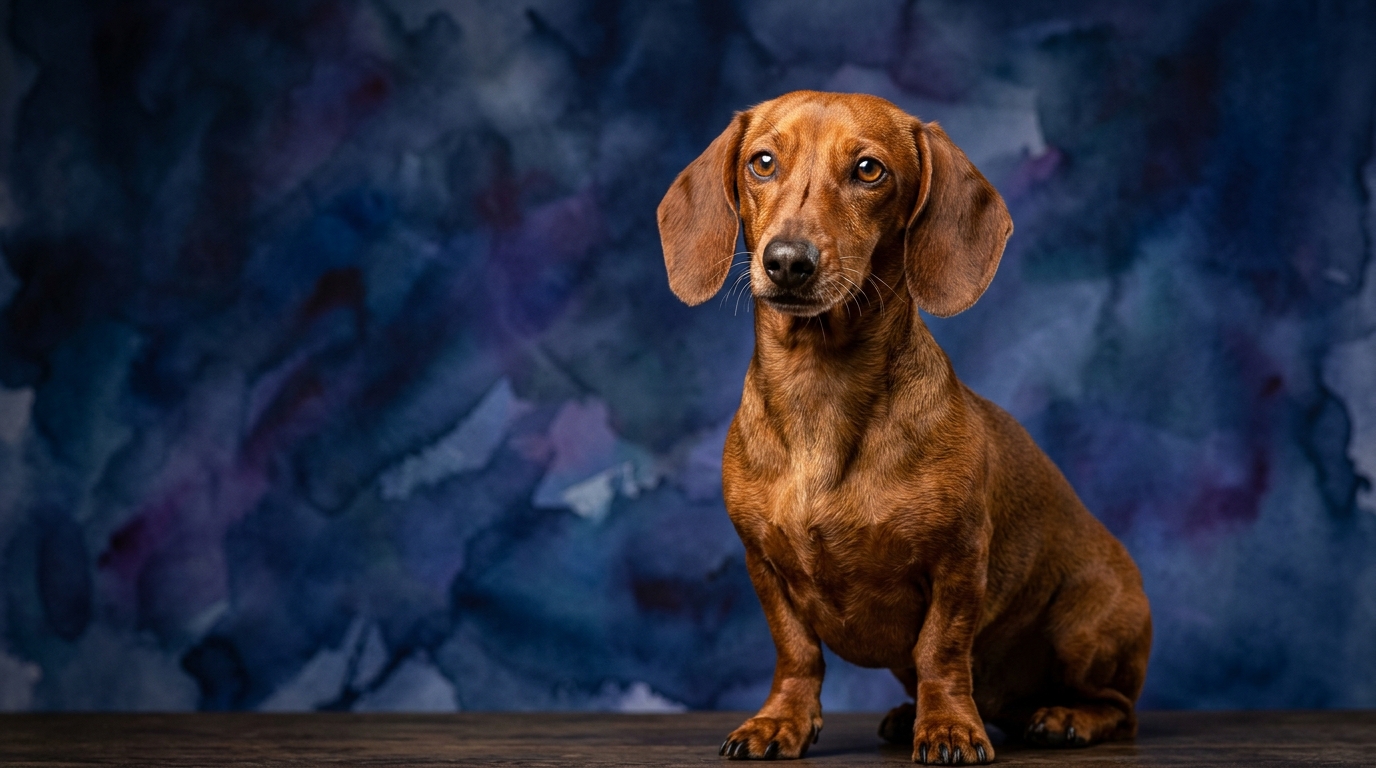
The Cosmic Pet Pet IQ Lab employs a five-dimensional model to evaluate canine intelligence, offering a granular view of each breed's mental landscape. For the Dachshund, a hound with a Coren rank of 49, their cognitive makeup is deeply rooted in their original purpose.
Dachshunds exhibit a notable Problem Solving score of 4/5, often excelling in tasks that involve scent-based puzzles or strategic navigation to achieve a goal, reflecting their badger-hunting heritage. Their Training Speed, however, registers at 2/5, indicating an independent streak that requires patient, consistent methods rather than rapid obedience. Social Intelligence for the Dachshund is 3/5; they are capable of forming deep bonds and understanding human cues, yet their loyalty can be quite selective. Instinctive Drive is where the Dachshund truly shines at 5/5, possessing an incredibly strong prey drive, scenting prowess, and an innate desire to dig and pursue. Their Memory score is 3/5, meaning they reliably retain learned behaviors and significant past experiences, both positive and negative.
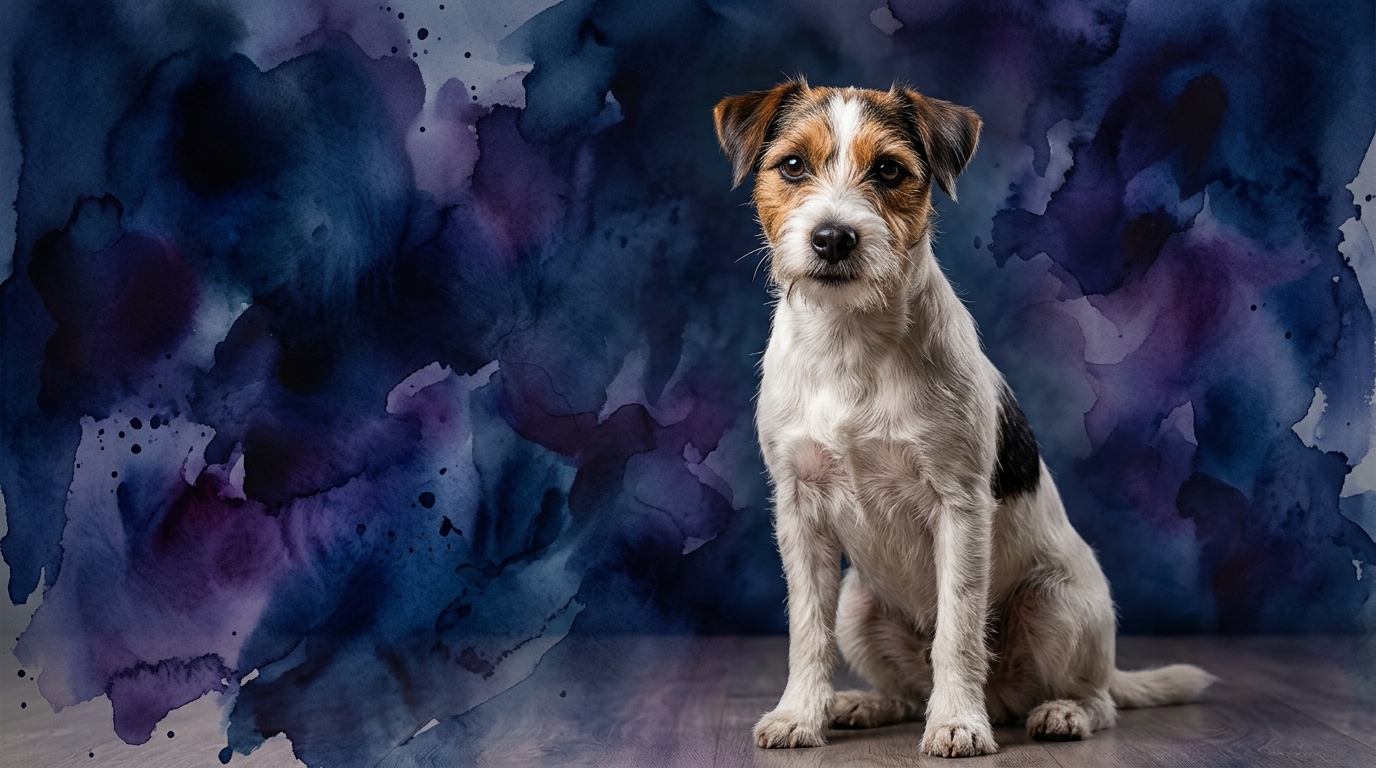
In contrast, the Parson Russell Terrier, a terrier breed not currently Coren-ranked, presents a more balanced, albeit distinct, cognitive profile. Their Problem Solving ability is rated at 3/5, demonstrating competence in figuring out challenges, often leveraging their agility and persistent nature. The Parson Russell Terrier's Training Speed is 3/5, suggesting they are moderately quick to grasp new commands, especially when training is engaging and varied. Their Social Intelligence also stands at 3/5, indicating a capacity for adaptable social interactions with both humans and other canines, though always with a characteristic terrier zest. Instinctive Drive for the Parson Russell Terrier is 3/5; while they possess a definite prey drive and enjoy exploring or digging, it typically manifests with less singular intensity than that of a Dachshund. Lastly, their Memory is 3/5, enabling them to retain a good repertoire of learned skills and experiences over time.
Where the Dachshund's Cognition Excels
The Dachshund's cognitive strengths are most apparent in domains tied directly to their historical role as tenacious hunters. Their Problem Solving score of 4/5 significantly surpasses the Parson Russell Terrier's 3/5, particularly when the challenge involves intricate scent work or navigating confined spaces. A Dachshund will meticulously unravel a scent trail, demonstrating remarkable focus and strategic thinking to reach the source, often outmaneuvering obstacles with determined persistence. This isn't merely about following a smell; it involves an internal map-making and decision-making process that is highly specialized.
Furthermore, the Dachshund's Instinctive Drive, rated at a perfect 5/5, is a profound cognitive advantage in its own right. This intense drive translates into an unparalleled ability to focus on a task, such as tracking a specific scent, for extended periods. While some might perceive this as stubbornness, it's actually a deep-seated cognitive program that overrides distractions, allowing them to complete a 'mission' they deem important. This singular dedication to their purpose, whether it's scenting out a hidden treat or attempting to 'burrow' under a blanket, is a testament to their specialized mental architecture, providing a level of unwavering application that is less pronounced in the Parson Russell Terrier.
Where the Parson Russell Terrier's Cognition Shines
The Parson Russell Terrier, while not reaching the Dachshund's peak in specific instinctive drives, demonstrates its own set of cognitive advantages, particularly in areas of learning and adaptability. Their Training Speed of 3/5 is a distinct edge over the Dachshund's 2/5. This indicates a more readily trainable nature, where new commands and complex routines are acquired with greater efficiency. A Parson Russell Terrier often displays a keen eagerness to engage in structured learning, making them responsive to various training techniques and motivations. This quicker uptake means they can progress through training levels more rapidly, absorbing a wider array of skills in a shorter timeframe.
Beyond just speed, the Parson Russell Terrier's more balanced cognitive profile across all five dimensions suggests a broader versatility in applying their mental faculties. While their Problem Solving is 3/5, it's often paired with a physical agility and quick-wittedness that allows them to tackle challenges from multiple angles. They are adept at understanding complex sequences in agility courses or quickly adapting to new game rules. This cognitive nimbleness, combined with their moderate instinctive drive, makes them highly adaptable companions who can excel in a diverse range of activities, from obedience to earthdog trials, without the single-minded intensity that can sometimes define the Dachshund's focus.
Ease of Training: Dachshund vs. Parson Russell Terrier
When considering ease of training, the Parson Russell Terrier generally presents a more straightforward experience for most owners. Their Training Speed of 3/5 indicates a moderate willingness and capacity to learn new commands quickly. This is often coupled with a desire to please their human companions, making them more amenable to positive reinforcement techniques and structured lessons. A Parson Russell Terrier's instinctive drive, while present, is also more easily channeled into constructive activities, allowing trainers to redirect their energy effectively.
The Dachshund, with its Training Speed of 2/5, can be a more challenging pupil. Their profound Instinctive Drive (5/5) means that when their nose is to the ground or a perceived 'prey' is in sight, human commands often become secondary. This independent nature, a hallmark of their specialized hunting background, requires exceptional patience, consistency, and creative motivation from their trainers. While they certainly can be trained, the process often takes longer and demands a deeper understanding of their inherent motivations. For instance, teaching a Dachshund a 'stay' command when a tantalizing scent is wafting by will test even the most experienced owner, as their brain is hardwired to follow that primal call above all else. A Parson Russell Terrier, conversely, might pause, register the scent, but be more readily called back to attention by a reward or command.
Matching Canine Cognition to Owner Lifestyles
The cognitive profiles of these two breeds offer clear insights into which might better suit an active versus a more relaxed owner. For the consistently active owner, the Parson Russell Terrier is often an ideal match. Their balanced IQ scores, particularly their 3/5 in both Problem Solving and Training Speed, combined with their energetic disposition, make them excellent partners for a wide array of mentally and physically demanding activities. These dogs thrive on varied engagements like agility courses, flyball, long trail runs, or engaging puzzle games that challenge their quick thinking and physical prowess. An active owner who enjoys structured training and diverse outings will find the Parson Russell Terrier a highly enthusiastic and capable companion, eager to participate and learn.
Conversely, the Dachshund might be better suited for owners who define 'active' in a different, often more specialized, way. While they require regular exercise, their profound Instinctive Drive (5/5) and Problem Solving (4/5) mean their mental stimulation needs lean heavily towards scent work, short bursts of chase, and opportunities for digging. A relaxed owner who appreciates a dog with a deep, independent character and can provide consistent, albeit perhaps less physically strenuous, mental enrichment will find a good fit. This might involve daily scent games, puzzle feeders that require strategic thought, and consistent short walks rather than marathon runs. Owners prepared for a dog with a strong will and a distinct cognitive focus will appreciate the Dachshund's unique charm, even if their definition of 'relaxed' still includes dedicated engagement with their dog's mental world.
The Cosmic Pet Pet IQ Lab Verdict
Choosing between a Dachshund and a Parson Russell Terrier hinges on a clear understanding of their distinct cognitive blueprints and how these align with an owner's lifestyle and expectations. Both breeds offer unique companionship, but their mental landscapes guide them toward different forms of interaction and engagement.
The Dachshund, with its unparalleled instinctive drive and specialized problem-solving skills, appeals to those who admire a dog with a profound, independent spirit. Owners who revel in deciphering their dog's nuanced motivations, appreciate a strong scenting ability, and are prepared for a training journey that prioritizes patience and understanding of canine instinct will find a rewarding companion. This breed thrives with an owner who respects its historical purpose and provides outlets for its natural drives, even if training requires a more deliberate approach. They are not for the owner seeking instant obedience, but rather a clever, determined partner who engages with the world on their own terms.
The Verdict
Choose a Dachshund if you appreciate a dog with a profound, focused instinctive drive, enjoy engaging with a clever problem-solver on their own terms (especially with scent), and are prepared for a dog with a strong independent streak and moderate training speed.
Choose a Parson Russell Terrier if you seek a versatile, energetic companion eager for varied activities, who appreciates a dog with balanced cognitive abilities and a relatively quicker training speed, and can provide consistent mental and physical challenges.
🧠 Find Your Pet's IQ Score
Our Pet IQ Lab assessment covers 25+ tests across 5 cognitive dimensions — personalized to your breed.
Take the Full IQ Test →Frequently Asked Questions
Is a Dachshund's stubbornness a sign of lower intelligence?
No, a Dachshund's perceived 'stubbornness' is often a manifestation of their exceptionally high Instinctive Drive (5/5) and independent problem-solving (4/5). Their brains are wired to prioritize scent trails and pursuit, which can make them less inclined to follow human commands when their instincts are engaged, indicating a specialized rather than lower form of intelligence.
Are Parson Russell Terriers better for first-time dog owners?
With a Training Speed of 3/5, Parson Russell Terriers can be more amenable to training for first-time owners compared to Dachshunds. However, their moderate Instinctive Drive (3/5) and high energy still require consistent engagement and clear guidance, so a first-time owner should be prepared for an active and mentally stimulating companion.
Which breed is better at learning tricks?
Given their Training Speed of 3/5, the Parson Russell Terrier generally picks up new tricks more quickly and with greater enthusiasm. While a Dachshund (Training Speed 2/5) can certainly learn tricks, their independent nature means it often requires more patience and creative motivation to achieve the same results.