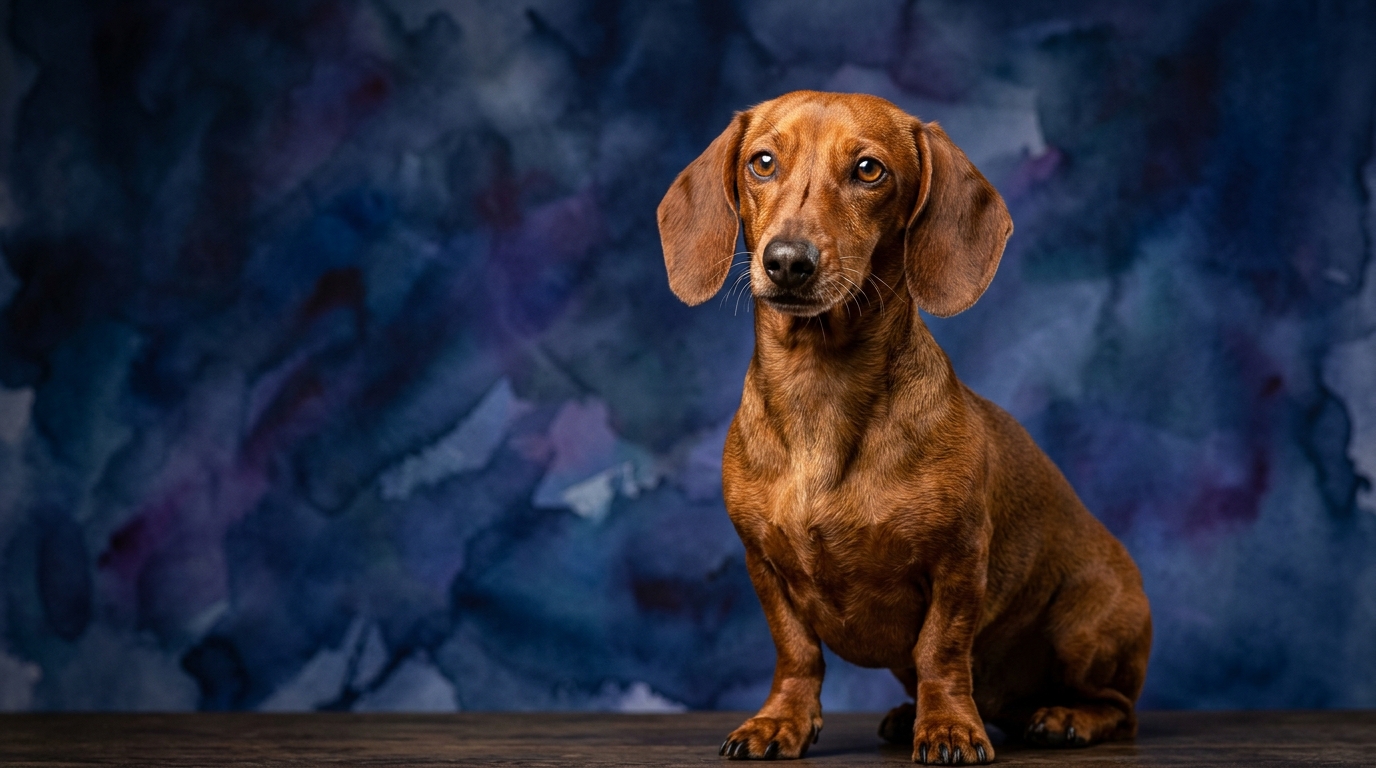
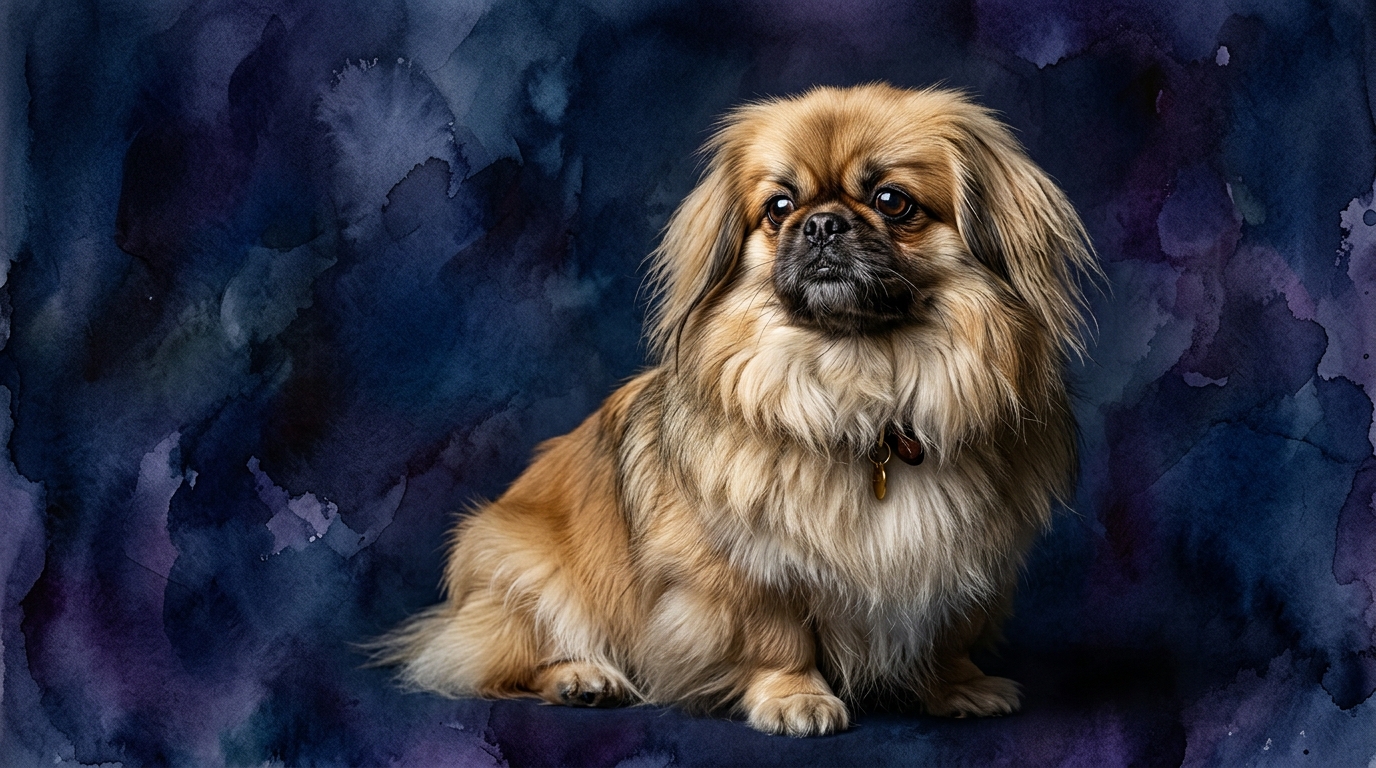
Side-by-Side IQ Profile: Dachshund vs. Pekingese
At The Cosmic Pet Pet IQ Lab, we evaluate canine intelligence across five key dimensions. Understanding these profiles provides insight into how each breed perceives and interacts with their world.
The Dachshund, a Hound breed ranked #49 by Coren, displays a cognitive makeup centered on independence and drive. Their Problem Solving is rated 4/5, indicating a strong capacity for independent thought and figuring out complex situations, often relating to their original hunting role where they navigated tunnels and outsmarted prey. Training Speed is 2/5, suggesting they require significant patience and repetition, as their independent nature and strong will can make them less inclined to comply readily. Social Intelligence stands at 3/5, meaning they form strong bonds but often prioritize their chosen family, observing and reacting but frequently following their own instincts over human direction. A defining characteristic is their Instinctive Drive at 5/5, an exceptionally strong urge to pursue, dig, and explore, deeply rooted in their heritage. Memory is 3/5, solid for recalling learned commands and experiences, but perhaps less precise when competing with their intense drives.
The Pekingese, a Toy breed with a Coren rank of #77, presents a cognitive profile geared towards companionship and domesticity. Their Problem Solving is 3/5, demonstrating a moderate ability to solve novel problems, often focusing on tasks that benefit their comfort or access to desired resources, with a pragmatic approach for personal gain. Training Speed is 3/5, indicating they are capable of learning commands at a reasonable pace with consistent, positive reinforcement, and are generally responsive when motivated. Social Intelligence is 3/5, showing a good understanding of social cues within their human family, forming deep, loyal bonds, and adeptly communicating needs to trusted individuals, though discerning with strangers. Their Instinctive Drive is 3/5, meaning natural dog behaviors like guarding or exploring are present but typically less intense and more manageable than in working breeds. Memory is 3/5, reliable for routines, favored people, and past interactions, aiding in their ability to adapt to household rules and maintain consistent behaviors.
Where the Dachshund Wins Cognitively
The Dachshund truly shines in Problem Solving (4/5) and Instinctive Drive (5/5). Their historical role as badger hunters demanded independent navigation and outmaneuvering prey in confined spaces. This translates into a dog that cleverly figures out challenges, from opening cabinets to finding hidden treats, demonstrating a persistent, inventive approach. Their exceptional instinctive drive means they are powerfully motivated by scent and the thrill of the chase, fueling their determined personality and robust cognitive engagement with their environment. This deep, ingrained cognitive programming prioritizes exploration and pursuit, making them master investigators of their surroundings and highly resourceful in achieving their goals.
Where the Pekingese Wins Cognitively
While the Dachshund excels in primal problem-solving, the Pekingese edges ahead in Training Speed (3/5) compared to the Dachshund's 2/5. Their cognitive processing for learning new commands tends to be more efficient, provided the motivation is right. Their moderate instinctive drive (3/5) also plays a crucial role; they are less likely to be sidetracked by an overwhelming urge to chase a squirrel or dig a hole, allowing them to focus more readily on human instruction. This balance enables them to absorb and retain training cues with greater consistency. Furthermore, the Pekingese's social intelligence, while rated 3/5 like the Dachshund, often manifests in a more refined, attentive companionship, focusing on the nuances of human interaction within a domestic setting.
Which Is Easier to Train and Why
When considering ease of training, the Pekingese generally presents a more straightforward experience. Their training speed of 3/5 indicates a reasonable capacity to learn new commands and routines with consistent effort. Crucially, their moderate instinctive drive (3/5) means they are less prone to being overwhelmingly distracted by external stimuli or deep-seated urges, allowing them to focus more readily on human instruction and engage in structured learning sessions when motivated.
In contrast, the Dachshund's lower training speed (2/5), compounded by an exceptionally high instinctive drive (5/5), means their intelligence is often directed by powerful instincts rather than human directives. They might understand what you want but choose to follow a compelling scent or pursue an imagined burrow instead. Their independent nature, a trait honed for solitary hunting, makes them less naturally inclined to seek human approval during training, often requiring immense patience, creativity, and a deep understanding of their unique motivations from owners to achieve consistent results.
Which Suits Active Owners vs. Relaxed Owners
The cognitive profiles of these two breeds clearly delineate their suitability for different owner lifestyles. The Dachshund, with its 4/5 problem-solving and commanding 5/5 instinctive drive, thrives with active owners who can channel its formidable mental and physical energy. These dogs require consistent mental stimulation, such as puzzle toys, scent work, or agility, to prevent boredom and destructive behaviors. Their strong drive means they will eagerly engage in activities that mimic their hunting heritage, like long walks exploring new smells or supervised digging opportunities. Owners who enjoy outdoor adventures, hiking, or simply engaging in prolonged interactive play will find a willing and capable companion in a Dachshund.
Conversely, the Pekingese, with its moderate scores across the board (3/5 for most categories), is far better suited for relaxed owners seeking a devoted, less demanding companion. Their cognitive engagement is often satisfied by comfortable routines, gentle play, and close proximity to their human family. While they appreciate short, leisurely strolls and interactive toys, they don't possess the intense need for constant mental and physical exertion that defines the Dachshund. A relaxed owner who values quiet companionship, indoor activities, and a serene home environment will find the Pekingese’s cognitive makeup aligns perfectly with their lifestyle.
The Verdict
Choosing a Dachshund means embracing a persistent, clever companion with an unyielding drive for exploration and problem-solving, ideal for owners who enjoy engaging with a dog's independent spirit and providing ample mental and physical challenges.
Opt for a Pekingese if you desire a devoted, serene companion whose cognitive focus is on comfortable routines and close human connection, making them a wonderful fit for relaxed households seeking a more amenable training experience.
🧠 Find Your Pet's IQ Score
Our Pet IQ Lab assessment covers 25+ tests across 5 cognitive dimensions — personalized to your breed.
Take the Full IQ Test →Frequently Asked Questions
Are Dachshunds stubborn or just independent?
Dachshunds are often perceived as stubborn due to their strong instinctive drive (5/5) and lower training speed (2/5). This isn't necessarily disobedience but rather a deep-seated independence, a cognitive trait honed for solitary hunting where they needed to make their own decisions in the field. They process information and prioritize tasks based on their powerful internal motivations.
Do Pekingese enjoy learning tricks?
Pekingese can certainly enjoy learning tricks, especially if the training is fun, positive, and offers clear rewards. Their 3/5 training speed suggests they are capable learners, and their moderate instinctive drive means they are less likely to be distracted by external stimuli during training sessions, making them receptive to engaging activities that strengthen their bond with their owner.
How does Coren rank relate to these IQ scores?
Coren's ranking primarily assesses 'working and obedience intelligence,' which correlates most closely with our 'training speed' and aspects of 'social intelligence.' The Dachshund's rank of #49 and the Pekingese's #77 reflect the Dachshund's slightly higher capacity for understanding and following human commands, even with its independent streak, while the Pekingese's rank indicates a moderate but reliable ability in this area.