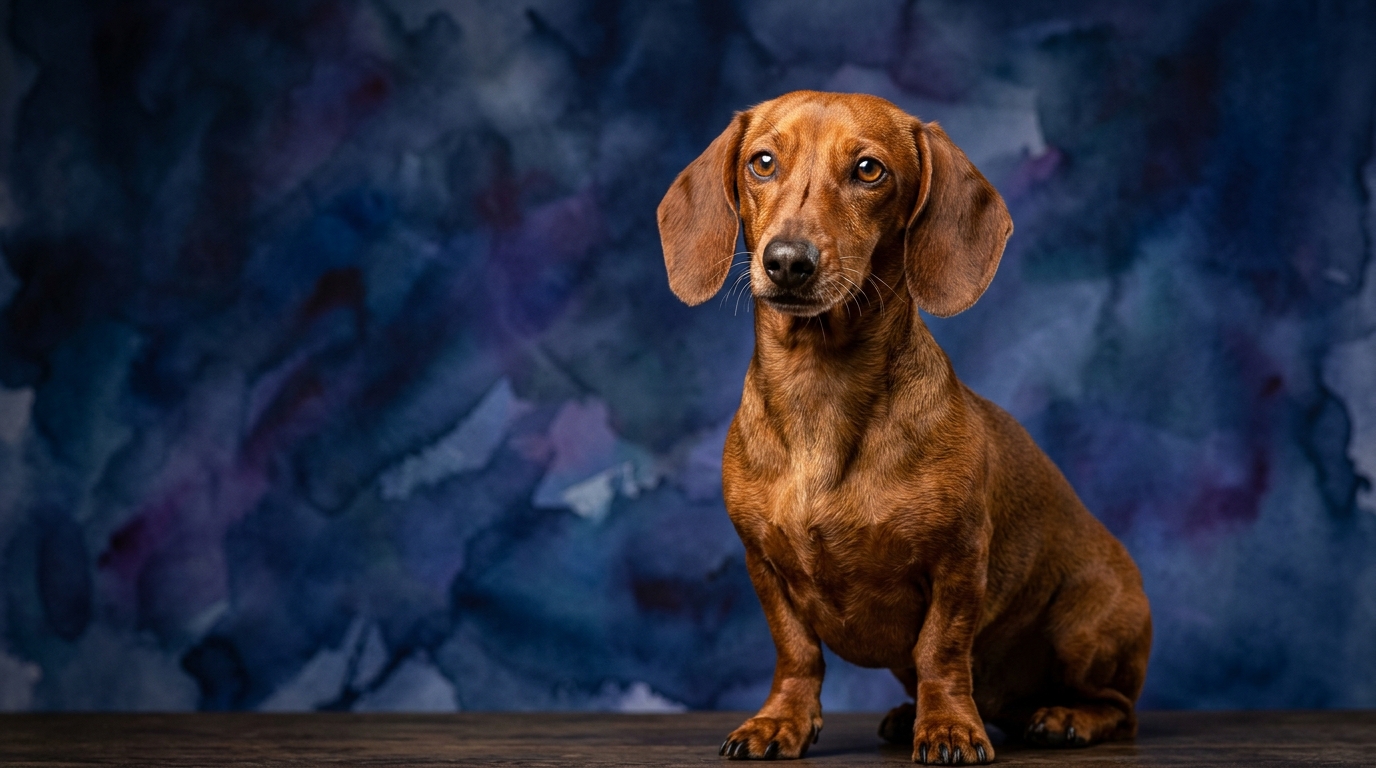
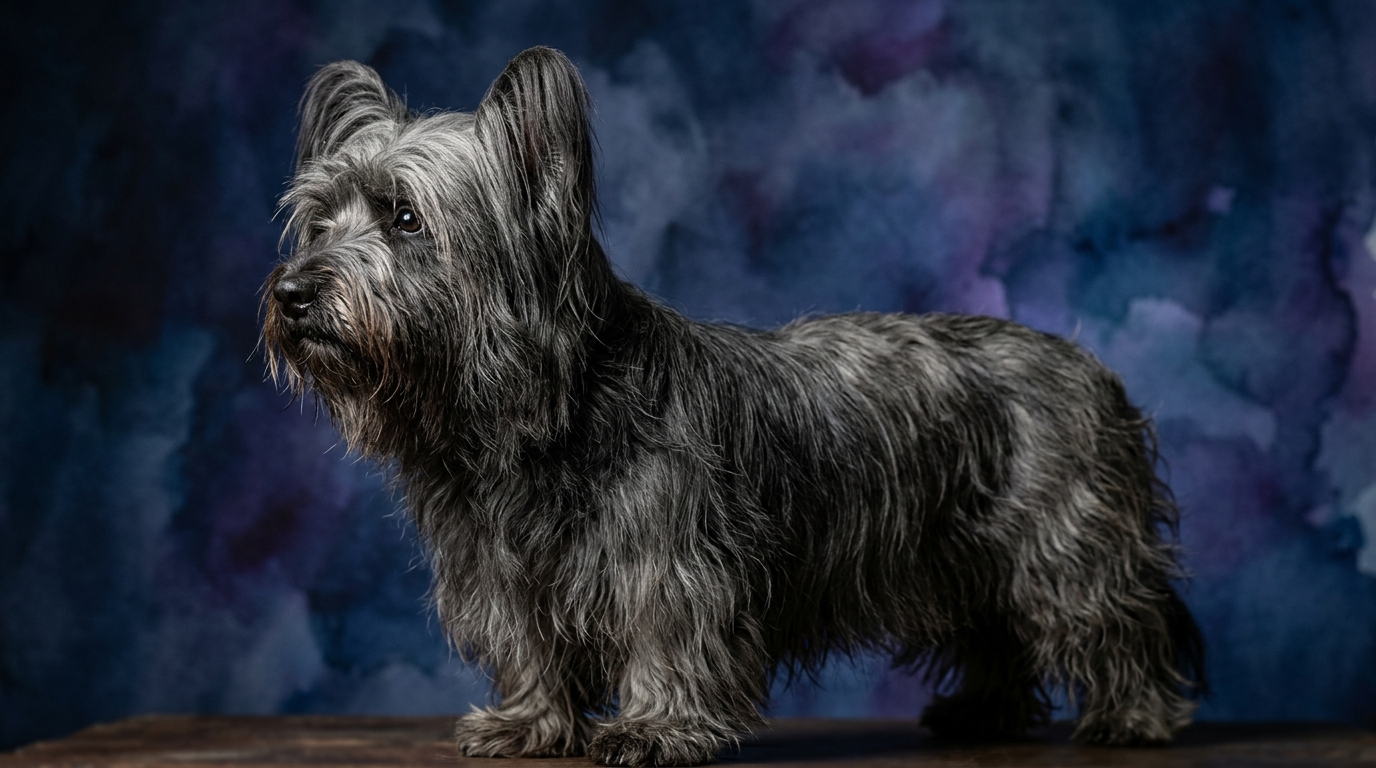
Side-by-Side Cognitive Profile
The Cosmic Pet Pet IQ Lab employs a five-dimensional framework to assess canine intelligence, providing a nuanced understanding beyond simple rankings. For the Dachshund and Skye Terrier, these dimensions paint distinct pictures of their mental landscapes.
The **Dachshund**, a Hound breed with a Coren rank of #49, exhibits a remarkable cognitive makeup. Their **Problem Solving** ability scores a strong 4/5, reflecting their capacity for independent thought and clever strategies, often driven by instinct. **Training Speed** is rated 2/5, indicating they learn at their own pace, sometimes prioritizing their interests over commands. **Social Intelligence** stands at 3/5; they form deep bonds but can be wary of outsiders. Their **Instinctive Drive** is an exceptional 5/5, a defining characteristic rooted in their hunting heritage. Finally, their **Memory** is a solid 3/5, particularly for scents and routines.
The **Skye Terrier**, a Terrier breed without a Coren ranking, presents a more balanced, albeit different, cognitive profile. Their **Problem Solving** capability registers 3/5, showing practical intelligence in navigating their environment. **Training Speed** is a moderate 3/5, suggesting a reasonable pace for learning commands. **Social Intelligence** also scores 3/5, as they are deeply devoted to their family but can be reserved with strangers. Their **Instinctive Drive** is 3/5, reflecting typical terrier tenacity without the specialized intensity of a Dachshund. Their **Memory** is 3/5, reliable for recalling learned behaviors and familiar interactions.
Where the Dachshund Excels Cognitively
The Dachshund's distinct cognitive strength lies in its exceptional instinctive drive (5/5) and superior problem-solving capabilities (4/5), particularly when these two dimensions intertwine. Their historical role as tenacious hunters of den-dwelling animals required them to independently navigate complex underground tunnels, strategizing how to flush out prey without direct human guidance. This has fostered an innate capacity to assess situations and devise solutions to reach specific goals, such as finding a hidden treat or maneuvering around an obstacle to get to an interesting scent. For example, a Dachshund might meticulously work out how to push a chair to reach a counter, demonstrating a focused, self-directed mental effort often driven by their powerful scenting abilities. Their cognitive engagement is often profoundly linked to their desire to explore, track, and 'hunt,' even in a modern home environment, making them incredibly resourceful when motivated by a compelling scent or object. This self-reliance in problem-solving, stemming from a deeply ingrained predatory drive, sets them apart.
Where the Skye Terrier Shows Cognitive Strength
The Skye Terrier exhibits a notable cognitive advantage in its balanced training speed (3/5) and more adaptable instinctive drive (3/5), which contribute to a generally more cooperative learning experience. While Dachshunds might be brilliant problem-solvers when pursuing their own agenda, the Skye Terrier's cognitive framework allows for a somewhat smoother integration of human-directed tasks. Their terrier heritage imbues them with persistence, but it's often channeled into achieving a shared objective with their owner rather than solely independent pursuits. This means they can process and respond to training cues with a consistent effort, learning new commands and routines at a steady pace. They are less likely to be completely derailed by an overpowering scent or a singular instinctual focus, making them more receptive to instruction in varied environments. Their problem-solving (3/5) is practical and observant, often applied to understanding their social dynamics and adapting their behavior to fit household expectations, rather than solely fulfilling a deep-seated hunting urge. This cognitive balance makes them adept at navigating the nuances of human-dog interaction during structured learning.
Ease of Training: Dachshund vs. Skye Terrier
When evaluating ease of training, the Skye Terrier generally presents a more straightforward experience than the Dachshund. The Skye Terrier's training speed (3/5) is moderate, indicating a reasonable capacity to learn and retain commands, coupled with a willingness to engage with their handler. Their instinctive drive (3/5), while present, is typically more manageable; they possess a terrier's determination but are often more amenable to redirection from an engaging owner. This means that while they might be stubborn, their focus can be more readily shifted back to the training task. For instance, a Skye Terrier might initially resist a 'stay' command, but with consistent, positive reinforcement, their inherent desire to please their family, coupled with their persistence, allows them to master it.
In contrast, the Dachshund's training speed (2/5) is slower, and their dominant instinctive drive (5/5) often dictates their priorities. Their powerful scenting ability and independent hunting heritage mean that a captivating scent or the thrill of exploration can easily override a command. This isn't a lack of cognitive ability, but rather a prioritization of deeply ingrained instincts. Trying to teach a Dachshund a reliable recall when they've picked up an interesting trail can be a significant challenge, as their cognitive focus is intensely directed towards that scent. They learn, but often on their own terms and timeline, requiring immense patience, creativity, and highly motivating rewards to maintain their engagement against competing natural urges. Their problem-solving (4/5) often manifests in figuring out how to *not* comply with a command if it conflicts with their current independent objective.
Matching Breeds to Lifestyles: Active vs. Relaxed Owners
The choice between a Dachshund and a Skye Terrier largely depends on an owner's lifestyle and how they prefer to engage with their canine companion.
For active owners who enjoy purposeful outdoor activities and are prepared to engage deeply with a dog's inherent drives, the Dachshund can be a rewarding match. Their exceptional instinctive drive (5/5) means they thrive on activities that stimulate their powerful nose and problem-solving skills, such as scent work, tracking games, or even urban exploration that allows them to 'hunt' for hidden treats. These dogs require consistent mental stimulation to prevent boredom and destructive behaviors. They are excellent companions for long, sniff-intensive walks where they can follow intriguing trails, and their independent nature means they can be content exploring their surroundings while their owner supervises. However, 'active' for a Dachshund doesn't necessarily mean high-impact running; it means mentally engaging activities that tap into their primal instincts.
Conversely, for owners who appreciate a more relaxed pace but still seek a devoted and observant companion, the Skye Terrier might be more suitable. While they certainly benefit from regular exercise and mental engagement, their instinctive drive (3/5) is less overwhelming, and their energy levels are often more moderate after their exercise needs are met. They are generally content with daily walks, playtime in a secure yard, and indoor companionship. Their social intelligence (3/5) allows them to be wonderfully attuned to their family's rhythm, making them excellent housemates who enjoy being part of the daily routine without constantly demanding intense, goal-oriented activities. They appreciate a comfortable home environment and thrive on consistent human interaction, making them ideal for individuals or families who prefer quiet evenings but still commit to daily engagement and training.
The Verdict
Choose a Dachshund if you are prepared for a dog with a formidable independent spirit and a powerful drive for scent-based exploration, valuing a clever problem-solver who thrives on engaging their hunting instincts.
Opt for a Skye Terrier if you seek a devoted, observant companion who learns at a steady pace and integrates well into a relaxed home environment, appreciating their balanced temperament and willingness to cooperate in training.
🧠 Find Your Pet's IQ Score
Our Pet IQ Lab assessment covers 25+ tests across 5 cognitive dimensions — personalized to your breed.
Take the Full IQ Test →Frequently Asked Questions
Do Dachshunds need a lot of exercise?
Dachshunds benefit from regular, moderate exercise, particularly activities that engage their strong scent drive like sniff walks or scent games. While not needing high-impact running, consistent mental and physical activity prevents boredom and supports their well-being.
Are Skye Terriers good with children?
Skye Terriers can be good with older, respectful children who understand how to interact gently with a dog. Their loyalty means they form strong bonds with their family, but their reserved nature often makes them less tolerant of boisterous or unpredictable younger children.
What is the biggest training challenge for a Dachshund?
The biggest training challenge for a Dachshund often stems from their powerful instinctive drive and independent problem-solving, making recall particularly difficult when they're on a scent trail. Consistent, high-value motivation and patience are crucial to overcoming their natural inclination to follow their nose.