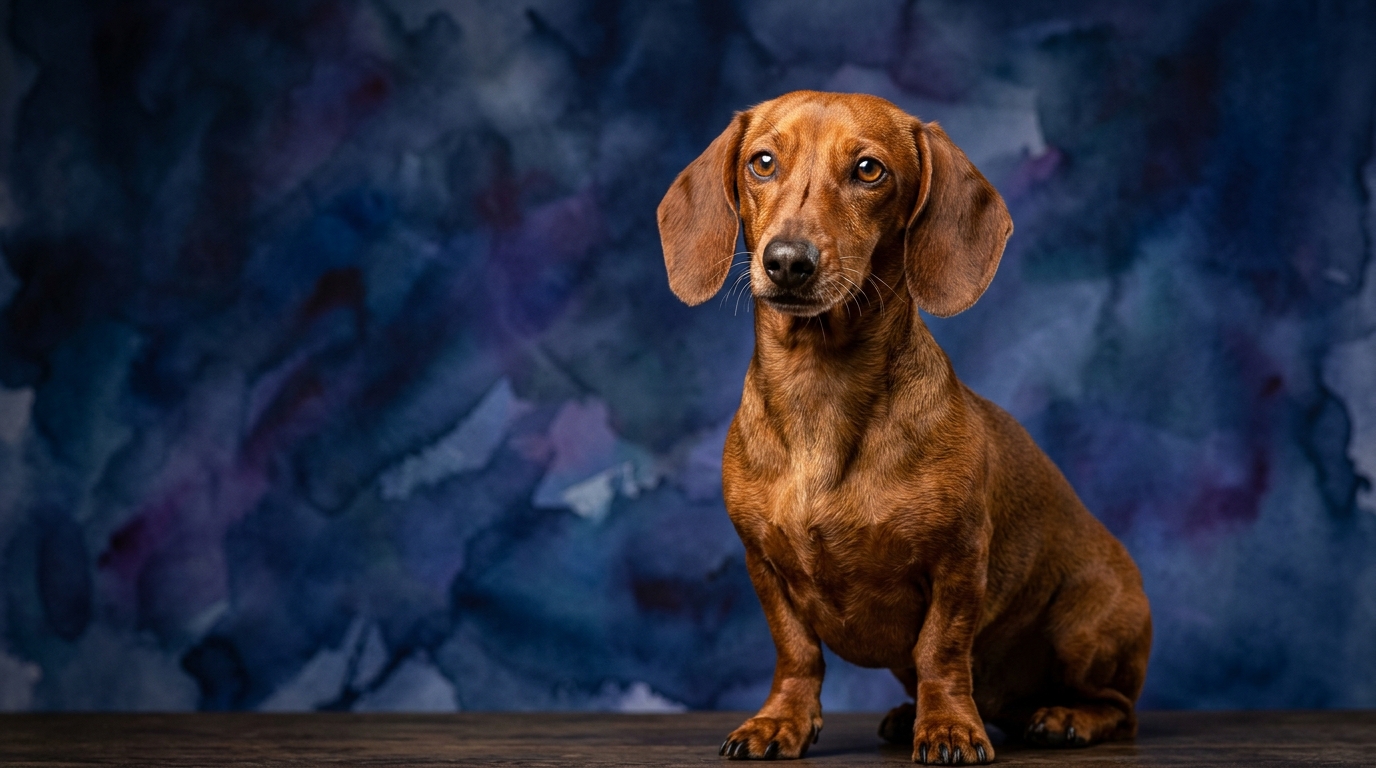
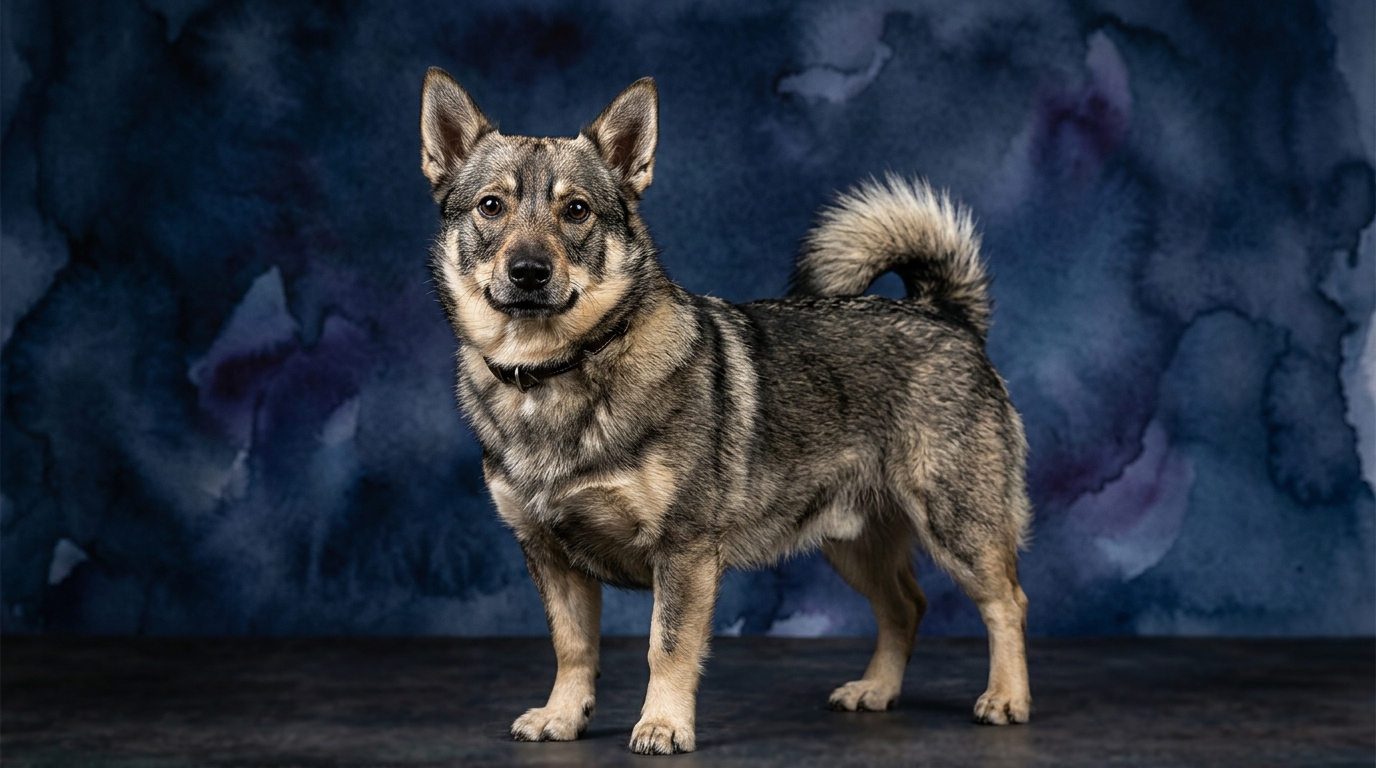
Side-by-Side IQ Profile: Dachshund vs. Swedish Vallhund
To truly understand the cognitive landscape of these two distinct breeds, The Cosmic Pet Pet IQ Lab breaks down their intelligence across five key dimensions:
**Dachshund (Hound)**
**Problem Solving (4/5):** These dogs exhibit a strong capacity for independent thought when faced with obstacles, particularly those related to their prey drive. They aren't quick to give up on a puzzle, especially if it involves scent or burrowing, demonstrating a tenacious pursuit of their goals.
**Training Speed (2/5):** Dachshunds can be deliberate learners, often requiring consistent repetition and high motivation. Their independent nature, honed for solitary hunting, means they may not always see the immediate value in human-directed tasks, preferring to follow their own instincts.
**Social Intelligence (3/5):** They are generally adept at reading human cues and forming strong bonds with their primary caregivers. However, their social interactions can be selective, sometimes displaying wariness towards strangers or other animals, reflecting a focused loyalty.
**Instinctive Drive (5/5):** This breed possesses an extraordinarily high prey drive, particularly for tunneling and scent work. Their instincts are a powerful motivator, directing much of their energy and focus towards investigation and pursuit, often to the exclusion of other stimuli.
**Memory (3/5):** Dachshunds have a functional memory for commands and routines, but their recall can be selectively applied when a stronger instinct, like a compelling scent, takes precedence. They tend to remember negative experiences or specific locations well.
**Swedish Vallhund (Herding)**
**Problem Solving (3/5):** Vallhunds approach problems with a practical, methodical mindset. They are capable of figuring out solutions, often through trial and error, particularly when the task involves manipulating objects or navigating their environment in a controlled manner.
**Training Speed (3/5):** These dogs are generally responsive learners, showing a moderate pace in acquiring new commands. Their eagerness to engage and work alongside their human companions contributes to their teachability, making them relatively cooperative students.
**Social Intelligence (3/5):** Vallhunds typically display a balanced social aptitude, capable of forming strong family bonds and generally interacting politely with others. They are observant of their environment and social cues, often acting as vigilant companions.
**Instinctive Drive (3/5):** Their herding instincts are present but typically manageable, manifesting as a desire to gather and control movement rather than an overwhelming prey drive. This drive is often channeled effectively into structured activities like dog sports.
**Memory (3/5):** Vallhunds possess a reliable memory for learned behaviors and routines. They can recall commands effectively and remember previous interactions, contributing to their consistency in training and their ability to build upon past experiences.
Where the Dachshund Excels Cognitively
The Dachshund's cognitive profile reveals specific strengths rooted in its history as a badger hunter. Their **Problem Solving (4/5)** ability, surpassing the Vallhund's 3/5, is particularly acute when the task aligns with their innate drives. For instance, a Dachshund will exhibit remarkable persistence and creativity in figuring out how to access a hidden toy or follow a scent trail, often employing digging, pushing, or burrowing strategies that a Vallhund might not instinctively consider. This isn't just stubbornness; it's a focused, independent problem-solving approach honed over generations for a specific task – getting to prey underground.
Furthermore, the Dachshund's **Instinctive Drive (5/5)** is profoundly more intense than the Vallhund's 3/5. This overwhelming drive, primarily geared towards scenting and burrowing, means they possess an internal compass that directs their focus with formidable power. While it can make training challenging, it also signifies a cognitive advantage in specific scenarios: a Dachshund will tirelessly pursue a scent, demonstrating an unwavering focus and sustained effort that few breeds can match. This single-minded dedication, while sometimes inconvenient for owners, is a testament to a powerful, specialized cognitive engine designed for tenacious pursuit. They don't just 'want' to chase; their entire being is wired for it, leading to complex tracking behaviors and independent decision-making in the field that reflect a distinct cognitive superiority in their niche.
Where the Swedish Vallhund Shines Cognitively
The Swedish Vallhund's cognitive strengths shine in areas that reflect its herding heritage and cooperative nature. Their primary cognitive advantage lies in their **Training Speed (3/5)**, which is notably higher than the Dachshund's 2/5. This difference isn't merely about eagerness; it reflects a more open and responsive cognitive framework for learning human-directed tasks. Vallhunds tend to process and integrate new commands more readily, often requiring fewer repetitions to achieve proficiency. This stems from their historical role as working dogs who needed to understand and execute complex instructions from their handlers to manage livestock.
While their Problem Solving (3/5) is slightly lower than the Dachshund's, the Vallhund's approach is often more adaptable to varied situations. Their **Instinctive Drive (3/5)**, being less overwhelmingly specialized than the Dachshund's, allows for a more balanced cognitive allocation. Instead of being singularly focused on a strong prey drive, the Vallhund can more easily shift its attention and apply its cognitive resources to diverse learning opportunities. This balanced drive, combined with their moderate social intelligence, means they are often more attuned to their human partner's intentions during training, making them quicker to pick up on cues and less likely to be distracted by overriding internal urges. Their cognitive framework is built for cooperative problem-solving and responsive action within a human-dog team, leading to a more versatile and agile learning mind.
Training Dynamics: Which Breed Learns Faster?
Based on their cognitive profiles, the **Swedish Vallhund is generally easier to train** compared to the Dachshund. This difference primarily stems from the Vallhund's higher **Training Speed (3/5 vs. 2/5)** and its more balanced **Instinctive Drive (3/5 vs. 5/5)**.
The Vallhund's moderate training speed means they typically grasp new commands and concepts more quickly. Their herding background predisposes them to working in partnership with humans, making them more attentive and responsive to instruction. They often display a keen desire to please and understand what is expected of them, which translates into a more cooperative learning experience. For instance, teaching a Vallhund to 'stay' or 'heel' might involve fewer repetitions and less frustration because they are inherently more inclined to focus on the handler and follow directions.
In contrast, the Dachshund's lower training speed is compounded by its exceptionally high instinctive drive. While they are capable of learning, their powerful prey drive can easily override human commands. A Dachshund might be perfectly compliant indoors, but the moment a compelling scent or a small critter enters the picture, their 5/5 instinctive drive kicks in, making them 'selectively deaf.' Their independent nature, developed for solitary hunting, means they often make their own decisions rather than automatically deferring to their owner. This isn't a lack of cognitive ability, but a prioritization of deeply ingrained instincts. For example, teaching a Dachshund a reliable recall can be a lifelong endeavor because the thrill of the chase or the allure of a scent often outweighs the desire to return to their owner, demanding far more consistent, high-value motivation and training effort than with a Vallhund.
Lifestyle Match: Active vs. Relaxed Owners
The choice between a Dachshund and a Swedish Vallhund also hinges significantly on an owner's lifestyle and activity level.
For **active owners**, the **Swedish Vallhund** is generally a more suitable match. Their herding heritage means they possess a moderate to high energy level that requires regular outlets. They thrive on mental and physical stimulation, enjoying activities like agility, obedience, herding trials, or long hikes. An owner who can commit to daily structured exercise, interactive games, and training sessions will find the Vallhund to be an engaging and willing partner. Their balanced instinctive drive and higher training speed make them amenable to learning new sports and tasks, which helps channel their energy constructively. Without sufficient activity, a Vallhund might invent its own entertainment, which can manifest as undesirable behaviors like excessive barking or destructive chewing.
Conversely, for **relaxed owners** who appreciate a dog that can be content with moderate activity and enjoys more downtime, the **Dachshund** might be a better fit, with some caveats. While they possess an extremely high instinctive drive, their compact size means their physical exercise requirements are often less demanding than a medium-sized herding dog. They enjoy short, brisk walks and opportunities to explore scents in a safe, fenced area. Indoors, they can be quite content to cuddle on the couch, often requiring less constant engagement than a Vallhund. However, 'relaxed' does not mean 'lazy' for a Dachshund; owners must still provide mental stimulation and outlets for their powerful scent and burrowing drives to prevent boredom and potential destructive behaviors. A relaxed owner for a Dachshund understands that while the dog might not need to run for miles, it absolutely needs opportunities to 'work' its nose and engage its problem-solving mind, perhaps through scent games or puzzle toys, rather than just passively existing. Their independent nature also means they are often less demanding of constant human attention than some other breeds.
The Verdict
Choose the Dachshund if you appreciate a tenacious, independent thinker with a powerful, specialized instinctual drive for scent work and burrowing, and are prepared for a deliberate training journey focused on patience and high-value rewards to manage their strong will.
Choose the Swedish Vallhund if you seek a biddable, responsive companion eager to engage in cooperative learning and physical activities, and you can provide consistent mental and physical stimulation to satisfy their balanced herding instincts.
🧠 Find Your Pet's IQ Score
Our Pet IQ Lab assessment covers 25+ tests across 5 cognitive dimensions — personalized to your breed.
Take the Full IQ Test →Frequently Asked Questions
Are Dachshunds stubborn?
Dachshunds are often perceived as stubborn due to their strong independent nature and high instinctive drive. Their primary focus can be on following scents or pursuing their own agenda, which can make them less immediately responsive to human commands compared to breeds bred for cooperation.
Do Swedish Vallhunds bark a lot?
Swedish Vallhunds can be prone to barking, a common trait among herding breeds, especially when they are bored, feel the need to alert their family, or are not receiving enough mental and physical stimulation. Consistent training and providing outlets for their energy can help manage this behavior.
Which breed is better with children?
Both breeds can be good with children when properly socialized and raised in a respectful environment. Dachshunds, with their delicate backs, require children to be taught gentle handling. Swedish Vallhunds, with their herding instincts, might try to 'herd' children, so supervision and training are essential for both breeds.