
Side-by-Side IQ Profile
The Cosmic Pet Pet IQ Lab employs a five-dimensional cognitive framework to understand the unique mental makeup of each breed. While both the Dachshund and West Highland White Terrier are cherished companions, a closer look at their individual IQ scores reveals fascinating distinctions in how they perceive, learn, and interact with their world.
**Dachshund IQ Profile:**
**Problem Solving (4/5):** Dachshunds demonstrate a strong capacity for independent thought, adept at creatively figuring out how to achieve desired outcomes, whether reaching a hidden treat or navigating tricky obstacles. Their persistence in overcoming challenges is a hallmark of this trait.
**Training Speed (2/5):** Not quick to pick up new commands. Their independent nature often means extensive repetitions are needed, and motivation must be carefully managed to achieve consistent results, as they prefer their own agenda.
**Social Intelligence (3/5):** Possess a moderate understanding of human cues, forming strong bonds and reading owner emotions. However, their independent streak means they might prioritize their impulses over human direction at times.
**Instinctive Drive (5/5):** An exceptionally strong, innate drive tied to their original purpose. Their powerful hunting instincts for scent tracking, digging, and pursuing small prey are deeply ingrained, profoundly influencing much of their behavior and focus.
**Memory (3/5):** Competent memory for learned experiences and routines. This recall is often filtered through their strong instinctive drives, meaning commands might be "forgotten" when a more compelling scent or activity presents itself.
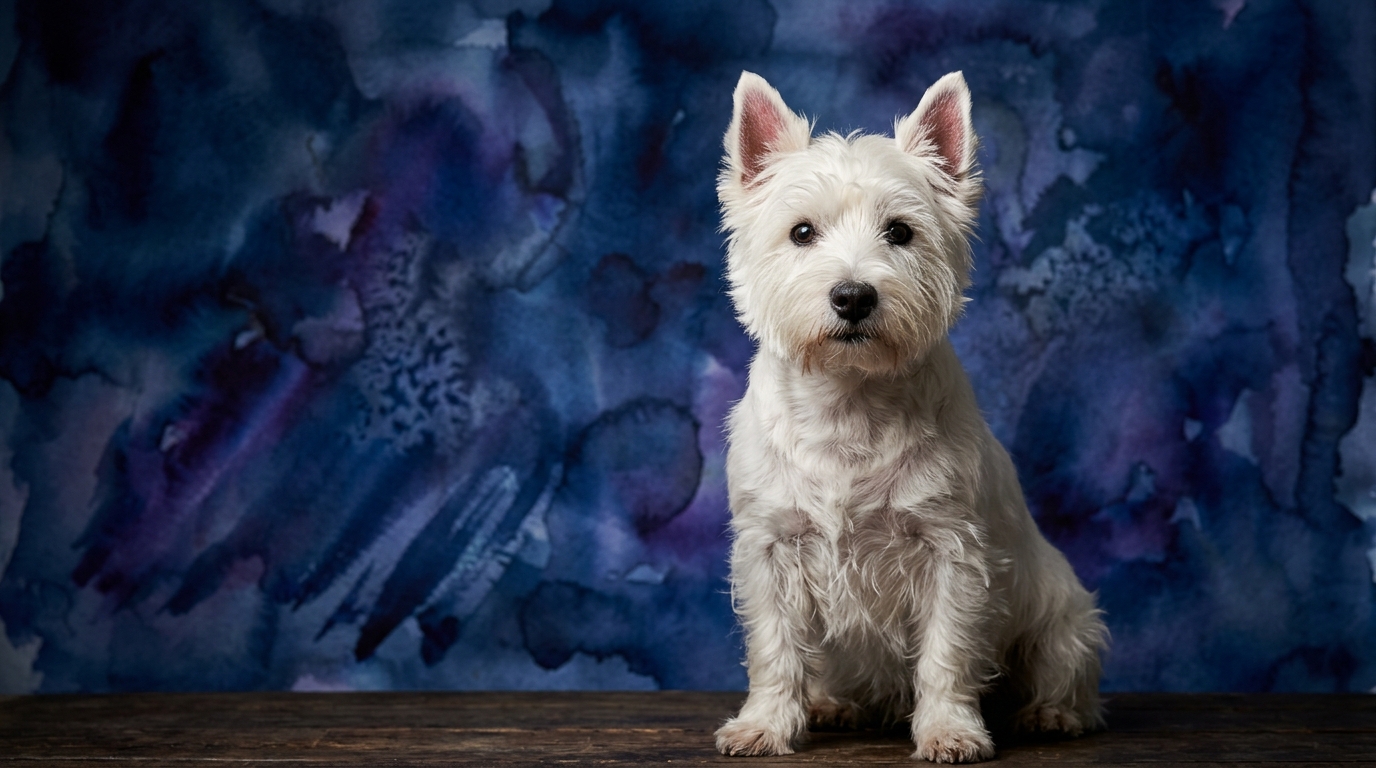
**West Highland White Terrier IQ Profile:**
**Problem Solving (3/5):** Westies exhibit a good, practical ability to solve immediate problems, such as retrieving a toy or navigating a new space. Their solutions tend to be more straightforward and direct, focusing on action rather than intricate workarounds.
**Training Speed (3/5):** Learns at a moderate pace, generally quicker than Dachshunds. They are receptive to training and grasp new commands with reasonable repetition, especially when the training is engaging and consistent.
**Social Intelligence (3/5):** Displays a moderate level of social intelligence, observant of human companions and responsive to social cues. They form close attachments and are eager to participate in family life, retaining their terrier independence.
**Instinctive Drive (3/5):** While terriers have a drive for hunting and digging, the Westie's instinctive drive is moderate compared to the Dachshund's intensity. Their prey drive is present but generally more manageable, often manifesting in playful chasing or enthusiastic digging.
**Memory (4/5):** Exhibits a strong memory, retaining learned commands, routines, and experiences effectively. This robust recall contributes positively to their trainability and consistency, making them less likely to "forget" what they've been taught.
Where the Dachshund Wins Cognitively
The Dachshund's cognitive profile reveals a distinct advantage in Problem Solving (4/5) and an exceptionally high Instinctive Drive (5/5). Their superior problem-solving isn't about rote learning, but ingenuity; they excel at independently devising methods to achieve goals, whether outsmarting a baby gate or retrieving an item. Coupled with unparalleled instinctive drive, Dachshunds possess unshakeable focus and tenacity when pursuing a perceived "task," such as following a scent trail or digging, demonstrating a profound, innate connection to their ancestral purpose.
Where the West Highland White Terrier Wins Cognitively
The West Highland White Terrier shows cognitive strengths in Training Speed (3/5) and Memory (4/5), giving them an edge in acquiring and retaining new information. Their ability to learn new commands and routines is more efficient than the Dachshund's. This quicker grasp, combined with robust memory, means Westies are more likely to recall what they've been taught consistently over time, making them generally more responsive to ongoing instruction and less prone to "forgetting" previously mastered skills.
Which is Easier to Train and Why
Considering their respective cognitive profiles, the West Highland White Terrier is generally easier to train than the Dachshund. The Westie’s superior Training Speed (3/5 vs. 2/5) means they grasp new commands more readily. This is further supported by their stronger Memory (4/5 vs. 3/5), allowing them to retain learned behaviors more consistently, reducing the need for constant re-teaching. In contrast, the Dachshund’s lower training speed often necessitates extensive repetition, and their exceptionally high Instinctive Drive (5/5) can be a significant distraction, frequently overriding attention to human directives. While Dachshunds have good problem-solving, this can sometimes work against training, as they might independently devise ways around commands. The Westie’s moderate instinctive drive and quicker learning curve make them more amenable to consistent instruction.
Which Suits Active Owners vs. Relaxed Owners
The choice between a Dachshund and a West Highland White Terrier largely depends on an owner's lifestyle. Owners seeking a companion with a profound, self-directed purpose and a strong drive for exploration might find the Dachshund more fitting, even if it requires a relaxed approach to strict obedience. Their intense instinctive drive means they thrive with opportunities for scent work, digging, and independent investigation, making them suitable for owners who appreciate a strong, intrinsic motivation and can manage an independent streak. They need mental stimulation that taps into their problem-solving and drive. Conversely, owners who prefer a dog that is generally more responsive to training, enjoys interactive activities, and offers a more balanced energy level might gravitate towards the West Highland White Terrier. Their moderate instinctive drive and quicker training speed make them adaptable to a variety of family activities, from walks and play sessions to learning tricks. A Westie is a good fit for owners who enjoy consistent training and want a cooperative, yet spirited, companion for daily life, balancing activity with relaxed companionship.
The Verdict
Opt for a Dachshund if you appreciate a dog with exceptional independent problem-solving and an incredibly strong instinctive drive, thriving on self-directed exploration and challenges that engage their innate hunter's spirit. Be prepared for a training journey that requires patience and creativity to navigate their independent nature.
Select a Westie if you prioritize a dog with good trainability, a reliable memory for commands, and a balanced instinctive drive, making them generally more responsive to instruction and adaptable to varied family activities. They offer a spirited yet cooperative companionship, ideal for owners who enjoy consistent engagement.
🧠 Find Your Pet's IQ Score
Our Pet IQ Lab assessment covers 25+ tests across 5 cognitive dimensions — personalized to your breed.
Take the Full IQ Test →Frequently Asked Questions
Are Dachshunds stubborn during training?
Dachshunds can certainly appear stubborn during training, largely due to their high instinctive drive and lower training speed. Their independent problem-solving skills mean they often prefer to follow their own agenda, especially if a scent or perceived "task" is more compelling than your command, requiring consistent, patient, and highly motivating training methods.
Do Westies need a lot of mental stimulation?
Yes, West Highland White Terriers benefit significantly from mental stimulation to keep their quick minds engaged. While their instinctive drive is moderate, their good memory and training speed mean they enjoy learning new tricks, puzzle toys, and consistent training sessions, which helps prevent boredom and channel their terrier energy constructively.
Which breed is better with children?
Both breeds can be wonderful with children, but their interactions depend heavily on individual temperament and proper socialization. Dachshunds, with their strong drive and independence, require respectful handling, while Westies, being spirited and social, often enjoy playful interaction, though supervision is always key to ensure positive experiences for both dog and child.