
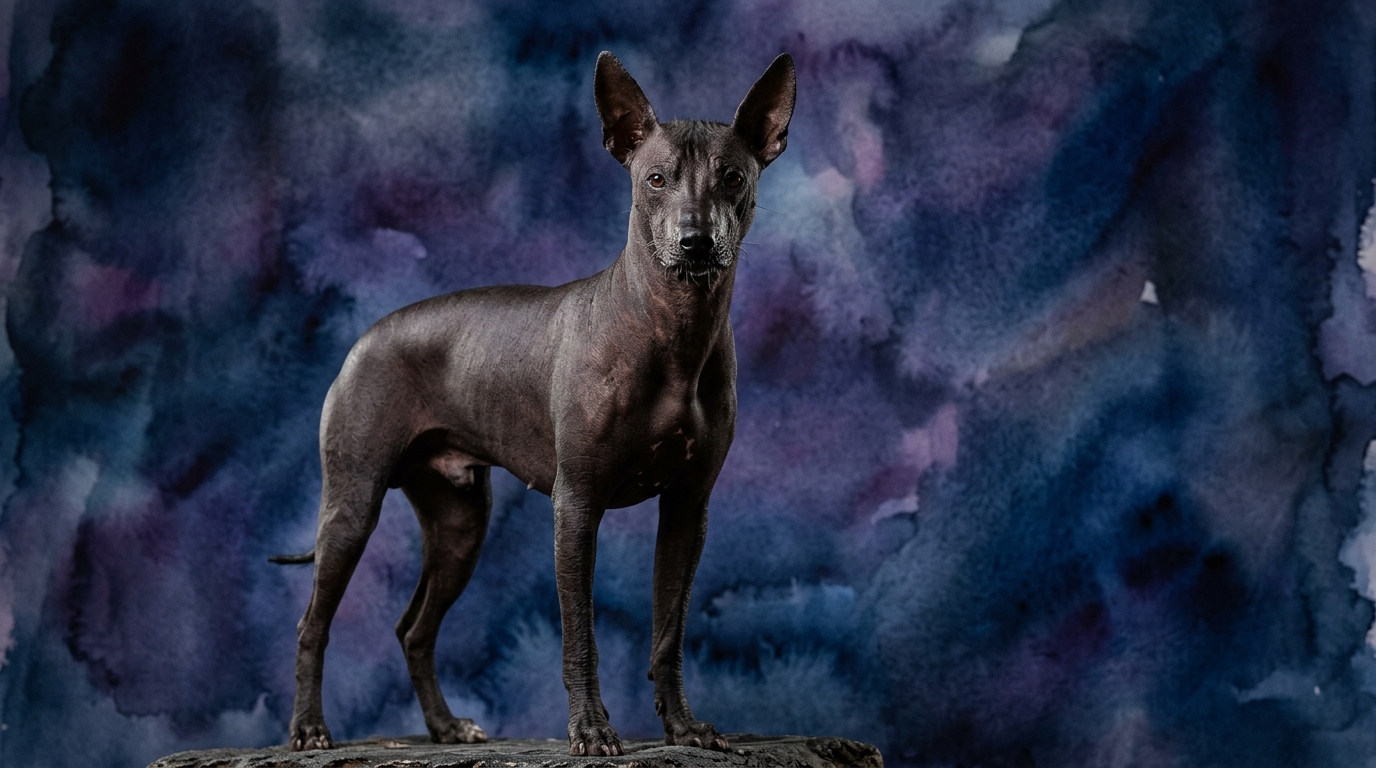
Side-by-Side IQ Profile: Dachshund vs. Xoloitzcuintli
The Dachshund, a tenacious hound, presents a cognitive profile geared for independent action and strategic pursuit. Their Problem Solving is rated 4/5, indicative of a breed that can devise clever tactics to overcome obstacles, particularly when motivated. Training Speed, however, registers at 2/5, suggesting they may require more patience and consistent methods due to their strong-willed nature. Social Intelligence is 3/5, meaning they form strong bonds and understand human cues, often with a singular focus on their primary caregiver. Their Instinctive Drive is a formidable 5/5, a testament to their deep-seated urge to hunt, scent, and explore. Memory stands at 3/5, allowing them to retain commands and experiences, though perhaps not with rapid recall.
In contrast, the Xoloitzcuintli, an ancient non-sporting breed, exhibits a more balanced and adaptable cognitive blueprint. Their Problem Solving score of 3/5 shows a capable mind that can navigate challenges, though perhaps with less independent, strategic cunning. Training Speed is rated 3/5, indicating a moderate pace for learning new commands, often responding well to positive reinforcement. Social Intelligence also scores 3/5, reflecting their capacity for deep loyalty and sensitivity to their family's emotions. Their Instinctive Drive is 3/5, present but not as intensely focused or persistent as a hound's, allowing for a more relaxed engagement. Memory is also 3/5, enabling them to reliably recall learned behaviors and routines.
Where the Dachshund Wins Cognitively
The Dachshund truly shines in areas demanding independent thought and relentless pursuit. Their Problem Solving score of 4/5, combined with an unparalleled Instinctive Drive of 5/5, creates a dog that excels at tasks requiring sustained focus and a knack for overcoming physical barriers. This isn't just about raw power; it's about cunning and determination. For instance, a Dachshund presented with a puzzle feeder will often employ various strategies until successful, demonstrating a persistent, trial-and-error approach fueled by their inherent drive. This cognitive pairing makes them exceptional at scent work and activities tapping into their innate hunting heritage, where they must independently track and strategize to reach a goal. Their ability to "think on their feet" in pursuit of a perceived reward, even if it means navigating complex terrain, is a clear cognitive advantage rooted in their historical function.
Where the Xoloitzcuintli Wins Cognitively
The Xoloitzcuintli's cognitive strengths lie in its balanced adaptability and sensitive social engagement. With a Training Speed of 3/5, they tend to absorb new information at a more consistent pace than the Dachshund's 2/5, often demonstrating a readiness to engage with their human companions in learning exercises. This moderate speed, coupled with their Social Intelligence of 3/5, means they are often more attuned to the nuances of human interaction during training, making them responsive to subtle cues and emotional states. While their Problem Solving is 3/5, they often approach challenges with a calm, considered manner. Their Instinctive Drive of 3/5 means they are less likely to be overwhelmed by environmental stimuli, allowing for a more focused learning environment. This balanced profile allows them to integrate new experiences and learn routines without the same level of independent, sometimes stubborn, cognitive processing.
Which is Easier to Train and Why
Based on The Cosmic Pet Pet IQ Lab's metrics, the Xoloitzcuintli generally presents as the easier breed to train. Their Training Speed of 3/5 indicates a more receptive learner compared to the Dachshund's 2/5. This difference isn't just about how quickly they grasp a command, but also about their willingness to consistently execute it. The Xolo's moderate Instinctive Drive (3/5) plays a significant role here; they are less likely to be sidetracked by powerful innate urges to hunt or explore independently during training sessions. Their social intelligence, also 3/5, means they are typically eager to please their family and maintain harmony, making them more amenable to instruction.
In contrast, the Dachshund's formidable Instinctive Drive (5/5) and lower Training Speed (2/5) mean that while they are capable of learning, their strong independent streak and deep-seated hunting instincts often override immediate compliance. A Dachshund might understand "stay" perfectly but choose to disregard it if a compelling scent or a perceived burrowing opportunity arises. Training a Dachshund often requires more creative motivation, greater patience, and an understanding of their inherent drive to work with, rather than against, their natural inclinations. This means Xolos tend to be more straightforward and consistent in their responses to training efforts.
Which Suits Active Owners vs. Relaxed Owners
The cognitive profiles of these two breeds offer clear guidance for owner lifestyles. The Dachshund, with its robust Problem Solving (4/5) and exceptional Instinctive Drive (5/5), thrives with active, engaging owners who can channel their considerable mental and physical energy. These dogs require consistent mental stimulation through puzzle toys, scent games, and structured training that challenges their cunning and persistence. They are not content to be passive companions; their drive demands a purpose, whether it's exploring the backyard with intense focus or participating in dog sports like earthdog trials. Owners who appreciate a dog with a strong, independent spirit and are prepared to provide daily outlets for their hunting instincts will find a fulfilling partnership.
Conversely, the Xoloitzcuintli, with its more balanced Instinctive Drive (3/5) and moderate Problem Solving (3/5), is generally better suited for owners who appreciate a calmer, more relaxed companionship, though they still enjoy activity. While capable of enjoying walks and playtime, their lower drive means they are less likely to become restless or destructive if not constantly engaged in high-intensity activities. Their social intelligence (3/5) points to a desire for close family bonds and a preference for being near their people, making them excellent companions for those who enjoy quiet evenings at home. They benefit from regular, but not necessarily strenuous, exercise and mental enrichment that focuses on bonding and routine rather than intense, independent problem-solving. Owners seeking a loyal, sensitive, and relatively low-maintenance companion in terms of constant mental stimulation will find the Xolo a good fit.
The Verdict
Choose a Dachshund if you are an owner who thrives on engaging a dog's independent problem-solving and relentless drive, ready to channel their tenacious spirit into purposeful activities.
Opt for a Xoloitzcuintli if you seek a loyal, sensitive companion with a balanced cognitive profile, one that integrates smoothly into a more relaxed family routine while still enjoying regular interaction.
🧠 Find Your Pet's IQ Score
Our Pet IQ Lab assessment covers 25+ tests across 5 cognitive dimensions — personalized to your breed.
Take the Full IQ Test →Frequently Asked Questions
Do Dachshunds and Xoloitzcuintli have good memories?
Both breeds score 3/5 in memory according to The Cosmic Pet Pet IQ Lab, indicating a moderate ability to recall learned commands and past experiences. This means they can reliably remember routines and training cues, but may not have the exceptional recall of some other breeds. Consistency in training and routine helps reinforce their memory.
Which breed is more social, Dachshund or Xoloitzcuintli?
Both Dachshunds and Xoloitzcuintli score 3/5 in Social Intelligence. This suggests both breeds are capable of forming strong bonds with their families and understanding human cues. Xolos tend to be more generally sensitive to household dynamics, while Dachshunds often display their social intelligence in forming deep, focused attachments to their primary caregivers.
How does instinctive drive affect daily life for these breeds?
The Dachshund's 5/5 Instinctive Drive means they are highly motivated by scent, digging, and pursuit, requiring outlets for these behaviors to prevent frustration. The Xoloitzcuintli's 3/5 Instinctive Drive indicates a more moderate level of these urges, making them generally less prone to acting on strong independent impulses like intense digging or chasing, leading to a calmer home environment.