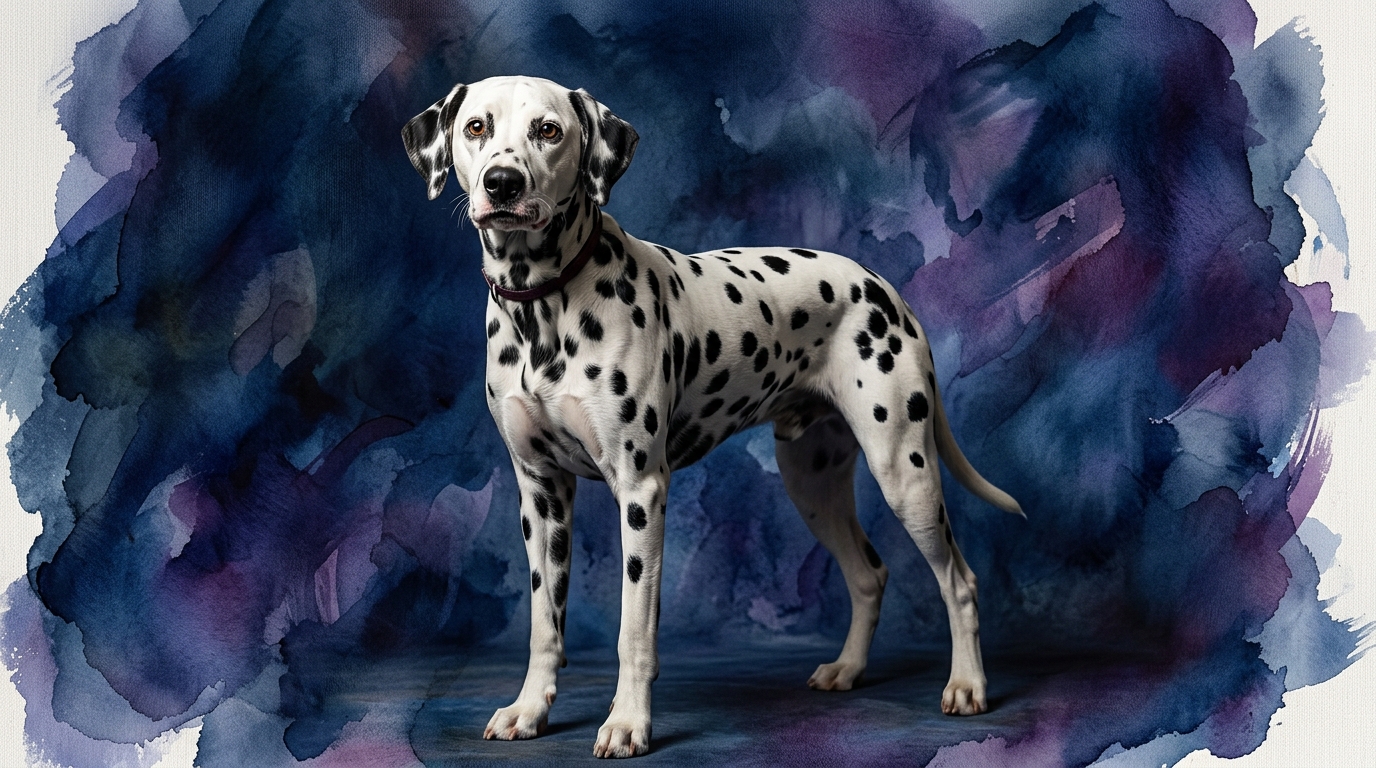

Side-by-Side IQ Profile: Dalmatian vs. Belgian Sheepdog (Groenendael)
The Dalmatian, categorized in the Non-Sporting group with a Coren rank of #39, presents a distinct cognitive makeup. Their problem-solving ability scores 3/5, suggesting they can navigate new challenges but might require more guidance or trial-and-error than some breeds. Training speed is also rated 3/5, indicating they learn at a moderate pace, benefiting from consistent, patient instruction. Where they truly shine is social intelligence, scoring 4/5, making them perceptive to human cues and capable of forming deep, communicative bonds. Their instinctive drive is a robust 4/5, reflecting their historical endurance roles, while memory is strong at 4/5, allowing them to retain learned behaviors and experiences effectively.
In contrast, the Belgian Sheepdog (Groenendael), a member of the Herding group with an impressive Coren rank of #15, showcases a different set of cognitive strengths. Their problem-solving ability is exceptional at 5/5, meaning they are adept at figuring out novel situations and adapting quickly. Training speed is equally impressive at 5/5, enabling them to grasp new commands and concepts with remarkable rapidity. Social intelligence is rated 3/5, indicating they can be more reserved or selective in their interactions, often forming intense bonds with their immediate family. Their instinctive drive scores 3/5, a moderate expression of their herding heritage, and their memory is outstanding at 5/5, ensuring they recall intricate sequences and past lessons with precision.
Where the Dalmatian Wins Cognitively
The Dalmatian's higher social intelligence, rated at 4/5 compared to the Groenendael's 3/5, suggests a distinct advantage in navigating complex social dynamics within a human family. Dalmatians are often more openly expressive in their affection and more readily engage with a wider circle of familiar people, demonstrating a nuanced understanding of social cues and interactions. This aptitude makes them particularly engaging family companions, often seeking out and thriving on human companionship and interaction, readily integrating into household routines.
Furthermore, the Dalmatian's instinctive drive, scoring 4/5 against the Groenendael's 3/5, points to a robust persistence and endurance that can be channeled into specific activities. This drive, rooted in their history as carriage dogs, manifests as a strong desire to accompany their owners on long excursions and maintain focus on sustained physical tasks. While it requires appropriate outlets, this elevated drive can make them exceptional partners for activities requiring stamina, such as long-distance running or hiking, where their unwavering enthusiasm can be a significant asset.
Where the Belgian Sheepdog (Groenendael) Wins Cognitively
The Groenendael's cognitive profile truly shines in its problem-solving ability, rated 5/5, significantly surpassing the Dalmatian's 3/5. This means a Groenendael is exceptionally adept at analyzing new situations, devising solutions to obstacles, and adapting its behavior in complex environments. Whether it's figuring out a new puzzle toy or navigating an intricate agility course, their capacity for independent thought and strategic planning is a clear differentiator, making them highly capable learners in dynamic settings.
Complementing their superior problem-solving, the Groenendael boasts a 5/5 training speed and a 5/5 memory, both higher than the Dalmatian's 3/5 and 4/5 respectively. This combination translates into a dog that learns new commands and multi-step routines with remarkable rapidity and retains that knowledge with outstanding accuracy over time. They require fewer repetitions to master a new skill and can recall complex sequences years later, making them outstanding candidates for advanced obedience, specialized work, and competitive dog sports where precision and consistency are paramount.
Which is Easier to Train and Why
Based on their intelligence profiles, the Belgian Sheepdog (Groenendael) is generally easier to train for a wide range of tasks. Their 5/5 training speed means they pick up new commands with minimal repetitions, and their 5/5 problem-solving allows them to generalize learned behaviors to new contexts quickly. This breed processes information efficiently and retains it with exceptional memory (5/5), enabling them to progress rapidly through complex training regimens, master nuanced cues, and maintain a high level of performance over time.
The Dalmatian, with a 3/5 training speed and 3/5 problem-solving, presents a different training experience. While certainly trainable, they typically require more patience, consistency, and a greater number of repetitions to solidify new behaviors. Their strong instinctive drive (4/5) can sometimes manifest as an independent streak, necessitating clear, engaging, and often creative training methods to maintain their focus. Owners must be prepared for a longer learning curve and a need for ongoing reinforcement to ensure behaviors remain reliable.
Which Suits Active Owners vs. Relaxed Owners
For owners seeking an active companion, both breeds demand significant engagement, but with different emphases. The Belgian Sheepdog (Groenendael) is ideal for highly active owners who thrive on mental and physical challenges, such as those involved in dog sports like agility, obedience, or protection work. Their high problem-solving and training speed require an owner who enjoys teaching, pushing cognitive boundaries, and providing structured, complex activities that utilize their mental prowess alongside their physical energy.
The Dalmatian, with its robust instinctive drive (4/5) and endurance background, is well-suited for active owners who prioritize consistent, vigorous physical exercise. These are individuals who enjoy long runs, cycling, hiking, or other sustained outdoor activities where the Dalmatian can utilize its stamina as a tireless companion. While they benefit from mental stimulation, their primary requirement for contentment often revolves around ample physical exertion, making them a fit for owners whose lifestyle naturally incorporates daily, extended periods of movement rather than intensive, complex training sessions.
The Verdict
Choose the Dalmatian if you seek a socially perceptive companion with robust physical stamina for outdoor adventures, and you are prepared for a more patient, consistent approach to training its strong, independent spirit.
Opt for the Belgian Sheepdog (Groenendael) if you are a dedicated owner who thrives on engaging in advanced training, dog sports, or working roles, valuing a dog with exceptional problem-solving abilities, rapid learning, and a profound memory.
🧠 Find Your Pet's IQ Score
Our Pet IQ Lab assessment covers 25+ tests across 5 cognitive dimensions — personalized to your breed.
Take the Full IQ Test →Frequently Asked Questions
Are Dalmatians difficult to train?
Dalmatians have a training speed rating of 3/5, meaning they are capable of learning but often require more repetitions and patience compared to breeds with higher scores. Their independent nature also necessitates consistent and clear training methods from their owners.
What kind of activities best suit a Belgian Sheepdog's intelligence?
Belgian Sheepdogs, with their 5/5 problem-solving and training speed, excel in activities that challenge both their minds and bodies, such as advanced obedience, agility, herding trials, or protection sports. They thrive on complex tasks that allow them to utilize their exceptional learning and memory capabilities.
Which breed is more adaptable to new environments?
The Belgian Sheepdog's 5/5 problem-solving ability generally makes them more adaptable to novel situations and environments, as they can quickly assess and adjust. Dalmatians, while capable, might take a bit longer to acclimate to significant changes due to their 3/5 problem-solving score, preferring established routines.