Side-by-Side: Unpacking Their IQ Profiles
At The Cosmic Pet Pet IQ Lab, we evaluate canine intelligence across five critical dimensions: problem solving, training speed, social intelligence, instinctive drive, and memory. While both the Dalmatian and the Black Russian Terrier are capable working breeds, their specific cognitive strengths diverge, reflecting their unique breed histories and purposes.
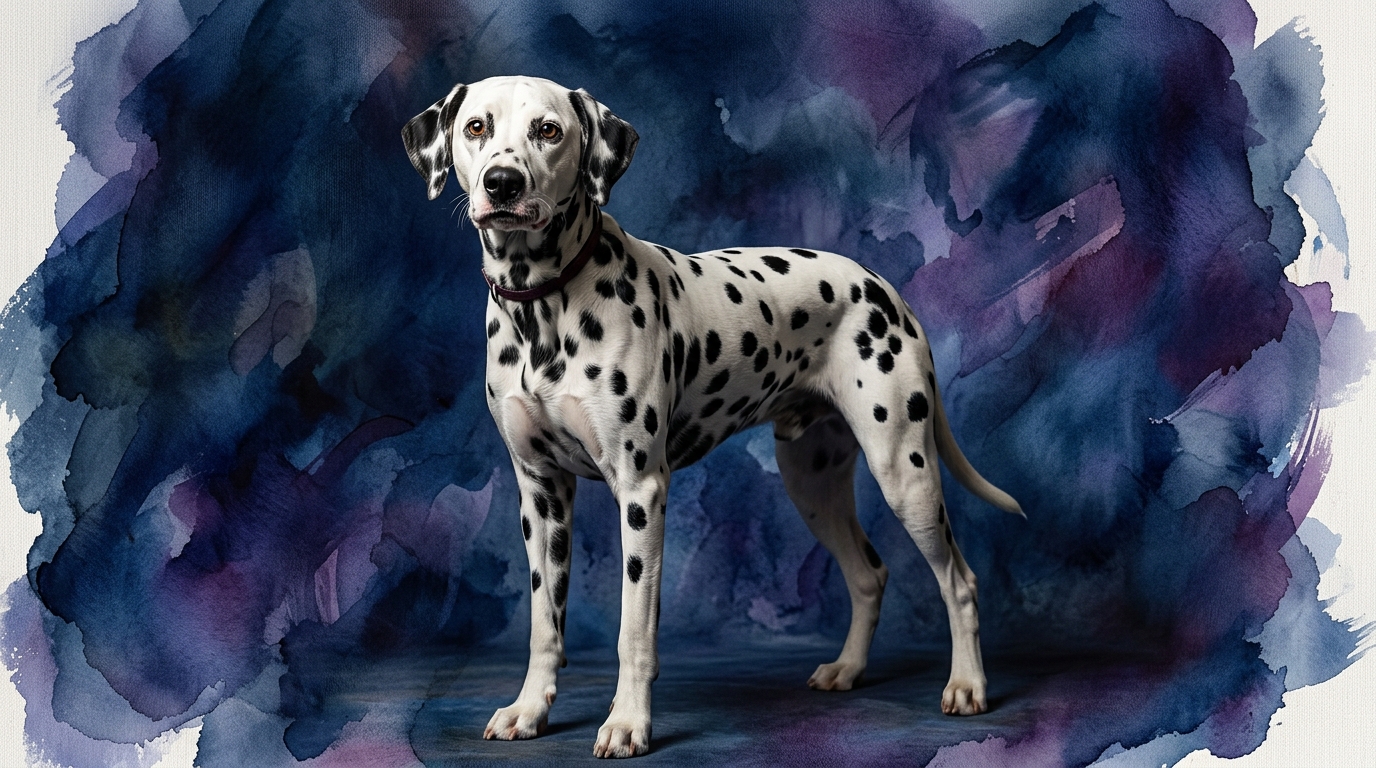
The Dalmatian, historically a coach dog, holds a Coren rank of #39, placing them within a respectable tier for working obedience. Our analysis assigns them a Problem Solving score of 3/5, indicating an ability to navigate familiar challenges and learn routines effectively, though they may not independently devise solutions for complex, novel puzzles. Their Training Speed is also 3/5, meaning they can grasp commands at an average pace, with consistency and positive reinforcement being crucial for lasting comprehension. Where Dalmatians truly shine is their Social Intelligence, scoring a robust 4/5; they are remarkably attuned to human cues, often anticipating needs and forming deep, responsive bonds within their family unit. Their Instinctive Drive is equally strong at 4/5, manifesting as a desire for sustained activity, companionship, and participation, echoing their past role running alongside carriages. Finally, their Memory at 4/5 suggests they retain learned behaviors and experiences with considerable detail and longevity, making long-term training highly effective.
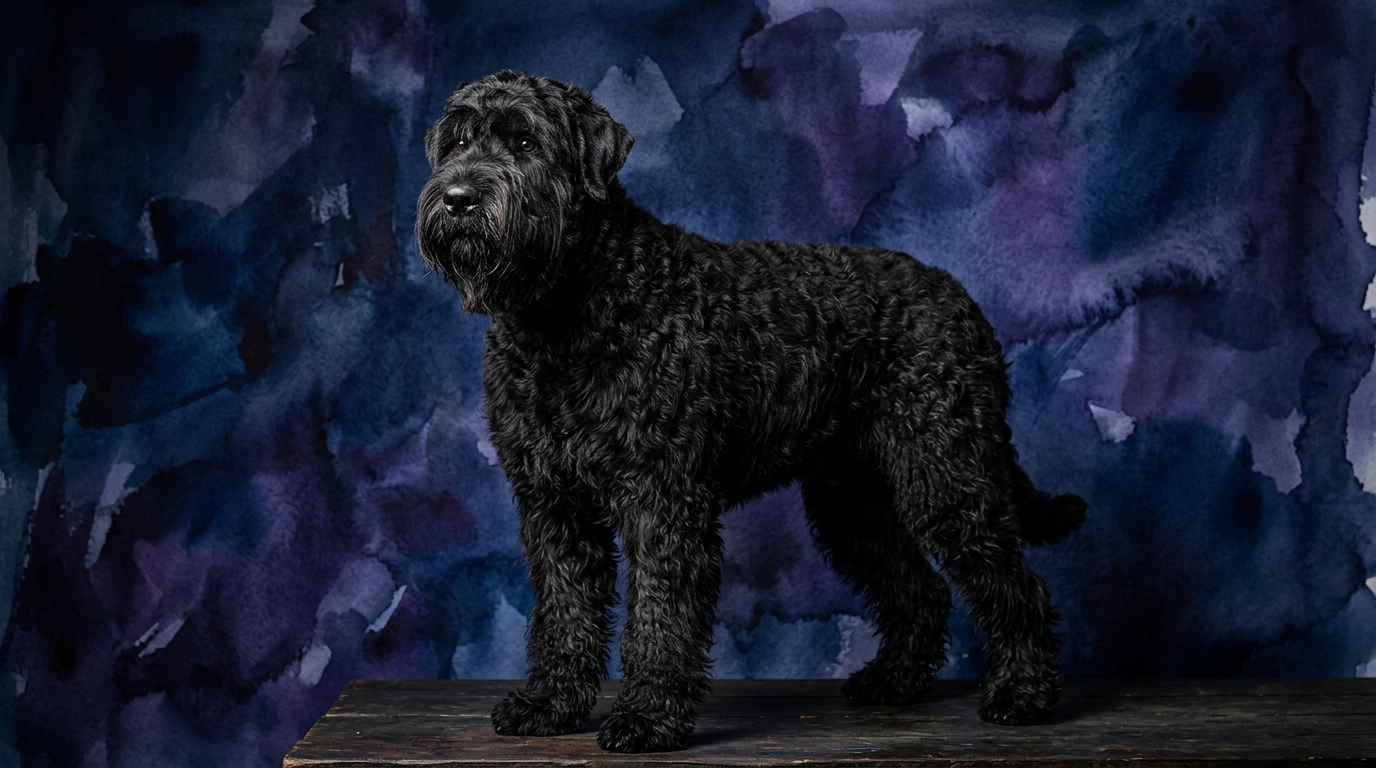
In contrast, the Black Russian Terrier (BRT), a breed developed for military and protection work, is not Coren-ranked but demonstrates a different set of cognitive priorities. Their Problem Solving is rated 3/5, reflecting an aptitude for practical tasks and the execution of procedural steps, particularly in scenarios related to their protective duties, rather than abstract reasoning. Similarly, their Training Speed is 3/5; they learn effectively through structured, consistent methods, with repetition solidifying their understanding. The BRT's Social Intelligence comes in at 3/5; while they form profound bonds with their immediate family, they are typically more reserved and discerning with strangers, processing social cues within their trusted circle rather than broadly. Their Instinctive Drive is 3/5, characterized by a purposeful working drive focused on guardianship and protection, rather than the continuous, high-energy companion drive of a Dalmatian. Their Memory is also 3/5, allowing them to retain training and experiences, especially those pertinent to their protective responsibilities, though perhaps with less breadth than the Dalmatian.
Where the Dalmatian Cognitively Excels
The Dalmatian's cognitive profile reveals distinct advantages in several key areas. Their superior Social Intelligence, rated 4/5 compared to the BRT's 3/5, means Dalmatians are often more expressive and outwardly responsive to human emotions and social dynamics. This heightened attunement allows them to integrate seamlessly into diverse social situations, often making them excellent companions who anticipate their owner's moods and desires. They are more likely to engage in interactive play and seek out social contact, demonstrating a nuanced understanding of their human 'pack' dynamics.
Furthermore, the Dalmatian's higher Instinctive Drive (4/5 versus 3/5) translates into a profound desire for sustained activity and partnership. This isn't merely about physical energy; it’s a cognitive drive to participate and engage in shared endeavors, making them eager participants in structured activities like agility, obedience, or long-distance running. This drive, rooted in their history as coach dogs, means they derive significant satisfaction from working alongside their human companions, channeling their energy into purposeful tasks.
Finally, the Dalmatian's stronger Memory (4/5 versus 3/5) offers a distinct cognitive edge. This enhanced recall means they are likely to remember commands, routines, and past experiences with greater detail and over longer periods. This robust memory capacity significantly reinforces training, making it easier for them to build upon previous lessons and adapt learned behaviors across various contexts, contributing to their reputation as adaptable and responsive learners.
Where the Black Russian Terrier Cognitively Excels
While the Black Russian Terrier's numerical scores may appear similar or slightly lower in some dimensions, their cognitive strengths are characterized by a focused intensity and specific application, particularly in areas related to their protective heritage. Their Problem Solving, rated 3/5, is geared towards practical, real-world scenarios, especially those involving security and guardianship. This means they excel at learning and executing procedural steps necessary for their protective roles, demonstrating a specific kind of cognitive resilience and methodical approach to challenges within their domain.
The BRT's Social Intelligence, while rated 3/5, is not about broad affability but about deep, discerning loyalty and an acute awareness of their immediate family's safety. Their cognitive processing of social cues is highly specialized, allowing them to accurately assess threats and discern friend from foe. This translates into a steadfast, unwavering devotion to their family, making them incredibly reliable protectors who are deeply attuned to the well-being of their trusted circle, even if they are reserved with outsiders.
Their Instinctive Drive, also 3/5, is channeled with a clear purpose: guardianship. This drive is less about continuous high-energy output and more about focused vigilance and a readiness to act when necessary. Cognitively, this means their attention and actions are often directed towards monitoring their environment and ensuring security, demonstrating a disciplined and purposeful application of their mental faculties to their primary role as a protector. This specific drive underpins their unwavering reliability in guarding tasks.
Training Ease: Dalmatian vs. Black Russian Terrier
When considering ease of training, the nuanced differences in their cognitive profiles become apparent. The Dalmatian's Coren rank of #39, coupled with their higher Social Intelligence (4/5) and Memory (4/5), generally positions them as more responsive and adaptable to a wider range of training methodologies. Their eagerness to please and ability to quickly grasp and retain commands, especially when positive reinforcement is employed, makes the training process often feel more collaborative. Their strong instinctive drive, while requiring significant channeling, can be harnessed effectively in activities like agility or advanced obedience, where their desire to work alongside their owner is a strong motivator. However, their sensitivity means harsh methods are counterproductive, and their high energy demands consistent engagement to prevent boredom-induced behaviors.
The Black Russian Terrier, while equally capable of learning, presents a different training dynamic. Their slightly lower Social Intelligence (3/5) and Memory (3/5) suggest that training may require more repetition, greater consistency, and a highly structured approach. Their inherent independence and discerning nature, characteristic of guardian breeds, mean that motivation needs to be robust and clear. They form deep bonds but are less overtly 'eager to please' in the broad sense; instead, they are motivated by purpose and the clear understanding of their role. Their protective instincts necessitate early and thorough socialization, alongside firm, consistent training, to ensure these powerful drives are managed appropriately and they develop into well-adjusted, confident protectors rather than reactive ones. While both breeds demand commitment, the Dalmatian's cognitive makeup might offer a slightly more fluid training experience for owners who can meet their energy and social interaction needs, whereas the BRT requires an owner who can consistently provide clear leadership and structured guidance tailored to their guardian temperament.
Suitability for Active vs. Relaxed Owners
The distinction between an active and a more relaxed lifestyle is critical when evaluating these breeds. The Dalmatian, with its high Instinctive Drive (4/5), is unequivocally suited for active owners. Their historical role as coach dogs instilled in them a need for sustained physical activity and mental engagement. They thrive on long runs, challenging hikes, and participation in dog sports like agility, flyball, or advanced obedience. An owner who can integrate their Dalmatian into an active outdoor lifestyle and provide consistent mental stimulation will find a joyful, engaged companion. Failing to meet these significant needs can lead to boredom, frustration, and undesirable behaviors, as their cognitive drive for activity remains unfulfilled. Their social intelligence also means they prefer to share these activities with their human family, making them excellent partners for shared adventures.
The Black Russian Terrier, while possessing a working drive (3/5), aligns differently with owner activity levels. They are not for truly 'relaxed' owners in the sense of minimal engagement, as their size, strength, and protective instincts demand consistent management and purposeful activity. However, their drive is more focused on vigilance and guardianship rather than continuous, high-energy output like a Dalmatian. They require regular, structured exercise, daily walks, and mental challenges that engage their problem-solving and protective faculties. An owner who values a steadfast, watchful companion and can provide consistent training, thorough socialization, and a secure environment, but perhaps prefers less continuous, high-octane physical activity than a Dalmatian might demand, could find a good match. Their social intelligence, being more reserved, means they might be content with less constant social interaction beyond their immediate family, provided their core needs for purpose and security are met. Both breeds require committed owners, but the *nature* of that commitment regarding activity and social interaction differs significantly.
The Verdict
Choose a Dalmatian if you seek an outwardly expressive, socially intelligent companion eager for joint adventures and capable of retaining complex training, provided you can channel their significant energy and drive. They thrive with owners who enjoy an active lifestyle and appreciate a dog that is deeply attuned to their social environment.
Opt for a Black Russian Terrier if you are an experienced owner seeking a steadfast, discerningly loyal protector with a focused working drive, willing to commit to consistent, structured training and thorough socialization. They are best suited for those who appreciate a reserved yet deeply bonded guardian.
🧠 Find Your Pet's IQ Score
Our Pet IQ Lab assessment covers 25+ tests across 5 cognitive dimensions — personalized to your breed.
Take the Full IQ Test →Frequently Asked Questions
Are Dalmatians good family dogs?
Yes, Dalmatians often form strong bonds with their families, displaying their high social intelligence and desire for companionship. They thrive with consistent interaction, early socialization, and significant daily exercise, making them suitable for active families who can meet their energy needs and integrate them into family life.
Do Black Russian Terriers need a lot of exercise?
Black Russian Terriers require regular, structured exercise to maintain their physical and mental well-being, though their needs may be less about continuous running and more about purposeful activity and vigilance. Daily walks, playtime, and consistent training sessions are essential to satisfy their working heritage and protective drives.
Which breed is better for first-time dog owners?
Neither the Dalmatian nor the Black Russian Terrier is typically recommended for first-time dog owners due to their size, specific training needs, and strong temperaments. Both breeds require experienced handling, consistent socialization, and a deep understanding of their unique cognitive profiles to thrive and become well-adjusted companions.