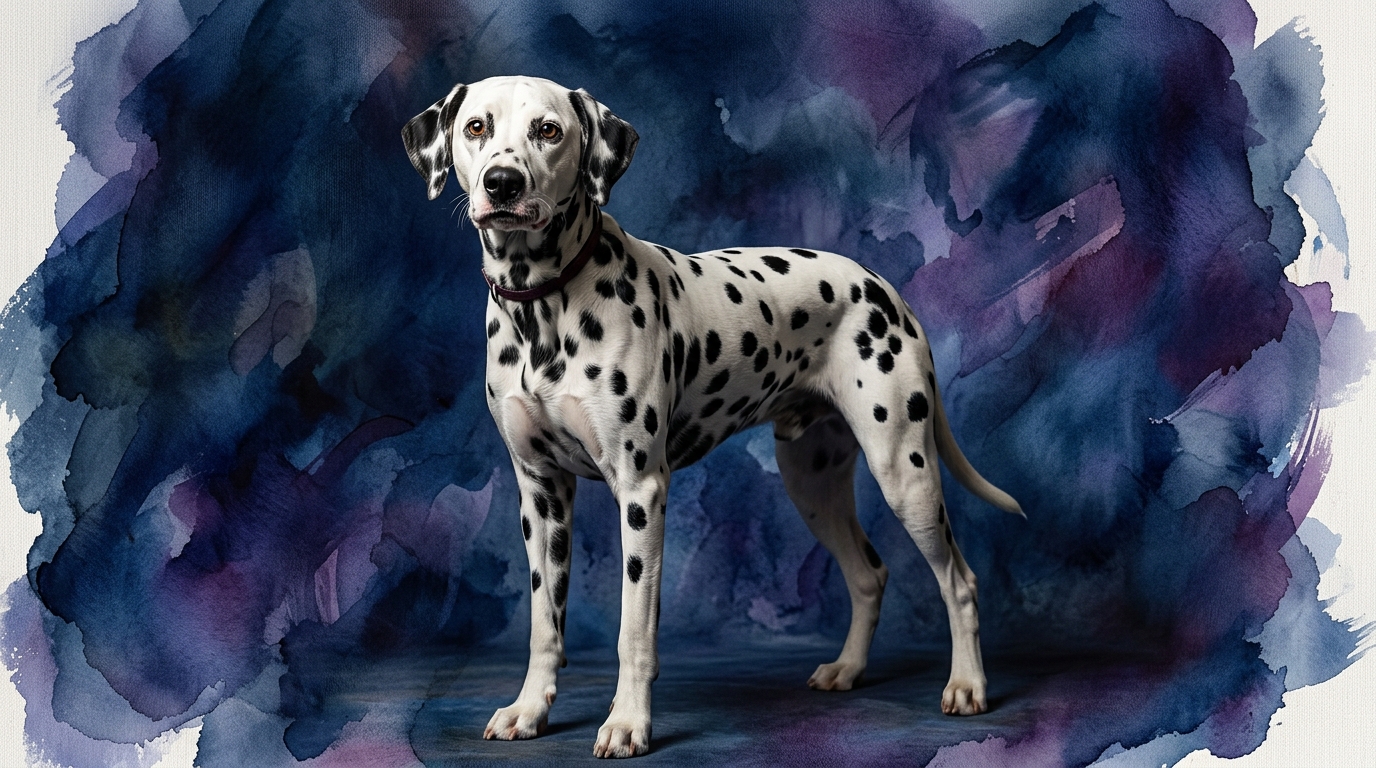
Side-by-Side Cognitive Profile: Dalmatian
The Dalmatian, a distinctive Non-Sporting breed ranked #39 by Coren, presents a unique blend of cognitive strengths. Their Problem Solving is rated at 3/5, indicating a moderate aptitude for navigating challenges, often relying on learned routines rather than spontaneous invention for complex tasks. Training Speed also sits at 3/5, suggesting they process new commands at a steady pace, benefiting greatly from consistent, patient repetition and engaging methods to maintain focus.
Where Dalmatians truly shine is in their Social Intelligence, scoring a notable 4/5. This means they are often highly attuned to the moods and intentions of their human companions, integrating smoothly into family dynamics and picking up on subtle social cues. Their Instinctive Drive is also strong at 4/5, manifesting as a persistent desire for movement, endurance, and a keen observational sense, echoing their historical role as carriage dogs. Finally, their Memory is robust at 4/5, allowing for excellent retention of learned behaviors and routines over time, contributing to long-term behavioral consistency once lessons are thoroughly ingrained.
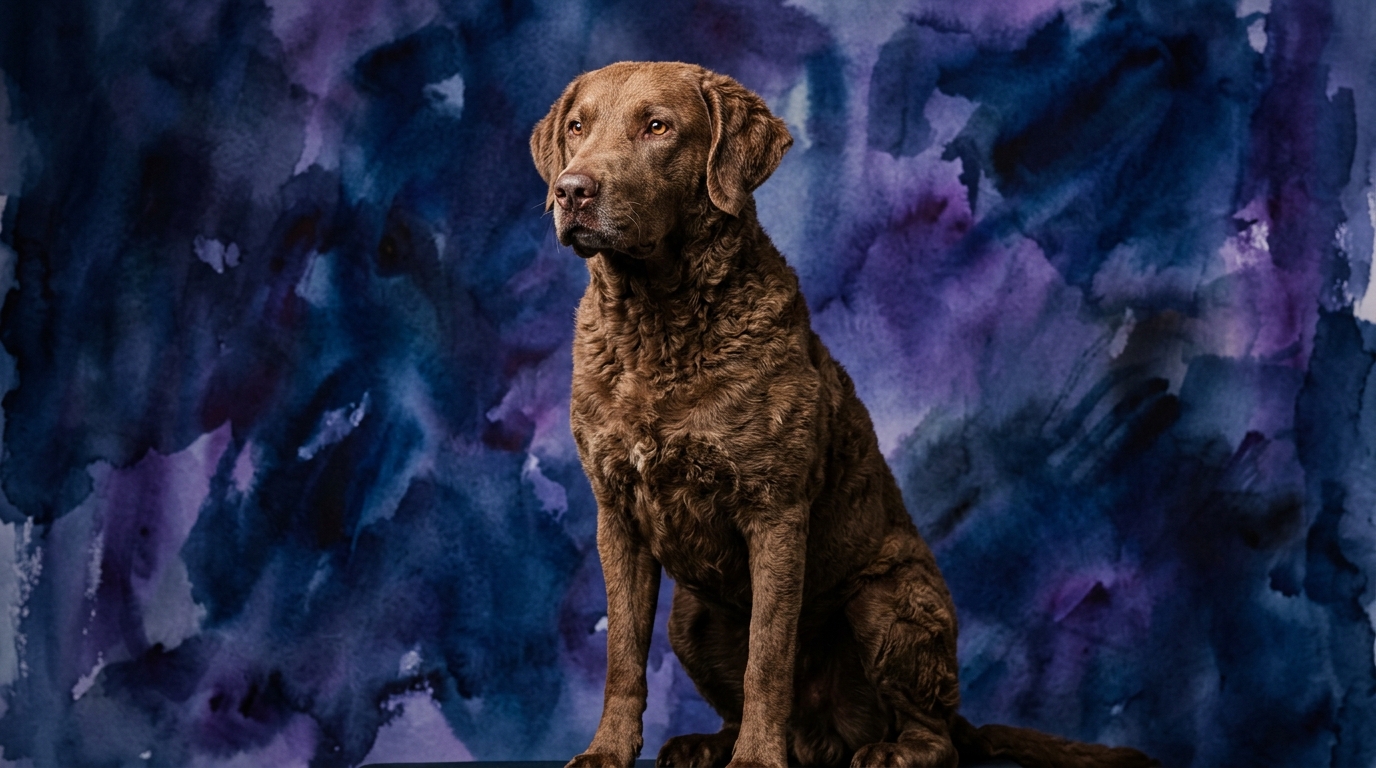
Side-by-Side Cognitive Profile: Chesapeake Bay Retriever
The Chesapeake Bay Retriever, a robust Sporting breed with a Coren ranking of #27, demonstrates a different set of cognitive priorities. Their Problem Solving capability is rated at a strong 4/5, particularly evident in goal-oriented tasks such as retrieving. They typically show a notable capacity to analyze situations, adapt strategies, and find effective solutions to practical challenges, especially those related to their working heritage. Their Training Speed also scores 4/5, meaning these retrievers typically grasp new commands and concepts with good efficiency, driven by an eagerness to work and please their handler.
In terms of Social Intelligence, the Chessie registers a 3/5. While deeply loyal to their core family, they can be more reserved or discerning with strangers and may not always display the same overt social expressiveness as some other breeds, often focusing their social understanding on their immediate pack. Their Instinctive Drive, rated 3/5, is well-channeled and task-specific, focusing on activities like scent work, water retrieving, and following precise instructions rather than a broad, unfocused energy. Like the Dalmatian, they possess a strong Memory at 4/5, which is crucial for recalling complex retrieving patterns, marking fallen birds, and executing sequences of commands with precision.
Where the Dalmatian Wins Cognitively
The Dalmatian's cognitive edge lies primarily in their superior Social Intelligence (4/5) compared to the Chesapeake Bay Retriever's (3/5). This means Dalmatians are generally more attuned to human emotional states and social dynamics within a household. They often pick up on subtle cues, adjust their behavior accordingly, and can integrate into a busy family environment with a greater innate understanding of interpersonal relationships. This heightened social awareness contributes to their reputation as adaptable companions who understand their place within the family unit and respond readily to social engagement.
Furthermore, the Dalmatian's Instinctive Drive (4/5) is broader and more generalized than the Chesapeake Bay Retriever's (3/5), which is often highly task-specific. While the Chessie's drive is channeled for retrieving, the Dalmatian's drive manifests as an enduring need for movement, observation, and participation, echoing their historical role alongside carriages. This means Dalmatians often possess a persistent curiosity about their environment and a sustained desire for activity that isn't necessarily tied to a specific "job," making them keen explorers and vigilant observers.
Where the Chesapeake Bay Retriever Wins Cognitively
The Chesapeake Bay Retriever excels in Problem Solving (4/5) and Training Speed (4/5), outpacing the Dalmatian in both categories (3/5 each). This indicates that Chesapeakes typically approach new challenges with a more analytical and goal-oriented mindset. When presented with an obstacle or a task, they are often quicker to devise effective strategies, especially if the problem has a clear solution or reward, making them adept at navigating complex practical situations. Their quick grasp of new concepts also means they can learn and internalize commands more efficiently, often requiring fewer repetitions to achieve mastery.
The Chessie's focused drive, while rated lower overall than the Dalmatian's broad instinctive drive, is particularly optimized for specific tasks, especially those involving retrieval and water work. This specialized cognitive focus allows them to concentrate intensely on a given objective, demonstrating impressive persistence and determination in pursuit of a goal. Their ability to quickly process and execute commands related to their working heritage gives them a distinct advantage in performance-based activities and structured learning environments.
Which Is Easier to Train and Why
Based on their cognitive profiles, the Chesapeake Bay Retriever (Training Speed 4/5) is generally easier to train than the Dalmatian (Training Speed 3/5). Chesapeakes possess a strong desire to work with their handlers and a natural inclination to follow direction, rooted in their sporting heritage. Their quicker grasp of commands means they absorb new lessons more rapidly and are often more motivated by the prospect of a task well done, leading to more efficient training sessions and quicker progress in obedience and specialized skills. They respond well to clear, consistent instruction and thrive on having a purpose.
Dalmatians, while capable learners with good memory, require more patience and consistency due to their moderate training speed and independent spirit. Their higher social intelligence means they respond well to positive reinforcement and connection, but their innate drive and occasional stubbornness can make training a more extended process. They benefit from engaging, varied training methods that keep them stimulated and prevent boredom, which can otherwise lead to a lack of focus. Real behavioral differences include the Chessie's intrinsic motivation for task execution versus the Dalmatian's need for social engagement and mental stimulation to maintain focus.
Which Suits Active Owners vs. Relaxed Owners
For active owners seeking a canine partner for demanding outdoor pursuits, the Chesapeake Bay Retriever is often a better match. Their superior problem-solving and training speed, combined with a robust physical constitution, make them ideal for activities like hunting, competitive obedience, agility, and extensive water sports. They thrive on having a job to do and require owners who can provide consistent mental and physical challenges to channel their focused energy and intelligence. Their somewhat reserved social intelligence means they might prefer a more task-oriented relationship with their owner rather than constant social interaction.
The Dalmatian, with its high social intelligence and broad instinctive drive, suits active owners who also value a strong social bond and a companion deeply integrated into family life. While they need significant exercise and mental stimulation, their cognitive strengths lean towards being a highly aware and interactive family member rather than a specialized working dog. They excel with owners who enjoy long walks, jogs, and interactive play, but also appreciate a dog that is keenly observant of household dynamics and enjoys being at the heart of family activities. Their adaptability makes them suitable for active families who enjoy including their dog in diverse social settings, provided their exercise needs are met.
The Verdict
Choose a Dalmatian if you value a highly socially intelligent, adaptable companion who thrives on family interaction and offers persistent, broad-spectrum energy for diverse activities, provided you can meet their consistent exercise and mental stimulation needs.
Opt for a Chesapeake Bay Retriever if you are an active, experienced owner seeking a dedicated, task-oriented partner for demanding outdoor pursuits and structured training, appreciating their quick learning and focused problem-solving abilities.
🧠 Find Your Pet's IQ Score
Our Pet IQ Lab assessment covers 25+ tests across 5 cognitive dimensions — personalized to your breed.
Take the Full IQ Test →Frequently Asked Questions
Are Dalmatians difficult to train due to their independence?
Dalmatians are not inherently difficult, but their moderate training speed and independent streak mean they require consistent, patient, and engaging training methods. They respond best to positive reinforcement and varied sessions that prevent boredom, leveraging their strong memory for long-term retention.
How does a Chesapeake Bay Retriever's social intelligence impact family life?
Chesapeake Bay Retrievers have moderate social intelligence, meaning they are loyal to their family but can be more reserved with strangers. They form strong bonds with their immediate household but might not be as overtly social or demonstrative in new social situations, preferring a more focused connection with their primary caregivers.
Which breed is better for a first-time dog owner?
Neither breed is typically recommended for first-time dog owners without significant commitment to training and exercise. The Chesapeake Bay Retriever's intense drive and need for structured work, and the Dalmatian's independent nature and high energy, both require experienced handling and consistent effort to thrive.