Side-by-Side Cognitive Profile
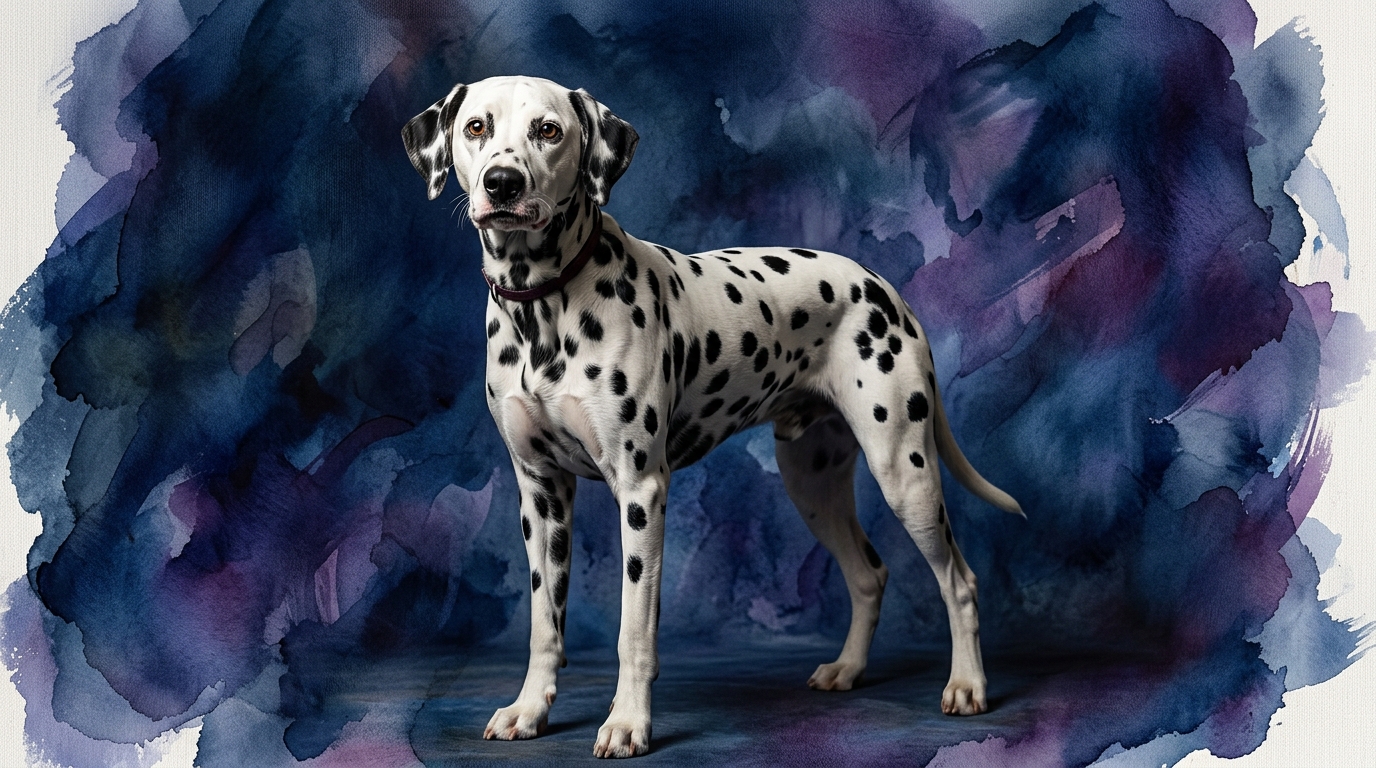
The Cosmic Pet Pet IQ Lab employs a multi-dimensional assessment to move beyond singular 'smart' labels, evaluating five key cognitive dimensions. For the Dalmatian, classified in the Non-Sporting Group and holding a Coren rank of #39, their profile indicates a moderate Problem Solving capacity at 3/5, suggesting they can navigate novel situations with some independent thought. Their Training Speed also sits at 3/5, implying a consistent, albeit not rapid, pace of learning new commands. Where Dalmatians truly stand out is in their Social Intelligence, scoring 4/5, indicating a keen ability to interpret human cues and social dynamics. This is complemented by a strong Instinctive Drive at 4/5, reflecting their inherent purpose-driven behaviors, and an excellent Memory at 4/5, allowing for robust retention of experiences and training.
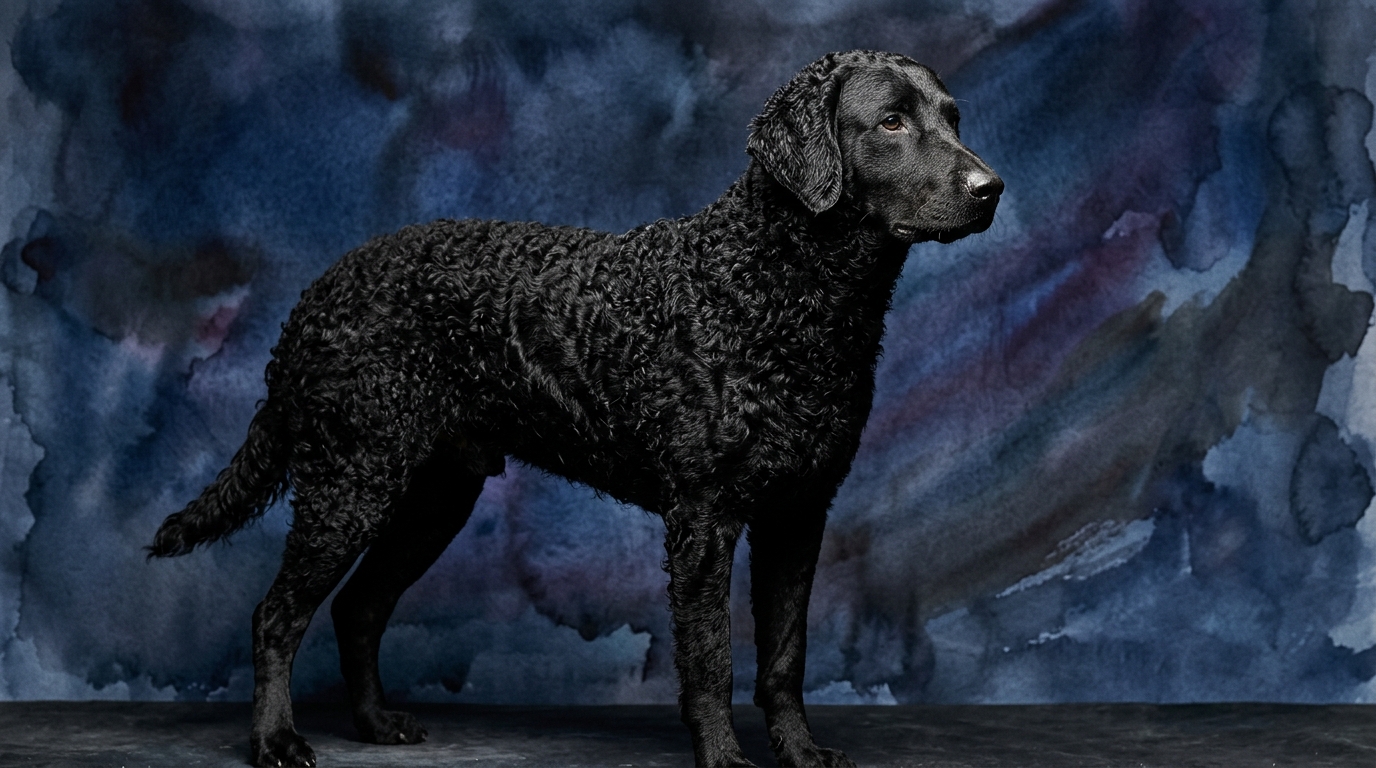
In contrast, the Curly-Coated Retriever, a Sporting Group member with a Coren rank of #41, presents a slightly different cognitive architecture. They share the Dalmatian's moderate Problem Solving ability at 3/5 and a similar Training Speed at 3/5, suggesting a comparable learning curve for new tasks. However, their Social Intelligence is rated at 3/5, indicating a more straightforward, less nuanced approach to human interaction compared to the Dalmatian. Their Instinctive Drive is also moderate at 3/5, reflecting a focused, yet perhaps less expansive, set of innate working behaviors. Like the Dalmatian, the Curly-Coated Retriever possesses an impressive Memory at 4/5, which is crucial for their role in complex retrieving sequences.
Where the Dalmatian Wins Cognitively
The Dalmatian's cognitive profile showcases distinct advantages in two key areas: Social Intelligence and Instinctive Drive. With a Social Intelligence score of 4/5 compared to the Curly-Coated Retriever's 3/5, Dalmatians often exhibit a superior capacity for understanding human emotions, subtle body language, and the intricate social structures of a family unit. This heightened social awareness can translate into a dog that is exceptionally attuned to its owner's moods and intentions, fostering a deep, empathetic bond. They might pick up on unspoken cues or anticipated routines with greater ease, becoming an integral, intuitive member of the household.
Furthermore, the Dalmatian's Instinctive Drive, rated at 4/5 versus the Curly-Coated Retriever's 3/5, signifies a potent internal engine for purposeful activity. Historically bred as coach dogs, this drive manifests as a robust need for engagement, stamina, and a desire to 'do' something. This isn't merely about physical energy; it's a cognitive imperative for structured tasks and mental stimulation. Owners who can channel this strong drive into varied activities like canine sports, long-distance running, or complex trick training will find a highly motivated and engaged partner, less prone to boredom when their cognitive needs are met.
Where the Curly-Coated Retriever Wins Cognitively
While the Curly-Coated Retriever's raw scores might not surpass the Dalmatian's in all dimensions, their cognitive profile demonstrates a focused efficacy particularly suited to their sporting heritage. Their Problem Solving at 3/5, combined with a robust Memory at 4/5, allows them to excel in sequential tasks and complex retrieving scenarios. Unlike the Dalmatian's more generalized high drive, the Curly-Coated Retriever's 3/5 Instinctive Drive is typically channeled into specific, purposeful work like fetching from land or water, making them exceptionally dedicated and efficient in these roles. Their cognitive strength lies in their ability to learn, remember, and execute multi-step commands related to their primary function as a retriever, often with unwavering focus.
The Curly-Coated Retriever's Social Intelligence at 3/5, while lower than the Dalmatian's, can be interpreted as an advantage in certain working contexts. This slightly less people-centric focus might make them less prone to distraction from handler emotions or external social cues when performing a task. Instead, their cognitive resources are more directly applied to the objective at hand, fostering a reliable, task-oriented partnership. This doesn't imply a lack of affection, but rather a cognitive predisposition towards a more business-like approach during training and work, ensuring consistency in performance where precision is paramount.
Which Is Easier to Train and Why
Assessing which breed is 'easier' to train is nuanced, as both the Dalmatian and the Curly-Coated Retriever share a moderate Training Speed of 3/5. This suggests that neither breed is inherently a lightning-fast learner, requiring consistent, patient, and engaging methods. However, their distinct cognitive profiles influence the *approach* to training.
The Dalmatian's higher Social Intelligence (4/5) can make initial training phases smoother, as they are often more attuned to human intentions and emotional cues. They may quickly grasp what their owner desires through subtle signals, fostering a good communicative loop. However, their strong Instinctive Drive (4/5) also means they possess an independent spirit and a significant need for mental engagement. If training isn't stimulating or if their drives aren't adequately channeled, they can become easily bored or develop their own 'agenda,' manifesting as stubbornness or distractibility. Successful Dalmatian training often involves variety, positive reinforcement, and making the training process a social, interactive game.
The Curly-Coated Retriever, with a Social Intelligence of 3/5, might require more explicit instruction and less reliance on subtle cues. They might not be as quick to 'read' their handler's mind. However, their Instinctive Drive (3/5), while lower than the Dalmatian's, is often more narrowly focused on retrieving and working alongside a handler. Once a Curly understands a command and its purpose, particularly if it aligns with their natural retrieving behaviors, they can be remarkably consistent and dedicated. They might be less prone to independent excursions of thought during a training session, provided the task is clear and rewarding. Training a Curly benefits from clear, consistent commands and a systematic approach, often leveraging their inherent desire to carry and fetch.
In essence, neither breed is 'easy' in the sense of requiring minimal effort. Dalmatians benefit from socially engaging, varied training that respects their independent drive, while Curly-Coated Retrievers thrive with clear, task-oriented instruction that taps into their focused working instincts.
Which Suits Active Owners vs. Relaxed Owners
Neither the Dalmatian nor the Curly-Coated Retriever are suitable for truly 'relaxed' or sedentary owners; both breeds demand significant physical activity and mental engagement. The distinction lies in the *type* of activity and interaction they thrive on.
Active owners seeking a highly social, versatile partner will find the Dalmatian an excellent match. Their robust Instinctive Drive (4/5) and historical role as endurance runners mean they require substantial daily exercise, often manifesting as long runs, hikes, or vigorous play. Crucially, their high Social Intelligence (4/5) means they crave interaction and integration into family activities. They are not content to simply run in the yard; they want to run *with* you, explore *with* you, and be a part of your daily life. Owners who can provide varied physical challenges and consistent social engagement, perhaps exploring different canine sports like agility or obedience, will see a fulfilled Dalmatian.
For active owners whose lifestyle revolves around specific outdoor pursuits or dog sports, the Curly-Coated Retriever is an ideal companion. Their Instinctive Drive (3/5), though numerically lower, is perfectly calibrated for their retrieving purpose. They excel in activities like hunting, dock diving, or competitive obedience and field trials, where their Problem Solving (3/5) and exceptional Memory (4/5) are put to use in structured, repetitive tasks. While they enjoy family life, their cognitive fulfillment often comes from having a 'job' that leverages their natural aptitudes for fetching and water work. They are well-suited to owners who appreciate a dedicated, focused partner for consistent, purposeful outdoor adventures.
In summary, both breeds require active engagement, but the Dalmatian thrives on integrated social activity and varied physical outlets, while the Curly-Coated Retriever often finds its greatest satisfaction in structured, task-oriented work that aligns with its retrieving heritage.
The Verdict
Choose the Dalmatian if you seek a socially attuned companion with a strong internal drive for purposeful, varied activity, and are prepared to channel that energy into diverse, interactive pursuits alongside your family.
Opt for the Curly-Coated Retriever if you desire a dedicated working partner for specific tasks like retrieving, or enjoy structured outdoor activities where their focused drive and excellent memory can truly shine.
🧠 Find Your Pet's IQ Score
Our Pet IQ Lab assessment covers 25+ tests across 5 cognitive dimensions — personalized to your breed.
Take the Full IQ Test →Frequently Asked Questions
Are Dalmatians difficult to train?
Dalmatians have a moderate training speed (3/5) and a strong instinctive drive (4/5), meaning they require consistent, engaging training methods. While their high social intelligence (4/5) helps them understand cues, their independent spirit means training must be stimulating to prevent boredom or stubbornness.
Do Curly-Coated Retrievers make good family pets?
Curly-Coated Retrievers can make devoted family pets, especially for active families. Their moderate social intelligence (3/5) means they might be less overtly expressive than some breeds, but they are loyal. They thrive best when their strong retrieving instincts are fulfilled through regular activities.
Which breed requires more exercise?
Both breeds are active and require substantial exercise. Dalmatians (Instinctive Drive 4/5) often need varied, high-stamina activities integrated with social interaction. Curly-Coated Retrievers (Instinctive Drive 3/5) also need significant activity, particularly structured tasks like retrieving or swimming, to satisfy their working heritage.