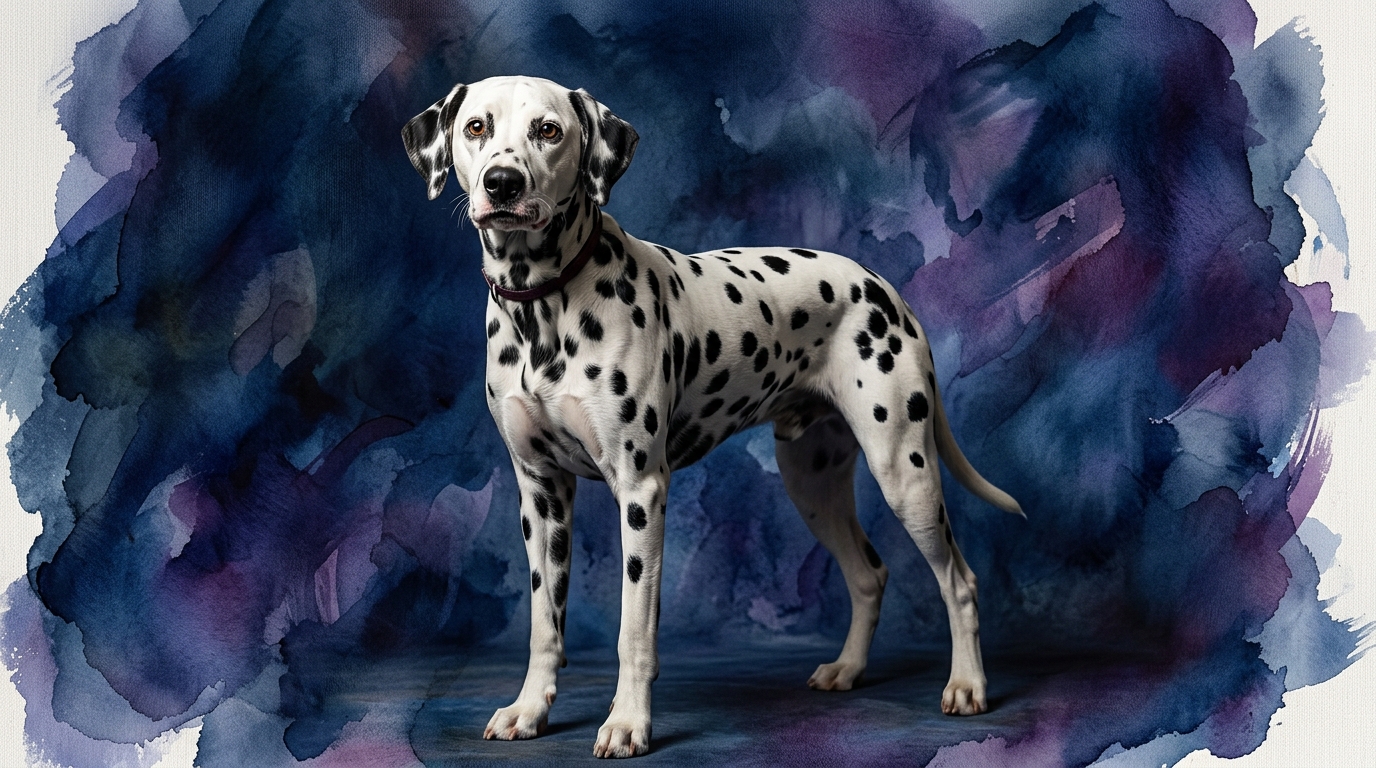
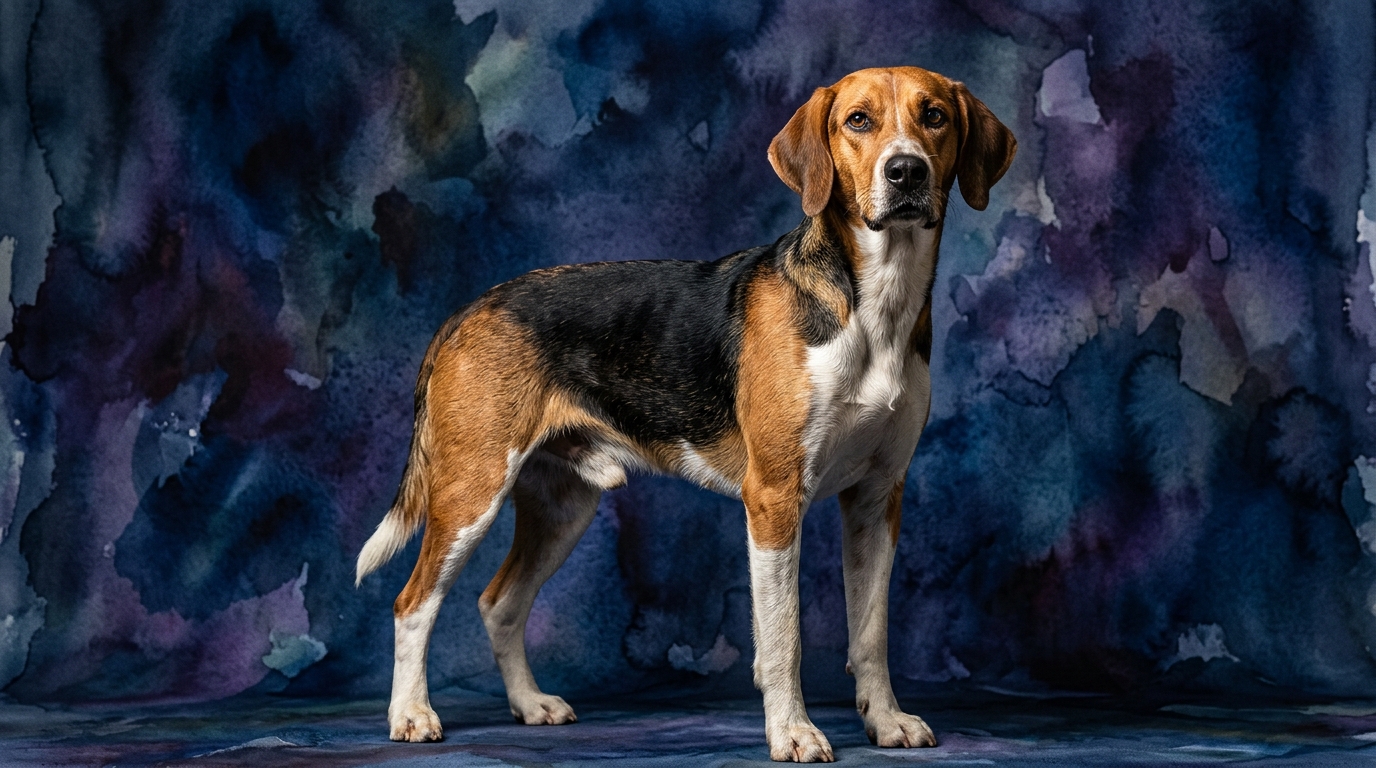
Side-by-Side IQ Profile
The Cosmic Pet Pet IQ Lab assesses canine cognition across five crucial dimensions: Problem Solving, Training Speed, Social Intelligence, Instinctive Drive, and Memory. These metrics provide a nuanced understanding beyond simple labels, allowing us to appreciate the specific strengths and challenges each breed presents.
The Dalmatian, historically a carriage dog, presents a balanced yet distinct cognitive profile. They exhibit a Problem Solving score of 3/5, indicating an ability to navigate moderately complex situations, and a Training Speed of 3/5, suggesting a reasonable pace for learning new commands. Their Social Intelligence truly stands out at 4/5, reflecting their capacity for deep connection and understanding of human cues. An Instinctive Drive of 4/5 speaks to their endurance and vigilance, while their Memory, also at 4/5, underpins their ability to retain routines and learned behaviors.
In contrast, the English Foxhound, bred for centuries to pursue game by scent, shows a profile optimized for their specialized work. Their Problem Solving is rated 3/5, often applied to tracking challenges, and Training Speed is 3/5, though often requiring specific motivation. Their Social Intelligence is 3/5, typically geared towards pack interaction rather than human-centric nuances. An Instinctive Drive of 3/5, while lower than the Dalmatian's, is intensely focused on scent work, and their Memory at 3/5 is effective for recalling trails and learned hunting patterns.
The Coren ranking system, which measures a dog's working and obedience intelligence, places the Dalmatian at #39, indicating a solid capacity for understanding and executing commands. The English Foxhound, not typically evaluated under this framework, instead demonstrates a different form of competence, one centered on independent pursuit and persistent tracking.
Where the Dalmatian Shines Cognitively
The Dalmatian's cognitive strengths are particularly evident in their Social Intelligence (4/5) and Memory (4/5). Their historical role as carriage dogs required them to run alongside horses and carriages, often for long distances, demanding a strong bond with their human companions and an acute awareness of their environment. This translates to an animal that is often highly attuned to human emotions and intentions, making them responsive to subtle cues and capable of forming profound connections. Their superior memory aids in recalling complex routines and commands, which is invaluable in a home environment.
Furthermore, their Instinctive Drive (4/5) manifests as an impressive stamina and a keen sense of awareness, rather than a singular prey drive. This drive, coupled with their social aptitude, means they are often eager participants in activities that involve their human family, thriving on engagement and consistent interaction. They excel in scenarios where understanding human expectations and remembering sequential actions are beneficial, making them adept at various dog sports or intricate household routines.
Where the English Foxhound Excels Cognitively
The English Foxhound's cognitive excellence is rooted firmly in their specialized purpose: hunting. While their Instinctive Drive scores 3/5, it is an intensely focused and persistent drive towards scent. Their problem-solving abilities (3/5) are predominantly channeled into deciphering complex scent trails, navigating varied terrain, and maintaining focus over long periods, often independently of human intervention. This form of problem-solving is less about understanding a human's arbitrary command and more about autonomously executing a deeply ingrained behavioral pattern.
Their Social Intelligence (3/5), while not as high as the Dalmatian's in a human context, is robust within a pack structure. Foxhounds are bred to work cooperatively with other hounds, following a collective goal. This means they are often tolerant and communicative with other dogs, a distinct form of social cognition. Their memory (3/5) is highly efficient for recalling scent patterns and geographical layouts relevant to their hunting pursuits, demonstrating a practical, application-specific form of recall rather than rote memorization of tricks. Their sustained focus on a scent, often to the exclusion of all else, is a testament to their highly specialized mental architecture.
Training Dynamics: Which Breed is Easier?
When comparing training ease, both breeds have a Training Speed score of 3/5, yet their underlying cognitive architectures lead to different experiences. The Dalmatian's higher Social Intelligence (4/5) and Memory (4/5) often make them more receptive to human-led training for companion tasks. They are generally more inclined to seek to understand and please their human partners, and their memory allows them to retain a wide array of commands and routines once learned. This makes them appear more straightforward to train for obedience, agility, or household manners, as they are often motivated by positive reinforcement and social interaction.
The English Foxhound, while equally capable of learning, requires a different approach. Their powerful Instinctive Drive (3/5) towards scent means that external stimuli, particularly intriguing smells, can easily override human commands. Training them effectively often involves leveraging this drive, for instance, by incorporating scent work into their training or using highly valued, scent-based rewards. Their problem-solving (3/5) is often directed towards their primary instinct, meaning they might 'problem-solve' how to get to a scent rather than how to execute a sit-stay on command. Consistency, patience, and understanding their deep-seated motivation are paramount.
Ultimately, for owners seeking a companion dog for general obedience, tricks, or dog sports that require close human partnership, the Dalmatian may present a more intuitive training experience due to their inherent social responsiveness and strong memory. The English Foxhound, while trainable, demands a handler who can channel their intense, independent drive and who understands that their 'ease' of training is dependent on aligning with their foundational instincts.
Tailoring to Lifestyles: Active vs. Relaxed Owners
For owners with an active lifestyle, the Dalmatian is an excellent match. Their high Instinctive Drive (4/5) signifies an inherent need for physical activity, capable of sustained running and exploration. Coupled with their strong Social Intelligence (4/5) and Memory (4/5), they thrive on varied activities that engage both their bodies and minds, such as long hikes, jogging, agility, or rally obedience. They require consistent mental stimulation and physical exertion to prevent boredom and channel their energy constructively. A Dalmatian is not a passive companion; they seek engagement and partnership in their adventures.
The English Foxhound, with its focused Instinctive Drive (3/5) and history of relentless pursuit, is unequivocally suited for exceptionally active owners, often those with access to large, secure outdoor spaces. Their need for vigorous, prolonged exercise, ideally with opportunities for scent exploration, is profound. A relaxed or sedentary owner will find it challenging to meet the physical demands of a Foxhound, which can lead to restlessness or destructive behaviors. They flourish in environments where their innate desire to run and follow scents can be safely indulged, making them ideal for rural living, dedicated runners, or owners involved in canine tracking sports. Their social intelligence (3/5) leans towards pack dynamics, so they often appreciate the company of other dogs, but their primary need remains the outlet for their physical and olfactory drives.
The Verdict: When to Choose Each Breed
Choosing between a Dalmatian and an English Foxhound comes down to understanding their distinct cognitive profiles and aligning them with your lifestyle and expectations.
The Dalmatian is an ideal choice for active individuals or families who appreciate a socially astute and memorable companion, one eager to participate in diverse activities and form a deep, responsive bond. Their balanced intelligence across social and memory dimensions makes them highly trainable for a wide array of companion roles, provided their significant need for physical and mental engagement is met.
The English Foxhound is best suited for highly experienced, exceptionally active owners, particularly those who can provide extensive opportunities for running and scent work in secure environments. Their independent, drive-focused intelligence thrives with handlers who understand and can channel their profound hunting instincts, making them a dedicated partner for specific outdoor pursuits rather than a general household companion.
The Verdict
Choose a Dalmatian if you seek a highly social, physically enduring companion eager to engage in diverse activities and form a deep, responsive bond, provided you can meet their consistent needs for mental and physical stimulation.
Opt for an English Foxhound if you are an exceptionally active, experienced owner, capable of providing extensive opportunities for their profound running and scenting instincts, ideally in a rural or very spacious, secure environment.
🧠 Find Your Pet's IQ Score
Our Pet IQ Lab assessment covers 25+ tests across 5 cognitive dimensions — personalized to your breed.
Take the Full IQ Test →Frequently Asked Questions
Are Dalmatians genuinely intelligent?
Yes, Dalmatians exhibit a well-rounded intelligence, particularly excelling in Social Intelligence (4/5) and Memory (4/5). This allows them to form strong bonds with humans and recall complex routines, making them responsive and capable companions for various activities.
Can English Foxhounds be good family pets?
English Foxhounds can be good family pets for the right, very active family, but their primary social intelligence is geared towards pack dynamics (3/5), and their intense instinctive drive (3/5) requires significant outlets. They need a family committed to providing extensive exercise and understanding their independent, scent-driven nature.
What's the biggest training challenge for each breed?
For Dalmatians, the biggest challenge often lies in managing their high instinctive drive (4/5) and ensuring adequate mental and physical stimulation to prevent boredom, despite their good training speed. For English Foxhounds, the primary challenge is overcoming their powerful, independent scent drive (3/5) which can make them oblivious to commands when a compelling scent is present, requiring consistent, high-value motivation.