Side-by-Side IQ Profile: Unpacking Cognitive Dimensions
At The Cosmic Pet Pet IQ Lab, we evaluate canine intelligence across five critical dimensions: problem solving, which gauges a dog's ability to navigate novel challenges; training speed, reflecting how quickly a dog grasps and retains new commands; social intelligence, assessing their capacity to understand and respond to human cues and social dynamics; instinctive drive, measuring their innate, task-oriented behaviors; and memory, indicating their recall of experiences and learned information. Each dimension is scored on a scale of 1 to 5, providing a comprehensive cognitive fingerprint for every breed.
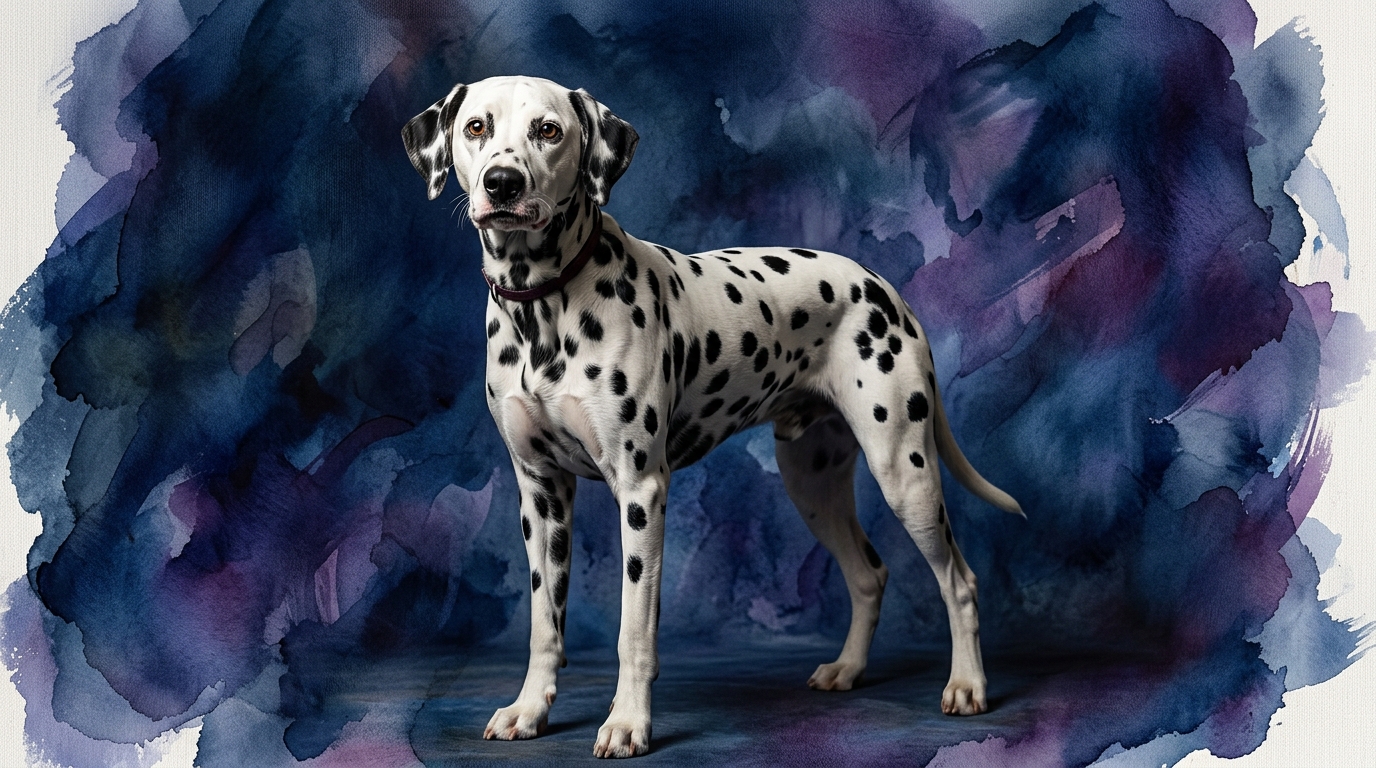
The Dalmatian, classified in the Non-Sporting Group with a Coren rank of #39, presents a balanced yet distinctly social cognitive profile. They score 3/5 for problem solving, demonstrating a competent ability to figure out dilemmas. Their training speed is also 3/5, suggesting a steady pace of learning. Where Dalmatians truly stand out is in their social intelligence, scoring 4/5, indicating a strong attunement to human interaction. Their instinctive drive is notably robust at 4/5, historically channeled into endurance and companionship, while their memory also rates high at 4/5, supporting their capacity for complex routines and recall.
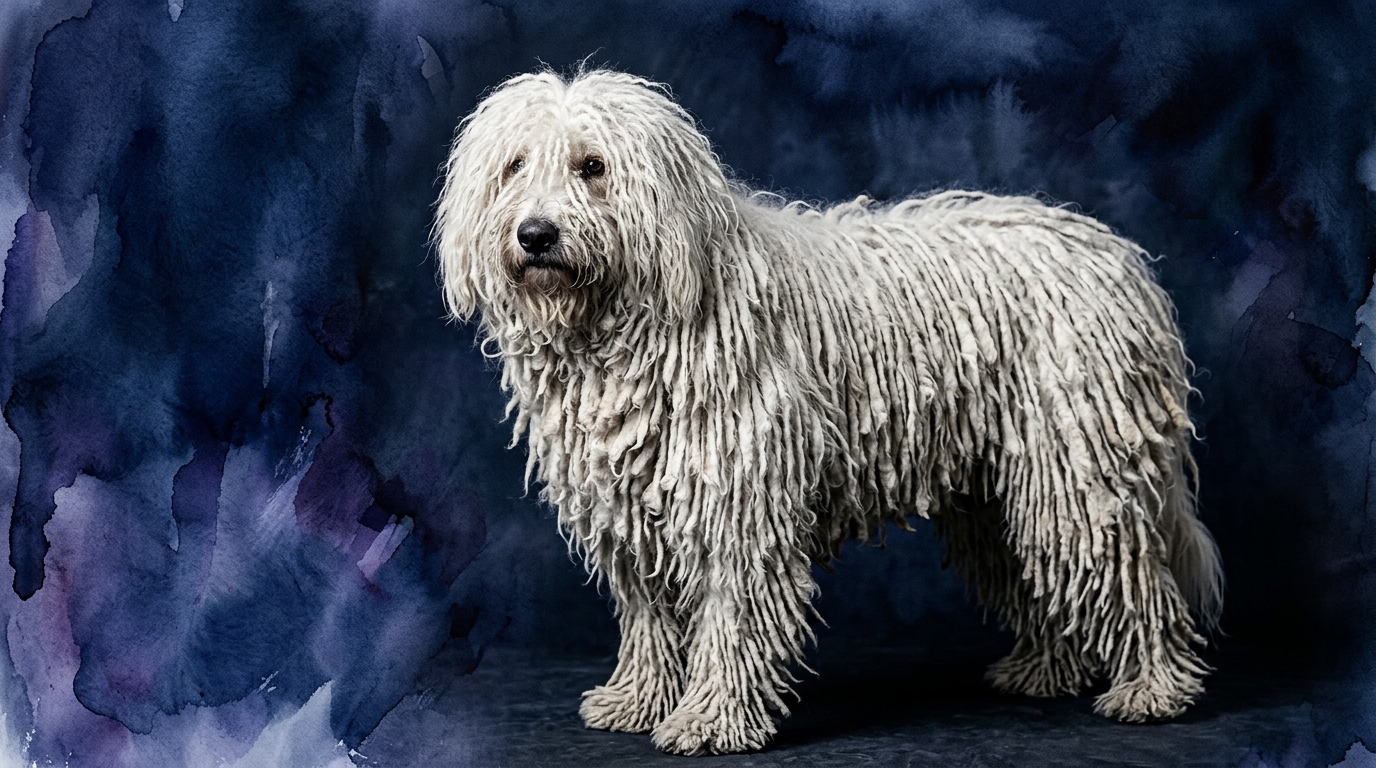
In contrast, the Komondor, a member of the Working Group with a Coren rank of #67, exhibits a cognitive makeup specifically honed for its traditional role as a livestock guardian. This breed scores 3/5 in problem solving, indicating a practical approach to environmental challenges. Their training speed also registers at 3/5, suggesting a deliberate learning process. The Komondor's social intelligence is 3/5, reflecting a more reserved nature, particularly towards strangers. Their instinctive drive is 3/5, intensely focused on protective behaviors, and their memory is also 3/5, serving to reinforce their guarding patterns and recognition of their charges and territory.
Observing these scores side-by-side, it becomes clear that while both breeds demonstrate solid foundational cognitive abilities, their strengths diverge in areas crucial to their historical and intended purposes. The Dalmatian leans towards social engagement and broad instinctive application, while the Komondor's cognition is more specialized, prioritizing independent thought and selective interaction for guardianship.
Where the Dalmatian's Cognition Shines
The Dalmatian's cognitive profile, particularly its higher social intelligence (4/5), instinctive drive (4/5), and memory (4/5), equips them for a highly interactive and adaptable companionship role. Their elevated social intelligence means they are often adept at picking up on human emotions and intentions, making them responsive family members who enjoy participation in daily activities. This allows them to forge deep bonds and understand subtle cues, fostering a dynamic relationship with their human companions, whether it's anticipating a walk or recognizing a need for comfort.
Their 4/5 instinctive drive, historically linked to their endurance as carriage dogs, translates into a sustained desire for engagement and activity. This isn't just about physical exertion; it's a mental drive to be involved, to have a purpose, and to follow a routine. Owners can channel this drive into various structured activities like agility, obedience, or even running companionship, where the Dalmatian's inherent stamina and desire to ‘work alongside’ are fulfilled. This strong drive, when appropriately directed, prevents boredom and promotes a well-adjusted demeanor.
Furthermore, a Dalmatian's 4/5 memory score significantly contributes to their learning and adaptability. They are capable of recalling a wide array of commands, routines, and past experiences with considerable accuracy. This robust memory aids in quickly solidifying training lessons, remembering specific routes during walks, and recognizing individuals, even after long periods. Their capacity to retain information makes them excellent candidates for complex trick training or specialized tasks where consistent recall is paramount, enhancing their versatility as a companion.
Where the Komondor's Cognitive Profile Excels for its Purpose
While the Komondor's raw cognitive scores might not numerically surpass the Dalmatian's, their specific configuration makes them uniquely suited for their traditional role as a livestock guardian, showcasing where their particular cognitive traits are advantageous. Their social intelligence, rated at 3/5, is not a deficit but rather a deliberate characteristic. This lower score reflects a more independent and discerning nature; they are not inherently eager to please every human, which is crucial for a guardian dog whose primary loyalty and focus must remain with its flock, rather than seeking approval from strangers or being easily distracted by external human interactions.
The Komondor's instinctive drive, also at 3/5, is intensely specialized. Unlike the Dalmatian's broader drive for activity, the Komondor's drive is laser-focused on vigilance and protection. This means their inherent behaviors are less about varied physical tasks and more about sustained, watchful presence, threat assessment, and decisive action when necessary. This focused drive allows them to remain alert for extended periods, independently assessing their environment for potential dangers without constant human direction, making them incredibly effective and self-sufficient guardians.
Their 3/5 problem-solving ability, while matching the Dalmatian's, is applied distinctly. For a Komondor, problem-solving often involves navigating environmental challenges related to securing their flock or territory. This might manifest as strategically positioning themselves to oversee an area, identifying weak points in a fence, or assessing the intent of an approaching animal or person. Their cognitive strengths lie in practical, real-world application of their intelligence to their guarding duties, rather than abstract puzzles. Their deliberate training speed (3/5) ensures that once a command or behavior is learned, especially if it aligns with their protective instincts, it is deeply ingrained and reliably executed for its intended purpose.
Training Dynamics: Dalmatian vs. Komondor
When considering ease of training, both Dalmatians and Komondors share a 3/5 score for training speed and problem solving, suggesting a similar foundational capacity for learning new tasks. However, the influence of their differing social intelligence and instinctive drive scores creates distinct training experiences. The Dalmatian's 4/5 social intelligence makes them generally more eager to engage with their human trainers and respond positively to feedback. They often thrive on interaction and praise, which can accelerate the learning process despite their moderate training speed score. Their higher instinctive drive (4/5) means they possess a strong desire for activity and purpose, which, if channeled into structured training, can make them highly motivated learners capable of mastering complex sequences.
Conversely, the Komondor's 3/5 social intelligence indicates a more independent and less overtly people-pleasing disposition. This means training often requires greater patience, consistency, and an understanding that a Komondor might not perform simply for human approval. They are more likely to comply when commands align with their perceived purpose or when the training method respects their autonomy. Their 3/5 instinctive drive is focused on guardianship, meaning training methods that tap into their natural protective instincts, such as boundary setting or watchful behaviors, will often be more effective than those demanding arbitrary tricks. Training a Komondor involves earning their trust and convincing them of the value of a command, rather than simply eliciting a quick response through enthusiasm.
Therefore, while both breeds can learn, the approach differs significantly. Dalmatians benefit from varied, engaging training sessions that leverage their social nature and desire for activity. They respond well to positive reinforcement and appreciate being an integral part of the training process. Komondors, on the other hand, require a calm, confident, and consistent leader who understands their independent spirit. Training should be purposeful, building on their natural instincts and respecting their deliberate decision-making process, rather than expecting immediate, enthusiastic compliance. Their lower social intelligence means they may not be as forgiving of inconsistent commands or unclear expectations, demanding a more precise and patient trainer.
Lifestyle Match: Active Owners vs. Relaxed Owners
Matching a dog's cognitive profile to an owner's lifestyle is crucial for a harmonious relationship. For the Dalmatian, their 4/5 instinctive drive and 4/5 memory indicate a need for consistent mental and physical stimulation. These are not dogs content with merely lounging; their historical role as carriage dogs instilled in them an endurance and a desire for purpose-driven activity. Owners who lead an active lifestyle, enjoying regular runs, long walks, or participating in dog sports like agility or flyball, would find a Dalmatian to be a willing and enthusiastic partner. Their 4/5 social intelligence also means they thrive on interaction and being an integrated part of family life, making them ideal for owners who want a highly engaged companion for all their adventures, rather than a dog that is simply present.
The Komondor, with its 3/5 instinctive drive focused on guardianship, presents a different lifestyle match. While they do not necessarily require the same high-octane physical exercise as a Dalmatian, they demand a very specific kind of owner engagement. Their cognitive makeup is geared towards vigilance and independent decision-making within a defined territory. This means 'relaxed' for a Komondor owner doesn't equate to 'sedentary' or 'hands-off.' Instead, it implies an owner who provides a stable environment for the Komondor to guard, understands their need for clear boundaries, and respects their independent nature. They are not dogs that typically demand constant play or social interaction with all visitors; rather, they are watchful, protective presences.
Therefore, an active owner for a Dalmatian implies someone who is physically engaged and wants a canine partner in their activities. For a Komondor, an 'active' owner is one who is mentally engaged in managing a powerful, independent guardian, providing consistent leadership and security, even if their own physical exercise routine is more moderate. Komondors are not suited for owners seeking a low-maintenance pet or one that will enthusiastically greet every stranger. They are for those who appreciate a formidable, loyal guardian, understanding that their cognitive strengths lie in their ability to protect with minimal human intervention, making them excellent for owners with property to oversee or those seeking a dedicated, discerning family protector.
The Verdict: Choosing Your Cognitive Companion
The choice between a Dalmatian and a Komondor ultimately hinges on aligning their distinct cognitive strengths with your lifestyle and expectations. The Dalmatian's balanced problem-solving and training speed, coupled with superior social intelligence, instinctive drive, and memory, makes them highly adaptable, interactive companions eager to participate in a variety of family activities. They thrive with owners who can provide consistent mental and physical engagement, appreciating a dog that is both a playful partner and a responsive learner, eager to be involved in every facet of life.
Conversely, the Komondor's specialized cognitive profile, characterized by its focused instinctive drive and deliberate social intelligence, positions it as an exceptional, independent guardian. They are best suited for owners who understand and respect their profound protective instincts, providing a stable environment where they can fulfill their role. This breed is for those seeking a formidable, loyal protector rather than a universally gregarious companion, an owner prepared for a dog that values purpose and autonomy over constant human-centric interaction, and whose intelligence is primarily directed towards ensuring the security of its charges.
The Verdict
Choose the Dalmatian if you seek an active, highly social companion eager to learn diverse tasks and participate in all aspects of family life.
Choose the Komondor if you require an independent, dedicated guardian with a strong protective instinct, valuing autonomy and a watchful presence over broad social engagement.
🧠 Find Your Pet's IQ Score
Our Pet IQ Lab assessment covers 25+ tests across 5 cognitive dimensions — personalized to your breed.
Take the Full IQ Test →Frequently Asked Questions
Are Dalmatians difficult to train due to their energy?
While Dalmatians have a 4/5 instinctive drive, indicating high energy, their 4/5 memory and social intelligence significantly aid training. They respond well to consistent, positive reinforcement and varied, engaging tasks that channel their drive, preventing boredom and potential misdirection of their energy into unwanted behaviors.
Do Komondors get along with other pets?
Komondors, with their 3/5 social intelligence and 3/5 instinctive drive, are typically tolerant and protective of 'their' flock, which often includes other family pets if introduced properly and early. However, their guardian instincts mean they can be wary or even aggressive towards unfamiliar animals, particularly those perceived as threats to their charges or territory.
How do the memory scores impact daily life for these breeds?
The Dalmatian's 4/5 memory aids in quickly recalling complex routines, commands, and social interactions, making them adaptable and responsive in various settings. The Komondor's 3/5 memory supports consistent vigilance and the recall of established patterns and perceived threats, crucial for their effective, reliable execution of guarding duties, albeit with a more focused application.