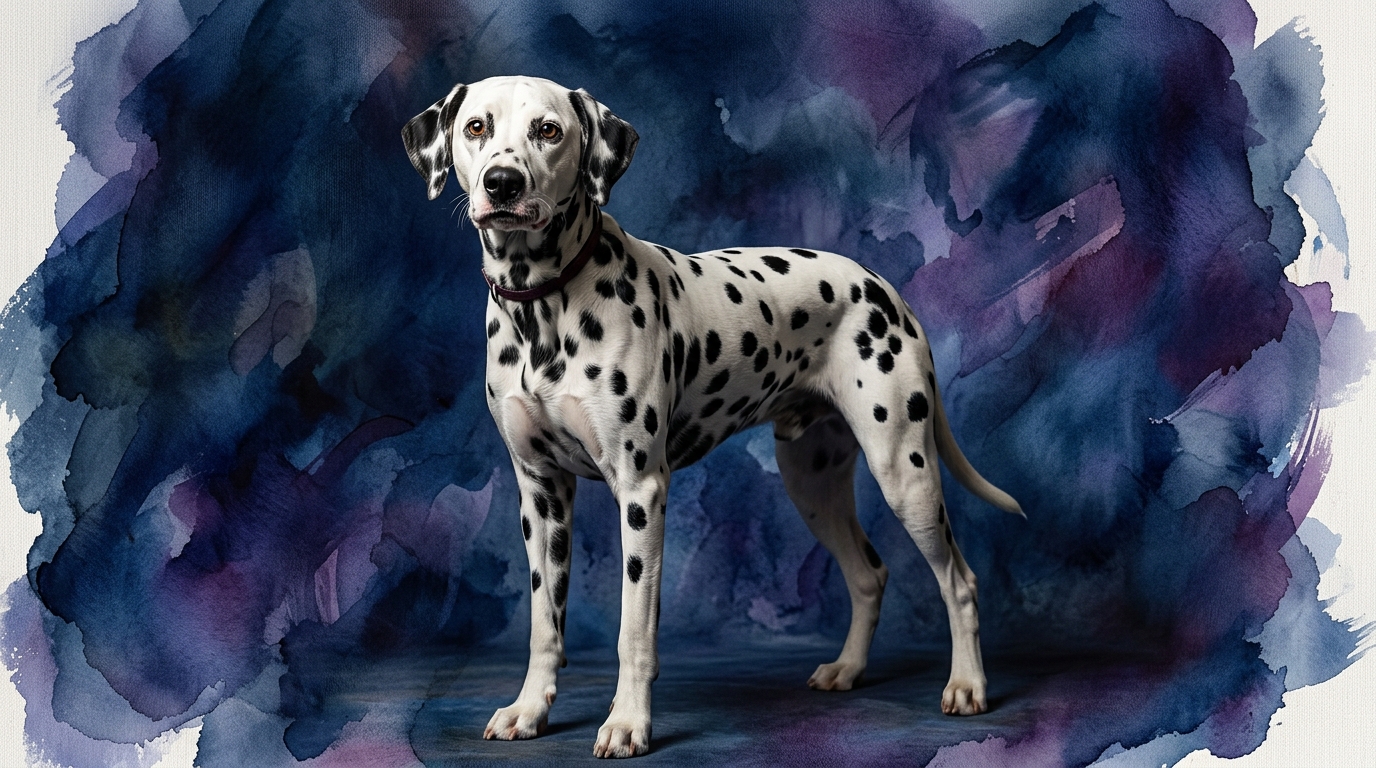

Side-by-Side IQ Profile
The Dalmatian, ranking #39 on Coren's scale, demonstrates a balanced yet strong cognitive profile. Their Problem Solving and Training Speed are rated at 3/5, indicating a solid capacity for learning new tasks and navigating novel situations. Where they truly shine is in Social Intelligence (4/5), Instinctive Drive (4/5), and Memory (4/5), reflecting their historical role as carriage dogs requiring close cooperation with humans and excellent recall of routes and routines. This combination suggests a dog adept at understanding social cues, driven by purpose, and capable of retaining complex information.
In contrast, the Lhasa Apso, positioned at #68 on Coren's ranking, presents a more uniform cognitive spread, with all five dimensions — Problem Solving, Training Speed, Social Intelligence, Instinctive Drive, and Memory — rated at 3/5. This indicates a consistent, moderate capacity across the board, rather than pronounced strengths in specific areas. Originating as sentinels in Tibetan monasteries, their intelligence developed around alertness and independent decision-making, valuing self-reliance over extensive human collaboration. Their 3/5 social intelligence suggests they can form bonds but might not always prioritize human direction in the same way a Dalmatian might.
Where Dalmatian Wins Cognitively
The Dalmatian's cognitive advantages are most evident in their elevated Social Intelligence (4/5) and Memory (4/5). Their history as carriage dogs demanded a keen awareness of their human handlers' intentions, necessitating a high degree of attunement to social cues and complex communication. This translates to an animal that often picks up on subtle changes in human mood or body language, making them particularly responsive in interactive scenarios.
Furthermore, their superior Memory (4/5) means Dalmatians are likely to retain learned commands, routines, and even specific pathways with greater ease and for longer durations. This robust memory, coupled with a strong Instinctive Drive (4/5), means they can be incredibly reliable partners for tasks requiring consistent performance, such as agility courses or repetitive training drills, where remembering sequences and executing them with purpose is key. Their drive often manifests as an eagerness to engage in activities, making them highly motivated learners when the activity aligns with their internal motivations.
Where Lhasa Apso Wins Cognitively
While the Lhasa Apso's individual cognitive scores are generally lower than the Dalmatian's, their strength lies in a balanced, self-reliant intelligence, optimized for their historical role as independent guardians. Their Problem Solving (3/5) and Instinctive Drive (3/5) are channeled differently. Unlike the Dalmatian's drive for cooperative tasks, the Lhasa Apso's drive is often more internally motivated, focused on observation and alert behavior. This allows them to assess situations and make independent decisions without constant human input, a valuable trait for a sentinel.
Their consistent 3/5 across all categories suggests a steady, practical intelligence. This breed excels at taking in information and reacting to their environment with a pragmatic approach. While they might not be as outwardly socially driven as a Dalmatian, their social intelligence (3/5) is sufficient for forming deep bonds with their chosen family, even if their expressions of affection are sometimes more reserved. Their moderate problem-solving skills mean they can navigate daily challenges and learn necessary household rules, albeit potentially at their own pace and with a strong sense of personal preference.
Which is Easier to Train and Why
Based on the Pet IQ Lab metrics, the Dalmatian generally presents as an easier breed to train. Their Training Speed is rated 3/5, similar to the Lhasa Apso, but this is significantly bolstered by their superior Social Intelligence (4/5) and Memory (4/5). Dalmatians are often more attuned to human communication and eager to please, making them more receptive to instruction. Their strong memory helps them retain commands quickly, reducing the need for extensive repetition.
The Lhasa Apso, with a Training Speed of 3/5 and Social Intelligence of 3/5, can be trained effectively, but their independent nature often requires a different approach. Their historical role fostered self-sufficiency, meaning they are less inclined to automatically defer to human commands if they perceive their own agenda as more pressing. Training a Lhasa Apso often benefits from patience, positive reinforcement, and making the training process feel like a collaborative game rather than a strict command-and-obey dynamic. Their moderate memory also means consistent, ongoing practice is essential for solidifying learned behaviors.
Which Suits Active Owners vs Relaxed Owners
For active owners seeking a canine partner for adventures and structured activities, the Dalmatian is often a more fitting choice. Their Instinctive Drive (4/5) translates into a natural eagerness for engagement, whether it’s long runs, hiking, or participating in dog sports like agility. Their robust memory and social intelligence also make them excellent candidates for advanced obedience and complex task learning. They thrive on mental and physical stimulation, becoming bored and potentially mischievous without sufficient outlets for their energy and cognitive capacity.
Relaxed owners, or those seeking a more independent companion, might find the Lhasa Apso a better match. While they enjoy walks and playtime, their moderate Instinctive Drive (3/5) means they don't demand the same intense exercise regimen as a Dalmatian. Their balanced cognitive profile, particularly their problem-solving and social intelligence at 3/5, allows them to be content with less structured engagement, often preferring to observe and patrol their immediate environment. They appreciate comfortable living and companionship but are generally less demanding of constant interactive stimulation.
The Verdict
Choose a Dalmatian if you seek an engaged, cooperative partner for active pursuits and enjoy consistent training to channel their impressive memory and social drive.
Opt for a Lhasa Apso if you value an independent, observant companion who is content with a more relaxed lifestyle and appreciate a dog with a steady, self-reliant cognitive approach.
🧠 Find Your Pet's IQ Score
Our Pet IQ Lab assessment covers 25+ tests across 5 cognitive dimensions — personalized to your breed.
Take the Full IQ Test →Frequently Asked Questions
Are Dalmatians difficult to live with due to their energy?
Dalmatians possess a high instinctive drive and require significant physical and mental exercise to remain balanced. Without adequate outlets, their energy and cognitive capacity can lead to behaviors like excessive barking or chewing, but with proper engagement, they are cooperative companions.
Do Lhasa Apsos bark a lot?
Lhasa Apsos were historically bred as alert dogs, and their instinctive drive for observation often manifests as barking to signal perceived intruders or changes in their environment. While not necessarily excessive, their vocal tendencies are part of their guarding nature.
Can a Lhasa Apso learn tricks?
Yes, a Lhasa Apso can certainly learn tricks. While their training speed and memory are rated moderately, consistent, positive reinforcement methods and patience will yield results. They may take longer to master complex sequences compared to a Dalmatian, but their problem-solving skills allow for learning.