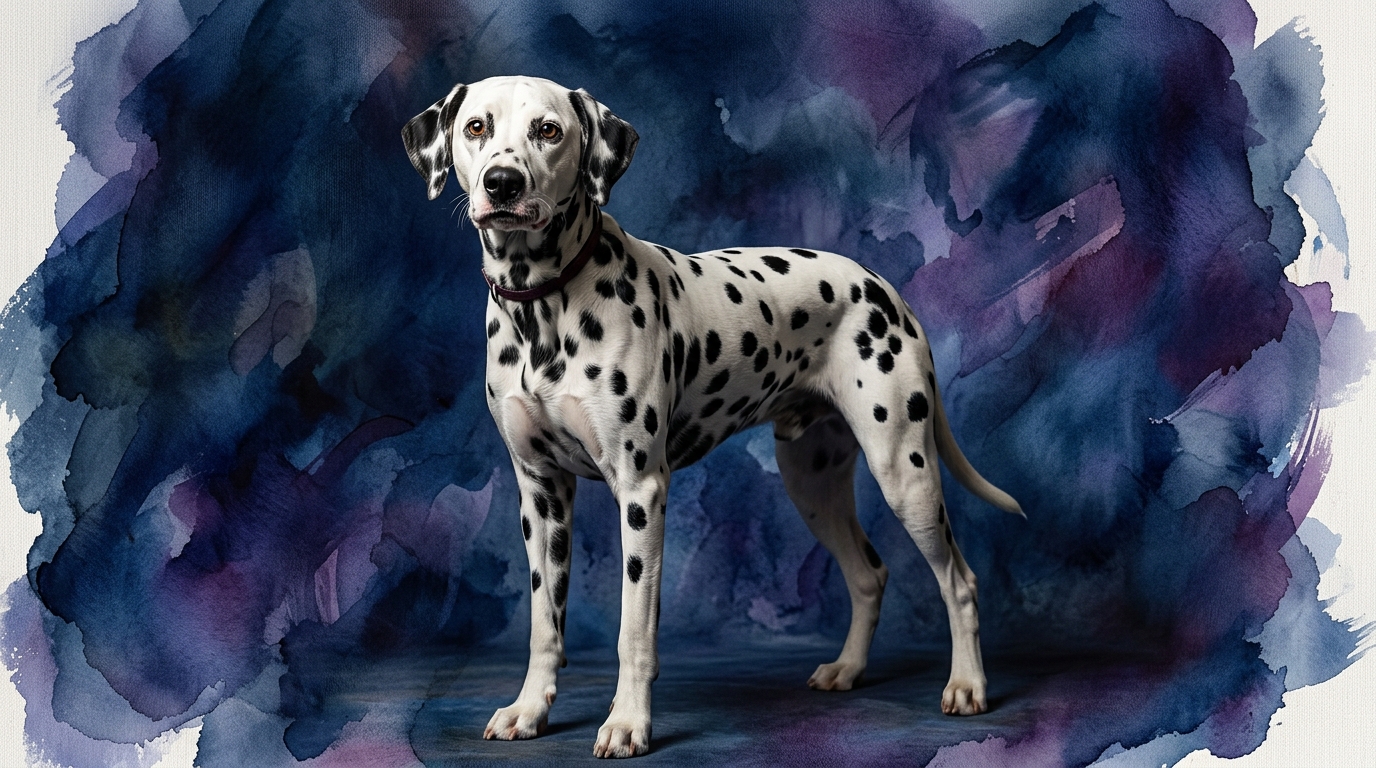

Side-by-Side IQ Profile: Dalmatian vs. Maltese
The Dalmatian, a Non-Sporting breed with a Coren rank of #39, demonstrates a balanced cognitive profile. Its problem-solving ability is rated 3/5, indicating a moderate capacity for independent thought and navigating novel situations. Training speed also stands at 3/5, meaning they grasp commands at an average pace, requiring consistent but engaging methods. Where Dalmatians truly show their cognitive strengths are in social intelligence (4/5), allowing them to read human cues effectively, and a robust instinctive drive (4/5), reflecting their heritage of endurance and alertness. Their memory is also strong at 4/5, ensuring good retention of learned behaviors and experiences.
In contrast, the Maltese, a Toy breed ranked #59 by Coren, presents a profile emphasizing social connection. Like the Dalmatian, its problem-solving ability is 3/5, indicating competence in everyday challenges but not exceptional ingenuity. Training speed is also 3/5, suggesting a similar learning curve for new commands. However, the Maltese excels dramatically in social intelligence, scoring a perfect 5/5, showcasing an extraordinary capacity for empathy and understanding human nuances. Its instinctive drive is lower at 2/5, reflecting a focus away from task-oriented work towards companionship, and its memory is rated 3/5, meaning consistent refreshers may be needed for less frequently used commands.
Where the Dalmatian Wins Cognitively
The Dalmatian's cognitive advantages are rooted in its historical working roles, particularly its strong instinctive drive (4/5) and superior memory (4/5). This breed possesses an innate stamina and alertness that translates into a natural aptitude for sustained physical and mental engagement. Owners find Dalmatians excel in activities requiring endurance, vigilance, and the recall of complex sequences, such as advanced agility courses, long-distance running companionship, or even scent detection. Their robust memory ensures that once a task or command is thoroughly learned, it is retained with remarkable consistency, making them reliable partners in structured activities. This combination of drive and retention allows them to master and execute multi-step processes more effectively than their Maltese counterparts, who generally lack this specific type of inherent, task-oriented motivation.
Where the Maltese Wins Cognitively
The Maltese’s preeminent cognitive strength lies in its exceptional social intelligence (5/5), a dimension where it truly outshines many breeds. This isn't merely about being friendly; it's a profound capacity to read and respond to human emotions, subtle vocal inflections, and body language with remarkable accuracy. They are masters of emotional attunement, often anticipating their owner's moods or needs without explicit commands, demonstrating a deep empathetic connection. This superior social acumen allows them to seamlessly integrate into human family dynamics, adapting their behavior to foster harmony and closeness. While Dalmatians are socially aware, the Maltese's specific gift is this intuitive, almost psychic, understanding of human social and emotional landscapes, making them unparalleled companions for those seeking a truly intimate and responsive bond.
Training Dynamics: Which is Easier to Train?
Both Dalmatians and Malteses share a training speed score of 3/5, indicating neither is inherently quicker or slower to learn new commands. However, the *approach* to training and the *type* of tasks they excel at differ significantly due to their other cognitive profiles. Dalmatians, with their strong instinctive drive (4/5) and memory (4/5), can be highly motivated trainees when tasks align with their natural inclinations for activity and purpose. Training success often hinges on channeling their energy and providing engaging, varied routines to prevent boredom or distraction. Once a concept clicks, their excellent memory ensures strong retention. The Maltese, on the other hand, leverages its perfect social intelligence (5/5) in training. They are often eager to please and highly responsive to positive reinforcement, thriving on the close interaction and praise from their handler. Their lower instinctive drive (2/5) means they might not be as enthusiastic about repetitive or physically demanding tasks, and their moderate memory (3/5) suggests that less frequently practiced commands may require more consistent reinforcement. Therefore, while both require patience, Dalmatians thrive on task-oriented challenges, and Malteses excel with emotionally rewarding, bond-centric training.
Matching Cognitive Profiles to Lifestyles
The Dalmatian is undoubtedly the better cognitive match for active owners who can provide ample physical and mental engagement. Their robust instinctive drive (4/5) and strong memory (4/5) mean they require consistent outlets for their energy and intellect. They thrive on structured activities like long runs, agility training, hiking, or even competitive obedience, where their endurance and ability to retain complex sequences are highly valued. Owners who enjoy an active lifestyle and are prepared to dedicate time to training and purposeful activities will find the Dalmatian a rewarding and engaged partner. In contrast, the Maltese, with its unparalleled social intelligence (5/5) and lower instinctive drive (2/5), is perfectly suited for more relaxed owners seeking a devoted, emotionally attuned companion. While they appreciate short walks and indoor play, their primary cognitive need is close human connection and companionship. They excel in environments where they can offer and receive constant affection, thrive on intimate social interaction, and serve as empathetic, responsive family members, making them ideal for individuals or families with a more sedentary or home-centric lifestyle.
The Verdict
Choose a Dalmatian if you're an active owner seeking a spirited, enduring companion who thrives on purpose-driven activities and excels with consistent, engaging training.
Opt for a Maltese if your priority is a profoundly empathetic, devoted companion who thrives on intimate social connection and excels in a more relaxed, home-focused environment.
🧠 Find Your Pet's IQ Score
Our Pet IQ Lab assessment covers 25+ tests across 5 cognitive dimensions — personalized to your breed.
Take the Full IQ Test →Frequently Asked Questions
Do Dalmatians make good family dogs?
Dalmatians can be wonderful family dogs, especially for active families who can meet their needs for exercise and mental stimulation. Their social intelligence (4/5) means they bond well, but their high instinctive drive requires consistent training and early socialization to ensure they channel their energy positively within a household.
Are Malteses difficult to house train?
Malteses aren't inherently more difficult to house train than other breeds, though their small size and lower instinctive drive (2/5) mean they might need more consistent reminders and positive reinforcement. Their high social intelligence (5/5) makes them eager to please, which can be a great asset if owners are patient and establish a clear routine early on.
What kind of mental stimulation do Dalmatians need?
Dalmatians require significant mental stimulation to prevent boredom, given their problem-solving (3/5) and strong instinctive drive (4/5). Puzzle toys, obedience training, agility courses, scent work, and varied physical activities that challenge both their bodies and minds are excellent ways to keep them engaged and content.