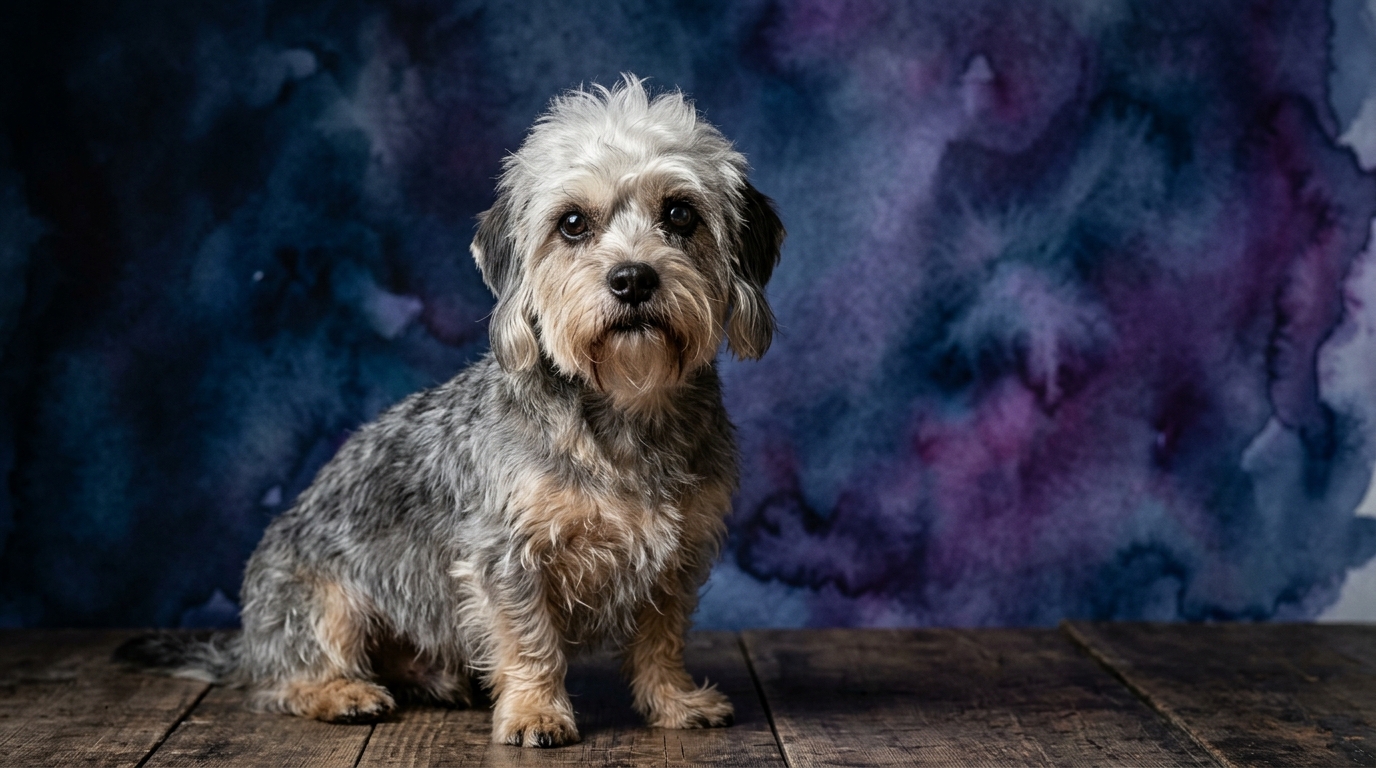
Side-by-Side Cognitive Profile: Dandie Dinmont Terrier
The Dandie Dinmont Terrier, a plucky breed with a rich hunting heritage, exhibits cognitive traits deeply rooted in its purpose. Its problem-solving ability (3/5) is characterized by a practical, persistent approach, often focused on overcoming physical obstacles or pursuing scents, showcasing a tenacious mental engagement rather than abstract thought. Training speed (3/5) for a Dandie means they absorb commands with consistency, but their independent terrier spirit often requires patient, engaging methods to ensure compliance, as they may prioritize their own inclinations. Social intelligence (3/5) within their family unit is robust, allowing them to read human cues accurately and form deep bonds; however, they tend to be more reserved and observational with strangers. Their instinctive drive (3/5) is particularly strong, manifesting as a pronounced prey drive and digging instinct, which fuels much of their cognitive exploration and engagement. Finally, their memory (3/5) is reliable, enabling them to retain routines, commands, and experiences, influencing their future interactions and adaptability.
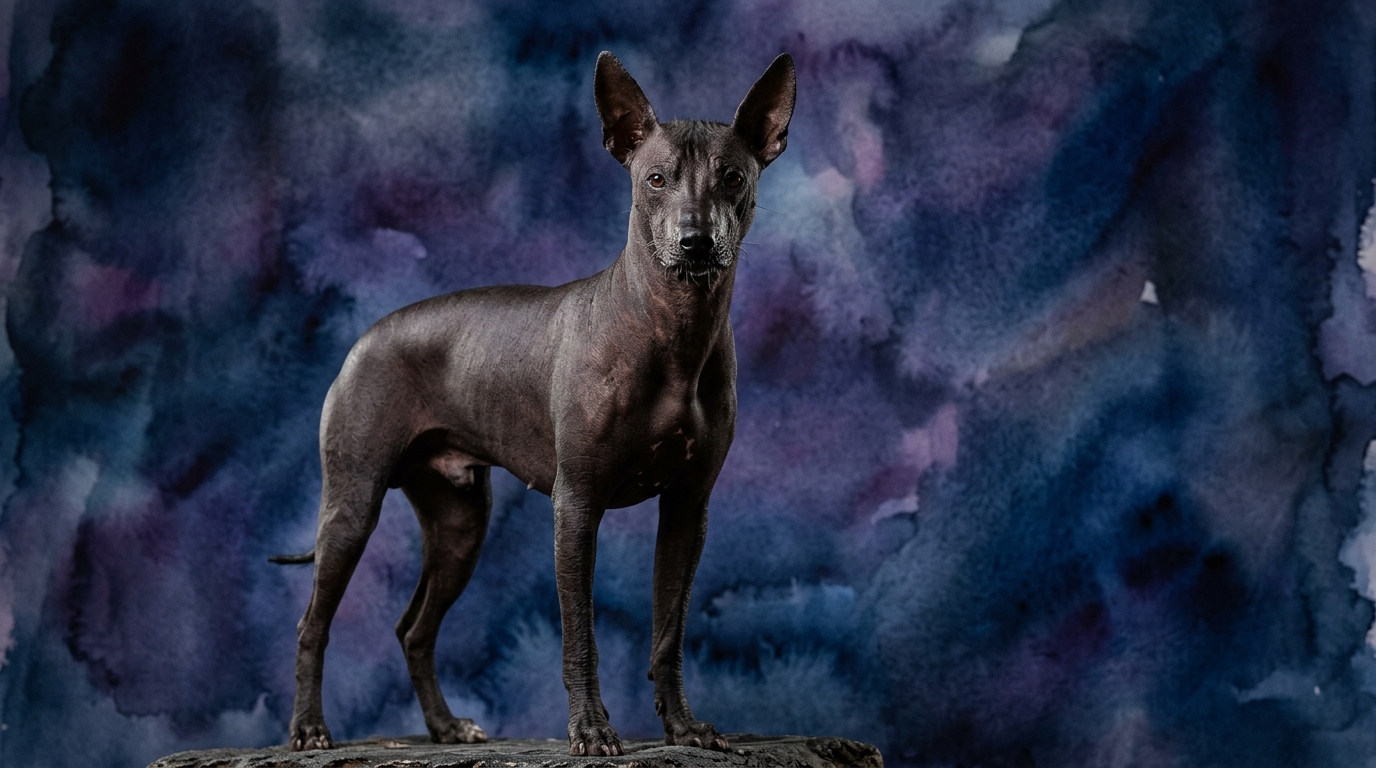
Side-by-Side Cognitive Profile: Xoloitzcuintli
The Xoloitzcuintli, an ancient and sensitive companion breed, demonstrates cognitive strengths centered around social attunement and environmental awareness. Their problem-solving ability (3/5) often involves understanding complex household dynamics, anticipating routines, and subtly communicating their needs or desires, rather than engaging in physical challenges. Training speed (3/5) for a Xolo is moderate, with their sensitive nature making them responsive to gentle, positive reinforcement; harsh methods can lead to reluctance or disengagement, underscoring the importance of a calm training environment. Social intelligence (3/5) is a hallmark of the Xolo, as they are deeply attuned to their family's emotions and body language, displaying a discerning aloofness towards strangers that reflects a sophisticated ability to differentiate between their trusted inner circle and outsiders. Their instinctive drive (3/5) is primarily focused on companionship, loyalty, and a natural guarding instinct, rather than hunting, shaping their cognitive engagement towards protecting their family and home. Their memory (3/5) is commendable, allowing them to recall people, places, and past interactions with clarity, contributing to their strong bonds and consistent behavior patterns.
Where the Dandie Dinmont Terrier Excels Cognitively
The Dandie Dinmont Terrier's cognitive strengths particularly shine in situations demanding sustained, independent effort and practical ingenuity. While both breeds score 3/5 in problem-solving, the Dandie's lineage as a badger and otter hunter means their problem-solving is often fueled by a tenacious drive to overcome physical obstacles or follow a scent to its conclusion. They exhibit a mental fortitude that allows them to persist in a task for extended periods, even when immediate rewards aren't apparent, relying on their internal motivation to 'get the job done.' This translates into a superior ability to self-occupy with investigative tasks or navigate complex physical environments independently, a direct reflection of their instinctive drive manifesting in cognitive application.
Where the Xoloitzcuintli Excels Cognitively
The Xoloitzcuintli demonstrates a unique cognitive advantage in areas requiring deep emotional attunement and subtle social navigation. Their 3/5 social intelligence, while shared in rating, manifests differently than the Dandie's. Xolos are masters of reading human body language, vocal inflections, and even anticipating moods with remarkable precision, a skill honed over centuries as devoted companions. This allows them to adapt their behavior fluidly within a family unit, offering comfort or seeking interaction based on their interpretation of human emotional states. Their problem-solving often involves intricate social puzzles, such as how to subtly gain attention or communicate a need, rather than physically overcoming barriers, showcasing a nuanced understanding of their human partners.
Training Dynamics: Dandie Dinmont Terrier vs. Xoloitzcuintli
Determining which breed is 'easier' to train is less about raw cognitive capacity and more about temperament and the trainer's approach. Both breeds have a 3/5 training speed, indicating they are capable learners. The Dandie Dinmont Terrier, with its independent and often determined terrier spirit, can present a challenge for trainers seeking instant obedience. They learn quickly but may require more motivation and engaging, varied training sessions to prevent boredom and harness their natural drive. Their problem-solving might extend to figuring out how to 'outsmart' the trainer if not consistently engaged. Conversely, the Xoloitzcuintli’s sensitive and deeply bonded nature means they can be highly responsive to their family's cues. They learn well through gentle, positive reinforcement, and clear communication. However, their sensitivity means they can become easily discouraged or shut down by harsh methods or inconsistent expectations. Therefore, while a Dandie might test a trainer's patience through stubbornness, a Xolo might test it through needing a very gentle and consistent hand to build confidence.
Lifestyle Match: Active vs. Relaxed Owners
For owners seeking an active companion, the Dandie Dinmont Terrier aligns well. Their inherent instinctive drive and problem-solving tenacity mean they thrive with regular physical activity that engages both their body and mind, such as long walks, structured play, or even earthdog trials (where appropriate and safe). They need outlets for their curiosity and digging instincts, making them suitable for owners who enjoy outdoor adventures and can provide consistent mental challenges. A relaxed owner might find their persistent energy and need for engagement overwhelming. The Xoloitzcuintli, while capable of enjoying activity, often suits a more relaxed household, particularly one that values deep companionship. While they need regular exercise, their cognitive engagement often revolves around close interaction with their family, quiet observation, and comfortable lounging. Their sensitive nature means they prefer a calm, predictable environment. They are content with moderate walks and ample cuddle time, making them a better fit for owners who prioritize intimate bonding and a quieter home life over constant high-energy activities.
The Verdict
Choose the Dandie Dinmont Terrier if you appreciate a spunky, independent mind, enjoy active problem-solving challenges, and are prepared to provide structured outlets for their strong terrier drives and investigative nature.
Opt for the Xoloitzcuintli if you value deep emotional bonds, seek a sensitive and observant companion, and prefer a calmer home environment where nuanced social interaction is paramount.
🧠 Find Your Pet's IQ Score
Our Pet IQ Lab assessment covers 25+ tests across 5 cognitive dimensions — personalized to your breed.
Take the Full IQ Test →Frequently Asked Questions
Are Dandie Dinmont Terriers good with children?
Dandie Dinmont Terriers can be good with respectful, older children who understand how to interact with a dog. Their independent nature and potential for sensitivity mean they may not tolerate rough play as readily as some other breeds, so supervision and teaching children proper interaction are key.
Do Xoloitzcuintli dogs require special care due to their skin?
Yes, the hairless variety of Xoloitzcuintli requires specific skin care. This includes regular bathing, moisturizing to prevent dryness, and sun protection (sunscreen or clothing) to prevent sunburn. Owners must be cognitively prepared to integrate this consistent care into their routine.
How do these breeds typically react to strangers?
Both breeds tend to be reserved with strangers, though for different reasons. The Dandie Dinmont Terrier, true to its terrier nature, might be wary and observe new people cautiously. The Xoloitzcuintli is famously aloof and discerning, often ignoring strangers or maintaining a polite distance, a hallmark of their sophisticated social intelligence focused on their inner circle.