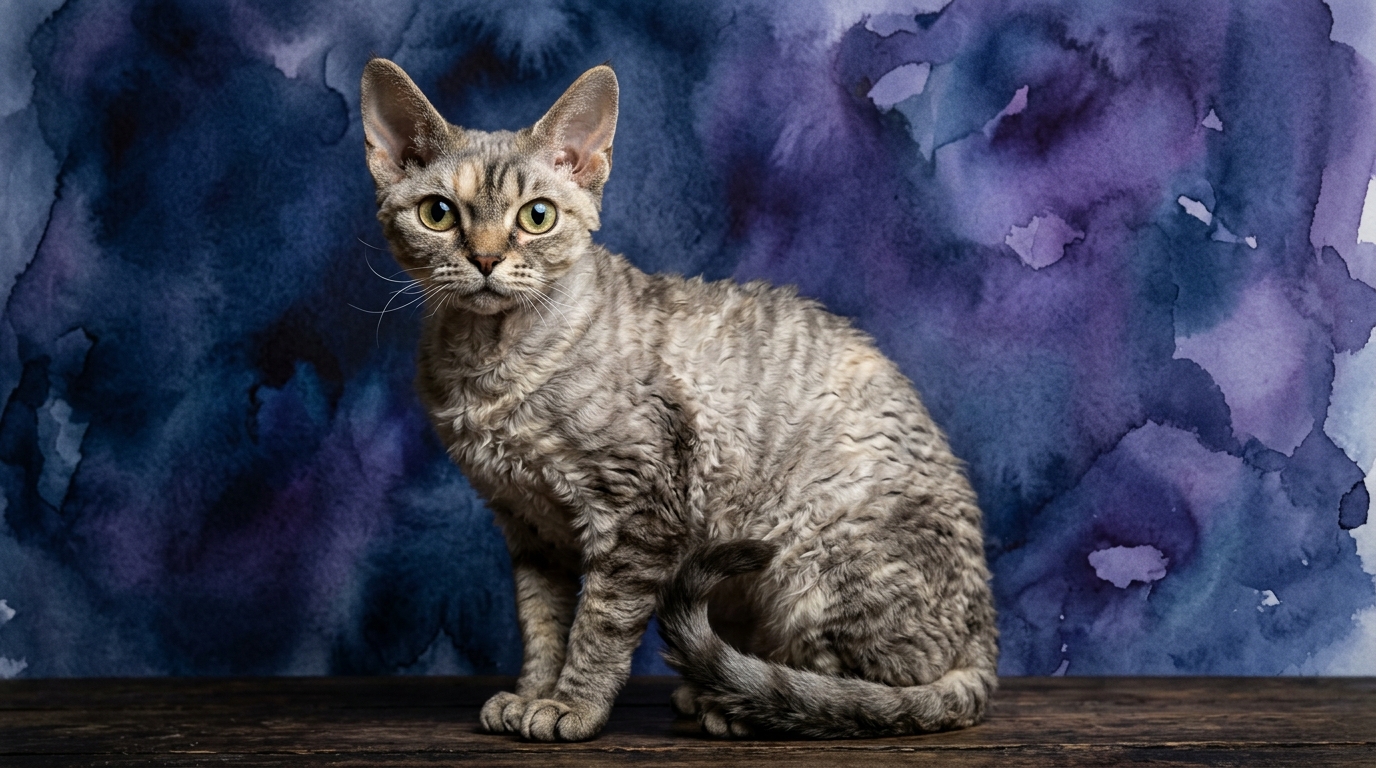
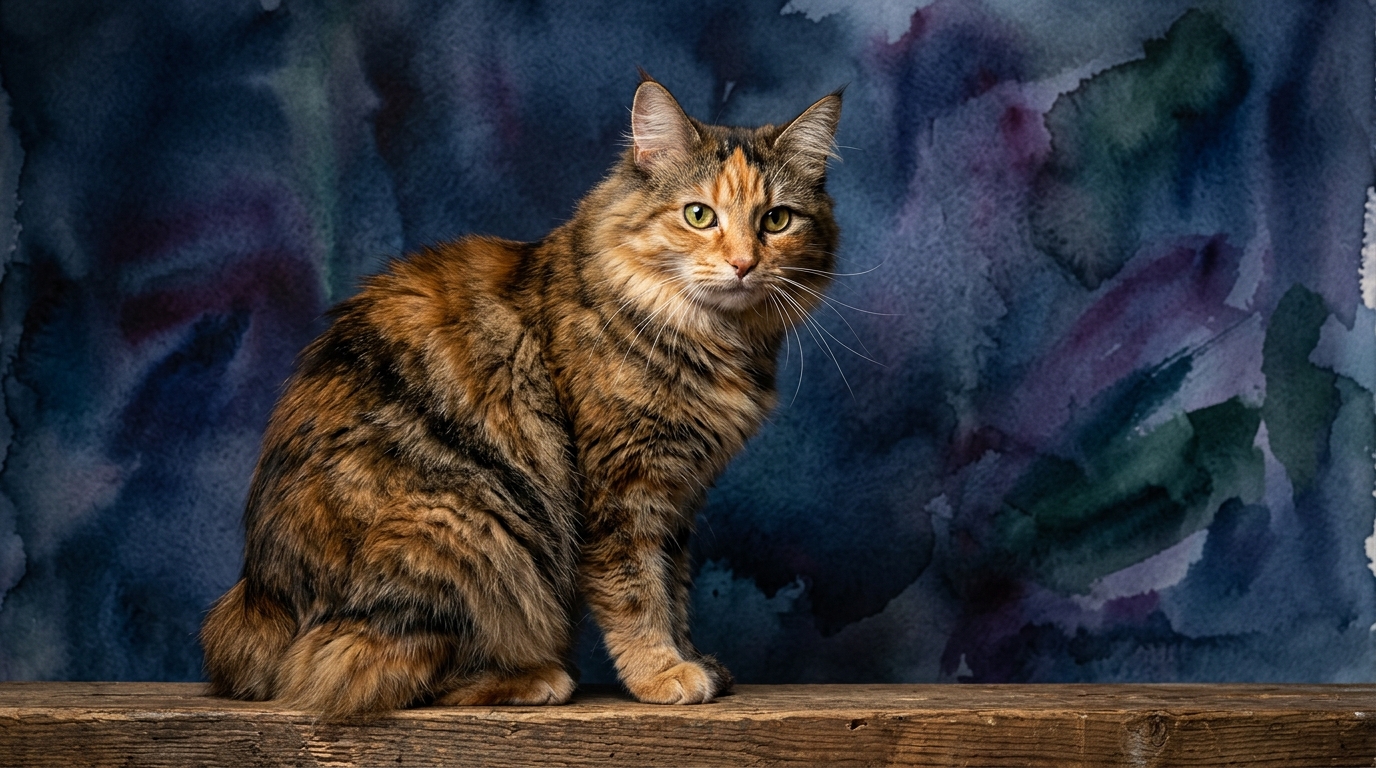
Side-by-Side IQ Profile: Devon Rex vs. Cymric
The Cosmic Pet Pet IQ Lab provides a detailed five-dimensional assessment for feline cognitive abilities, offering a clear framework to compare the Devon Rex and the Cymric. Let's break down how each breed measures up across these specific cognitive traits, providing a foundational understanding of their mental strengths and tendencies.
The Devon Rex registers impressive scores: Problem Solving 4/5, Training Speed 5/5, Social Intelligence 5/5, Instinctive Drive 3/5, and Memory 4/5. These numbers paint a picture of a cat with a quick mind and a strong inclination for interaction and learning. Its high scores in social and training aspects suggest a cat that is not only capable but also eager to engage with its environment and human companions.
In contrast, the Cymric presents a more uniformly moderate profile: Problem Solving 3/5, Training Speed 3/5, Social Intelligence 3/5, Instinctive Drive 3/5, and Memory 3/5. While these scores indicate a perfectly capable feline, they suggest a less intense, more balanced cognitive approach compared to the Devon Rex. The Cymric’s cognitive style is one of consistent competence rather than exceptional agility in any single domain.
For Problem Solving, the Devon Rex (4/5) shows a notable capacity for navigating novel situations and figuring out how to achieve desired outcomes, perhaps opening cupboards or retrieving toys from tight spots. The Cymric (3/5) displays a competent, but less ambitious, approach to problem-solving, likely capable of basic tasks but less inclined to persistently experiment with complex puzzles.
In terms of Training Speed, the Devon Rex (5/5) stands out, indicating a rapid ability to associate actions with consequences, quickly picking up commands or routines. The Cymric (3/5) learns at a more moderate pace, requiring consistent repetition but still capable of acquiring desired behaviors over time.
Social Intelligence sees the Devon Rex (5/5) excelling in understanding and responding to human cues, often seeking interaction and forming strong, perceptive bonds. The Cymric (3/5) exhibits a pleasant social disposition, engaging with its family but perhaps not displaying the same level of nuanced emotional attunement or constant interactive demand.
Both breeds score 3/5 for Instinctive Drive, suggesting a balanced level of innate hunting or exploratory behaviors. Neither is excessively driven by primal urges, making them generally adaptable to indoor living without constant need for intense predatory outlets.
Finally, for Memory, the Devon Rex (4/5) demonstrates a robust ability to recall past experiences, remembering routines, people, and locations with good accuracy. The Cymric (3/5) possesses a functional memory, sufficient for daily routines and recognizing familiar faces, though perhaps not retaining complex sequences or past events with the same detail.
Where the Devon Rex Wins Cognitively
The Devon Rex's cognitive strengths are evident across multiple domains, particularly in areas that involve active engagement and social perceptiveness. Its 4/5 in Problem Solving means a Devon Rex is more likely to actively engage with and conquer environmental challenges, from figuring out how to access a favorite treat to manipulating simple puzzle toys. This cat often displays a curious, exploratory mindset, persistently investigating new objects or spaces with an aim to understand them, rather than simply observing.
The Devon Rex's standout 5/5 in Training Speed translates into a feline companion that can absorb new commands or learn complex tricks with remarkable celerity. Owners might find these cats quickly mastering leash training, “sit” commands, or even more intricate sequences, making them highly responsive to positive reinforcement. This rapid learning curve suggests a neurological efficiency in forming associations, allowing them to connect actions with outcomes more quickly than many other breeds.
Furthermore, a 5/5 in Social Intelligence positions the Devon Rex as exceptionally perceptive of human emotions and intentions. They often initiate interactions, respond keenly to vocal tones and body language, and seem to “read” their human companions with an unusual depth, fostering a highly communicative relationship. This makes them particularly adept at joining in family activities and understanding subtle household dynamics, often seeking to be at the center of attention.
The 4/5 Memory score complements these traits, allowing a Devon Rex to consistently apply learned behaviors and recall past interactions, strengthening training efforts and reinforcing their social bonds over time. They tend to remember their favorite hiding spots, preferred toys, and the routines of their human caregivers with impressive accuracy, contributing to their adaptable and responsive nature.
Where the Cymric Wins Cognitively
While the Cymric's cognitive profile is generally more moderate, its consistent 3/5 scores across the board present a distinct set of advantages, particularly for owners seeking a predictable and less cognitively demanding companion. Its 3/5 in Problem Solving suggests a cat that approaches new situations with a practical, rather than overly experimental, mindset. This can translate into a calm acceptance of routines and fewer instances of a cat actively “outsmarting” its environment in disruptive ways, like systematically opening cabinets or dismantling complex enrichments.
The Cymric's 3/5 Social Intelligence indicates a friendly and affectionate cat that enjoys companionship without necessarily requiring constant, intense emotional engagement or displaying the same level of demanding perceptiveness as a Devon Rex. This can be a “win” for owners who appreciate a warm presence but prefer a cat that is content with independent activity for periods, rather than constantly seeking intricate social interaction. Their social engagement is reliable and pleasant without being overwhelming, providing comfort without being clingy.
Similarly, a 3/5 in Training Speed means the Cymric is capable of learning, just at a more measured pace. This consistency can be beneficial for owners who prefer a slower, more deliberate training process, allowing for gradual habit formation without the pressure of a lightning-fast learner. The behaviors, once learned, tend to be well-established due to the steady reinforcement, leading to reliable long-term habits.
Overall, the Cymric's cognitive profile offers a steady, robust, and less “high-maintenance” mental engagement. Owners can expect a companion that adapts well to a regular household rhythm, is generally unfussy, and provides reliable companionship without requiring constant mental gymnastics or elaborate enrichment to prevent boredom. This balanced cognitive structure promotes a sense of calm and contentment in their daily lives, making them a consistently pleasant presence.
Which is Easier to Train and Why
Without question, the Devon Rex presents as the easier cat to train, a direct consequence of its superior 5/5 Training Speed and 5/5 Social Intelligence. These two dimensions work synergistically: the Devon Rex's rapid learning curve means it quickly grasps the connection between a cue, a desired action, and a reward. If an owner says “sit” and offers a treat when the cat lowers itself, the Devon Rex will form that association with remarkable speed, often after just a few repetitions, making training sessions highly efficient and rewarding.
Its elevated social intelligence further amplifies this trainability. Devon Rex cats are often keenly attuned to their human's vocalizations, body language, and even subtle shifts in mood. This perceptiveness allows them to better understand what is being asked of them and makes them more motivated to please their human companions, often viewing training as a shared activity. They often thrive on interactive training sessions, viewing them as engaging social play rather than mere tasks, which enhances their willingness to participate.
In contrast, the Cymric, with its 3/5 Training Speed and 3/5 Social Intelligence, requires a more patient and consistent approach. While certainly trainable, a Cymric will likely need more repetitions to solidify a new command or routine. They may not pick up on subtle human cues as quickly, necessitating clearer, more direct communication during training sessions. Their motivation might stem more from the reward itself rather than the social engagement of the training process, meaning owners need to ensure high-value treats or play are consistently offered.
For instance, teaching a Devon Rex to fetch a toy might involve a few playful sessions where it quickly understands the game and retrieves the item, often bringing it back directly to the owner with enthusiasm. A Cymric, while capable of learning to fetch, might take longer to grasp the “return” aspect, perhaps preferring to play with the retrieved toy independently before eventually bringing it back, or needing more explicit guidance to complete the retrieve-and-return cycle. The Devon Rex's cognitive agility simply streamlines the entire learning process, making it a more responsive and adaptable student.
Which Suits Active Owners vs. Relaxed Owners
The Devon Rex, with its elevated Problem Solving (4/5), Training Speed (5/5), and Social Intelligence (5/5), is an ideal companion for active owners who relish engaging with their pets. These cats thrive on mental stimulation and interactive play, often seeking out opportunities to learn and interact. Owners who enjoy teaching tricks, using puzzle feeders, or engaging in regular, dynamic play sessions will find the Devon Rex to be an enthusiastic participant, always ready for the next challenge. Their social nature means they often want to be involved in household activities, following their owners from room to room and seeking out attention, making them a constant, engaging presence. An active owner can provide the varied enrichment that prevents a Devon Rex from becoming bored and potentially finding its own, less desirable, forms of entertainment.
Conversely, the Cymric, with its consistent 3/5 scores across cognitive dimensions, is better suited for relaxed owners who appreciate a calmer, more independent, yet still affectionate, presence. These cats are perfectly content with a more predictable routine and less intense demands for mental engagement. While they enjoy interaction, they are not constantly seeking complex puzzles or elaborate training sessions, making them a less demanding companion. A relaxed owner might offer regular cuddle sessions and some casual play, but wouldn't feel compelled to provide constant, high-level cognitive challenges to keep their cat stimulated. The Cymric’s balanced cognitive profile allows it to adapt gracefully to a quieter home environment, providing companionship without requiring an extensive schedule of mentally stimulating activities, making them a harmonious fit for a more tranquil lifestyle.
Consider a household where the owners are frequently out or prefer quiet evenings: a Cymric would likely adapt well, entertaining itself or simply resting, and then enjoying interaction upon the owners' return without demanding immediate, intense engagement. A Devon Rex in the same scenario might become restless, potentially seeking out mischief or vocalizing its desire for engagement, highlighting its need for a more interactive and stimulating lifestyle. The choice between these breeds often comes down to the owner's lifestyle and their capacity to meet the cat's innate cognitive and social needs, ensuring a harmonious partnership.
The Verdict
If you seek a highly interactive, quick-learning feline companion eager to engage in training, puzzles, and deep social bonds, the Devon Rex is an exceptional match for your active lifestyle.
Opt for the Cymric if you desire a steady, affectionate cat that offers a pleasant companionship without demanding constant cognitive challenges or intense social interaction, fitting seamlessly into a relaxed home.
🧠 Find Your Pet's IQ Score
Our Pet IQ Lab assessment covers 25+ tests across 5 cognitive dimensions — personalized to your breed.
Take the Full IQ Test →Frequently Asked Questions
Are Devon Rex cats good with children?
Yes, their high social intelligence and playful nature often make them excellent companions for respectful children, as they enjoy interaction and can adapt well to family dynamics. They tend to be patient and enjoy being involved in household activities, often forming strong bonds with younger family members.
Do Cymric cats need a lot of grooming?
As a generally short-haired breed (though long-haired variants exist), Cymric cats have moderate grooming needs, primarily requiring regular brushing to maintain their coat and minimize shedding, without the intensive care of long-haired breeds. Their calm demeanor makes grooming sessions relatively easy to manage, usually a few times a week.
What kind of toys do Devon Rex cats enjoy most?
Devon Rex cats often prefer interactive toys that engage their problem-solving skills and allow for social play, such as puzzle feeders, feather wands for “hunting” games, and even small retrieve toys. They thrive on novelty and variety in their play, enjoying toys that challenge their quick minds and allow them to interact with their human companions.