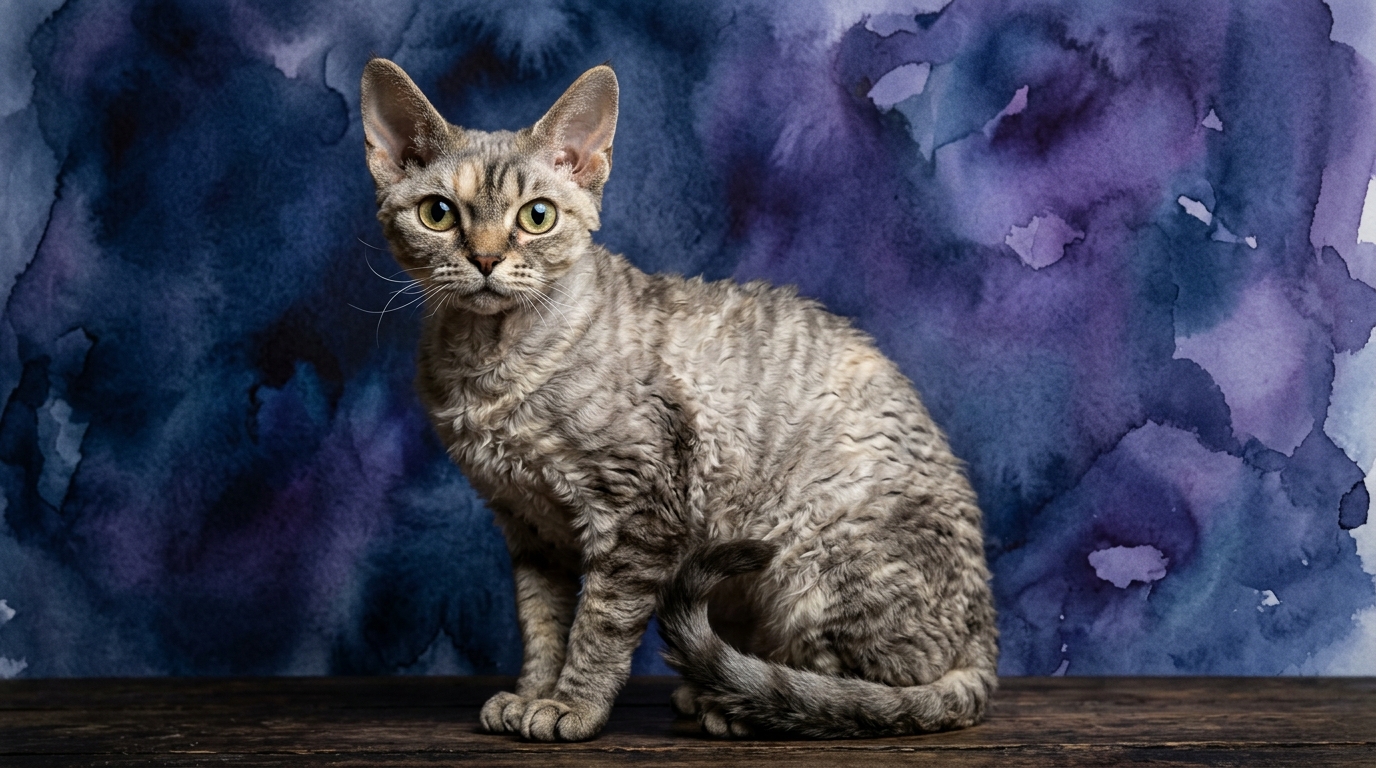
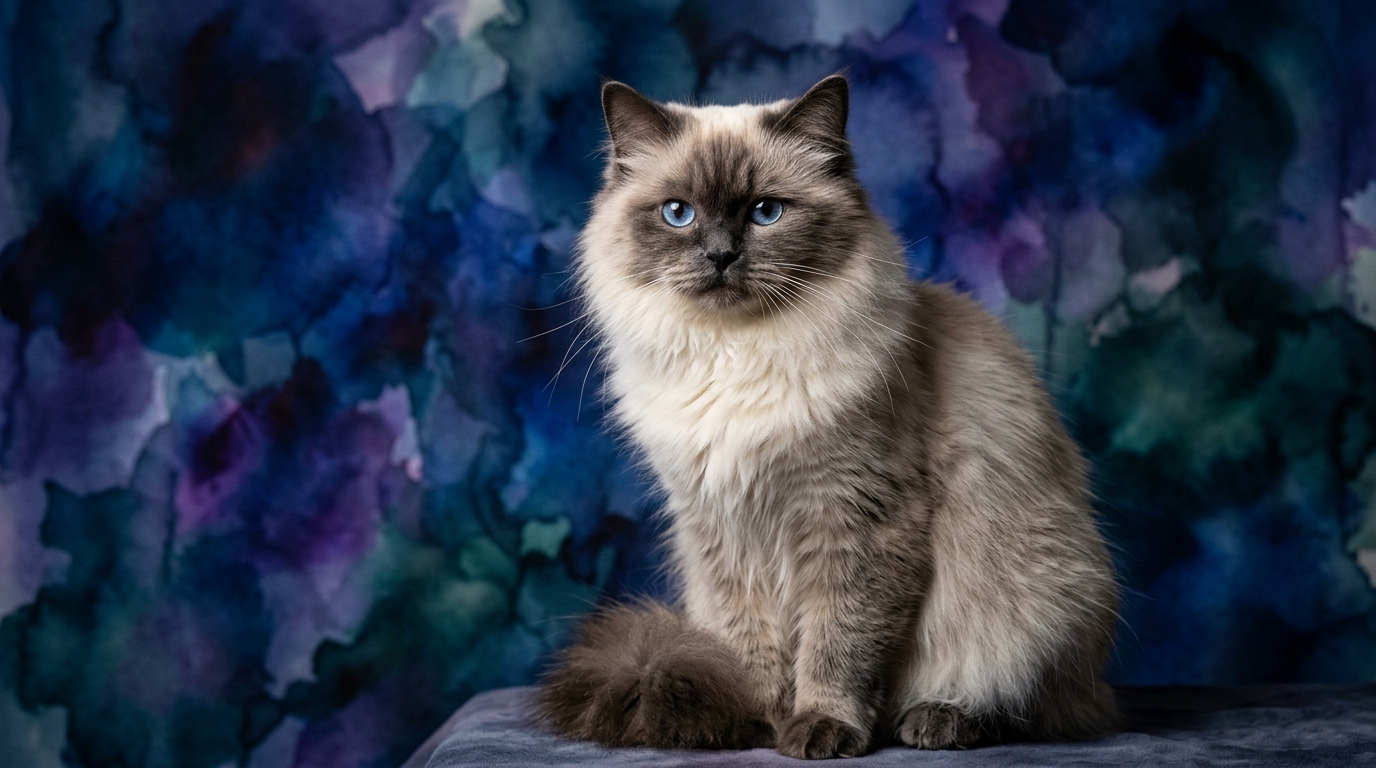
Side-by-Side Cognitive Profile
**Problem Solving:** The Devon Rex (4/5) exhibits a notable aptitude for navigating their environment, quickly learning to open cabinets or manipulate puzzle toys to retrieve treats. Their method often involves persistent curiosity and a blend of observation and trial-and-error when faced with challenges. Himalayans (3/5) typically approach problem-solving with a more measured, less insistent demeanor. While they learn routines, they may show less inclination to persistently tackle complex puzzles or devise intricate strategies, often preferring predictability over active environmental manipulation.
**Training Speed:** The Devon Rex (5/5) excels, picking up new commands and routines with remarkable swiftness. Their eagerness to engage and capacity for quick association make them prime candidates for learning tricks, responding to clicker training, and rapidly adapting to household rules, making training a rewarding process. Himalayans (3/5) possess a moderate training speed, capable of learning but requiring more patience and consistent repetition. They respond best to gentle, positive reinforcement. While basic commands are effective, complex trick training might be a slower, more deliberate endeavor for this breed.
**Social Intelligence:** These Devon Rex felines (5/5) are profoundly social, displaying high awareness and responsiveness to human emotions and household dynamics. They actively seek interaction, often greeting owners, engaging in conversational chirps, and readily participating in family activities, adapting behavior to social situations. Himalayans (3/5) exhibit a pleasant, albeit more reserved, social intelligence. They form strong bonds and appreciate companionship, but their approach is often less overtly demanding. Content to observe or enjoy quiet lap time, they show affection through gentle purrs rather than constant, active engagement.
**Instinctive Drive:** The Devon Rex (3/5) possesses a moderate instinctive drive. While enjoying play and some predatory behaviors, their drive isn't overwhelmingly intense. They are content with indoor living and regular interactive play, rather than a strong urge for extensive outdoor exploration, contributing to their adaptability. Himalayans (3/5) share a similar moderate instinctive drive. Their inclination towards hunting or intense exploration is typically not pronounced. They enjoy toys, but activities are usually confined to their immediate environment, preferring comfort over vigorous pursuit, suiting quiet, indoor lifestyles.
**Memory:** Devon Rex cats (4/5) demonstrate a strong capacity for memory, remembering routines, toy locations, and past interactions. This robust memory contributes to their quick training and ability to anticipate daily events, aiding in forming lasting relationships and recalling specific experiences. Himalayans (3/5) have a solid, functional memory, allowing them to learn and retain necessary information for daily living like litter box location and feeding schedules. While effective for comfortable domestic life, their memory might not be as acutely detailed or applied to complex sequences as a Devon Rex's.
Where the Devon Rex Wins Cognitively
The Devon Rex clearly stands out in areas requiring rapid learning, social engagement, and inventive thinking. Their exceptional training speed (5/5) means they can grasp new concepts and commands with remarkable alacrity, making them exceptionally responsive to positive reinforcement and trick training. This translates into a cat that can learn to walk on a leash, perform simple tricks, or even respond to their name with impressive consistency. Furthermore, their superior social intelligence (5/5) allows them to deeply connect with their human companions, often mirroring moods and actively participating in household life. They are adept at reading human cues, anticipating interactions, and even engaging in 'conversations' through various vocalizations, fostering an unusually strong and interactive bond. Their problem-solving acumen (4/5) also positions them as clever navigators of their environment, capable of independently figuring out how to access desired items or places, showcasing an inquisitive and adaptive mind.
Where the Himalayan Excels in Suitability
While the Himalayan’s cognitive profile might appear less dynamic in terms of raw scores, their strengths lie in a different realm of feline suitability. Their moderate instinctive drive (3/5), shared with the Devon Rex, means they are typically less prone to intense hunting behaviors or a relentless need for outdoor exploration. This makes them exceptionally content and serene indoor companions, requiring less active management of predatory instincts. Their consistent scores across the board (3/5 for Problem Solving, Training Speed, Social Intelligence, and Memory) suggest a balanced and predictable cognitive makeup. This leads to a cat that thrives on routine and offers a steady, calm presence, without the higher demands for mental stimulation or constant interaction that a more cognitively active breed might require. Their 'win' is often in their capacity for serene companionship and their lower propensity for disruptive, curiosity-driven behaviors, making them ideal for owners who appreciate a peaceful home environment.
Which is Easier to Train and Why
Based on their respective IQ profiles, the Devon Rex is undeniably the easier breed to train. Their perfect score in training speed (5/5) indicates a feline eager to learn and quick to form associations between actions and rewards. This manifests in real behavioral differences: a Devon Rex is more likely to pick up litter box habits almost instantly, respond to their name with minimal repetition, and even enjoy structured training sessions for leash walking or fetching toys. Their high social intelligence (5/5) further enhances trainability, as they are often motivated by human attention and praise, making them keen participants in interactive learning. In contrast, the Himalayan's moderate training speed (3/5) suggests a need for more patience and consistency. While perfectly capable of learning, a Himalayan might require more repetitions and a calmer, more routine-driven approach to training. They are less likely to be motivated by complex challenges or a rapid succession of new tricks, preferring to master a few essential routines over time. Owners training a Himalayan should focus on positive reinforcement, gentle encouragement, and celebrating small, consistent progress.
Which Suits Active Owners vs. Relaxed Owners
The distinct cognitive profiles of these breeds strongly dictate their suitability for different owner lifestyles. An active owner, one who enjoys interactive play, teaching tricks, and a highly engaged pet, would find an ideal companion in the Devon Rex. Their high problem-solving abilities (4/5) and exceptional social intelligence (5/5) mean they thrive on mental stimulation and frequent interaction. They often initiate play, follow their owners from room to room, and enjoy being at the heart of household activity, making them excellent partners for an owner seeking a dynamic and participatory feline. Conversely, a relaxed owner, one who appreciates a calm presence, predictable routines, and less demanding companionship, would likely find the Himalayan a more fitting choice. Their consistent moderate scores across all intelligence dimensions (3/5) translate into a cat that is content with a more sedentary lifestyle. Himalayans are typically less inclined to seek out constant mental challenges or initiate intense play sessions, preferring quiet companionship, comfortable naps, and gentle affection. They offer a tranquil presence, making them perfect for those who desire a serene, beautiful, and affectionate lap cat.
The Verdict
Choose the Devon Rex if you seek a highly interactive, intelligent, and trainable companion eager to learn tricks and engage actively in daily life, thriving on mental stimulation and social connection.
Choose the Himalayan if you prefer a serene, predictable, and calm companion who offers gentle affection and appreciates a quiet, routine-oriented home without demanding constant mental challenges or high-energy play.
🧠 Find Your Pet's IQ Score
Our Pet IQ Lab assessment covers 25+ tests across 5 cognitive dimensions — personalized to your breed.
Take the Full IQ Test →Frequently Asked Questions
Do Devon Rex cats get along well with other pets and children?
Yes, their high social intelligence (5/5) often makes Devon Rex cats highly adaptable and amiable with other pets and children. They generally enjoy being part of a busy household and can form strong bonds with multiple family members, often seeking out interaction.
How much grooming does a Himalayan require given their long coat?
While not directly related to intelligence, their long, luxurious coats require daily grooming to prevent mats and tangles. This routine interaction can be a pleasant bonding experience, and their moderate social intelligence (3/5) means they usually tolerate or even enjoy this consistent attention.
Can Himalayans learn to play fetch like some other cat breeds?
While not as naturally inclined or quick to learn as a Devon Rex, a Himalayan can certainly be taught to play fetch with patience and consistent positive reinforcement. Their moderate training speed (3/5) means it may take longer, but their enjoyment of routine and quiet interaction can make it a rewarding activity.