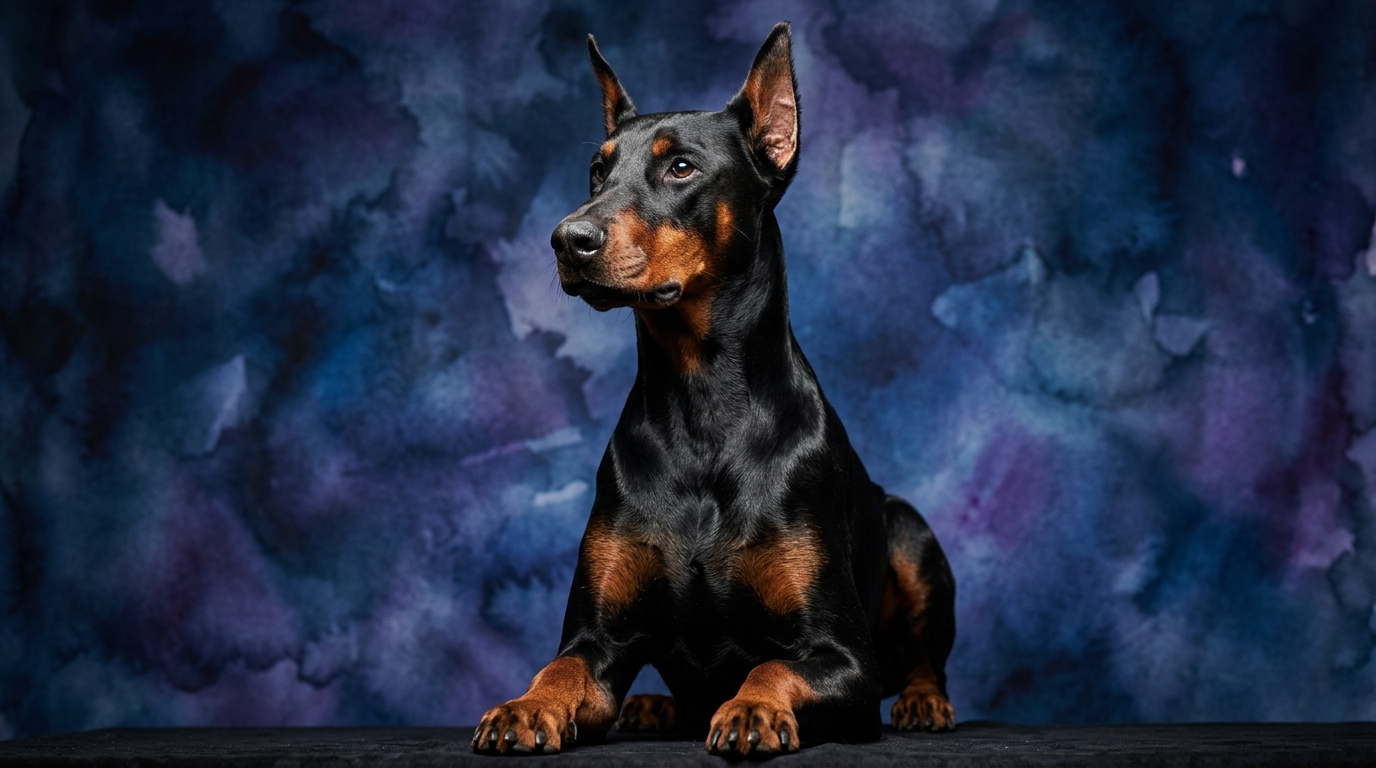
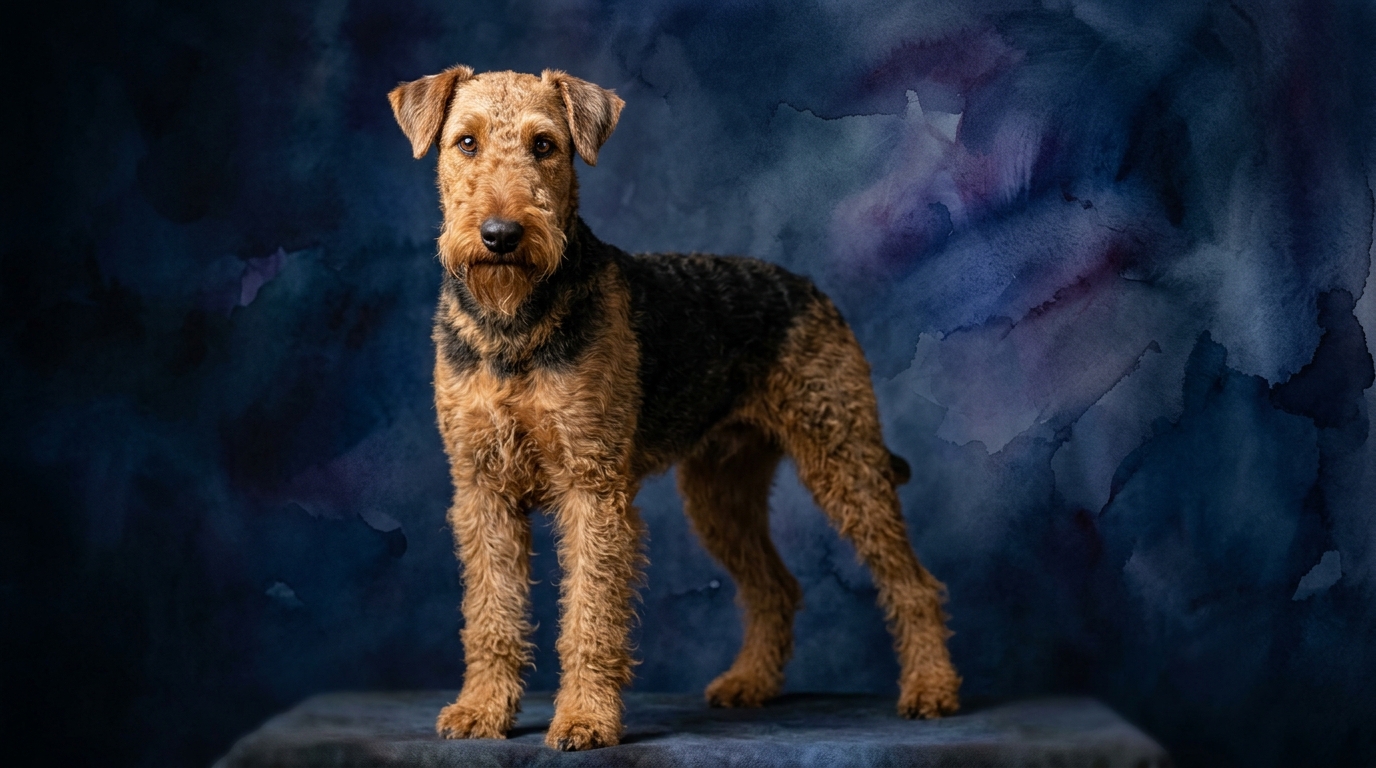
Side-by-Side IQ Profile: Doberman Pinscher vs. Airedale Terrier
The Doberman Pinscher, a member of the Working Group, commands a distinguished Coren rank of #5, indicating its exceptional working and obedience aptitude. Our Pet IQ Lab assessment outlines its cognitive strengths across the board: a formidable 5/5 in Problem Solving, 5/5 in Training Speed, 4/5 in Social Intelligence, 5/5 in Instinctive Drive, and a perfect 5/5 in Memory. This profile paints a picture of a canine designed for precision, rapid learning, and unwavering focus.
In contrast, the Airedale Terrier, hailing from the Terrier Group, holds a Coren rank of #29. Its IQ scores reflect a different, yet equally compelling, set of intellectual attributes: 4/5 in Problem Solving, 4/5 in Training Speed, 3/5 in Social Intelligence, 3/5 in Instinctive Drive, and 4/5 in Memory. This breed showcases a resourceful and independent intellect, characteristic of its terrier heritage, where self-reliance and tenacity were paramount.
Where the Doberman Pinscher Excels Cognitively
The Doberman Pinscher's cognitive framework is built for efficiency and high-level execution, particularly evident in its perfect 5/5 scores for Training Speed and Memory. This breed processes new commands with remarkable swiftness, often requiring minimal repetitions to solidify understanding, making them outstanding candidates for complex obedience, protection work, or competitive dog sports. Their superior memory means these intricate behaviors are retained consistently over extended periods, contributing to their reputation for reliability and precision.
Furthermore, the Doberman’s 5/5 in Problem Solving signifies a breed that quickly assesses and navigates complex scenarios, often identifying the most direct path to a solution. Coupled with a 5/5 Instinctive Drive, they possess an intense, inherent motivation to pursue tasks and fulfill their roles, whether it’s tracking, guarding, or performing intricate routines. This combination of rapid learning, robust memory, and focused drive allows Dobermans to excel in environments demanding sustained mental effort and precise execution.
Where the Airedale Terrier Demonstrates Unique Cognitive Strengths
While the Airedale Terrier’s scores may appear lower in direct comparison, its cognitive strengths manifest differently, rooted in a history that demanded independent thought and adaptability. Its 4/5 in Problem Solving, though not a 5/5, highlights a resourceful and inventive approach to challenges. Airedales are adept at figuring things out on their own, often employing trial-and-error or creative solutions without constant human direction—a valuable trait for a versatile hunting terrier.
The Airedale’s 3/5 Social Intelligence, while indicating less overt eagerness to please than some breeds, contributes to its self-sufficient intellect. This independence means they are less reliant on continuous human validation, fostering a robust mental fortitude that thrives in varied, unpredictable environments. Their 3/5 Instinctive Drive is geared towards persistent pursuit and engaging with the world on their own terms, providing a different kind of motivation than the Doberman’s task-oriented focus. This blend of independence and resourcefulness allows the Airedale to excel in situations requiring ingenuity and resilience rather than strict adherence to command.
Trainability: Doberman Pinscher vs. Airedale Terrier
When it comes to trainability, the Doberman Pinscher generally presents an easier path for owners, largely due to its 5/5 Training Speed and 4/5 Social Intelligence. Dobermans are typically eager to please their handlers, highly attentive, and quickly form associations between commands and actions. They thrive on structure and consistent leadership, absorbing complex instructions with remarkable speed and retaining them with exceptional memory. Their inherent drive to work makes them highly motivated partners in training, responding well to clear direction and positive reinforcement.
The Airedale Terrier, with a 4/5 Training Speed and 3/5 Social Intelligence, offers a different training experience. While capable of learning, their independent and often spirited terrier nature can make them more challenging. Airedales may require more patience, creativity, and varied training methods to maintain engagement, as they might view training as a negotiation rather than a direct instruction. Their strong problem-solving skills (4/5) can sometimes be applied to figuring out how to get their own way, necessitating an owner who is firm, consistent, and makes training fun and rewarding to overcome potential 'terrier stubbornness' and harness their innate resourcefulness effectively.
Matching Canine Intellect to Owner Lifestyle
For active owners seeking a dedicated partner in highly structured and demanding activities, the Doberman Pinscher is often an exceptional fit. Their intense instinctive drive (5/5), perfect training speed (5/5), and flawless memory (5/5) make them superb candidates for competitive dog sports like agility, obedience, protection work, or advanced tracking. These dogs require significant mental engagement through consistent training and purposeful tasks, thriving when given a 'job' that utilizes their focused intellect. A Doberman with a relaxed owner lacking the commitment to provide this mental stimulation may develop anxiety or destructive behaviors.
The Airedale Terrier, while also requiring significant activity, suits owners who appreciate a resourceful and independent companion for varied, perhaps less formally structured, adventures. Their problem-solving (4/5) and moderate instinctive drive (3/5) mean they benefit from exploration, puzzle toys, and activities that allow them to think independently, such as scent work or exploring new trails. While not suitable for truly relaxed owners, the Airedale might tolerate a slightly less rigid daily routine than a Doberman, provided their needs for physical exercise and mental engagement are met through diverse, engaging outlets that appeal to their self-reliant nature. An Airedale left to boredom might channel its ingenuity into mischievous or destructive acts.
The Verdict
Choose the Doberman Pinscher if you seek a highly trainable, focused partner for advanced obedience, protection work, or competitive dog sports, thriving on structure and precision.
Opt for the Airedale Terrier if you value an independent, resourceful companion with a tenacious spirit, capable of self-directed problem-solving and thriving in varied, less formal activities.
🧠 Find Your Pet's IQ Score
Our Pet IQ Lab assessment covers 25+ tests across 5 cognitive dimensions — personalized to your breed.
Take the Full IQ Test →Frequently Asked Questions
Are Dobermans or Airedales better for first-time dog owners?
Dobermans, with their intense drive and need for consistent, experienced guidance, can be challenging for novices. Airedales also require an owner who understands terrier independence and can provide firm, patient training, making neither an ideal 'easy' first dog.
Which breed requires more mental stimulation?
Both breeds require significant mental engagement, but of different types. Dobermans thrive on structured, task-oriented challenges that utilize their exceptional training speed and memory, while Airedales benefit from problem-solving games and varied activities that engage their independent resourcefulness.
How does Coren rank relate to these IQ scores?
Coren's ranking primarily assesses 'working and obedience intelligence' or trainability. The Doberman's #5 rank aligns with its 5/5 training speed and memory, while the Airedale's #29 reflects its good but more independent trainability (4/5 training speed) compared to top-tier obedience breeds.