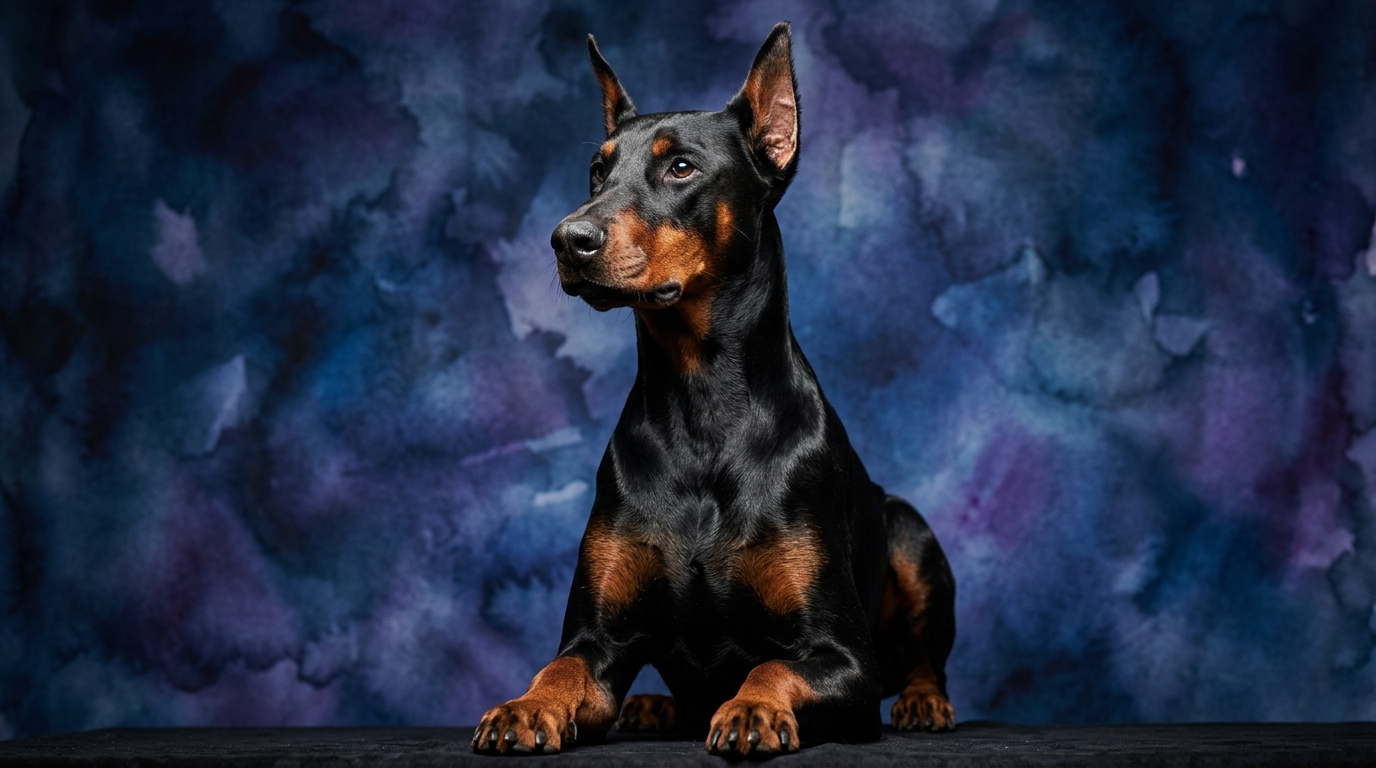
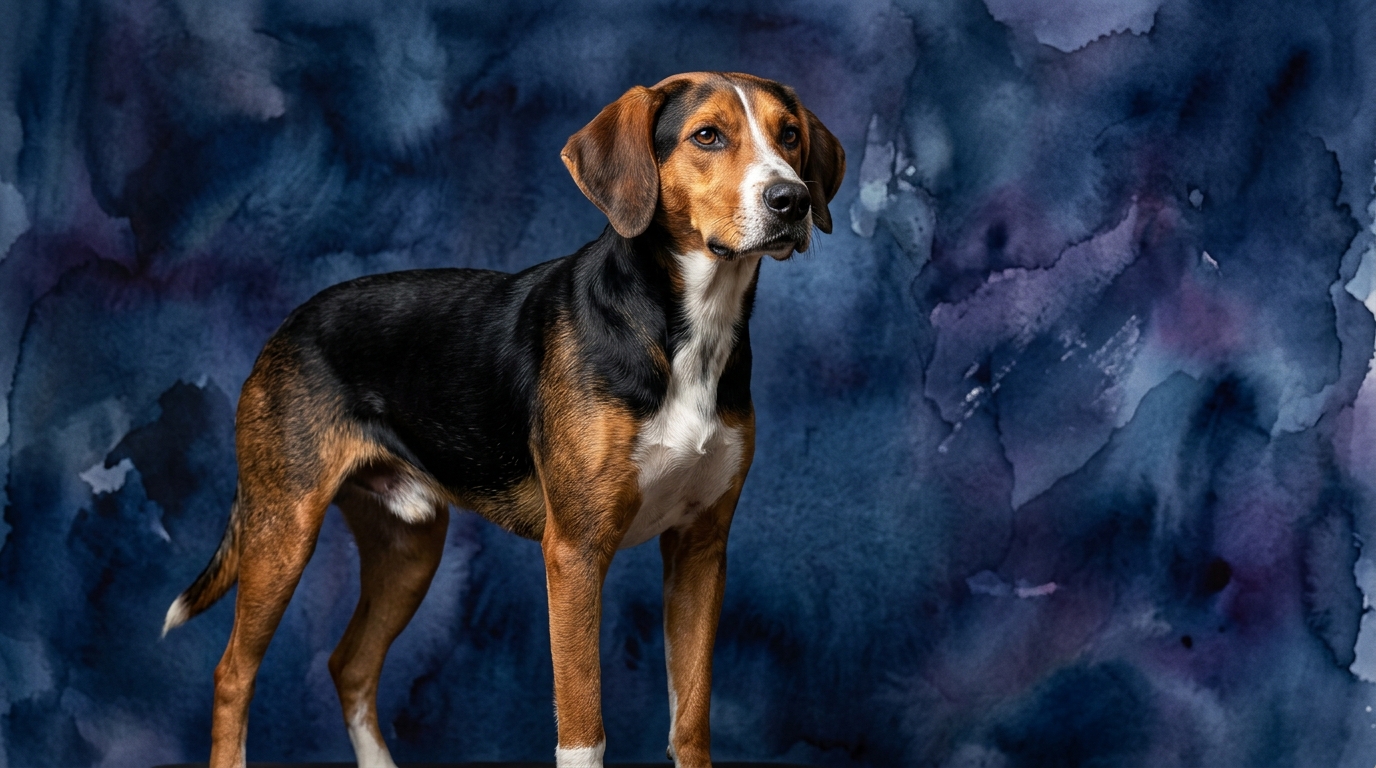
Side-by-Side IQ Profile: Doberman Pinscher vs. American Foxhound
The Cosmic Pet's IQ Lab evaluates canine cognition across five crucial dimensions, offering a nuanced understanding beyond simple obedience. For the Doberman Pinscher, a breed consistently ranked high in working intelligence (Coren rank #5), their profile reflects a formidable cognitive architecture. Their Problem Solving is rated 5/5, indicating an exceptional ability to analyze complex situations and devise effective solutions, often demonstrating foresight. Training Speed also scores 5/5, highlighting their rapid acquisition of new commands and routines, a testament to their focus and eagerness to engage. Social Intelligence at 4/5 means they are highly attuned to human cues and family dynamics, forming deep, reciprocal bonds. Instinctive Drive, a robust 5/5, points to a strong inherent motivation for purpose-driven activities like guarding or task completion. Finally, their Memory is a perfect 5/5, ensuring long-term retention of learned behaviors and experiences, making their training cumulative and reliable.
In contrast, the American Foxhound presents a different cognitive blueprint, reflecting its heritage as a specialized scent hound (not Coren-ranked for general obedience). Their Problem Solving is rated 3/5, suggesting competence in practical, often scent-related, challenges but less inclination for abstract or multi-step tasks outside their primary focus. Training Speed at 3/5 indicates a moderate learning pace, often requiring consistent patience due to their independent nature and powerful distractions. Social Intelligence scores 3/5, signifying a generally amiable disposition and connection with humans, though perhaps not the same depth of reciprocal understanding as breeds bred for close partnership; their social focus often extends to other dogs in a pack. Their Instinctive Drive, also 3/5, is profoundly specialized for scent pursuit, a singular focus that can override other directives. Memory at 3/5 means they retain information adequately for their purposes, particularly related to known trails and routines, but their recall for arbitrary commands might be less consistent than breeds with higher general memory scores.
Where the Doberman Pinscher Excels Cognitively
The Doberman's cognitive strengths are evident across the board, particularly in their capacity for structured learning and task execution. Their 5/5 Problem Solving means they don't just follow commands; they understand the *why* behind them, adapting to novel situations with a strategic mindset. For example, a Doberman can quickly learn to navigate complex obstacle courses or differentiate between specific toys based on verbal cues, extrapolating rules to new objects. Their 5/5 Training Speed is a direct result of their attentiveness and motivation to work with their handler, absorbing new commands like 'find keys' or 'turn off the light' in very few repetitions. This rapid acquisition of skills makes them exceptionally versatile for various roles, from protection to service work. Furthermore, their 5/5 Memory ensures that once a concept or command is learned, it's deeply ingrained, allowing for consistent performance even after long breaks. This cumulative learning ability is a hallmark of breeds excelling in advanced obedience and specialized tasks.
Where the American Foxhound Excels Cognitively
While the Doberman excels in general working intelligence, the American Foxhound's cognitive prowess is deeply specialized and finely tuned for its ancestral purpose: scent tracking. Their 3/5 Instinctive Drive, while numerically lower, represents an unwavering, singular focus on scent that is unparalleled. A Foxhound can follow a faint, hours-old trail across varied terrain, filtering out countless distracting odors, a feat requiring immense cognitive dedication and sensory processing. This isn't about solving human-defined puzzles, but about navigating a complex olfactory world with supreme precision. Their Problem Solving (3/5) in this context means expertly interpreting scent patterns to locate quarry, adapting their tracking strategy based on wind, terrain, and the age of the trail. Their memory (3/5) is particularly strong for scent profiles and known hunting grounds, allowing them to recall successful hunting strategies or previously encountered trails. While their social intelligence (3/5) might not manifest as eager human-centric obedience, their ability to cooperate within a pack, communicating through vocalizations and body language during a hunt, showcases a distinct form of social cognition vital for their survival and success in the field.
Trainability: Doberman Pinscher vs. American Foxhound
The Doberman Pinscher is unequivocally easier to train for a wide range of tasks, primarily due to their exceptional scores in Training Speed (5/5), Problem Solving (5/5), and Memory (5/5). A Doberman typically grasps new commands with minimal repetitions, often showing an eager 'what's next?' attitude. Their strong social intelligence means they are highly motivated to please their handler and work in partnership, making them receptive to instruction and quick to respond. For instance, teaching a Doberman to stay reliably or to retrieve specific items from a distant room is often a smooth process, driven by their focus and desire for purpose. In contrast, the American Foxhound, with its 3/5 scores across these dimensions, presents a different training challenge. While capable of learning, their independent nature and powerful instinctive drive for scent often mean they require more patience, consistency, and creative motivation. A Foxhound might be perfectly capable of understanding 'come,' but if a compelling scent crosses their path, their instinct to follow that trail will often override the learned command, making recall particularly challenging in unfenced areas. Their training requires understanding and working with, rather than against, their primary drive, often relying on high-value rewards and environmental control.
Matching Breeds to Owner Lifestyles
Both breeds require active engagement, but the *type* of activity differs significantly. The Doberman Pinscher, with its 5/5 Instinctive Drive and high energy levels, thrives with owners who can provide consistent mental stimulation and structured physical exercise. This means daily rigorous walks, runs, advanced obedience training, agility, or protection sports. A Doberman needs a 'job' to do, and an owner who can dedicate time to training sessions, puzzle toys, and interactive play will see a well-adjusted companion. They are not suited for relaxed owners who prefer minimal interaction beyond basic walks, as their unfulfilled cognitive and physical needs can lead to behavioral issues.
The American Foxhound also demands an active owner, but their activity is more about endurance and scent work than structured tasks. They need ample opportunities to run, explore, and most importantly, engage their nose. This translates to long, leashed walks or off-leash excursions in securely fenced areas where they can follow scents without risk. Owners who enjoy hiking, trail running, or even participating in scent work trials will find a compatible partner. While they can be calm indoors after sufficient exercise, their powerful drive means a 'relaxed owner' who doesn't provide outlets for their innate scenting behavior will likely find themselves with a bored, potentially destructive, and vocal hound. Neither breed is ideal for a truly sedentary lifestyle.
The Verdict
Choose a Doberman Pinscher if you seek a highly trainable, versatile working partner eager for structured tasks, protection roles, or advanced obedience, and are prepared to provide rigorous mental and physical engagement.
Choose an American Foxhound if you are an adventurous owner passionate about outdoor activities like hiking or scent work, appreciate an independent spirit, and are prepared to manage a powerful prey drive with consistent training and secure environments.
🧠 Find Your Pet's IQ Score
Our Pet IQ Lab assessment covers 25+ tests across 5 cognitive dimensions — personalized to your breed.
Take the Full IQ Test →Frequently Asked Questions
Is the Doberman Pinscher truly smarter than the American Foxhound?
The Doberman excels in general obedience and working intelligence, demonstrating superior problem-solving and training speed for human-defined tasks. The American Foxhound possesses specialized cognitive strengths in scent tracking and endurance, which are distinct but equally sophisticated within their specific domain.
Can an American Foxhound be trained for advanced obedience like a Doberman?
While an American Foxhound can learn basic obedience, achieving the precision and rapid response seen in a Doberman for advanced tasks is significantly more challenging due to their independent nature and powerful scent drive. Their focus is inherently geared towards following a trail rather than intricate human commands.
Do Dobermans and American Foxhounds require the same type of exercise?
Both breeds need substantial exercise, but their needs differ. Dobermans thrive on structured activities like agility and protection work that engage both mind and body. Foxhounds require extensive opportunities for running and scent exploration, needing open, secure spaces to satisfy their innate tracking instincts.