Side-by-Side Cognitive Profiles
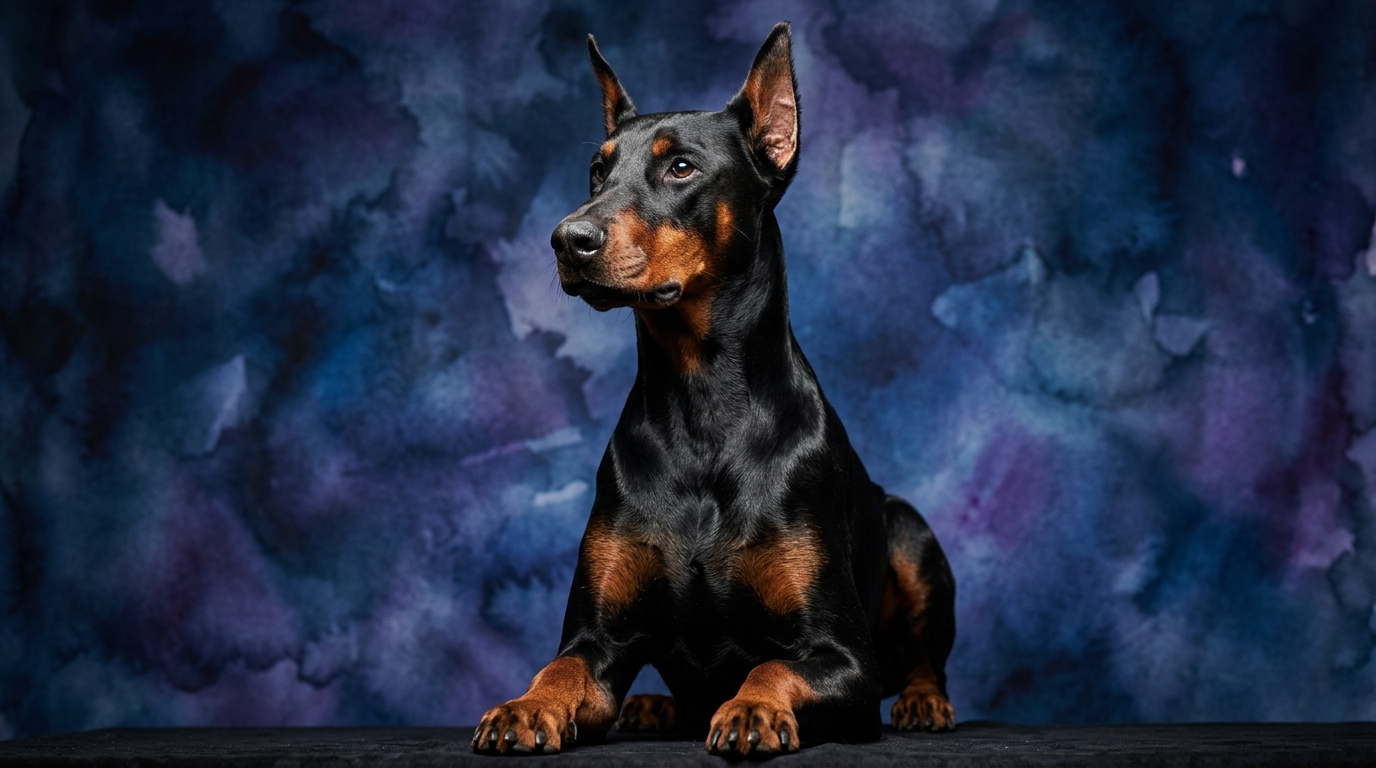
The Cosmic Pet IQ Lab evaluates canine cognition across five crucial dimensions, offering a granular view of each breed's mental makeup. For the Doberman Pinscher, a breed celebrated for its precision and guardianship, the scores paint a picture of sharp mental acuity. Their Problem Solving capability rates a perfect 5/5, indicating an exceptional capacity for independent thought and strategic navigation of complex situations. Training Speed also achieves a 5/5, reflecting their rapid grasp of new concepts and commands, often requiring minimal repetitions. Social Intelligence stands strong at 4/5, suggesting a discerning understanding of human cues and social dynamics, though they can be reserved with those outside their immediate circle. An Instinctive Drive of 5/5 highlights their profound inherent motivation for tasks, protection, or specific roles, while their Memory, also 5/5, speaks to an enduring retention of experiences, learned behaviors, and spatial information.
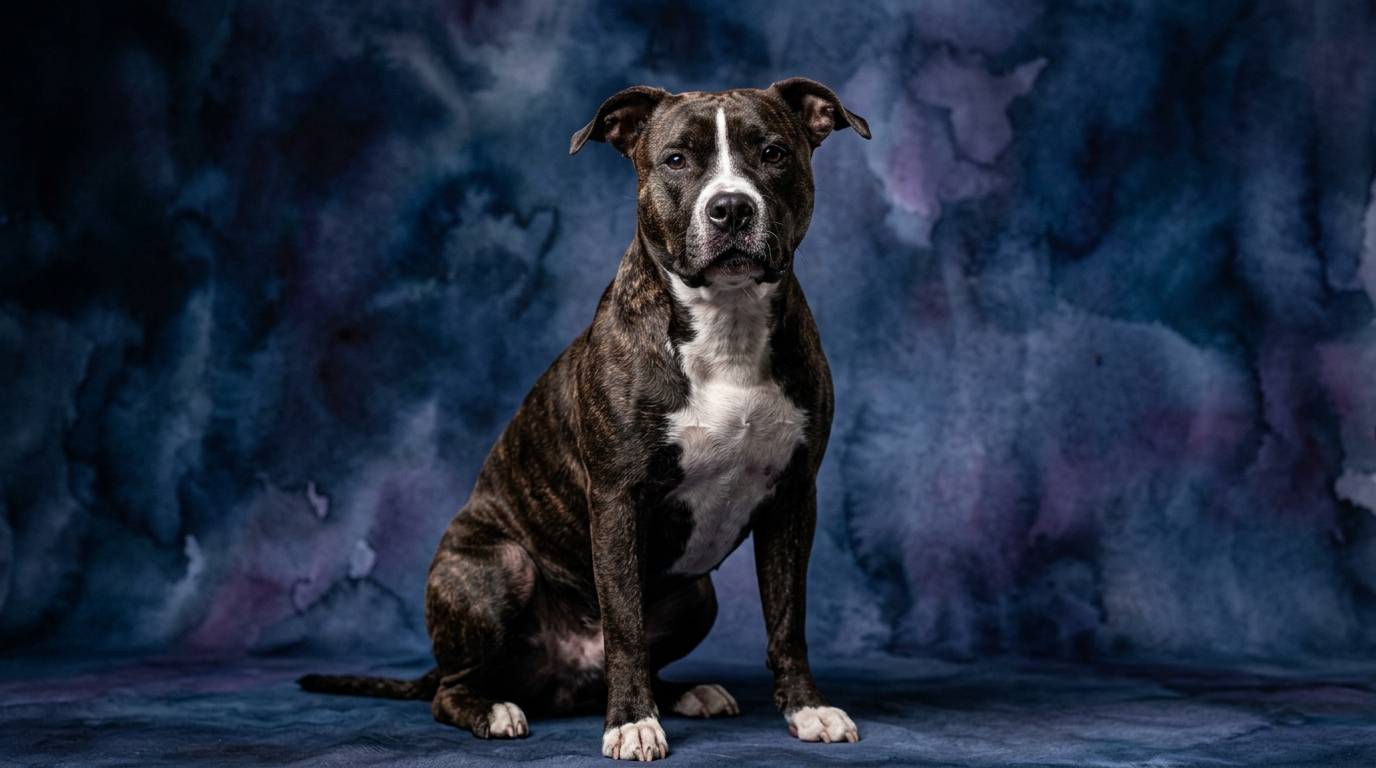
In contrast, the American Staffordshire Terrier, a breed admired for its tenacity and companionship, presents a different cognitive signature. Their Problem Solving score of 3/5 indicates a capable but often more guided approach to challenges, preferring clear parameters rather than extensive independent strategizing. Training Speed, at 3/5, shows a steady learning curve that benefits from consistent, positive reinforcement and a moderate number of repetitions to solidify new behaviors. Social Intelligence, also 3/5, points to a deeply affectionate nature within their trusted family unit, though they might interpret subtle human cues less acutely than the Doberman. An Instinctive Drive of 3/5 suggests a moderate inherent drive, often expressed as a strong desire for companionship and play, rather than a specific working vocation. Their Memory, however, is a commendable 4/5, demonstrating solid retention of routines, familiar people, and learned associations.
Where the Doberman Pinscher Wins Cognitively
The Doberman Pinscher demonstrates clear cognitive superiority in areas demanding rapid assimilation, complex problem-solving, and sustained focus. Their 5/5 Problem Solving score means they excel at tasks requiring multi-step solutions, adapting to novel situations, or figuring out how to achieve a goal when the path isn't immediately obvious. This manifests as a dog that can independently assess and react to changing environments, making them particularly adept at roles requiring quick, logical decisions. Furthermore, their 5/5 Training Speed allows them to absorb new information and commands with remarkable efficiency. This isn't just about learning tricks; it’s about quickly understanding the 'why' behind an action and generalizing that knowledge to different contexts, making advanced obedience, protection work, or specialized assistance roles a natural fit. Their formidable 5/5 Instinctive Drive fuels this learning and application, providing an unwavering motivation to engage in structured activities and fulfill perceived duties, while their 5/5 Memory ensures these complex skills and experiences are retained over extended periods, fostering a truly reliable companion for demanding tasks.
Where the American Staffordshire Terrier Wins Cognitively
While the American Staffordshire Terrier's cognitive profile differs from the Doberman's, it presents distinct strengths that resonate with their role as devoted companions. Their 4/5 Memory score, for instance, is a significant asset, allowing them to consistently recall familiar people, routines, and positive associations, contributing to their reputation as reliable family members. This strong memory underpins their ability to form lasting bonds and remember appropriate behaviors within their established household. Their 3/5 Social Intelligence, while not as discerning as the Doberman's, translates into a more universally open and affectionate demeanor within their trusted circle, fostering a deep emotional connection and a willingness to engage in play and interaction with family members. This particular blend of memory and social awareness means an AmStaff often excels at being a consistently loving and predictable presence in a home, readily engaging in familiar activities and offering unwavering loyalty. Their tenacity, though not directly scored, often complements their cognitive abilities; once they understand a task, they apply a steadfast determination to complete it, which can be a unique cognitive 'win' in terms of persistence.
Which is Easier to Train and Why
When considering ease of training, the Doberman Pinscher holds a distinct advantage due to its exceptional Training Speed (5/5) and Problem Solving (5/5). These dogs quickly connect cause and effect, requiring fewer repetitions to master new commands and complex sequences. They actively seek to understand what is being asked of them and generalize learned behaviors to novel situations, making advanced obedience, agility, or specialized roles relatively straightforward. Their innate desire to work and please their handler, stemming from their high instinctive drive, further accelerates the training process, as they are often intrinsically motivated by the challenge itself.
The American Staffordshire Terrier, with a Training Speed of 3/5 and Problem Solving of 3/5, requires a more patient and consistent approach. They learn steadily but benefit significantly from clear, concise instructions and more repetitions to solidify new concepts. While they are eager to please their families, their cognitive style is less about independent deduction and more about direct instruction. Trainers will find that positive reinforcement techniques are paramount, helping the AmStaff to associate learning with rewarding experiences. Their tenacity means that once a behavior is learned, it tends to stick, but the initial acquisition phase typically demands more dedicated effort and structured guidance compared to the Doberman Pinscher.
Which Suits Active Owners vs. Relaxed Owners
The Doberman Pinscher, characterized by a 5/5 Instinctive Drive and 5/5 Problem Solving, thrives with active, highly engaged owners. These dogs require substantial daily physical exercise combined with consistent mental stimulation through training, puzzle toys, or structured work. An owner who can commit to advanced obedience, competitive dog sports, or a 'job' for their Doberman will find them a fulfilled and cooperative companion. Owners who are more relaxed or cannot provide this level of consistent engagement and mental challenge may find a Doberman can become bored or develop undesirable behaviors stemming from unchanneled energy and intellect.
The American Staffordshire Terrier, with a 3/5 Instinctive Drive and 3/5 Problem Solving, is more adaptable to a range of owner lifestyles, though they are certainly not suited for entirely relaxed owners. They need regular exercise to maintain physical health and mental well-being, such as daily walks, playtime, or moderate hikes. Their cognitive needs are met with consistent, positive training and interactive play, rather than the constant, complex mental challenges a Doberman demands. An AmStaff can happily transition from an active outing to a relaxed evening with their family, provided their core needs for exercise, companionship, and consistent guidance are met. They are an excellent choice for owners who enjoy regular activity but don't necessarily seek a canine partner for demanding competitive disciplines.
The Verdict
Choose the Doberman Pinscher if you are an experienced owner seeking a highly responsive, task-oriented companion for advanced training, protective roles, or competitive dog sports, and can commit to intensive mental and physical engagement.
Opt for the American Staffordshire Terrier if you desire a devoted, resilient family companion who appreciates consistent guidance, enjoys varied activities, and values deep social bonds within their trusted circle, without the need for constant, complex mental work.
🧠 Find Your Pet's IQ Score
Our Pet IQ Lab assessment covers 25+ tests across 5 cognitive dimensions — personalized to your breed.
Take the Full IQ Test →Frequently Asked Questions
What makes the Doberman's memory exceptional?
The Doberman's 5/5 memory allows them to retain complex command sequences, remember past experiences with remarkable accuracy, and recall specific locations over long periods, making them highly reliable for learned tasks and routines.
How does the AmStaff's social intelligence differ from the Doberman's?
The AmStaff's 3/5 social intelligence indicates strong affection and loyalty to their family, though they might be less discerning or subtle in reading human cues compared to the Doberman's 4/5, which suggests a more nuanced understanding of social dynamics.
Can an American Staffordshire Terrier excel in problem-solving?
While scoring 3/5, AmStaffs are capable problem-solvers, especially when tasks are clear and consistent. They may require more direct guidance and practice to master complex challenges compared to the Doberman's innate aptitude for independent strategizing.