Side-by-Side IQ Profile
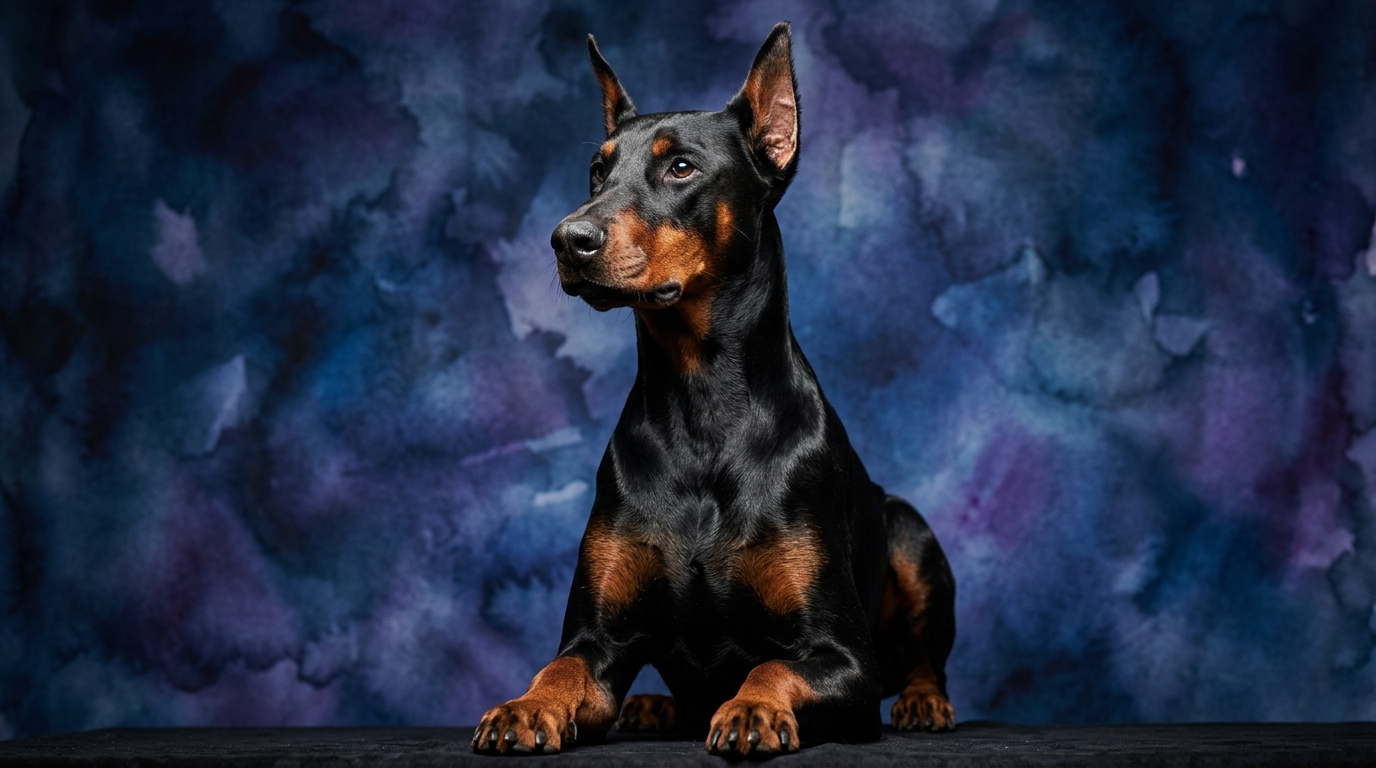
**Doberman Pinscher:** This Working breed, with a Coren rank of #5, demonstrates remarkable cognitive consistency. Its **Problem Solving (5/5)** involves adeptly dissecting novel situations and devising effective solutions, whether navigating complex obedience courses or understanding intricate household routines. The Doberman's **Training Speed (5/5)** allows it to absorb new commands and behaviors with remarkable alacrity, often requiring only a handful of repetitions to solidify a concept. Its **Social Intelligence (4/5)** manifests as strong attunement to human emotion and intent, fostering a deep partnership and allowing anticipation of directives within a family or working unit. The **Instinctive Drive (5/5)** is primarily channeled towards protection, vigilance, and companionship, providing profound motivation for tasks involving guarding or partnership. Finally, its **Memory (5/5)** ensures excellent recall for commands, routines, and even specific events, retaining complex sequences over long periods.
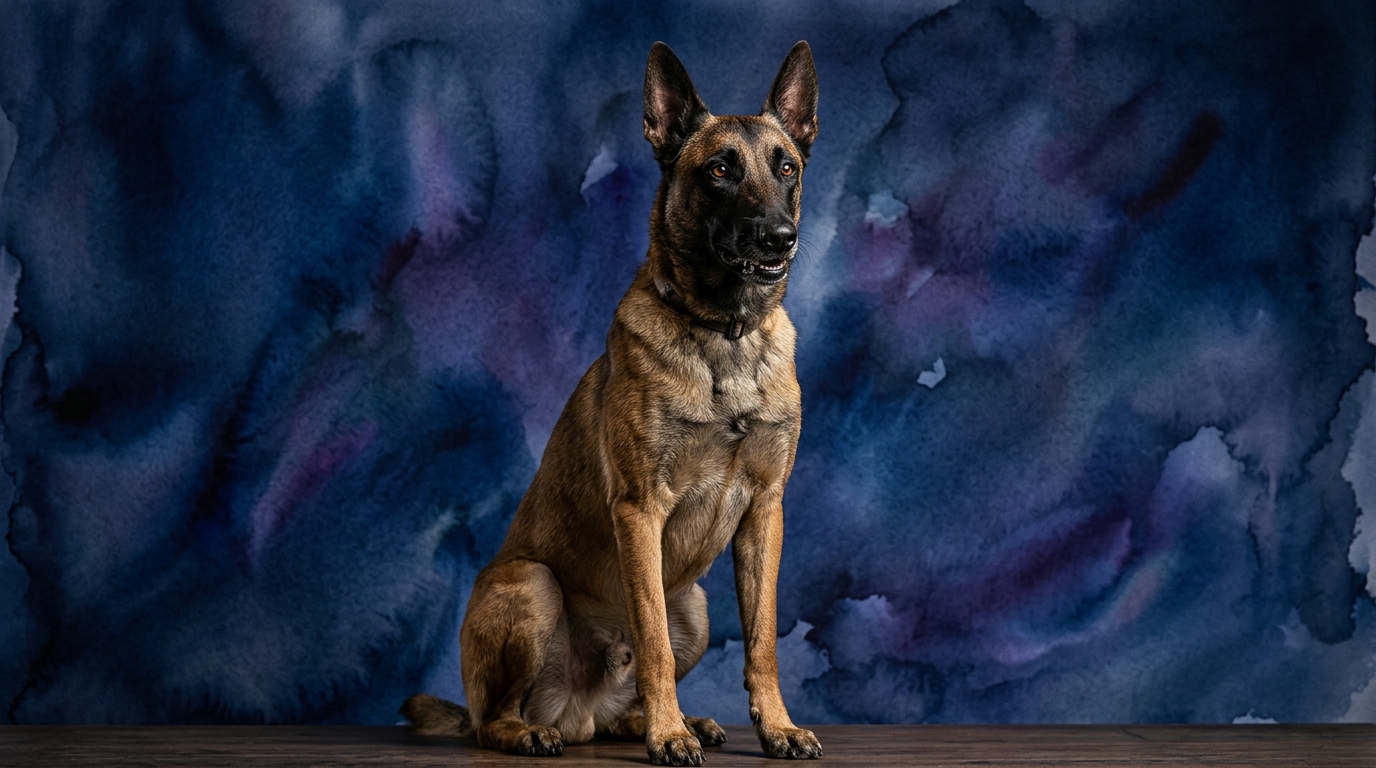
**Belgian Malinois:** As a Herding breed ranked #22 by Coren, the Malinois showcases a distinct application of its cognitive strengths. Its **Problem Solving (5/5)** involves exceptional ingenuity in dynamic environments, rapidly assessing fluid situations and adapting strategies, particularly in tasks requiring independent decision-making like herding or tracking. Like the Doberman, the Malinois's **Training Speed (5/5)** is astonishing, capable of mastering intricate multi-step commands and physical sequences with minimal repetition, fueled by high motor drive and intense focus. Its **Social Intelligence (4/5)** is intensely focused on interpreting subtle operational commands and environmental shifts in a working context, forming strong bonds driven by task completion. The Malinois's powerful **Instinctive Drive (5/5)** is channeled towards intense activity, chase, herding, and bite work, providing an almost limitless reservoir of energy and focus. Its **Memory (5/5)** retains vast repertoires of learned behaviors, complex patterns, and environmental details, essential for consistency in high-stakes work.
Where Doberman Pinscher Wins Cognitively
While their raw IQ scores appear identical, the Doberman Pinscher’s cognitive strengths often shine brightest in the realm of structured obedience and a nuanced partnership dynamic, reflected in its Coren rank of #5. This breed exhibits a profound ability to apply its 5/5 training speed and 5/5 memory to consistently execute complex commands with precision and grace. Their superior placement in obedience rankings suggests a particular aptitude for understanding human intent and a greater inclination to perform within defined parameters, making them exceptionally responsive to handler direction. The Doberman's 4/5 social intelligence is often expressed as a deep desire to please and collaborate, translating into a more predictable and harmonious learning experience for many owners. Their 5/5 instinctive drive, primarily oriented towards protection and companionship, makes them highly motivated by praise and the opportunity to work alongside their human, fostering a partnership where cognitive effort is willingly directed towards shared goals. This breed excels when tasks require sustained focus on detail and a refined understanding of sequential commands, often performing with an elegant efficiency that belies the underlying cognitive effort.
Where Belgian Malinois Wins Cognitively
The Belgian Malinois, despite its Coren rank of #22, showcases a unique cognitive prowess rooted in its herding origins and intense working drive. Its 5/5 problem-solving ability is less about elegant execution of pre-set commands and more about dynamic, independent assessment and rapid adaptation in fluid, high-stakes scenarios. When a Malinois encounters an unexpected obstacle during an agility course or a shifting herd of livestock, its mind immediately processes variables and devises a solution, often with minimal handler input beyond the initial directive. Their 5/5 instinctive drive is an engine of relentless focus and tenacity, allowing them to sustain peak mental and physical output over extended periods, a critical asset in roles like search and rescue or protection work. While their 5/5 training speed is exceptional, it’s often applied to mastering complex physical feats and quick-change directives rather than the precision of formal obedience. The Malinois's cognitive edge lies in its capacity for intense, sustained mental effort combined with an unparalleled physical athleticism, making them masters of tasks requiring both brute force and immediate, intelligent improvisation.
Which is Easier to Train and Why
Determining which breed is 'easier' to train is less about raw cognitive capacity and more about the owner's experience and the specific training goals. The Doberman Pinscher, with its Coren rank of #5, is often perceived as more straightforward for a wider range of dedicated owners. This isn't because they are inherently 'smarter' than a Malinois, but because their 5/5 training speed and 4/5 social intelligence are typically expressed through a strong desire for human partnership and a natural inclination towards structured obedience. Dobermans often thrive on clear commands and consistent routines, aiming to please their handlers and excel in predictable environments. Their working dog heritage means they are wired to perform specific, often complex, tasks for humans, and their robust memory ensures these lessons stick. In contrast, the Belgian Malinois, despite its identical 5/5 training speed, demands a more experienced and nuanced approach. Their herding background and intense 5/5 instinctive drive mean they possess an extraordinary work ethic and problem-solving ability, but these traits can manifest as independent thought or a relentless pursuit of activity if not properly channeled. Malinois need a 'job' and a handler skilled in harnessing their boundless energy and directing their formidable drives. For an owner who understands how to leverage a Malinois's innate need for intense engagement, they are incredibly responsive. However, for a novice, their relentless drive and cognitive independence can be overwhelming, making the Doberman generally more forgiving in the initial stages of training and more readily adaptable to a structured family life without constant, high-octane work.
Which Suits Active Owners vs Relaxed Owners
Neither the Doberman Pinscher nor the Belgian Malinois is suitable for a truly relaxed or sedentary owner; both breeds demand significant mental and physical engagement to thrive. However, the type and intensity of activity they require differ. The Doberman Pinscher, while undeniably active, fits well with owners who enjoy daily vigorous exercise, structured training sessions, and mental enrichment activities like puzzle toys or advanced obedience. Their 5/5 instinctive drive for protection and companionship means they thrive on being an integrated part of the family, often finding satisfaction in activities that involve their human partners, such as jogging, hiking, or dog sports like agility or Schutzhund. They need consistent stimulation, but their energy is often more manageable than that of the Malinois. The Belgian Malinois, on the other hand, is built for extreme performance and demands an owner whose lifestyle is centered around intense, sustained activity. Their 5/5 instinctive drive and problem-solving capacity necessitate a 'job' that challenges them physically and mentally every single day. This might involve competitive dog sports like IPO/Schutzhund, advanced agility, detection work, or extensive working roles. An owner who cannot provide hours of structured, high-intensity engagement will quickly find a Malinois becoming bored, destructive, or developing behavioral issues due to unmet needs. For the Malinois, 'active' means a lifestyle dedicated to their work and training, far beyond what most would consider a typical 'active' pet ownership.
The Verdict
Choose the Doberman Pinscher if you seek a highly trainable, devoted partner capable of excelling in structured obedience and protection work, and you can provide consistent, vigorous exercise and mental stimulation within a family-integrated lifestyle.
Opt for the Belgian Malinois if you are an experienced, dedicated handler prepared to commit to a lifestyle of intense physical activity and advanced, specialized training, channeling their extreme drives into a demanding working role or competitive dog sport.
🧠 Find Your Pet's IQ Score
Our Pet IQ Lab assessment covers 25+ tests across 5 cognitive dimensions — personalized to your breed.
Take the Full IQ Test →Frequently Asked Questions
Do Dobermans and Malinois have similar exercise needs?
Both breeds require extensive exercise, but the Malinois typically demands more intense, sustained, and job-oriented physical and mental output, whereas the Doberman thrives on vigorous daily activity that can be more integrated into family life.
Which breed is better for a first-time dog owner?
Neither breed is ideal for a first-time owner due to their high intelligence, intense drives, and training demands; however, a Doberman Pinscher might be more manageable for a committed novice willing to invest heavily in professional guidance, compared to the often overwhelming intensity of a Malinois.
How does the Coren rank differ from the IQ dimensions provided?
The Coren rank primarily measures a breed's working and obedience intelligence, reflecting how quickly and consistently they learn and execute human-given commands, while the IQ dimensions describe inherent cognitive capacities like problem-solving and memory, which can be applied differently based on breed purpose and individual temperament.