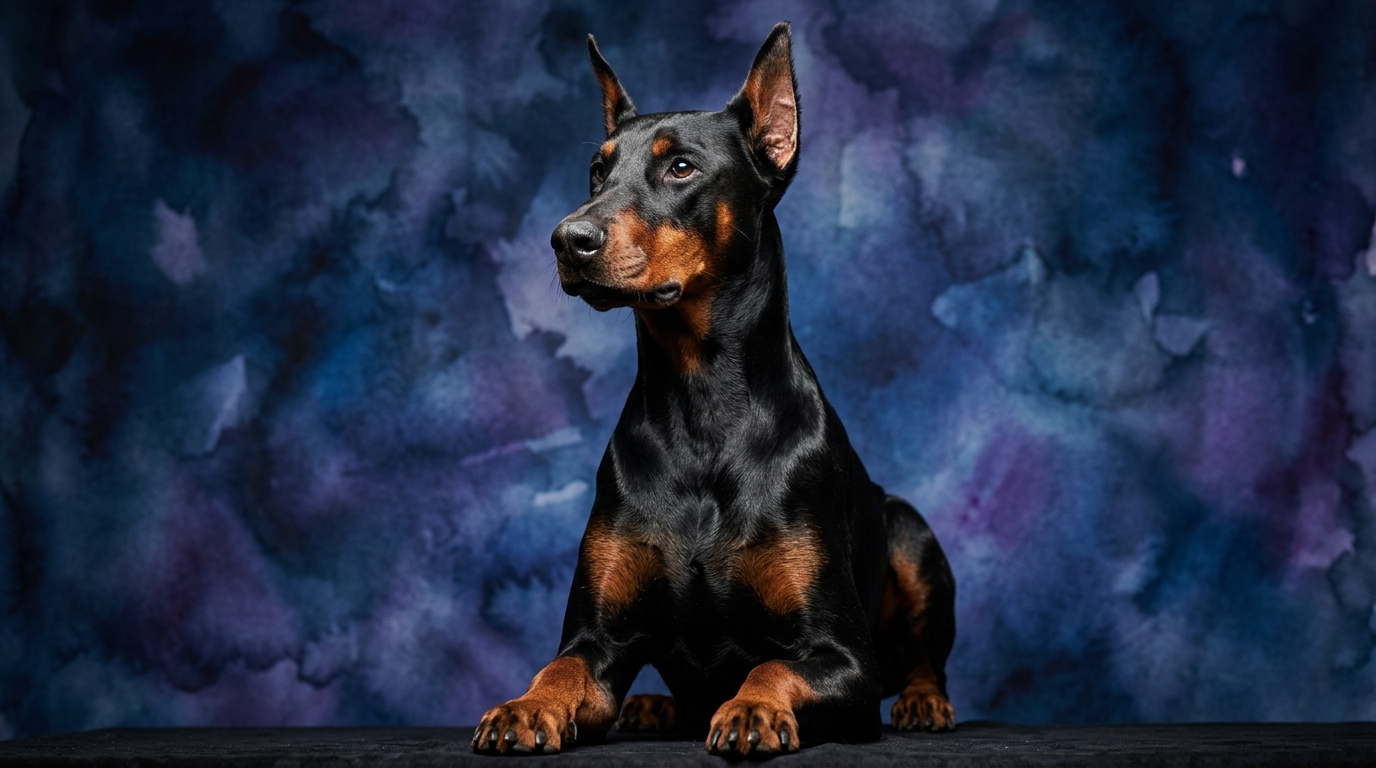
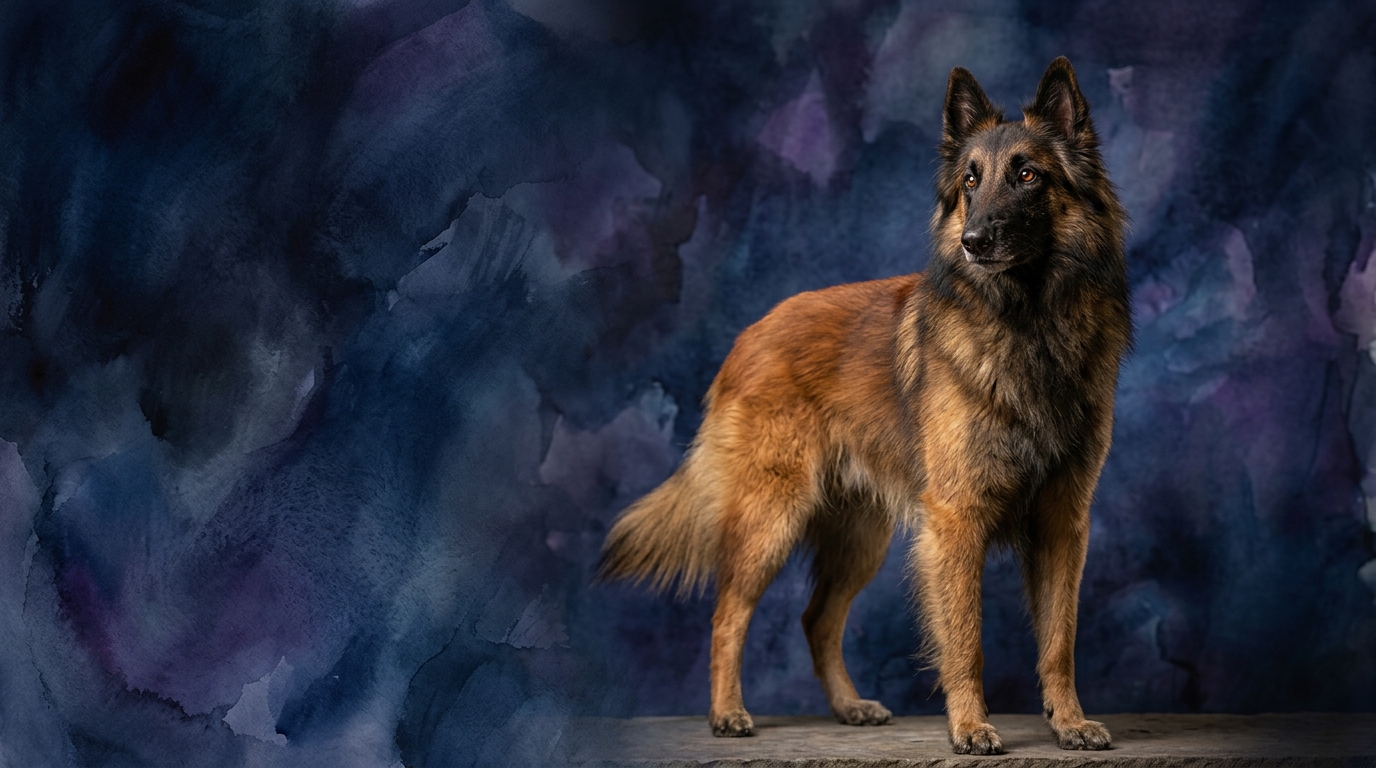
Side-by-Side Cognitive Profile
At The Cosmic Pet Pet IQ Lab, we evaluate canine intelligence across five key dimensions, revealing the intricate mental architecture of each breed. For the Doberman Pinscher and Belgian Tervuren, several scores align, while others diverge significantly, painting a detailed picture of their cognitive landscapes.
Both breeds achieve a perfect 5/5 in **Problem Solving**. This indicates an outstanding capacity for adaptive thinking, allowing them to quickly analyze new situations, learn complex tasks, and devise solutions to novel challenges. Whether it's a Doberman figuring out an escape route or a Tervuren strategizing to manage a flock, their mental agility is top-tier.
Similarly, both the Doberman and the Tervuren score 5/5 in **Training Speed**. This means they grasp new commands and concepts with remarkable rapidity, often requiring only a few repetitions to internalize an instruction. Their attentiveness and eagerness to engage in structured learning make them highly responsive to consistent, positive reinforcement methods.
Their **Memory** is also equally robust, with both breeds scoring 5/5. This strong long-term retention means that once a skill, command, or routine is learned, it is deeply ingrained. Dobermans remember complex sequences for protection work, while Tervurens retain intricate patterns for herding or agility, making them incredibly reliable once trained.
A notable difference emerges in **Social Intelligence**, where the Doberman Pinscher scores 4/5 compared to the Belgian Tervuren's 3/5. The Doberman's higher score reflects a pronounced attunement to human emotional cues and social dynamics within a family unit. They often form deep, intuitive bonds, anticipating their handler's needs and responding to subtle non-verbal communication. The Tervuren's 3/5 suggests a more independent social processing; while they bond deeply, their interactions might be less overtly driven by human validation, potentially requiring more deliberate effort to build social rapport outside of task-oriented engagement.
The most significant divergence is in **Instinctive Drive**, with the Doberman Pinscher earning a 5/5 and the Belgian Tervuren a 3/5. The Doberman's intense drive is a pervasive force, rooted in their guardian and protection heritage, manifesting as unwavering vigilance, territorial awareness, and a profound desire to fulfill a 'job.' This drive fuels their focus and dedication in working roles. The Tervuren's 3/5 drive, while lower in overall intensity, is precisely channeled through their herding lineage, expressed as a compelling urge to gather, control, and move. While they possess protective instincts, it is typically less all-encompassing than the Doberman's, often expressed through watchful observation rather than direct intervention unless truly provoked.
Where the Doberman Pinscher Excels Cognitively
The Doberman Pinscher's cognitive strengths truly shine in areas demanding intense partnership and a strong sense of purpose. Their superior Social Intelligence (4/5) provides a distinct advantage in roles requiring seamless human-canine collaboration. Dobermans often possess an almost psychic ability to anticipate their handler's intentions or emotional shifts, making them exceptionally responsive in scenarios where subtle communication is paramount, such as advanced obedience, protection sports, or service dog work. This cognitive attunement allows them to integrate deeply into a human family, often acting as a highly perceptive and empathetic companion.
Furthermore, their unparalleled Instinctive Drive (5/5) offers a profound cognitive asset for tasks requiring unwavering dedication and vigilance. This drive, deeply ingrained from their working heritage, enables Dobermans to excel in roles demanding sustained focus, such as personal protection, search and rescue, or police work. Their inherent motivation to perform a 'job' is a powerful internal engine, driving them to complete tasks with formidable intensity and a consistent desire to engage and work alongside their human partners, providing a reliable source of motivation for training and task completion.
Where the Belgian Tervuren Excels Cognitively
While the Doberman's cognitive prowess leans towards intense, protective partnership, the Belgian Tervuren's strengths lie in the nuanced application of their instincts and a capacity for independent problem-solving. Their Instinctive Drive, rated 3/5, is a specific cognitive advantage in herding contexts. This drive, though lower in general intensity than the Doberman's, is precisely calibrated for complex, dynamic tasks involving strategic movement and control of livestock without aggressive confrontation. Their cognitive 'win' is in the sophisticated execution of this instinct, requiring a delicate balance of pressure and release, anticipation, and independent decision-making to manage a flock effectively, a skill set distinct from the Doberman's guardian focus.
The Tervuren's slightly lower Social Intelligence (3/5) compared to the Doberman can also be a cognitive advantage in specific scenarios. It suggests a capacity for more autonomous decision-making and less reliance on constant handler input in situations where a dog needs to make quick, self-directed choices. This independence, coupled with their 5/5 Problem Solving and Memory, allows them to operate with impressive self-sufficiency when the task demands it, such as navigating an intricate agility course or making split-second herding decisions without direct instruction, showcasing a valuable self-reliant cognitive strength.
Training Dynamics: Doberman Pinscher vs. Belgian Tervuren
Both Doberman Pinschers and Belgian Tervurens are rated 5/5 in Training Speed, indicating that both breeds learn new commands with exceptional rapidity. However, the 'ease' of training can vary significantly due to their differing social intelligence and instinctive drives, requiring different approaches from their handlers.
The Doberman's higher Social Intelligence (4/5) often translates into a stronger intrinsic desire to please their handler. They are typically more attuned to subtle human feedback and praise, which can make initial obedience training feel smoother and more immediately rewarding for an owner. Their eagerness to engage and respond to human approval can accelerate the bond-building aspect of training, making them highly receptive to instruction.
Conversely, the Doberman's potent Instinctive Drive (5/5) demands a handler who can consistently channel this energy productively. Without clear direction, consistent boundaries, and a designated 'job,' this drive can manifest as strong-willed behavior, an overzealous application of protective instincts, or a tendency to take charge, which necessitates experienced, confident leadership to manage effectively. Their intensity requires a firm yet fair hand.
The Belgian Tervuren, with its 3/5 Social Intelligence, might be less overtly motivated by human approval and more task-focused. This means a trainer might need to employ more creative and engaging methods, relying on the inherent satisfaction of the task itself rather than solely on social reinforcement. Their 3/5 Instinctive Drive, while still requiring outlets, might be somewhat less overwhelming to manage than the Doberman's intense 5/5 drive, provided it is directed into appropriate activities like herding, agility, or competitive obedience, where their natural inclinations can be harnessed productively. Ultimately, both are exceptionally trainable, but the Doberman often offers a more immediate sense of responsiveness due to their social attunement, while the Tervuren may require a trainer to tap into their independent working spirit through engaging and purpose-driven activities.
Matching Breeds to Lifestyles: Active vs. Engaged Owners
It is crucial to understand that neither the Doberman Pinscher nor the Belgian Tervuren is suited for a truly 'relaxed' or sedentary owner; both breeds are working dogs that demand substantial mental and physical engagement. The Doberman, with its 5/5 Instinctive Drive and 4/5 Social Intelligence, thrives with an active owner who can provide a consistent 'job' or purpose. This includes rigorous daily exercise, advanced training, protection sports, or extensive mental stimulation, always with a clear role and structure. Their need for close partnership and a sense of responsibility means they require an owner who enjoys active, hands-on engagement and confident leadership, integrating the dog fully into their daily routines and activities as a true companion and protector.
The Belgian Tervuren, despite a lower 3/5 Instinctive Drive and 3/5 Social Intelligence, remains a high-energy working breed with significant needs. They require an active owner who understands the necessity of channeling their herding instincts into appropriate outlets such as agility, obedience, flyball, or actual herding work. While they might tolerate slightly more independent activity or self-directed play than a Doberman, they still need significant physical exercise and complex mental stimulation to prevent boredom, anxiety, and potential destructive behaviors. An owner who enjoys outdoor activities, dog sports, and engaging their dog in complex, problem-solving tasks will find a Tervuren a rewarding companion, but neither breed will flourish in a household that cannot meet their substantial intellectual and physical demands.
The Verdict
Choose the Doberman Pinscher if you seek a highly intuitive, intensely driven partner for protection, advanced obedience, or a deeply bonded family guardian, and are prepared to provide firm, consistent leadership to channel their strong instincts.
Opt for the Belgian Tervuren if you are drawn to a more independently-minded, agile companion for herding, agility, or competitive obedience, valuing their nuanced working drive and self-sufficient problem-solving capabilities.
🧠 Find Your Pet's IQ Score
Our Pet IQ Lab assessment covers 25+ tests across 5 cognitive dimensions — personalized to your breed.
Take the Full IQ Test →Frequently Asked Questions
Are Doberman Pinschers better at learning new tricks than Belgian Tervurens?
Both breeds score 5/5 in Training Speed, indicating they learn new commands and tricks with exceptional rapidity and minimal repetition. Their capacity for acquiring new behaviors is equally impressive, though their motivation for doing so might stem from different cognitive drivers.
Which breed is more likely to bond with a single person?
While both breeds form strong bonds, the Doberman Pinscher's higher Social Intelligence (4/5) suggests a greater propensity to form an intense, intuitive connection with a primary handler, often showing a nuanced understanding of their specific needs and cues. The Belgian Tervuren (3/5) bonds deeply but may exhibit a more independent social approach, valuing the entire family unit or the task at hand.
Does the Doberman's higher instinctive drive make them more difficult to live with?
The Doberman's 5/5 instinctive drive requires a committed owner who can provide consistent training, clear boundaries, and appropriate outlets for their energy and protective instincts. While this drive can lead to challenging behaviors if not managed, it also forms the basis of their exceptional working ability and loyalty when properly channeled.