
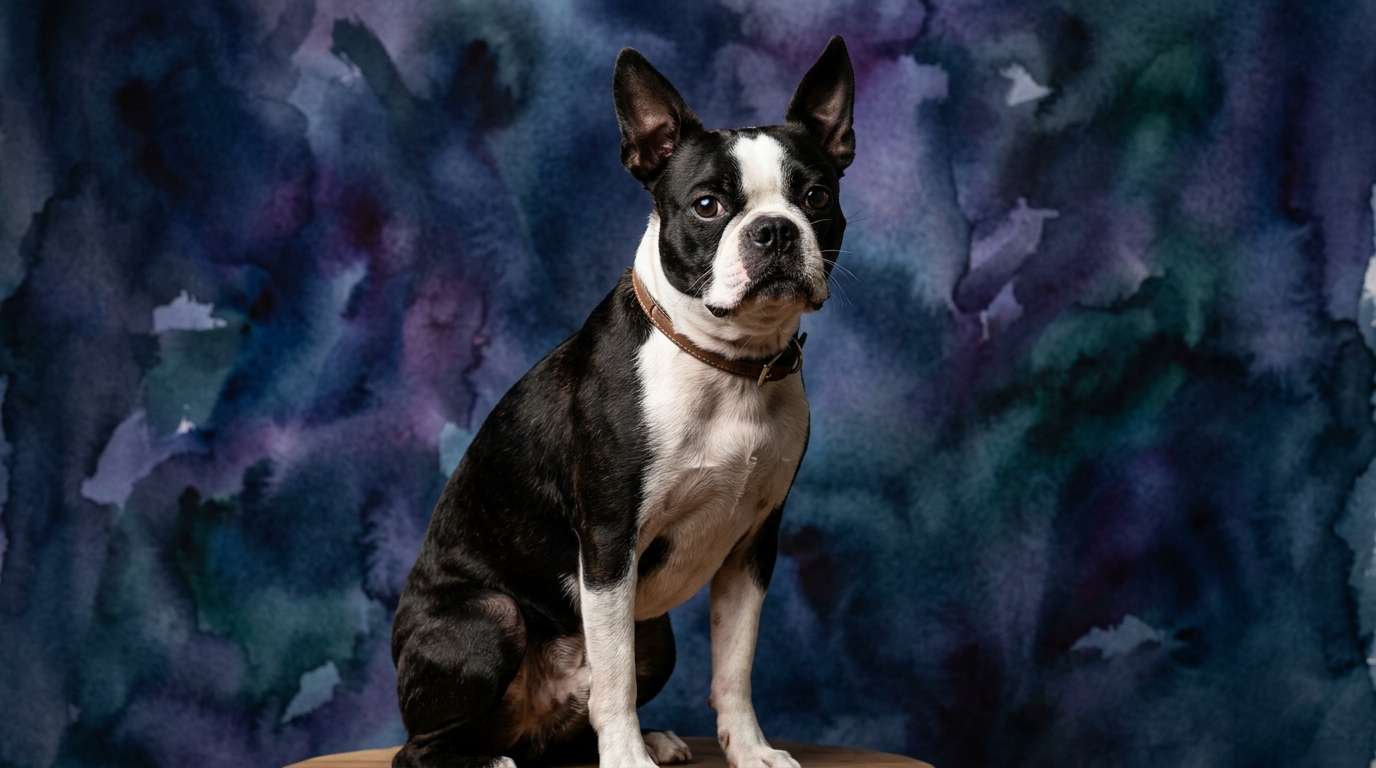
Side-by-Side IQ Profile: Doberman Pinscher vs. Boston Terrier
The Cosmic Pet Pet IQ Lab provides a comprehensive framework to understand the unique cognitive strengths of different breeds. For the Doberman Pinscher, a Coren rank of #5 signifies a breed with exceptional working intelligence, reflected in its high scores across most dimensions. This breed boasts a Problem Solving score of 5/5, indicating an outstanding ability to analyze complex situations and devise effective solutions independently. Its Training Speed is also 5/5, meaning it learns new commands and behaviors with remarkable swiftness, often requiring minimal repetitions. Social Intelligence is rated 4/5, showing a strong capacity to understand human emotions and social cues, forming deep, perceptive bonds. An Instinctive Drive of 5/5 highlights a powerful innate urge for activity, work, and purpose, which fuels its engagement with challenging tasks. Finally, a Memory score of 5/5 ensures that learned lessons, routines, and experiences are retained with impressive accuracy and longevity.
In contrast, the Boston Terrier, with a Coren rank of #54, occupies a different cognitive niche, reflecting its primary role as a companion animal. Its Problem Solving score is 3/5, suggesting it can handle moderate challenges but may require more guidance or trial-and-error for intricate tasks, being less inclined towards independent strategic thinking. Training Speed is 3/5, meaning it learns at a steady pace, benefiting from consistent positive reinforcement and patience rather than rapid generalization. Interestingly, its Social Intelligence matches the Doberman at 4/5, indicating a high degree of attunement to human companionship and family dynamics, thriving on interaction. However, its Instinctive Drive is 2/5, signifying a much lower inherent compulsion for strenuous work or protection, making it naturally content with moderate activity and companionship. Its Memory score of 3/5 means information is retained adequately with reinforcement, but less frequently used commands or experiences might require occasional refreshers.
Where the Doberman Pinscher Wins Cognitively
The Doberman Pinscher's cognitive profile, particularly its 5/5 scores in problem-solving, training speed, instinctive drive, and memory, positions it as a powerhouse of mental acuity. This breed excels in tasks demanding sustained focus, strategic thinking, and precise execution, such as advanced obedience, agility, protection work, or complex scent detection. A Doberman can quickly analyze a situation, devise a solution, and execute it efficiently, whether that involves figuring out how to open a child-proof gate or learning an intricate sequence of commands in a single session. Their superior memory means lessons stick, making retraining rare and building on previous knowledge seamless. This allows them to master multi-step commands and adapt to novel scenarios with an impressive degree of independence and precision, often anticipating their handler's next move. Furthermore, their intense instinctive drive fuels their desire to engage in mentally stimulating activities, making them enthusiastic partners for challenging endeavors and highly motivated to perform complex tasks with purpose.
Where the Boston Terrier Wins Cognitively
While the Boston Terrier's cognitive scores might not reach the Doberman's peak in every dimension, their unique mental architecture presents distinct advantages, especially concerning their role as companion animals. Their 4/5 social intelligence score is a significant highlight, indicating a deep capacity for understanding and integrating into human family dynamics. Boston Terriers are exceptionally adept at reading subtle shifts in human mood and responding with appropriate companionship, often providing comfort or initiating play at just the right moment. Their lower instinctive drive (2/5) means they are less compelled by intense working urges, making them naturally more content with a relaxed home environment and moderate daily activities. This reduced drive translates into a dog less prone to developing destructive behaviors out of boredom or requiring constant, structured mental challenges. Instead, their cognitive strengths lie in their adaptability to diverse social settings and their unwavering focus on human interaction, making them superb emotional support animals and delightful household members who thrive on connection rather than complex tasks. Their intelligence is geared towards harmonious cohabitation, making them excellent at learning routines that facilitate family life without needing to be constantly 'employed' in a task.
Which is Easier to Train and Why?
Based on their respective IQ profiles, the Doberman Pinscher is unequivocally easier to train for a wide range of commands and complex behaviors. Their 5/5 training speed means they grasp new concepts and cues with minimal repetition, often understanding the expectation after just a few attempts. This rapid learning is synergized with their 5/5 memory, ensuring that once a lesson is learned, it is retained for the long term, reducing the need for constant refreshers. A Doberman's 5/5 problem-solving ability also means they can generalize learned behaviors to new situations and even figure out solutions independently when presented with a novel challenge during training. For example, if taught to retrieve a specific item, they can quickly apply that understanding to a different item or location. This cognitive flexibility and drive make them exceptionally responsive to advanced training protocols, allowing handlers to progress rapidly through complex curricula.
In contrast, the Boston Terrier, with a 3/5 training speed and memory, requires more patience and consistent reinforcement. While capable of learning, they may need more repetitions to solidify a command and might require occasional refreshers to maintain proficiency. Their 3/5 problem-solving means they are less likely to independently figure out complex training scenarios or generalize as quickly, relying more on direct instruction and positive guidance from their handler. For instance, a Boston Terrier might learn 'sit' and 'stay' reliably but could struggle with a multi-step retrieve task involving obstacles without extensive, patient breakdown. The Doberman's high instinctive drive also makes them incredibly eager to work and please, providing an intrinsic motivation for training that the Boston Terrier, with its lower drive, might not always share to the same degree, though they are certainly willing to please for affection and treats.
Suitability for Active vs. Relaxed Owners
The Doberman Pinscher is an ideal match for active owners who can provide ample physical exercise and, crucially, consistent mental stimulation. Their 5/5 instinctive drive means they possess a deep-seated need for purpose and activity, whether that's through advanced obedience, agility, protection sports, hiking, or regular, vigorous play sessions. Owners who can dedicate significant time to training and engaging their Doberman's formidable problem-solving and memory skills will find a highly responsive and fulfilling partner. Neglecting these needs can lead to boredom and potential behavioral issues, as their sharp minds and energetic bodies crave productive outlets. These dogs thrive when given a 'job' and a clear structure, making them excellent for those who integrate their dog into a busy, goal-oriented lifestyle.
For relaxed owners or those seeking a less demanding canine companion, the Boston Terrier presents a more suitable option. Their 2/5 instinctive drive indicates a much lower requirement for intense physical exertion or complex mental tasks. While they enjoy walks and playtime, they are generally content with moderate daily activity and thrive on simply being part of the family's routine. Their high social intelligence makes them excellent companions for quiet evenings at home, and they are typically satisfied with interactive toys and consistent, affectionate attention rather than rigorous training regimens or demanding jobs. They adapt well to apartment living and do not typically require vast spaces to expend their energy, making them perfect for owners with a more laid-back lifestyle who prioritize companionship and ease of integration into a calm household routine.
The Verdict
The Doberman Pinscher is the superior choice for experienced, active owners seeking a highly trainable, mentally agile partner for demanding activities, protection, or competitive dog sports. Their cognitive gifts demand consistent engagement and structured outlets, rewarding dedicated handlers with unparalleled responsiveness and capability.
The Boston Terrier is best suited for individuals or families seeking a charming, adaptable, and affectionate companion whose intelligence centers on social interaction and harmonious cohabitation rather than intense work or complex tasks. They thrive in relaxed home environments with consistent companionship and moderate activity.
🧠 Find Your Pet's IQ Score
Our Pet IQ Lab assessment covers 25+ tests across 5 cognitive dimensions — personalized to your breed.
Take the Full IQ Test →Frequently Asked Questions
Is a Doberman Pinscher too smart for a first-time dog owner?
A Doberman's exceptional problem-solving and instinctive drive can be challenging for inexperienced owners. Their quick learning (5/5 training speed) means they learn good habits rapidly, but also poor ones, requiring consistent, knowledgeable guidance and significant time commitment from day one to channel their mental prowess constructively.
Can a Boston Terrier excel in dog sports like agility?
While Boston Terriers can certainly participate and enjoy dog sports, their 3/5 problem-solving and training speed mean they may not achieve the same competitive edge as breeds with higher cognitive drive. They often excel more in sports that emphasize companionship and fun, like rally or trick training, rather than intense, intricate sequences requiring rapid independent decision-making.
How do the social intelligence scores impact daily life with these breeds?
Both breeds score 4/5 in social intelligence, meaning they are perceptive and bond well with their families. The Doberman's social intelligence often manifests as a keen awareness of family safety and dynamics, contributing to their protective instincts, while the Boston Terrier's focuses more on providing constant, affectionate companionship and fitting seamlessly into household routines, thriving on close human interaction.