
Side-by-Side IQ Profile: Doberman Pinscher vs. Briard
The Doberman Pinscher, ranking impressively at Coren #5, presents a formidable cognitive profile. Its Problem Solving is rated 5/5, indicating an exceptional capacity to analyze novel situations and devise effective solutions, often with minimal guidance. Training Speed also scores 5/5, reflecting their rapid assimilation of new commands and routines, making them remarkably receptive students. Social Intelligence stands at 4/5, suggesting a strong understanding of human cues and social hierarchies, though perhaps with a reserved initial approach. An Instinctive Drive of 5/5 highlights their profound internal motivation for tasks, often manifesting as unwavering focus and determination. Finally, their Memory is a perfect 5/5, allowing them to retain complex sequences and associations over extended periods.
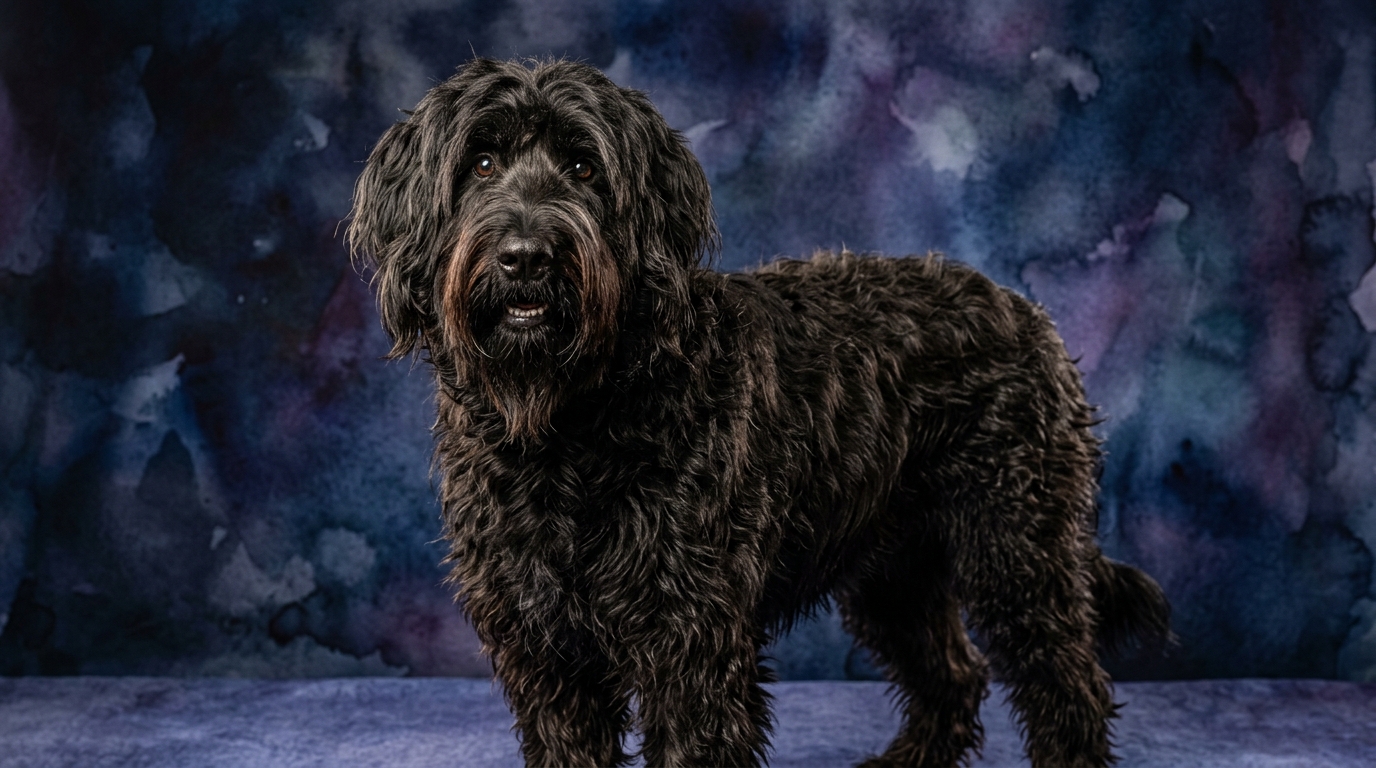
In contrast, the Briard, positioned at Coren #30, offers a different intellectual signature. Its Problem Solving is rated 4/5, signifying a solid ability to navigate challenges and learn from experience, though potentially requiring more time or repetition than a Doberman. Training Speed is 4/5, meaning they are capable learners but might not pick up new skills with the same instantaneous grasp. Social Intelligence is 3/5, indicating they are generally aware of their human companions but can exhibit a more independent or discerning nature, often forming deep bonds with their immediate family. Their Instinctive Drive is 3/5, suggesting a moderate internal motivation for work, rooted in their herding heritage but less intense than a Doberman's perpetual readiness. The Briard's Memory is 4/5, allowing them to recall past events and learned behaviors effectively.
Where the Doberman Pinscher Wins Cognitively
The Doberman Pinscher's cognitive edge is most apparent in scenarios demanding rapid, precise learning and unwavering focus. Their 5/5 Training Speed and 5/5 Problem Solving combine to make them exceptional candidates for complex obedience, protection work, or competitive dog sports where intricate routines must be mastered quickly and executed flawlessly. For instance, a Doberman can learn a multi-stage agility course after only a few repetitions, internalizing the sequence of obstacles and the precise body movements required with remarkable efficiency. Their 5/5 Instinctive Drive fuels this dedication, ensuring they remain highly motivated to perform even challenging or repetitive tasks without losing enthusiasm.
Furthermore, the Doberman's perfect 5/5 Memory means they rarely forget a command or a learned behavior, even after extended breaks, making retraining efforts minimal. This superior recall is invaluable in critical service roles or high-stakes protection work where immediate, accurate responses are non-negotiable. Their 4/5 Social Intelligence, while not a perfect 5, still allows for a deep, responsive bond with their handler, enabling them to anticipate commands and react to subtle body language cues with impressive accuracy, creating a seamless partnership in demanding environments.
Where the Briard Wins Cognitively
While the Doberman excels in speed and precision, the Briard's cognitive strengths lie in a thoughtful, persistent approach to problem-solving and a robust memory for patterns and territories. Their 4/5 Problem Solving, combined with a 4/5 Memory, means they are adept at navigating complex, dynamic environments, such as a large property requiring regular patrols or managing a scattered flock. A Briard might take longer to grasp a new trick than a Doberman, but once learned, their memory ensures it is deeply ingrained, particularly if the task relates to their inherent guarding or herding instincts.
The Briard's 3/5 Instinctive Drive, while lower than the Doberman's, translates into a more independent, self-reliant nature, which is a significant asset in roles where constant human direction isn't always feasible or desirable. They possess a patient endurance for tasks that require sustained focus over time, rather than explosive bursts of activity. Their 3/5 Social Intelligence means they form profound, protective bonds with their immediate family, often displaying a discerning wariness of strangers, making them exceptional, albeit selective, guardians. This thoughtful independence allows them to assess situations and act without needing explicit instruction for every step.
Which is Easier to Train and Why?
Based on their IQ profiles, the Doberman Pinscher is generally easier to train than the Briard, primarily due to its superior Training Speed (5/5 vs. 4/5) and higher Instinctive Drive (5/5 vs. 3/5). Dobermans absorb new information with remarkable alacrity; they are eager to please and possess an innate desire to work alongside their human companions, making them highly responsive to positive reinforcement and clear directives. Their high social intelligence also means they are quick to interpret and respond to human intentions and emotional states, streamlining the communication process during training.
The Briard, while certainly trainable, typically requires more patience and a nuanced approach. Their 4/5 Training Speed means skills are learned, but often with more repetitions or a slower progression. Their 3/5 Social Intelligence can sometimes manifest as a thoughtful independence, meaning they might question commands or require more convincing before committing, rather than instantly complying. Their lower instinctive drive also means they may not possess the same tireless enthusiasm for repetitive training drills, sometimes preferring to figure things out on their own terms, a trait stemming from their historical role as independent herders and guardians.
Which Suits Active Owners vs. Relaxed Owners
The Doberman Pinscher is unequivocally suited for active owners who can provide consistent mental and physical engagement. Their 5/5 Instinctive Drive means they thrive on having a purpose, whether it's daily runs, advanced obedience training, dog sports like agility orschutzhund, or even a 'job' around the house. Owners who appreciate a canine partner that is always ready for action and requires structured activity will find a Doberman exceptionally rewarding. Neglecting their need for engagement can lead to boredom and potentially destructive behaviors, as their powerful cognitive engine needs constant fuel.
The Briard, while still requiring regular exercise to maintain physical health, can be a better fit for owners who appreciate a more measured pace and a strong, protective presence without the constant demand for intense, structured work. Their 3/5 Instinctive Drive suggests they enjoy activity but might be content with long walks, hikes, or opportunities to 'patrol' their property, rather than needing high-octane dog sports daily. Owners who value a loyal, watchful companion that is capable of independent thought and possesses a calm, albeit watchful, demeanor once their needs are met, might find the Briard a more harmonious match. They are not 'relaxed' in the sense of being sedentary, but their activity needs are less intense and more self-directed compared to a Doberman.
The Verdict
Choose the Doberman Pinscher if you seek a highly trainable, focused, and purpose-driven companion for advanced training, dog sports, or a working role, and are prepared to meet their significant demands for mental and physical engagement.
Opt for the Briard if you desire a thoughtful, independent, and protective companion who forms deep family bonds, thrives on moderate activity, and you appreciate a dog with a more self-reliant approach to life.
🧠 Find Your Pet's IQ Score
Our Pet IQ Lab assessment covers 25+ tests across 5 cognitive dimensions — personalized to your breed.
Take the Full IQ Test →Frequently Asked Questions
Do Doberman Pinschers make good family dogs?
Yes, with proper socialization and training, Dobermans can be devoted family members. Their 4/5 social intelligence means they form strong bonds with their primary family, often acting as protective guardians, though their intensity requires consistent guidance.
Are Briards difficult to train for first-time dog owners?
Briards can be a challenge for first-time owners due to their independent nature and 3/5 social intelligence, which means they might require more patience and consistent, positive reinforcement. Their thoughtful approach to learning means they respond best to clear, fair leadership.
Which breed is better for protection?
Both breeds possess protective instincts, but the Doberman Pinscher's 5/5 instinctive drive and high trainability make them exceptionally suited for formal protection work, responding with precision and intensity. The Briard offers a more naturally watchful and discerning guardian presence, relying on their independence to assess threats.