Side-by-Side Cognitive Profiles
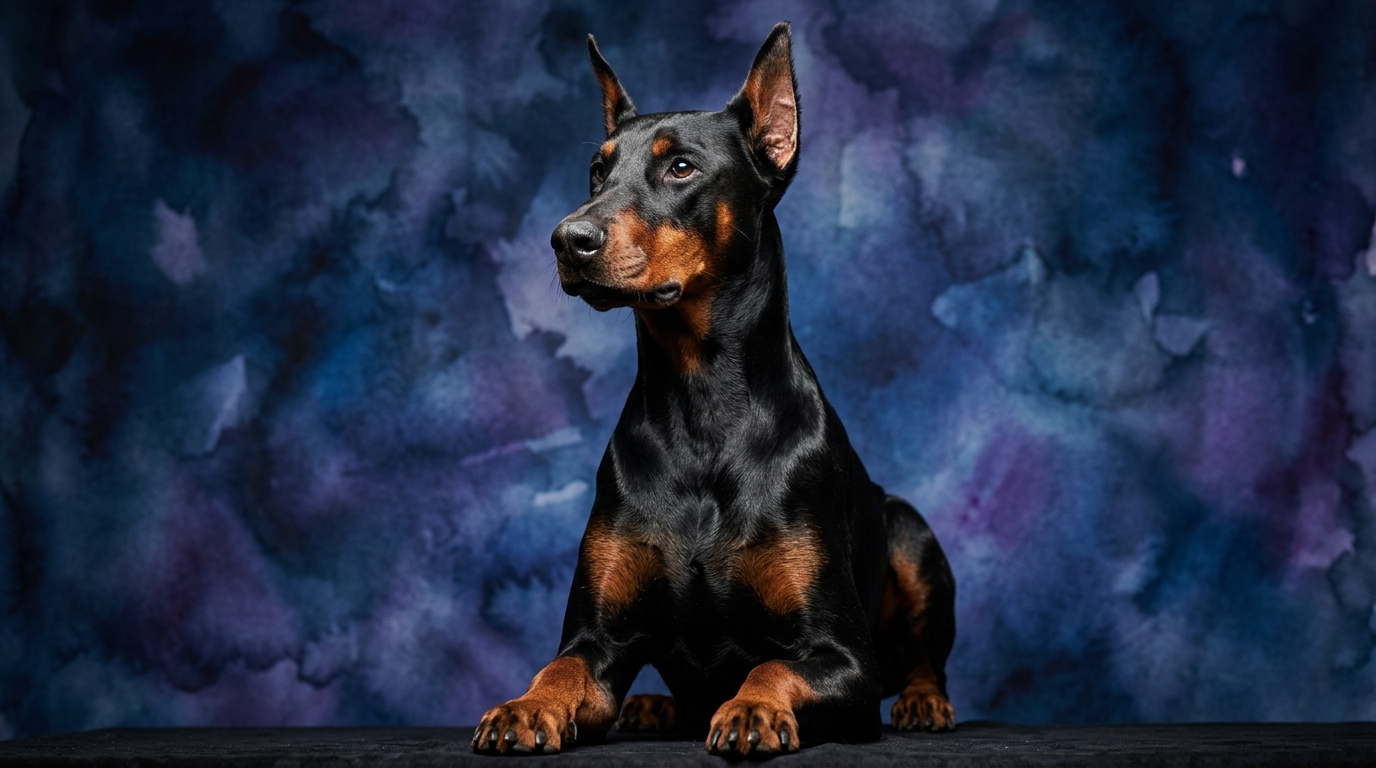
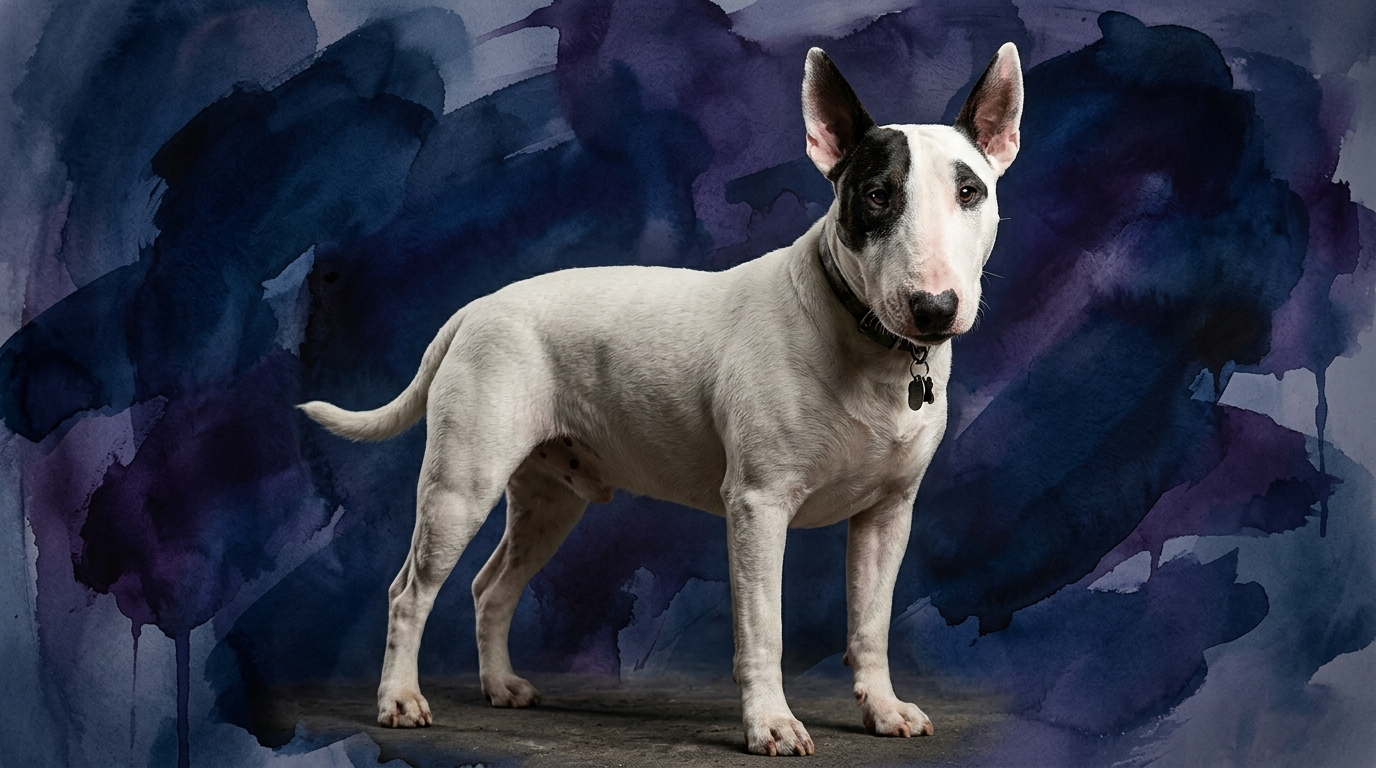
At The Cosmic Pet Pet IQ Lab, we evaluate canine intelligence across five key dimensions, revealing a comprehensive picture of each breed's cognitive strengths. Comparing the Doberman Pinscher (Coren rank #5) with the Bull Terrier (Coren rank #66) illustrates a significant divergence in these profiles.
The Doberman Pinscher's profile reflects a breed engineered for precision and responsiveness:
• Problem Solving (5/5): This breed quickly analyzes novel situations and devises effective solutions, demonstrating exceptional analytical skills in complex environments.
• Training Speed (5/5): Dobermans absorb new commands and routines with impressive swiftness, often mastering concepts in minimal repetitions, making them highly responsive.
• Social Intelligence (4/5): Keenly perceptive of human cues and emotional states, their social interactions are purposeful and observant, understanding hierarchies but tempered by a strong guarding instinct.
• Instinctive Drive (5/5): Propelled by a profound desire to work, they exhibit intense focus, tenacity in tasks, and a strong protective impulse, requiring outlets for this deep-seated energy.
• Memory (5/5): Their recall of learned behaviors and past experiences is outstanding, ensuring durable training and robust understanding of routines over long periods.
The Bull Terrier, conversely, presents a profile of independent thought and tenacious spirit:
• Problem Solving (3/5): Bull Terriers approach problems with curious persistence, often employing trial and error rather than rapid deduction, making their methods less direct but often effective.
• Training Speed (3/5): Learning new commands requires more patience and repetition; their independent spirit necessitates compelling motivation and consistent, engaging methods to internalize instructions.
• Social Intelligence (3/5): They form strong, affectionate bonds with their chosen people, understanding familial dynamics, though their social interactions can be on their own terms, less attuned to subtle human shifts.
• Instinctive Drive (3/5): Characterized by a strong prey instinct and tenacious focus, their drive is formidable when pursuing something of interest, though not always directed by a traditional 'work' ethic.
• Memory (3/5): Bull Terriers possess functional memory for routines and commands, especially with positive reinforcement, but may require more frequent refreshers to maintain proficiency.
Where the Doberman Pinscher Excels Cognitively
The Doberman Pinscher's cognitive architecture presents clear advantages in scenarios demanding rapid processing and execution. Their 5/5 Problem Solving score means they excel at discerning patterns and formulating swift solutions, whether navigating an agility course with precision or understanding complex multi-step command sequences. This breed's 5/5 Training Speed allows them to absorb new information with minimal repetition, making them adept at learning specialized tasks like search and rescue protocols or advanced obedience. Furthermore, their perfect 5/5 Memory ensures that these complex learnings are retained over time, building a robust foundation of knowledge and skills. This cognitive efficiency, combined with their 5/5 Instinctive Drive, means a Doberman doesn't just learn quickly but is also profoundly motivated to apply that learning, making them exceptional partners for intricate, goal-oriented activities.
Where the Bull Terrier's Cognitive Traits Shine
While the Bull Terrier's cognitive scores are generally lower in a comparative context, their specific blend of traits offers unique advantages, particularly for owners who appreciate a distinct approach to life. Their 3/5 Problem Solving, though not as rapid, is often characterized by a tenacious, exploratory method. They might not solve a puzzle box instantly, but they will persist, trying different angles and approaches until they succeed, demonstrating a resilience that can be endearing and effective in its own right. Their 3/5 Social Intelligence means they forge deep, often comical bonds with their families, thriving in environments where their unique personality is celebrated rather than expected to conform rigidly. This breed’s 3/5 Instinctive Drive, while not focused on 'work' in the traditional sense, fuels a profound determination when they are interested in something, be it a favorite toy or a particular scent. This unwavering focus, once engaged, can make them formidable in their chosen pursuits, even if it takes a different kind of motivation to initiate.
Training Journey: Doberman Pinscher vs. Bull Terrier
In terms of ease of training, the Doberman Pinscher holds a significant edge, directly attributable to their 5/5 Training Speed and 5/5 Memory. They process instructions quickly, understand cause-and-effect relationships with minimal prompting, and retain those lessons for extensive periods. This means a Doberman can learn foundational commands in just a few sessions and then build upon that knowledge to master advanced tasks, often requiring only slight adjustments or refinements. Their 4/5 Social Intelligence also contributes, as they are generally attuned to human direction and eager to please a respected leader.
Conversely, the Bull Terrier, with a 3/5 Training Speed and 3/5 Memory, presents a different training journey. They require far more patience, repetition, and creative motivation to learn new behaviors. Their independent streak, stemming from a lower social intelligence score in a comparative context, means they might question the 'why' or simply choose not to comply if the motivation isn't compelling enough. Training a Bull Terrier often involves transforming lessons into engaging games and understanding that their persistence can sometimes manifest as stubbornness, requiring a consistent, firm, yet positive approach.
Matching Breeds to Lifestyles: Active vs. Relaxed Owners
For owners who thrive on high-intensity activities and intricate partnerships, the Doberman Pinscher is an ideal match. Their 5/5 Instinctive Drive paired with top-tier Problem Solving and Memory means they require substantial mental and physical engagement. These are dogs that excel in dog sports like Schutzhund, advanced obedience, agility, or as working service animals, needing structured tasks that challenge their considerable cognitive abilities daily. A Doberman without sufficient mental stimulation can become bored and channel their potent drive into less desirable behaviors.
The Bull Terrier, on the other hand, suits owners who appreciate a robust companion but whose activity preferences might lean towards consistent, engaging play rather than complex, task-oriented work. While still energetic and requiring regular exercise to maintain physical health and mental balance, their 3/5 Instinctive Drive is more about focused bursts of activity or tenacious exploration rather than a constant need for a 'job.' They can adapt to a slightly more relaxed home environment provided they receive regular, stimulating walks, playtime, and consistent attention, without the same intense demand for intricate cognitive challenges.
The Verdict
The Doberman Pinscher is the definitive choice for experienced owners seeking a highly biddable, profoundly capable working partner for demanding activities and complex training.
The Bull Terrier is better suited for owners who cherish a unique, tenacious, and affectionate companion, prepared to invest consistent, patient effort into training and who appreciate a dog with a distinct, sometimes comical, personality.
🧠 Find Your Pet's IQ Score
Our Pet IQ Lab assessment covers 25+ tests across 5 cognitive dimensions — personalized to your breed.
Take the Full IQ Test →Frequently Asked Questions
Are Dobermans good for first-time dog owners?
Dobermans, with their intense drive and high cognitive demands, are generally better suited for experienced owners who can provide consistent, firm leadership and extensive mental and physical stimulation. Their rapid learning means they can quickly pick up bad habits as easily as good ones if not guided properly.
Do Bull Terriers need a lot of exercise?
While not requiring the same type of intense, structured 'work' as a Doberman, Bull Terriers are energetic and do need regular, engaging exercise. Daily walks, playtime, and opportunities to explore safely are crucial to keep them physically fit and mentally content, preventing boredom.
How do their social needs differ?
Dobermans, with 4/5 social intelligence, are perceptive and bond closely with their family, but their interactions are often more purposeful, rooted in their guarding instincts. Bull Terriers, at 3/5, are affectionate and devoted to their inner circle but can be more independent or selective in their social graces, thriving in a family that understands their unique, often comical, personality.