
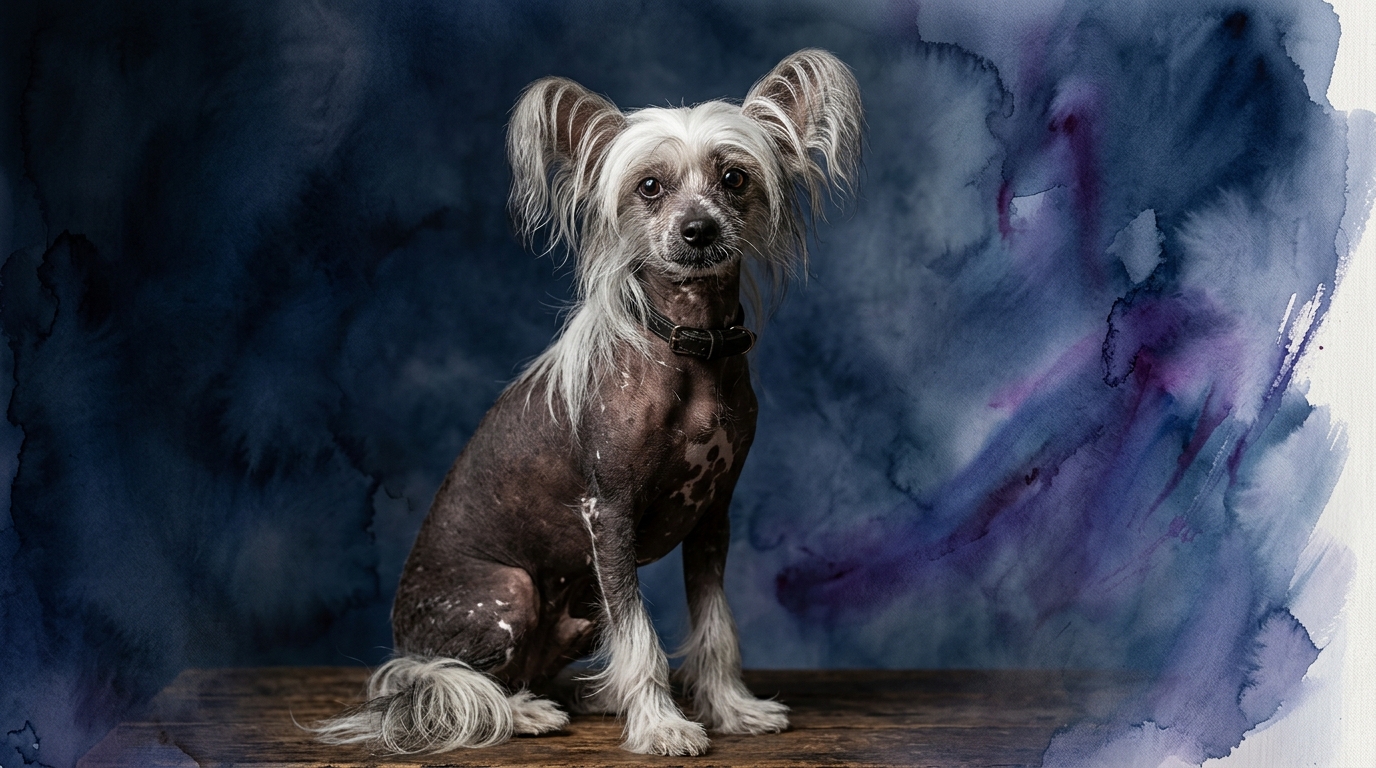
Side-by-Side IQ Profile: Doberman Pinscher vs. Chinese Crested
The Doberman Pinscher presents a formidable cognitive profile, marked by exceptional scores across most dimensions. Their Problem Solving (5/5) signifies a profound capacity for navigating complex situations and devising solutions. Training Speed (5/5) indicates a rapid assimilation of new commands and routines, making them quick learners. Social Intelligence (4/5) suggests a nuanced understanding of social cues, often manifesting as deep loyalty and situational awareness. An Instinctive Drive (5/5) highlights a powerful internal motivation for purposeful activities, while Memory (5/5) ensures extensive, long-term retention of experiences and learned behaviors.
In contrast, the Chinese Crested exhibits a more moderate cognitive approach. Their Problem Solving (3/5) means they can address challenges but may require more direct guidance or simpler tasks. Training Speed (3/5) suggests they are capable of learning, though at a more deliberate pace, benefiting from consistent repetition. Social Intelligence (3/5) points to an adequate understanding of social dynamics, often fostering strong, affectionate bonds with their immediate human family. An Instinctive Drive (3/5) indicates they possess innate motivations, but these are generally less intense or less task-oriented than working breeds. Memory (3/5) allows for information retention, yet complex sequences or infrequently practiced commands might necessitate refreshers.
Where Doberman Pinscher Wins Cognitively
The Doberman Pinscher's cognitive architecture provides distinct advantages in several areas. Their perfect 5/5 in Problem Solving and Memory enables them to master intricate multi-step commands and grasp abstract concepts, excelling in advanced obedience, protection work, or complex agility courses. For instance, a Doberman can learn to differentiate between specific objects by name and retrieve them, or understand the nuanced body language required for precise protection commands, demonstrating superior mental processing and recall.
With a 5/5 in Training Speed, the Doberman processes and internalizes new information with remarkable efficiency. This translates to fewer repetitions needed for a command to solidify and a rapid adaptation to new routines or environments, such as learning a complex choreography for canine freestyle in a fraction of the time a less cognitively agile breed might require. Their high Instinctive Drive (5/5) fuels a deep internal motivation to engage in meaningful activities, whether patrolling a property or participating in competitive sports. This drive contributes to their focus and persistence, allowing them to remain engaged and effective during prolonged, demanding tasks like tracking or search and rescue operations, making them highly reliable partners in structured environments.
Where Chinese Crested Wins Cognitively
While not about direct competition in task performance, the Chinese Crested’s cognitive profile offers unique advantages for specific lifestyles. Their moderate Problem Solving (3/5) and Instinctive Drive (3/5) mean they are less prone to creating their own complex 'jobs' or becoming restless without constant high-level mental engagement. This makes them highly adaptable to quieter, less structured home environments, thriving on companionship rather than needing intricate tasks to occupy their minds, reducing the likelihood of boredom-induced mischief.
The Chinese Crested’s Social Intelligence (3/5) translates into a straightforward, affectionate bond with their chosen people, often without the intense territorial or protective social calculations seen in breeds with higher scores. They typically seek comfort and proximity, making them superb lap companions whose social needs are met by close human interaction rather than elaborate social hierarchies or roles. Furthermore, their moderate Memory (3/5) and Training Speed (3/5) can mean a more forgiving learning curve for owners. While they learn, they might not dwell on past training errors or negative experiences with the same intensity as a breed with a 5/5 memory, fostering a resilient and emotionally open bond where minor missteps are easily overcome, contributing to a relaxed training dynamic.
Their overall cognitive makeup supports a primary role as a dedicated companion. Their moderate drive means their focus is often directed towards their immediate human family, seeking warmth, attention, and shared quiet moments, rather than being constantly distracted by external stimuli or an overwhelming internal urge to perform. This makes them inherently predisposed to fulfilling the role of a devoted, low-key presence, a significant win for owners seeking an emotionally accessible and less demanding canine friend.
Which is Easier to Train and Why
The Doberman Pinscher is unequivocally easier to train for complex tasks and commands. With a 5/5 in both Training Speed and Problem Solving, they absorb new information with minimal repetition and can quickly generalize learned behaviors to new contexts. Their high Instinctive Drive (5/5) means they are often eager to work and find purpose in training, translating into strong motivation and focus. For example, a Doberman can learn a multi-step agility course after just a few walkthroughs, remembering each obstacle's sequence and execution with precision.
In contrast, the Chinese Crested, with 3/5 in both Training Speed and Problem Solving, will require more patience, consistent repetition, and simplified steps. While they are certainly trainable and capable of learning, their cognitive processing is more gradual, and they may not instinctively seek out the challenge of new commands with the same fervor. A Chinese Crested might master 'sit' quickly but could take longer to reliably perform a 'stay' with distractions, needing more foundational work and positive reinforcement. The Doberman's inherent cognitive design makes it significantly more receptive to formal instruction and intricate learning scenarios.
Which Suits Active Owners vs. Relaxed Owners
The Doberman Pinscher is an ideal match for active owners who thrive on purposeful engagement and consistent mental stimulation. Their 5/5 Instinctive Drive means they require a 'job' or regular, challenging activities to feel fulfilled, whether it's advanced obedience, protection work, agility, or extensive hiking. A Doberman without sufficient mental and physical outlets can channel its considerable cognitive energy into less desirable behaviors, making them unsuitable for sedentary lifestyles. Their cognitive profile demands an owner who is ready to be an active participant in their dog's mental and physical development.
Conversely, the Chinese Crested is perfectly suited for relaxed owners seeking a devoted, less demanding companion. Their moderate Instinctive Drive (3/5) and Problem Solving (3/5) mean they are content with shorter walks, indoor play, and ample cuddle time. While they benefit from mental engagement, it doesn't need to be as intense or constant as with a Doberman. They thrive in environments where their primary role is to be a cherished family member, rather than a working partner, making them excellent companions for apartment dwellers or those with a quieter lifestyle, fitting seamlessly into a less strenuous daily routine.
The Verdict
Opt for a Doberman Pinscher if you are an experienced owner seeking a highly capable, purpose-driven companion for advanced training, canine sports, or protective roles, and are prepared to meet their significant mental and physical exercise requirements.
Select a Chinese Crested if you desire an affectionate, adaptable companion that thrives on close human connection, requires moderate exercise, and fits a more relaxed, indoor-oriented lifestyle.
🧠 Find Your Pet's IQ Score
Our Pet IQ Lab assessment covers 25+ tests across 5 cognitive dimensions — personalized to your breed.
Take the Full IQ Test →Frequently Asked Questions
Can a Chinese Crested perform agility or learn tricks?
Yes, a Chinese Crested can certainly learn agility and tricks, though their progress might be slower than a Doberman's due to their 3/5 training speed. They excel with positive reinforcement and shorter, engaging sessions, making these activities enjoyable for both dog and owner, albeit at a more deliberate pace.
Does a Doberman Pinscher's high instinctive drive make them difficult?
A Doberman's high instinctive drive (5/5) means they need appropriate outlets for their energy and focus. Without consistent training, mental challenges, and a clear purpose, this drive can manifest as restlessness, anxiety, or destructive behaviors, highlighting the importance of early socialization and ongoing purposeful engagement from their owners.
How does social intelligence differ between these breeds?
The Doberman's 4/5 social intelligence often translates to a keen awareness of their surroundings and a strong protective instinct towards their family, sometimes requiring careful management in novel social situations. The Chinese Crested's 3/5 social intelligence typically means they are more focused on bonding closely with their immediate human family, often being more reserved or cautious with strangers but less inclined towards complex territorial displays, prioritizing intimate human connection.