Side-by-Side Cognitive Profiles
To understand the distinct mental landscapes of these two breeds, let's examine their scores across five critical IQ dimensions, as assessed by The Cosmic Pet Pet IQ Lab.
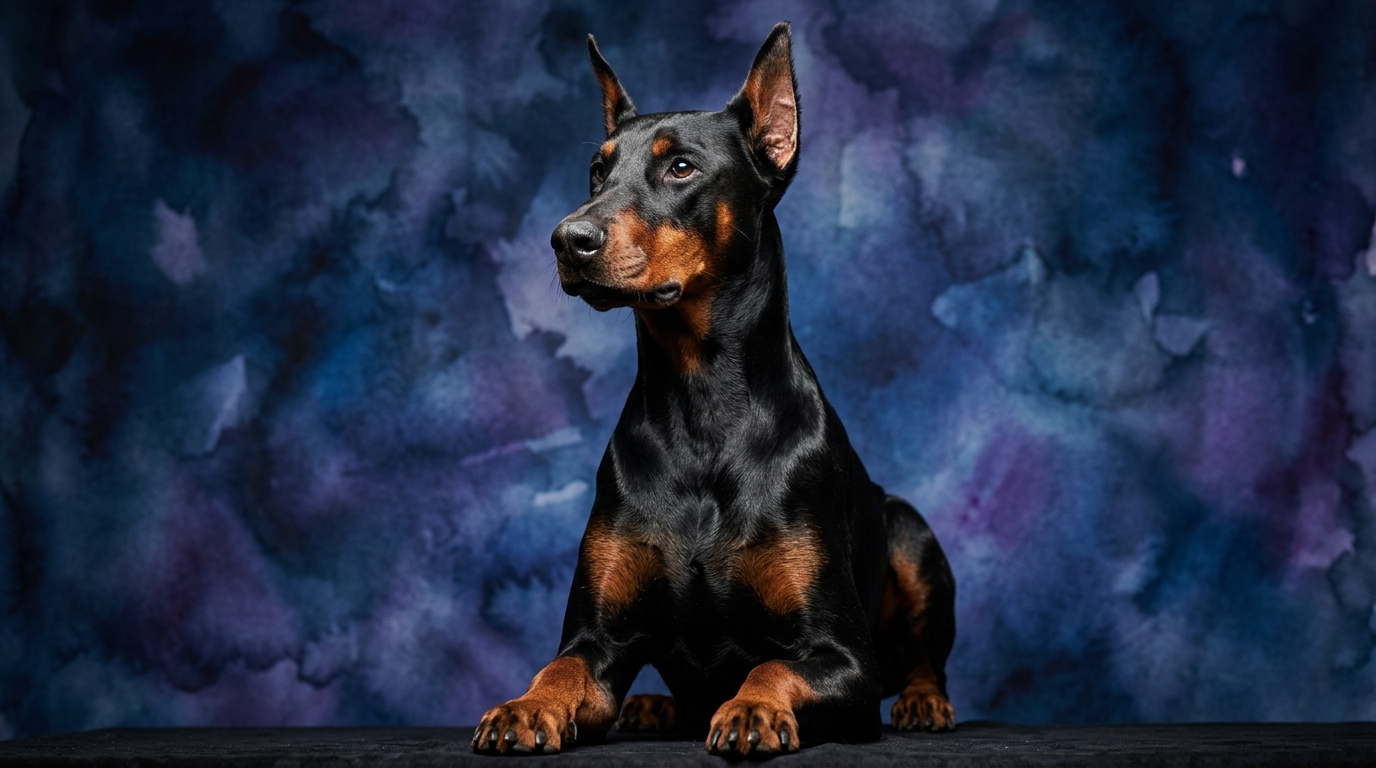
The Doberman Pinscher, ranking #5 in Coren's classification, exhibits exceptional cognitive prowess. Its Problem Solving is rated 5/5, indicating an outstanding capacity for complex thought and independent strategizing. Training Speed also scores 5/5, reflecting an unparalleled ability to rapidly acquire and internalize new commands and routines. Social Intelligence is strong at 4/5, demonstrating a keen understanding of human emotions and family dynamics, though often with a discerning approach to strangers. Instictive Drive is a powerful 5/5, underpinning their formidable protective and working capabilities. Finally, Memory stands at an impressive 5/5, ensuring long-term retention of learned behaviors and experiences.
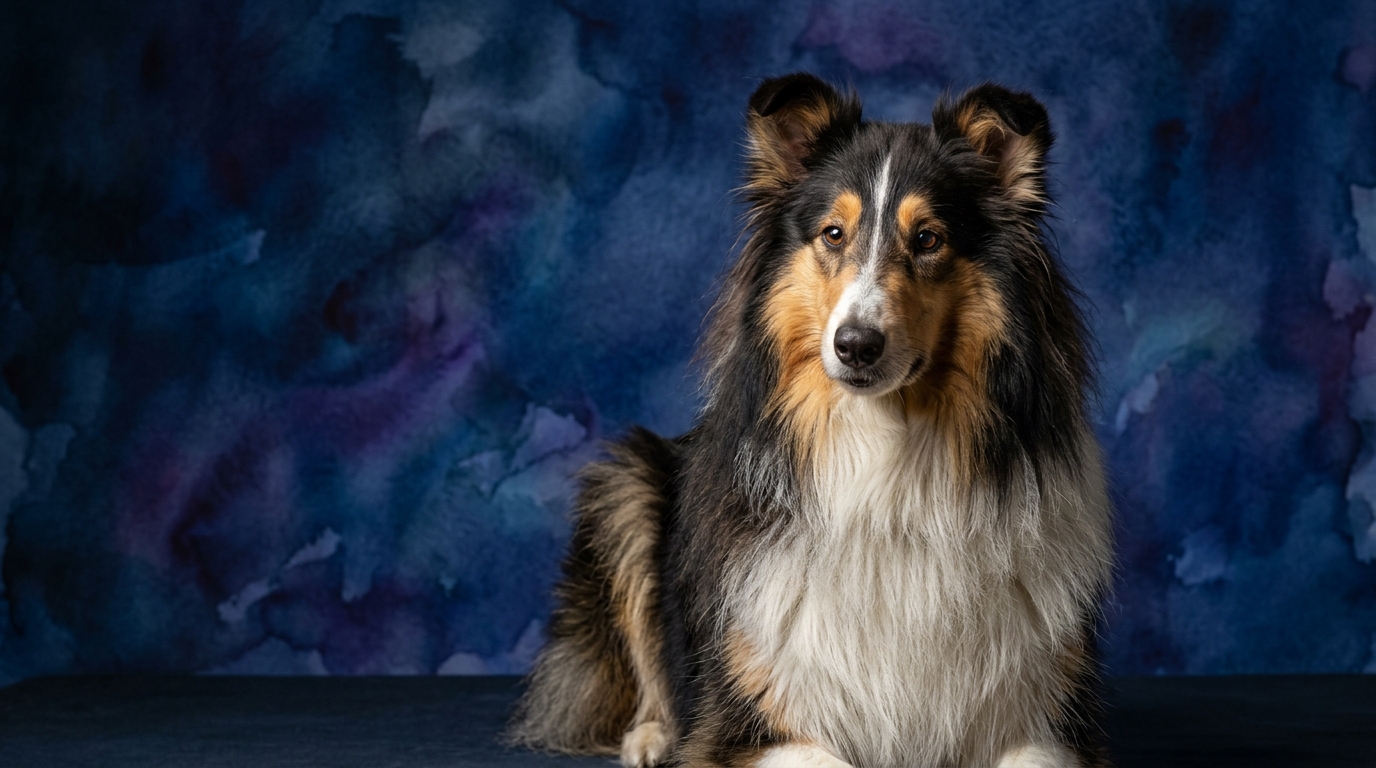
The Rough Collie, holding Coren's #16 rank, presents a different, yet still capable, cognitive blueprint. Its Problem Solving is rated 4/5, showing a robust ability to navigate practical challenges, particularly those involving spatial awareness and group management. Training Speed scores 4/5, indicating efficient learning, albeit potentially requiring slightly more repetition than a Doberman. Social Intelligence is 3/5, suggesting a gentle empathy and good understanding of social cues within their trusted circle, with a tendency towards sensitivity. Instictive Drive is 3/5, primarily manifesting as a herding instinct and a desire for companionship rather than intense protection. Memory matches the Doberman at 5/5, highlighting their excellent recall for past interactions and learned tasks.
Where the Doberman Pinscher Excels Cognitively
The Doberman Pinscher's superior Problem Solving (5/5) allows it to excel in scenarios demanding independent thought and strategic planning. They don't just follow instructions; they can analyze novel situations, devise solutions, and adapt complex learned sequences to new contexts, making them formidable partners in advanced obedience or specialized working roles. This means they are more likely to 'figure out' a multi-step puzzle or navigate an unfamiliar obstacle course with minimal prior exposure.
Their unparalleled Training Speed (5/5) is a significant cognitive advantage. Dobermans internalize new commands and behaviors with remarkable efficiency, often mastering complex tasks in very few repetitions. This rapid neural pathway formation for new information enables them to progress quickly through advanced training, making them incredibly responsive and versatile for intricate work or competitive canine sports.
The Doberman's powerful Instictive Drive (5/5) is a core cognitive asset, fueling their focus, determination, and courage. This isn't merely a physical attribute; it's a deep-seated mental framework that motivates them to fulfill their perceived duties as guardians or working partners. This intense, purpose-driven cognitive state allows them to maintain concentration and execute tasks under pressure, making them exceptionally reliable in high-stakes situations.
Where the Rough Collie Stands Out Cognitively
While both breeds score 5/5 in Memory, the Rough Collie's exceptional recall often pairs with its gentle disposition to foster a particularly stable and predictable home environment. They remember routines, family members, and positive past interactions with warmth, contributing to their reputation as reliable, affectionate companions who rarely forget a kind word or a familiar face, making them incredibly consistent in their behavior.
The Rough Collie's Problem Solving (4/5) shines particularly in dynamic, fluid situations, especially those involving spatial reasoning and managing moving entities, directly stemming from their herding heritage. Their ability to anticipate movement, adapt to changing conditions, and strategically guide groups without direct commands demonstrates a highly developed, intuitive form of cognitive flexibility crucial for intelligent management rather than assertive control.
The Collie's Social Intelligence (3/5), though numerically lower than the Doberman's, manifests as a distinct advantage in its empathetic and less confrontational approach to social interactions. They are often more attuned to subtle emotional cues from a broader range of people and animals, demonstrating a nuanced understanding of social harmony. Their instinct to 'herd' translates into a desire to keep a group together and safe through gentle guidance, making them exceptionally adaptable to diverse social settings once they are comfortable and secure.
Trainability: Doberman Pinscher vs. Rough Collie
When considering ease of training, the Doberman Pinscher generally presents an easier path for experienced handlers, primarily due to its 5/5 Training Speed and 5/5 Problem Solving. They grasp concepts rapidly, generalize learning quickly, and possess an intense instinctive drive that makes them eager to work and please, provided the tasks align with their natural predispositions. Their focus is intense, allowing them to master complex sequences with minimal repetition, making them ideal for advanced obedience and specialized roles.
The Rough Collie, with a 4/5 Training Speed, is also highly trainable but often benefits from a slightly more patient and gentler approach. Their social sensitivity means that harsh corrections are counterproductive; they respond beautifully to positive reinforcement, praise, and a calm, consistent methodology. While they learn efficiently, their problem-solving tends to be more practical and less abstract than a Doberman's, meaning highly conceptual tasks might take a little longer. Their lower instinctive drive (3/5) suggests their motivation is more centered on companionship and pleasing their family, rather than an intense drive for a specific 'job,' making them excellent candidates for family obedience and companion sports.
Matching Breeds to Lifestyles: Active vs. Relaxed Owners
For active owners seeking a high-engagement partner, the Doberman Pinscher is an ideal match. Their 5/5 instinctive drive and problem-solving abilities mean they require substantial mental and physical stimulation. Owners who thrive on advanced obedience, protection sports, agility, or extensive daily exercise will find the Doberman a willing, capable, and enthusiastic companion. A Doberman without consistent, challenging engagement can become bored and potentially develop undesirable behaviors, reflecting their need for a 'job' and purpose.
For more relaxed owners, the Rough Collie offers a wonderful balance. While they still require daily exercise and mental engagement, their energy levels and instinctive drive (3/5) are generally more moderate. They are content with regular walks, engaging playtime, and extensive family interaction, enjoying being an integral part of the household rhythm without demanding constant, high-intensity activity. Their social intelligence (3/5) and less intense drive make them excellent family companions who adapt well to a slightly less structured routine, provided they receive consistent affection and attention.
The Verdict
Choose a Doberman Pinscher if you are an experienced, active owner seeking a highly trainable, intensely focused working partner for demanding tasks, protection, or advanced canine sports, and you can consistently channel their formidable drive and problem-solving capabilities.
Choose a Rough Collie if you desire a gentle, empathetic, and adaptable family companion who enjoys moderate activity, thrives on positive social interaction, and will remember your kindness and routines with unwavering devotion, offering a calm, watchful presence.
🧠 Find Your Pet's IQ Score
Our Pet IQ Lab assessment covers 25+ tests across 5 cognitive dimensions — personalized to your breed.
Take the Full IQ Test →Frequently Asked Questions
Are Dobermans good family dogs?
Dobermans can be exceptional family dogs, forming deep bonds with their immediate household; their high social intelligence (4/5) means they are very attuned to their family's emotions, but their strong protective instincts require careful socialization and training to ensure they are discerning with strangers.
Do Rough Collies need a lot of exercise?
Rough Collies require moderate daily exercise, such as walks and playtime, to stay healthy and mentally stimulated; their instinctive drive (3/5) is lower than some working breeds, making them generally content with regular activity rather than intense, constant engagement.
Which breed is better for first-time dog owners?
The Rough Collie is generally more suitable for first-time dog owners due to its more adaptable nature, lower intensity, and milder instinctive drives, whereas the Doberman's powerful drives and need for consistent, experienced handling can be challenging for novices.